Christmas cactus is one of the most beautiful flowering houseplants for winter homes. Its flat green segments and bright pink, red, white, or purple blooms bring color to windowsills when many other plants are resting. A healthy Christmas cactus can bloom for years, becoming fuller and more impressive with every season.
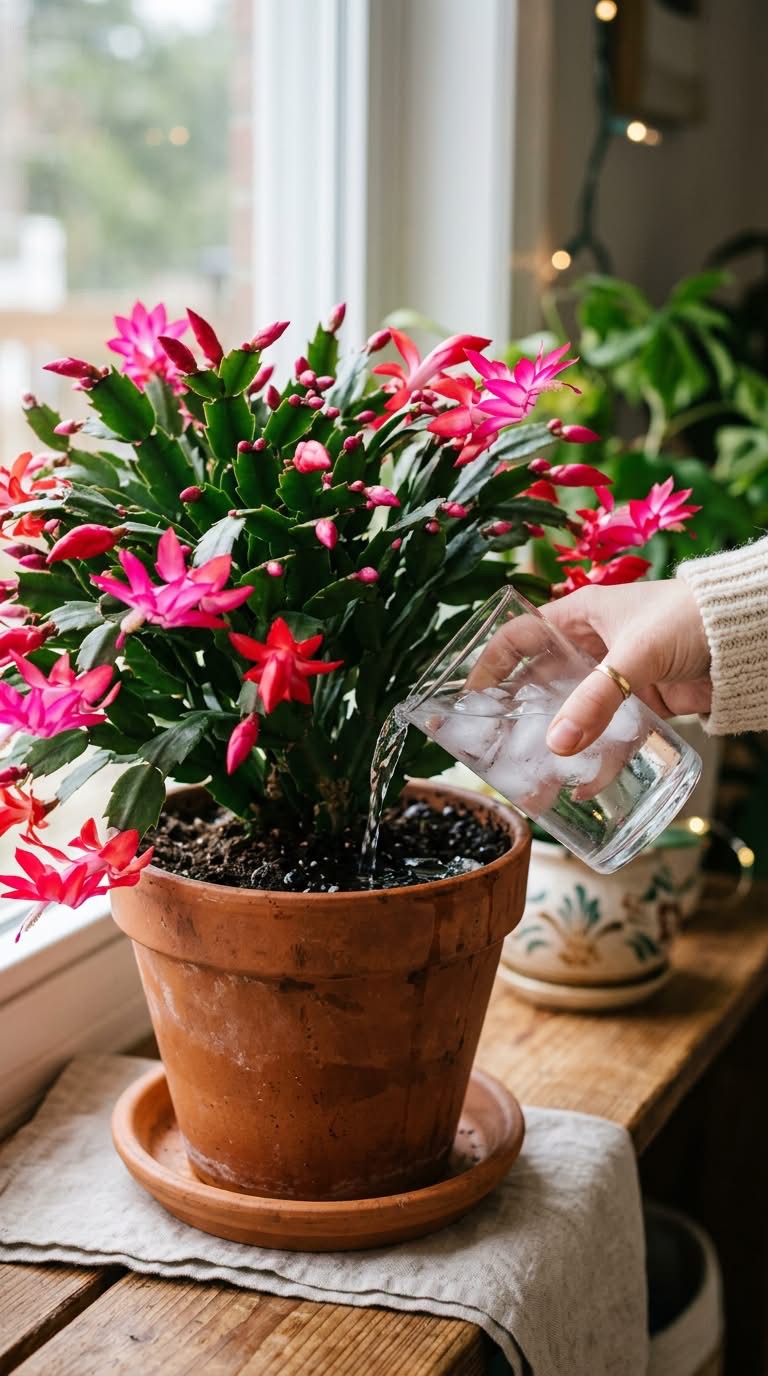
Because the plant has “cactus” in its name, many people assume it should be treated like a desert plant. In reality, Christmas cactus comes from tropical forest conditions and needs a different type of care. It likes bright filtered light, airy soil, regular moisture, and a stable environment. One popular image shows ice water being poured into the pot, but very cold water is not a blooming secret. A gentle room-temperature watering routine is a safer way to protect the roots and flowers.
What Makes Christmas Cactus Different
Christmas cactus, also known as Schlumbergera, is not a typical dry-climate cactus. It naturally grows in humid forest environments, where it receives filtered light and moisture around its roots without sitting in heavy wet soil.
Its leaf-like segments store some moisture, but the plant does not enjoy long periods of drought. At the same time, its roots can struggle if the potting mix stays soaked. This balance is the key to caring for the plant properly.
A Christmas cactus looks especially elegant on a wooden table near a bright window, on a plant stand in the living room, or as a colorful centerpiece in a dining area. The more stable its growing conditions are, the more likely it is to hold its buds and flowers beautifully.
Why Ice Water Is Not the Best Choice
Ice-cold water can create an unnecessary temperature shock around the root zone, especially when the plant is sitting in a warm indoor room. Christmas cactus prefers steady care rather than sudden changes in temperature or moisture.
Room-temperature water is the gentler choice. It allows the potting mix to absorb moisture evenly without making the roots suddenly cold. This matters even more when the plant is covered in buds or flowers, because sudden temperature changes can contribute to bud drop.
The best watering habit is simple: check the soil first, then water only when it needs it. Do not water based on a fixed daily schedule, and do not use icy water as a shortcut.
The Best Way to Water a Christmas Cactus
Touch the top inch of the potting mix with your finger. When it feels dry, water slowly around the soil until a little water begins to flow from the drainage hole. Let the pot drain completely, then empty any water that remains in the saucer.
The soil should feel lightly moist after watering but never swampy. If the pot feels heavy and wet for many days, the soil may be too dense or the container may not be draining properly. Christmas cactus needs moisture, but it also needs air around the roots.
University horticulture guidance recommends watering holiday cactus when the soil surface becomes dry and allowing extra water to drain away instead of leaving the pot in standing water. University of New Hampshire Extension explains that overly wet soil can lead to root problems.
Choose a Pot That Can Drain
A beautiful ceramic or terracotta pot can make a Christmas cactus look more decorative, but the container must have a drainage hole. Decorative pots without drainage can hold water at the bottom, which keeps the roots too wet even when the surface soil appears dry.
A terracotta pot is often a good option because the material allows some moisture to evaporate through the sides. A plastic pot can also work well as long as the potting mix is airy and the bottom has open drainage holes.
Use a saucer under the pot to protect furniture, but do not let water remain in the saucer after watering. Emptying the excess helps keep the root zone fresh and balanced.
Use an Airy Potting Mix
The right soil is just as important as the watering routine. Christmas cactus does not grow well in heavy compacted soil. It prefers a mix that holds some moisture but still drains freely.
A quality houseplant mix improved with perlite, orchid bark, or coarse sand can create a lighter texture around the roots. This makes it easier for water to move through the pot and reduces the chance of the roots staying wet for too long.
Christmas cactus grows best in a moist but well-drained, airy medium. North Carolina Extension notes that overly wet or overly dry soil can both create problems for the plant.
Give It Bright but Gentle Light
Christmas cactus enjoys bright indirect light. A location near an east-facing window or a bright window with a sheer curtain is often ideal. The plant gets enough daylight to support healthy growth without receiving harsh direct sun for hours.
Strong direct summer sun can bleach or burn the flat segments. On the other hand, a very dark room may slow down growth and make flowering less reliable. The goal is soft, bright light that feels natural and steady.
If the plant is blooming, avoid moving it from one location to another too often. A plant full of buds prefers consistency. Once you find a bright spot with gentle light, let it stay there.
Keep Temperatures Steady While It Blooms
Christmas cactus responds well to normal indoor temperatures, but it does not like strong drafts. Keep it away from heater vents, air conditioners, fireplaces, and frequently opened doors during the blooming period.
A dramatic change in temperature can make the plant drop buds before they open. Cold windows can also be stressful at night during winter. If the leaves are touching very cold glass, move the pot slightly back from the window while keeping it in bright light.
Penn State Extension recommends bright, indirect light and room-temperature water for holiday plants, while also warning that sudden temperature changes can lead to falling buds and flowers. Penn State Extension
Feeding the Plant Without Overdoing It
Christmas cactus does not need strong fertilizer during its flowering season. Feeding heavily when the plant is full of buds can create stress instead of helping. It is usually better to focus on watering, light, and stable temperatures while it blooms.
During active spring and summer growth, a diluted balanced houseplant fertilizer can be used according to the label. Light feeding supports the growth of strong green segments that will help the plant prepare for future blooms.
Avoid adding random powders, sugar, salt, baking soda, or concentrated homemade mixtures to the soil. These can affect the potting mix and may damage the roots. A simple, measured plant-care routine is much safer.
How to Encourage More Blooms Next Season
A Christmas cactus usually needs a period of long uninterrupted nights and cooler conditions before it begins forming flower buds. This process happens naturally in many homes during autumn, especially when the plant is not exposed to bright artificial light all night.
When autumn arrives, keep the plant in a spot that receives natural daylight during the day and darkness at night. Avoid placing it beside a lamp that stays on for long hours. The plant also benefits from slightly cooler night temperatures during this period.
Long nights help trigger flowering in holiday cactus. Illinois Extension notes that the plant needs extended darkness for several weeks to begin forming buds.
Common Christmas Cactus Problems
If buds are falling before they open, look first at temperature changes, drafts, watering habits, and light. Moving the plant, letting the soil become very dry, or keeping the pot too wet can all affect blooming.
If the green segments look wrinkled, the plant may be too dry or the roots may not be absorbing water properly. Check the potting mix and make sure the soil is not packed too tightly around the roots.
If the leaves become soft and limp, the pot may be staying too wet. Let the soil dry slightly, check the drainage hole, and make sure excess water is not trapped in the saucer.
Where Christmas Cactus Looks Most Beautiful
A blooming Christmas cactus brings a warm color accent to a living room, kitchen, home office, or bedroom. Its arching stems look especially beautiful in a hanging basket, on a plant stand, or in a simple terracotta pot.
Place it near a bright window where the flowers can be seen clearly. A wooden shelf, neutral table runner, ceramic pot, or natural woven basket can make the plant look even more elegant without competing with the blooms.
Because the flowers naturally create such a strong visual display, the best decor style is often simple. Let the plant remain the main colorful feature of the space.
Final Thoughts
The real Christmas cactus watering trick is not ice water. It is room-temperature water, a pot that drains freely, an airy soil mix, and a stable bright location.
When the plant receives gentle consistent care, it can hold its flowers longer and prepare for beautiful blooms in future seasons. Keep the roots healthy, avoid sudden changes, and let this colorful holiday cactus become a long-lasting part of your home decor.