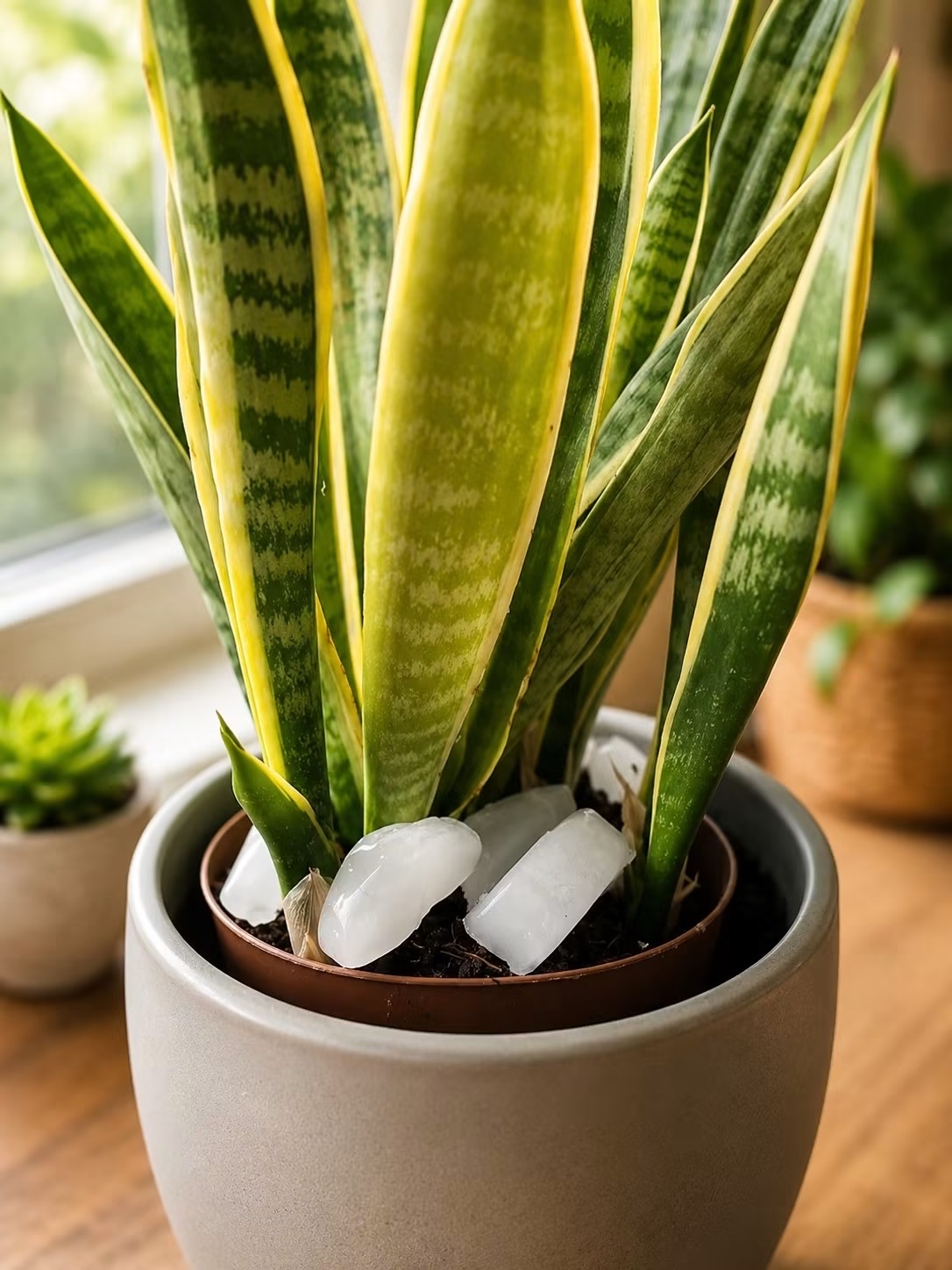
Snake plants are popular because their upright green leaves look elegant in almost any room, from a bright living room corner to a modern office desk. They are also known for being low-maintenance, but simple care does not mean no care. One common social-media trend shows ice cubes placed on the soil, yet this is not the best routine for a snake plant.
A snake plant grows best with a stable environment: well-draining soil, a pot with drainage, suitable light, and careful watering. The goal is not to keep the soil constantly wet or cold. It is to let the roots receive water when they truly need it, then allow the potting mix to dry before watering again.
What Is a Snake Plant?
Snake plant is the common name for Dracaena trifasciata, previously known as Sansevieria trifasciata. It has strong, upright leaves with beautiful green patterns and, in many varieties, a golden yellow edge.
Its architectural shape makes it an excellent decorative plant for contemporary homes. A healthy snake plant can look beautiful in a ceramic pot beside a sofa, near a bedroom window, in an entryway, or on a shelf with other low-maintenance indoor plants.
Snake plants tolerate lower light than many houseplants, but they grow best with bright indirect light and careful watering. Well-draining soil is especially important because overwatering can lead to root problems. North Carolina Extension
Why Ice Cubes Are Not the Best Watering Method
Ice cubes melt slowly, but that does not make them a reliable watering method for snake plants. They can place cold water directly around the roots in one small area instead of moistening the potting mix evenly.
A healthier routine is to use room-temperature water and pour it slowly around the soil surface. This lets the root zone receive moisture more evenly and allows excess water to drain through the bottom of the pot.
The real issue for most snake plants is not a lack of ice. It is usually watering too often, using a pot without drainage, or leaving the plant in soil that stays wet for too long.
The Best Way to Water a Snake Plant
Before watering, check the soil with your finger. If it still feels damp below the surface, wait a few more days. Snake plants prefer the potting mix to dry out thoroughly between waterings.
When the soil is dry, use room-temperature water and pour gently around the base of the plant. Water until a small amount begins to leave the drainage hole, then empty the saucer or outer cachepot so the plant is never sitting in standing water.
Illinois Extension recommends allowing snake plant soil to dry completely between waterings and notes that overwatering is the main reason these plants fail. Illinois Extension
How Often Should You Water?
There is no exact calendar rule because temperature, light, pot size, and soil type all affect how quickly soil dries. In a brighter, warmer room, your snake plant may dry more quickly. In a darker or cooler room, it may need water much less often.
During spring and summer, many indoor snake plants need water only when the potting mix has dried completely. During winter, growth slows down and watering may be needed only every several weeks.
Instead of watering every Sunday or every two weeks automatically, always check the soil first. This simple habit is more useful than any watering trick.
Use a Pot With a Drainage Hole
A beautiful pot is important for home décor, but the healthiest snake plant pot is one with a drainage hole. Drainage allows excess water to leave the root zone instead of collecting at the bottom.
If you love the look of a decorative pot without drainage, place the snake plant in a smaller nursery pot with holes, then set that pot inside the decorative container. Remove it for watering, let it drain fully, and return it once dripping has stopped.
This simple setup gives you both a stylish display and better control over watering.
Choose Fast-Draining Soil
Snake plants do not enjoy dense, heavy soil that remains wet for a long time. A cactus or succulent potting mix is often a good option because it drains more quickly than standard heavy potting soil.
You can also improve regular potting mix by adding perlite or coarse pumice. The goal is an airy mix that lets water move through easily while still supporting the roots.
Well-drained soil and careful watering are key parts of snake plant care, according to North Carolina Extension. North Carolina Extension
Give Your Snake Plant the Right Light
Snake plants can tolerate low light, but low light is not always ideal for strong, steady growth. Bright indirect light is a great choice because it supports growth without exposing the leaves to intense all-day sun.
Place the pot a few feet from a bright window, or near a window with filtered light. A room with morning sunlight can also work well. If the leaves begin to look pale or scorched, move the plant farther from direct sun.
Rotate the pot a quarter turn every few weeks so all sides receive similar light. This can help the plant keep a balanced, upright shape.
Signs You May Be Watering Too Much
Yellowing leaves, soft spots near the base, and soil that stays wet for many days can all signal that the plant is receiving too much water. Do not add more water just because the top surface looks dry if the lower part of the pot is still damp.
If you notice these signs, pause watering and allow the mix to dry. Check that the pot has a drainage hole and that the plant is not sitting in water inside an outer container.
Overwatering is usually easier to correct early. The faster you improve drainage and adjust the watering routine, the better chance the plant has to recover its healthy appearance.
A Simple Snake Plant Care Routine
Choose a pot with drainage and an airy potting mix. Place the snake plant in bright indirect light or a well-lit room. Wait until the soil is dry before watering, then use room-temperature water and let excess water drain away.
Dust the leaves gently with a soft, damp cloth every few weeks. Clean leaves look more attractive and help the plant receive light evenly. Avoid heavy leaf-shine products, which can leave residue on the foliage.
During active growth in spring and summer, you may use a balanced houseplant fertilizer at a diluted strength and only according to its label instructions. Do not fertilize a stressed plant, and never use random household powders as a substitute for plant fertilizer.
Where a Snake Plant Looks Beautiful at Home
A tall snake plant makes a strong statement beside a living room armchair or in an empty corner near a window. Its vertical shape adds height without making the space feel crowded.
A medium-sized pot works beautifully on an entryway console, beside a desk, or near a floor lamp. For a more polished look, choose a simple ceramic pot in white, beige, black, or natural stone tones.
Smaller snake plants can look elegant in bedrooms, bathrooms with suitable light, or on open shelving. Pairing one with a trailing pothos or a compact ZZ plant can create a balanced indoor plant display.
Safety Note for Homes With Pets and Children
Keep snake plants out of reach of pets and young children. The plant can cause problems if ingested, and its sap may irritate sensitive skin. North Carolina Extension
Final Thoughts
The best hidden trick for a healthier snake plant is not ice cubes. It is consistency. Let the soil dry, use room-temperature water, provide drainage, and place the plant in suitable light.
These simple habits protect the roots, support strong upright leaves, and help your snake plant remain a beautiful, low-maintenance part of your indoor décor for years.