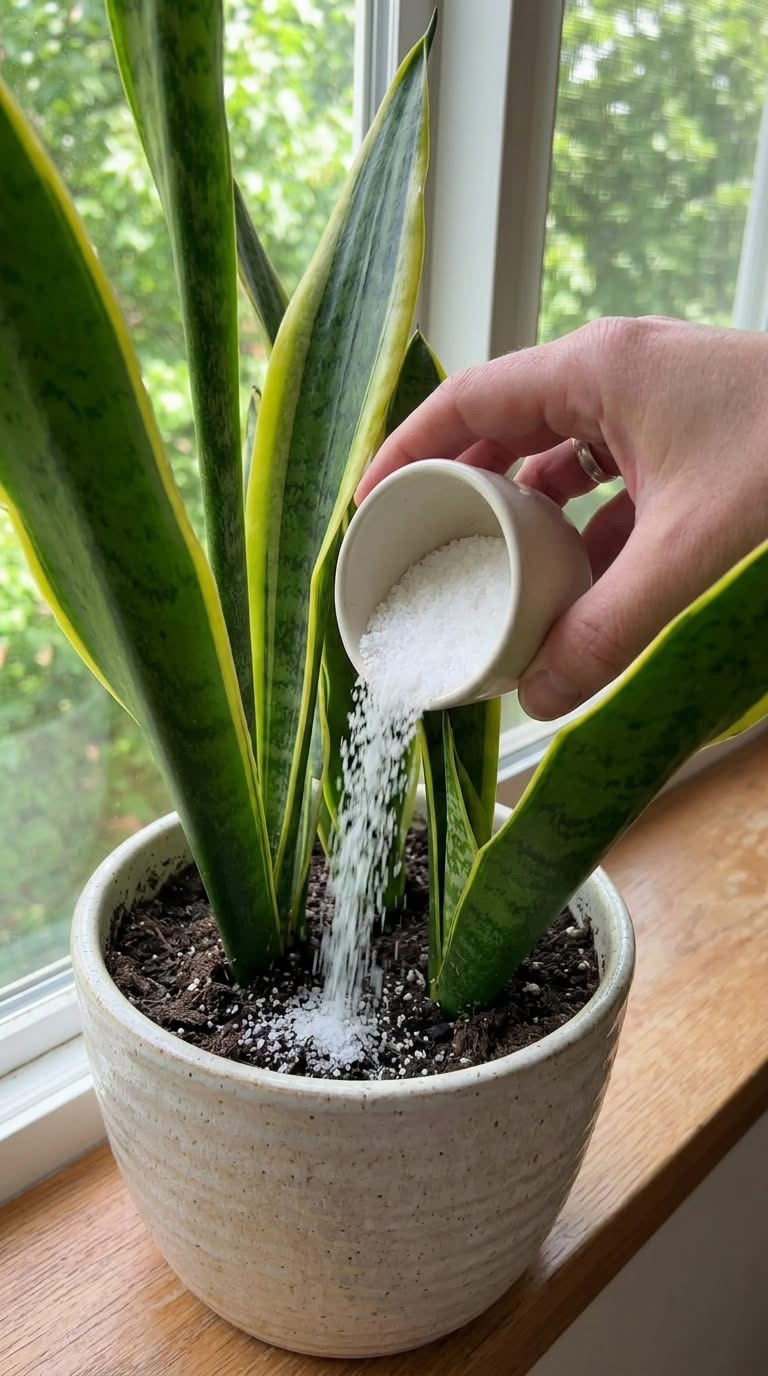
Snake plants are loved for their tall, sculptural leaves, easy-care nature, and clean modern look. A mature plant can slowly form small new shoots at the base, often called pups or offshoots. These new plants grow from underground rhizomes and make the original pot look fuller, thicker, and more valuable over time.
Many people see a white powder being added to the soil and assume it is the secret behind lots of new snake plant babies. The real answer is more balanced. A snake plant does not produce offshoots because of one magic powder. It produces them when the roots are healthy, the potting mix drains well, the plant receives enough light, and feeding is gentle instead of excessive.
The hidden trick is to create the right environment for the underground rhizomes. When the plant feels stable and healthy, it has a better chance of producing new growth from the base.
Understanding How Snake Plant Offshoots Form
Snake plant pups do not grow from the leaves. They begin beneath the soil from thick horizontal rhizomes connected to the main plant. A mature snake plant may send out a rhizome under the soil, and a small new cluster of leaves eventually appears beside the original plant.
This process takes time. Some snake plants produce pups more readily than others, and a young plant may need time to establish a strong root system before it begins making offshoots. Variegated types with yellow leaf edges can also grow at a different pace from solid-green varieties.
The best thing you can do is avoid stressing the plant. Overwatering, poor drainage, weak light, or heavy fertilizer can slow growth rather than encourage it. Healthy roots always come first.
The Truth About the White Powder
If you see a white powder or tiny white granules on snake plant soil, it should not be assumed that every white kitchen powder is safe. Salt, sugar, baking soda, flour, laundry products, and unknown powders can damage the potting mix or leave unwanted residue around the roots.
For safe plant care, the only suitable “white powder” should be a fertilizer product made specifically for houseplants and used exactly according to its label. A balanced slow-release fertilizer can provide gentle nutrition during the active growing season, but it is not a guarantee of pups.
The purpose of light feeding is to support normal growth, not force the plant to make babies quickly. Too much fertilizer can cause brown leaf edges, weak roots, or mineral buildup in the soil. A calm routine gives better long-term results than adding large amounts of anything at once.
Use a Pot That Supports Healthy Growth
Snake plants can be comfortable in a slightly snug pot, and a mature plant may eventually form a fuller clump when its roots have filled much of the container. However, there is an important difference between being comfortably established and being severely rootbound.
A plant that is extremely crowded may struggle to take up water properly or may even crack a thin pot. If roots are pushing the plant upward, growing through drainage holes, or making the pot unstable, it is time to move the plant into a container only slightly larger than the current one.
Choose a pot with drainage holes. This is one of the most important details for snake plant care. A decorative pot can look beautiful, but water must be able to escape after watering. Roots sitting in trapped water are much more likely to weaken than to produce strong new offshoots.
Give the Roots an Airy Potting Mix
Snake plants need a potting mix that drains well and does not stay wet for too long. Dense heavy soil can hold too much moisture around the roots, especially in indoor pots. When the soil remains soggy, the underground rhizomes cannot stay healthy.
A cactus or succulent potting mix is often a practical choice for snake plants. Adding perlite, pumice, or coarse grit can help create more air pockets in the soil. This allows water to move through the pot while keeping the roots in a cleaner, more balanced environment.
Well-drained soil and careful watering are essential for snake plants because root rot is often linked to overwatering. North Carolina Extension also notes that the soil should dry between waterings.
Bright Light Helps the Plant Build Energy
Snake plants are known for tolerating lower light, but tolerance is not the same as ideal growth. In a very dim corner, the plant may survive but grow slowly. More active growth usually happens when the plant receives bright, indirect light or gentle filtered sunlight.
Place the pot near a bright window where the leaves receive natural light without strong afternoon heat. A few hours of soft morning light can work well for many snake plants. Avoid placing the leaves directly against hot glass or in harsh all-day sunlight, because strong sun can scorch the foliage.
A brighter location does not create pups overnight, but it gives the plant more energy to grow leaves, roots, and rhizomes over time. This is one of the most reliable ways to support a fuller plant.
Water Less Often, but Water Properly
The most common mistake with snake plants is watering too frequently. These plants store moisture in their thick leaves and do not need constantly wet soil. Before watering, check the potting mix a few inches below the surface. If it still feels moist, wait longer.
When the soil has dried, water the plant thoroughly until a little water runs from the drainage holes. Then let excess water drain away completely. Do not leave the pot sitting in a saucer full of water.
During cooler months, snake plants often need much less water because growth slows down. A slower routine in winter helps protect the roots from moisture stress. Allowing the soil to dry is a simple but important habit for a strong, stable plant.
Feed Lightly During Active Growth
Snake plants do not need heavy feeding. During spring and summer, when the plant is actively producing new leaves, a light dose of balanced houseplant fertilizer can support normal growth. Follow the product label carefully and avoid increasing the amount just to try to create more pups.
A gentle fertilizer routine works best when the plant already has good light, drainage, and watering habits. Fertilizer cannot repair roots that are sitting in soggy soil, and it cannot replace a brighter growing location.
If you use slow-release granules, place them on or just below the soil surface only as directed on the package. Water normally afterward. Never pile fertilizer directly against the leaf base or use more than the recommended rate.
Signs Your Snake Plant May Be Ready for Offshoots
A snake plant that is mature and settled in its pot may show a few signs that it is building a stronger base. The leaves may look firm and upright, new leaves may appear from the center, and the plant may slowly become denser around the soil line.
Sometimes a small pointed shoot appears near the edge of the pot. At first, it may look like a tiny leaf emerging from the soil. Give it time and avoid moving or digging around it. The new offshoot is connected to the main plant and needs the established root system while it grows.
Do not pull a new pup away too early. Wait until it has developed several leaves and a healthy connection to its own roots before dividing it from the parent plant.
Common Mistakes That Can Slow Down Pups
Overwatering is the biggest problem for snake plants. Wet soil can weaken roots, cause yellowing leaves, and slow down the plant’s ability to make new growth. A pot without drainage makes this risk even higher.
Another mistake is using a container that is far too large. Extra soil holds moisture longer than the roots can use it, especially when the plant is small. Choose a pot that is only slightly wider than the root ball when repotting.
Too much fertilizer can also create problems. Brown leaf tips, white crust on the soil, or stressed-looking foliage can be signs that minerals have built up in the potting mix. If this happens, stop feeding, flush the soil gently with plain water, and allow it to drain fully.
Where a Full Snake Plant Looks Beautiful
A snake plant with several offshoots becomes a striking piece of living decor. Its upright leaves add height without taking up much floor space, making it useful in both small and large rooms.
It looks especially elegant in a bright living room corner beside a sofa or armchair. A tall ceramic pot can make the plant feel more refined while adding a clean vertical shape to the room.
Snake plants also work well near a home office desk, in an entryway, beside a bedroom window, or on a covered balcony with bright shade. A fuller clump can create a stronger visual impact than a single thin plant, especially when placed in a simple white, black, stone, or terracotta pot.
Final Thoughts
The best hidden trick for more snake plant offshoots is not a random powder. It is giving the plant time, bright supportive light, well-drained soil, careful watering, and gentle feeding only when needed.
When the roots stay healthy, the plant can slowly build strong underground rhizomes. Those rhizomes are what eventually create the small new pups that make your snake plant look fuller, greener, and even more beautiful in your home.