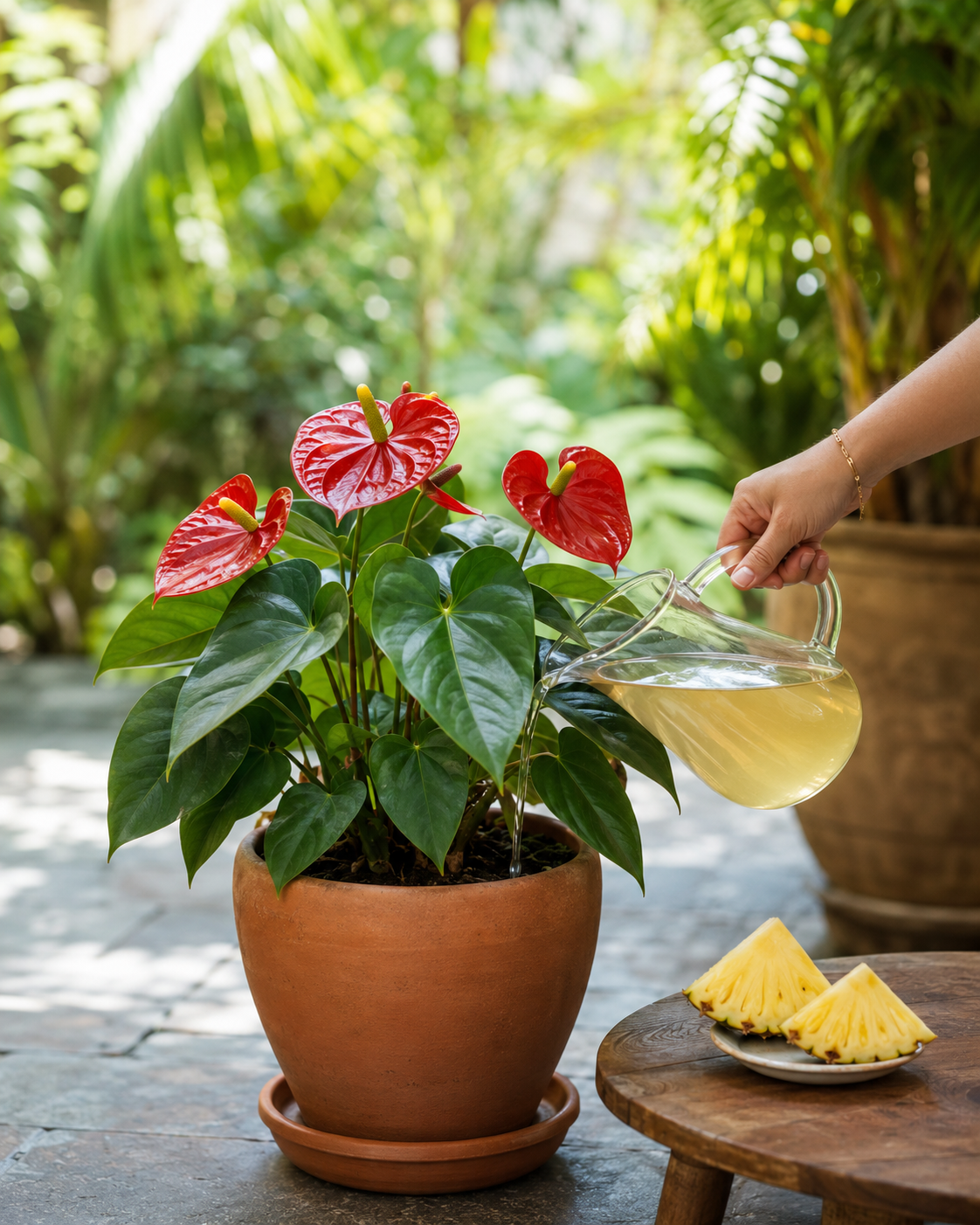
Anthuriums are among the most elegant plants for patios, balconies, and shaded garden corners. Their glossy heart-shaped leaves and colorful red, pink, or white blooms give outdoor spaces a tropical and polished look. When an anthurium is healthy, it can make a simple plant stand, outdoor table, or container display feel brighter and more refined.
Because these plants are so decorative, many gardeners look for easy home ideas to keep them looking full and vibrant. One trend that often gets attention is pineapple water. A pale golden liquid made with pineapple may look like a gentle homemade plant tonic, especially when it is poured around a flowering anthurium. However, the real secret to a beautiful outdoor anthurium is not one kitchen liquid. It is a balanced routine built around light, drainage, watering, and root health.
Why Outdoor Anthuriums Look So Special
Anthuriums have a naturally decorative appearance. Their leaves are smooth, broad, and deep green, while their blooms have a waxy, sculptural finish that stands out in a container garden. They can add color without making an outdoor space feel crowded.
Placed in the right location, anthuriums work beautifully beside garden seating, on covered patios, in bright balcony corners, or near an outdoor dining table. Their tropical look also pairs well with woven furniture, terracotta pots, light stone, and natural wood decor.
A healthy plant makes the biggest difference. When leaves are glossy and upright, and blooms remain clean and colorful, the entire display looks more carefully styled. This is why good plant care matters more than any quick-growing trend.
Why Pineapple Water Gets Attention
Pineapple water sounds appealing because it feels natural, simple, and affordable. The golden color and fruit pieces create the impression that the liquid contains something special for plants. Many people see it as a homemade alternative to store-bought fertilizer.
However, anthuriums do not need sugary fruit water sitting around their roots. Pineapple contains natural sugars and organic material, which can leave residue in the potting mix. In a warm outdoor container, this may encourage unwanted microbial activity, sour smells, or small insects if used repeatedly.
A healthy anthurium may still look good after someone uses pineapple water, but that does not always mean the pineapple water created the result. Often, the plant was already receiving enough light, drainage, moisture, and nutrition. The best approach is to focus on the conditions that truly support the plant over time.
What Actually Helps an Anthurium Grow Well
The roots are the foundation of a strong anthurium. When roots have air, steady moisture, and a pot that drains well, the plant is more likely to produce firm leaves and colorful blooms. When the soil stays heavy and wet, the roots can struggle, and the plant may begin to look dull even if it is watered often.
Anthuriums prefer a loose, airy growing mix rather than compact garden soil. A chunky indoor plant mix combined with orchid bark, perlite, or pumice allows excess water to drain while still holding enough moisture around the roots. This balance is especially important outdoors because rainfall and warm weather can change soil conditions quickly.
Bright but filtered light is also important. Outdoors, direct midday sun can scorch leaves and fade blooms. A covered patio, bright shaded balcony, or garden spot with gentle morning sun is usually a better choice. Anthuriums grow best in bright indirect light, moist but well-drained soil, and warm, humid conditions. North Carolina Extension
A Better Watering Routine for Outdoor Anthuriums
Watering should be based on the potting mix, not on a strict daily schedule. Before watering, check the top inch of the soil with your finger. If it feels dry, water the plant slowly until a small amount runs through the drainage holes. If the soil still feels moist, wait before watering again.
Outdoor anthuriums may need more frequent watering during hot weather because containers dry out faster in warm air. However, they should never sit in a saucer filled with water. Good drainage is essential because roots need oxygen as well as moisture.
Rain can also affect the routine. If the plant has been outside during several rainy days, check that the pot is draining freely and that the soil is not staying soaked. A protected location can help prevent too much water from collecting around the roots.
Should You Use Pineapple Water on an Anthurium?
Pineapple water is not a replacement for fertilizer, proper watering, or a healthy potting mix. If it is used at all, it should be treated as an occasional experiment rather than a regular routine. Avoid using concentrated pineapple juice, sweetened pineapple drinks, or liquid that contains pieces of fruit.
For the safest approach, use plain water for regular watering and choose a balanced houseplant fertilizer during the active growing season. A diluted fertilizer made for flowering houseplants gives the plant nutrients in a more predictable and controlled way.
If the potting mix starts smelling sour, attracts fungus gnats, or stays wet for too long, stop using any homemade fruit liquid. Replace it with normal watering and improve the potting mix if necessary. A clean root zone will always be more valuable than a trendy tonic.
Feeding an Outdoor Anthurium the Right Way
A balanced liquid fertilizer can support steady growth when used lightly and according to its label. Feed the plant during its active growing months, usually when temperatures are warm and the plant is producing fresh leaves or blooms. Do not overfeed, because too much fertilizer can build up in the soil and stress the roots.
It is better to feed lightly and consistently than to add strong amounts all at once. The goal is to support the plant’s normal growth, not force it to produce instant blooms. With the right light and care, anthuriums can keep a neat, colorful appearance for a long time.
How to Make an Anthurium Look Fuller and More Luxurious
Keep old or damaged leaves trimmed away with clean scissors. Removing faded blooms and yellowing leaves helps the plant look tidier and allows attention to stay on the healthy foliage. Wipe dust from leaves gently with a damp cloth so their natural shine can show.
Choose a pot that matches the space around it. A simple white, black, terracotta, or textured ceramic pot can make the plant feel more decorative. Make sure the container has drainage holes, even when using a stylish outer planter.
Grouping anthuriums with other shade-loving tropical plants can also create a fuller outdoor display. Ferns, calatheas, and certain palms can complement the anthurium’s glossy leaves while giving the patio or balcony a lush garden look.
Common Outdoor Anthurium Mistakes to Avoid
The most common mistake is placing the plant in harsh direct sun. Strong afternoon light can cause brown patches, faded blooms, and stressed leaves. Move the plant into a bright but protected place if the sun feels too intense.
Another common issue is watering too often. Anthuriums enjoy moisture, but heavy wet soil can damage their roots. Always make sure excess water can escape from the pot after watering or rain.
Using sugary kitchen liquids too frequently is also best avoided. These liquids can make plant care seem easy, but they do not solve poor drainage, weak light, or unhealthy roots. A simple, consistent care routine is much more reliable.
Final Thoughts
Pineapple water may look interesting in a plant video, but anthuriums become beautiful because of steady care, not a single homemade liquid. Give your outdoor anthurium filtered light, airy soil, a draining pot, careful watering, and gentle feeding when needed.
When the roots are healthy and the plant is placed in the right outdoor spot, the leaves can stay glossy and the blooms can remain a beautiful feature in your patio, balcony, or garden display.