Meta Description: Learn safe Phalaenopsis orchid care with bright indirect light, bark-based orchid potting mix, careful watering, light feeding, and occasional Epsom salt use. Discover how to keep moth orchids looking beautiful indoors.
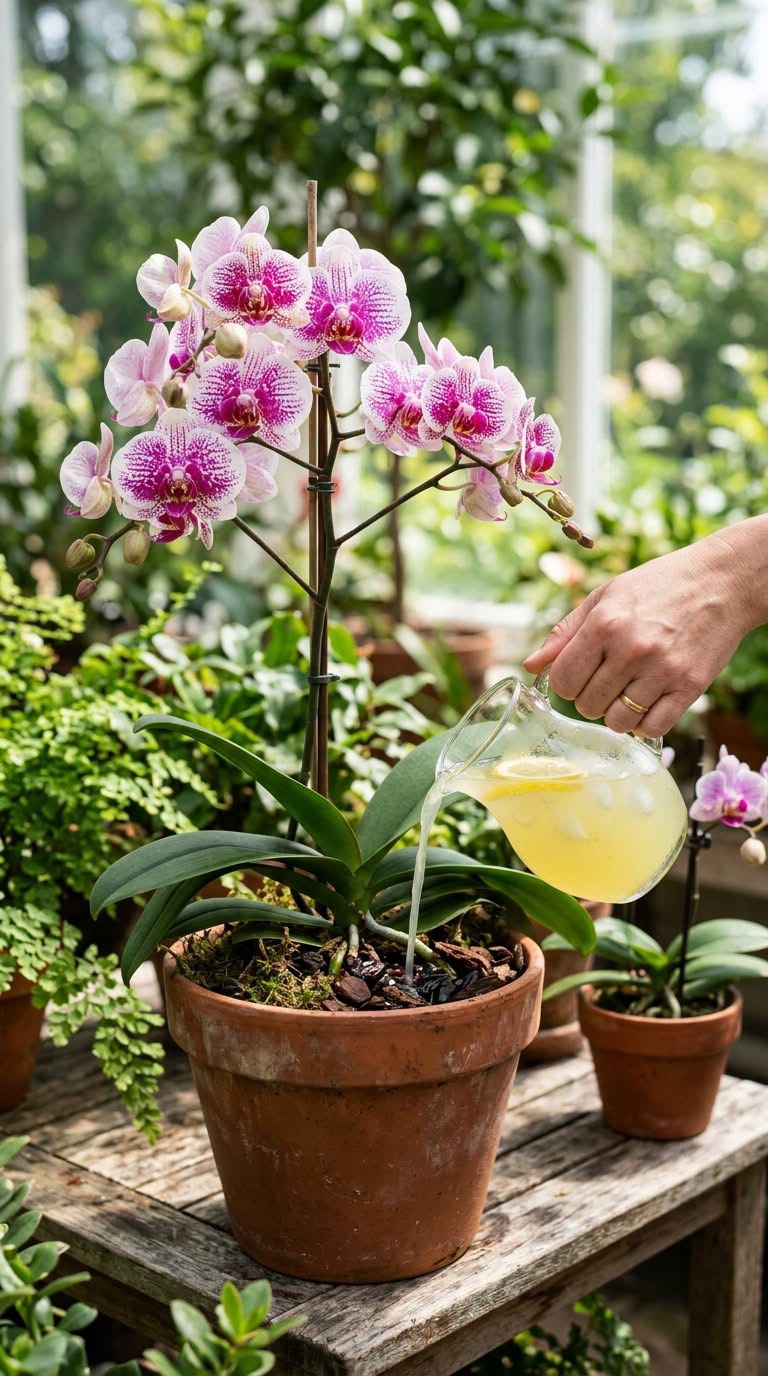
Featured Image: Use the provided pink Phalaenopsis orchid photo at the top of this article.
Phalaenopsis orchids, often called moth orchids, are among the most popular flowering houseplants for a reason. Their smooth, arching flower stems and long-lasting blooms can bring a refined, peaceful look to a bright room. The orchid in the photo has the classic Phalaenopsis form: broad, glossy leaves at the base, visible aerial roots, and a tall supported spike carrying soft pink flowers with deeper patterned centers.
Many people assume an orchid needs complicated care, but a good routine is usually simple. The most important details are bright indirect light, a breathable orchid bark mix, drainage, and a watering rhythm that keeps roots from staying wet. Some indoor gardeners also use a small amount of Epsom salt, also known as magnesium sulfate, as an occasional supplement. It should never be treated as a quick bloom trick. When used carefully, it is simply one optional part of balanced orchid care.
What Is a Phalaenopsis Orchid?
Phalaenopsis is a tropical orchid that grows naturally in warm, humid environments where its roots receive air around them. That is why the plant is usually sold in a clear or ventilated pot filled with chunky bark instead of ordinary garden soil. The roots need moisture, but they also need oxygen. Dense, heavy soil can hold too much water and make a healthy orchid harder to maintain.
The plant’s leaves store moisture and should feel firm and smooth. Healthy roots may look silvery gray when dry and greener after watering. Aerial roots that grow outside the pot are normal. They are part of the plant’s natural growth habit, not a sign that the orchid needs a larger pot right away.
Moth orchids are especially valued for their long flowering period. A well-kept plant may carry flowers for weeks, and an established orchid can flower again in a later season. The goal is not to force a fast result. The goal is to build a calm, stable routine that supports healthy leaves, roots, and future flower spikes.
Why Phalaenopsis Orchids Make Beautiful Indoor Plants
An orchid adds colour without making a room feel crowded. Its upright flower spike creates height, while the smooth leaves keep the display clean and modern. Pink, white, cream, yellow, and purple Phalaenopsis varieties work with many interior styles, from simple wood furniture to bright kitchen shelves and more formal entryways.
Because the flowers are naturally decorative, a single orchid can become the focus of a small plant corner. A plain ceramic outer pot can hide the clear growing pot while still allowing you to remove it easily for watering. Choose an outer pot that is slightly wider, never one that traps drainage water around the roots.
Why Magnesium Matters in Orchid Care
Magnesium is one of the nutrients plants use as part of normal growth. Epsom salt is magnesium sulfate, a white crystalline product that dissolves in water. It is sometimes discussed in orchid care because it supplies magnesium, and some orchid growers use it occasionally when their normal fertilizer program does not already provide enough of that nutrient.
However, Epsom salt is not a complete orchid fertilizer. It does not replace nitrogen, phosphorus, potassium, light, proper watering, or fresh bark media. It also cannot correct root damage caused by overwatering. A plant with dark, soft roots or a pot that smells sour needs better drainage and a root check first—not extra powder.
Before adding any supplement, look at your usual orchid fertilizer label. Some products already include magnesium and other micronutrients. If yours does, adding another source may be unnecessary. If you use a water-soluble orchid fertilizer that does not contain magnesium, a carefully diluted Epsom salt solution can be considered as an occasional supplement rather than a weekly habit.
How to Use a Small Amount of Epsom Salt Safely
Use plain, unscented Epsom salt labeled as magnesium sulfate. Do not use bath salts, scented crystals, unknown white powders, cleaning products, or kitchen mixtures. These can contain ingredients that do not belong in orchid bark or near sensitive roots.
For an orchid that is actively growing and otherwise healthy, dissolve a small amount of Epsom salt completely in water before applying it. Never scatter dry crystals across the bark. A dissolved solution reaches the root zone more evenly and avoids concentrated pockets against individual roots. Use it only occasionally, and keep it separate from a regular fertilizer application unless your fertilizer directions or an experienced local orchid grower advises otherwise.
Water the orchid first if the bark is very dry. Then apply the diluted solution slowly around the bark, keeping it away from the crown—the point where the leaves join. Let the pot drain completely.
Do not use Epsom salt when the orchid is newly repotted, visibly stressed, sitting in soggy bark, or showing signs of root decline. Skip it if white mineral crust is building up on the pot, bark, or roots. Plain water and good drainage are more helpful than additional salts in these situations.
The Best Watering Routine for Moth Orchids
Orchid watering is more about observation than a strict calendar. In a clear pot, look at the roots and bark. When the roots appear silvery and the bark is nearly dry, it is usually time to water. Green roots and damp bark usually mean the plant can wait.
Take the inner pot to a sink and water it thoroughly with room-temperature water. Allow water to flow through the bark and out of the drainage holes. After a few minutes, empty all water from the outer pot or saucer. This method helps refresh the bark while keeping the roots from standing in water.
Avoid pouring water into the crown between the leaves. If water collects there, blot it gently with a tissue. Leaving moisture in that area for long periods can create problems, especially in a cool room with limited air movement.
Light, Temperature, and Flowering Conditions
Bright indirect light is the best starting point for Phalaenopsis orchids. An east-facing window is often ideal because it provides gentle morning light. A spot near a brighter south- or west-facing window can also work when the plant is protected by a sheer curtain or placed a little back from the glass.
Very strong direct sun can leave leaves pale, warm, or marked, while very low light can slow growth and make future flowering less likely. The right place feels bright to you without putting the plant in a harsh beam of afternoon sun.
Stable temperatures are important, especially when the orchid has buds or open flowers. Keep it away from heaters, air-conditioning vents, cold drafts, and fruit bowls that release ripening gases. Sudden environmental changes can make buds less stable. A consistent room with gentle air movement is usually better than moving the plant from place to place.
After the flowers fade, do not assume the orchid is finished. Continue caring for the leaves and roots. With adequate light and ordinary seasonal changes, a healthy Phalaenopsis may begin another spike in time. Patience is part of good orchid care.
Choosing the Right Orchid Potting Mix and Pot
Phalaenopsis orchids need an orchid-specific potting medium, not regular potting soil. Chunky bark mixes are popular because they allow water to drain and air to circulate around the roots. Some mixes also include charcoal, perlite, or a small amount of sphagnum moss to balance moisture retention.
Repotting is useful when bark begins to break down, stays wet too long, or has an unpleasant smell. It is also a good time to examine the roots. Healthy roots are generally firm; remove only roots that are clearly dead, hollow, or mushy using clean scissors. Do not cut firm aerial roots simply because they are growing outside the pot.
Choose a pot with plenty of drainage. Clear orchid pots are helpful because they let you watch root colour and moisture level. If you prefer a decorative container, use it as an outer cover and remove the inner pot for watering. This protects the elegant look of the display without sacrificing practical root care.
Additional Ways to Support a Healthy Orchid
Regular orchid fertilizer is often more useful than relying on one mineral supplement. Select a fertilizer labeled for orchids or indoor flowering plants and use it at the rate shown on the product label. Light, consistent feeding during active growth can support normal leaf and root development. Avoid overfeeding, because fertilizer salts can build up in bark-based media.
Gentle cleaning also helps the plant look its best. Wipe dusty leaves with a soft damp cloth so they can receive light effectively. Check the undersides of leaves and the joints around the flower spike for pests. If you see a concern, identify it before using any treatment and choose only a product labeled for indoor ornamental plants.
Support a tall flower spike with a thin stake and loose orchid clip if needed. The stake should be placed carefully in the bark, avoiding major roots. This simple detail keeps the flowering display upright and makes the plant look neat without forcing the stem into an unnatural position.
Beautiful Places to Display a Phalaenopsis Orchid
An east-facing windowsill is one of the best places for a moth orchid because it provides both useful light and a calm view of the flowers. If the sill is narrow or cold in winter, place the orchid on a small table or plant stand nearby instead of pressing it against the glass.
A bright living-room side table can make the orchid feel like a natural part of the room. A kitchen counter can also work if it receives filtered daylight and stays away from hot steam, stove heat, and cold exterior drafts.
For a welcoming entryway, place the orchid on a console table that receives daylight from a nearby window. A bedroom dresser can be another elegant option if the room is bright during the day. Keep the plant away from radiators, fans, and frequently opened doors. The best display location is one that is both beautiful and stable.
Common Orchid Care Mistakes to Avoid
The most common mistake is overwatering. Orchid roots need moisture, but they also need air. Constantly wet bark can lead to root problems, limp leaves, and poor growth. Letting the medium approach dryness before watering is safer than keeping it soaked.
Another mistake is treating Epsom salt as a cure-all. Magnesium sulfate can be an occasional supplement, but it is not a substitute for a complete orchid fertilizer and cannot make up for weak light, damaged roots, or compacted media.
Avoid placing the orchid in harsh direct sun or in a dark corner. Light affects both the look of the leaves and the possibility of future flowering. Also avoid moving an orchid often while it has buds or open blooms. A stable location reduces unnecessary stress.
Finally, do not repot simply because you see aerial roots. These roots are normal. Repot only when the bark has aged, drainage has declined, or the plant has clearly outgrown the pot.
Final Thoughts
The beauty of a Phalaenopsis orchid comes from a balanced routine, not a single secret ingredient. Bright indirect light, a breathable bark mix, careful watering, gentle feeding, and stable indoor conditions give the plant what it needs to grow naturally. A small amount of dissolved Epsom salt may be used occasionally when it fits your fertilizer routine, but it should stay a minor part of overall orchid care. With patient, consistent care, a moth orchid can remain a graceful focal point in your home and return with more flowers in a future season.
Safety Note
Use only plain Epsom salt labeled as magnesium sulfate and only in a fully dissolved, lightly diluted solution. Never add unknown white powders, scented bath products, or dry crystals directly to the bark. Keep water and products out of the orchid crown, and allow the pot to drain fully after every watering. Pause all supplements if the orchid has soft or dark roots, soggy media, a sour smell, or visible mineral buildup. Keep plant-care products away from children and pets, and always follow the label directions for orchid fertilizers and other products.