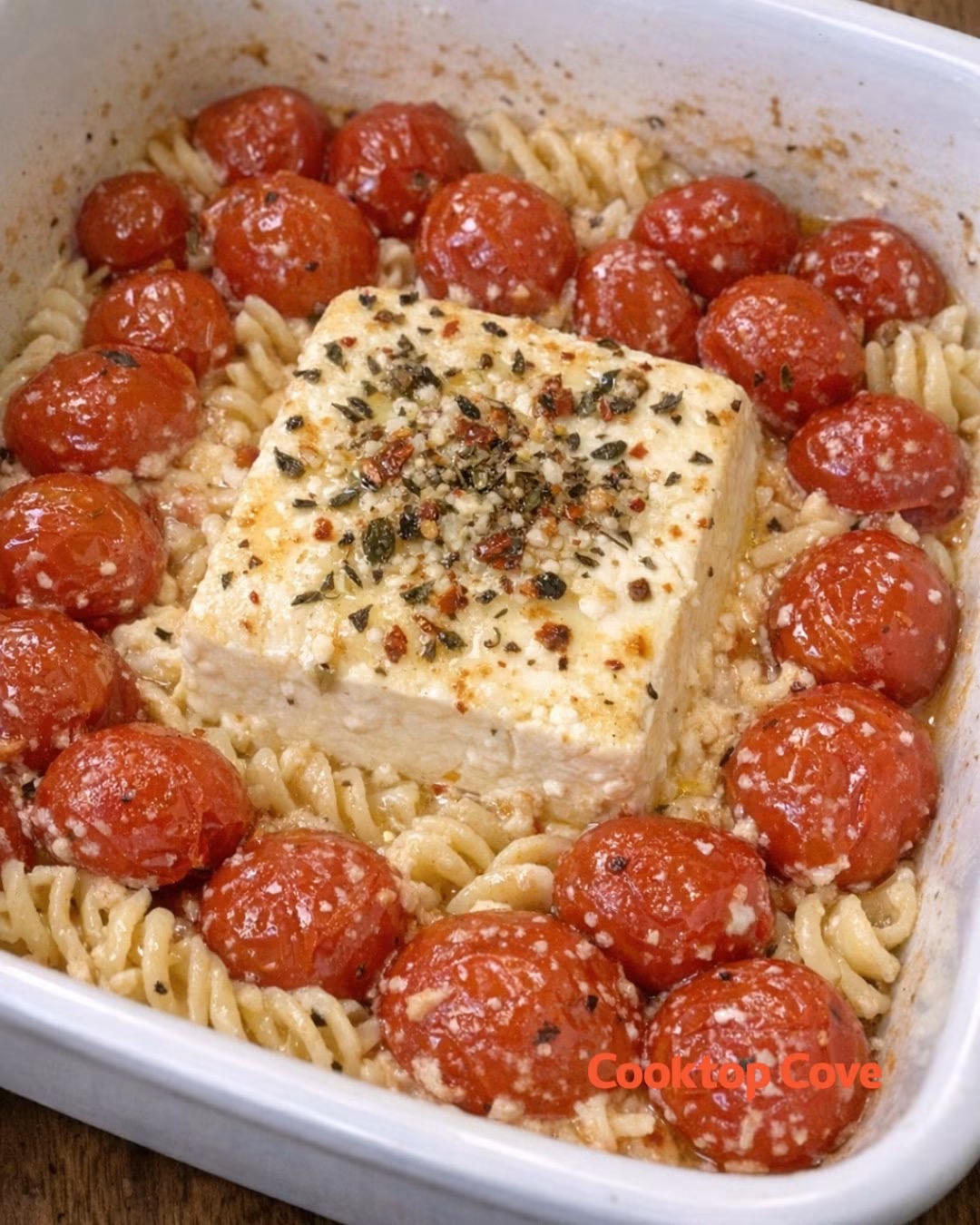
A block of feta roasted in olive oil surrounded by cherry tomatoes until both go soft and blistered, then smashed together into a sauce and tossed through pasta. No cream, no roux, and the sauce comes from two ingredients breaking down in the oven.
The technique that matters is choosing block feta packed in brine rather than pre-crumbled. Pre-crumbled feta is dusted with a starch coating to stop it clumping in the bag, and that coating stops it melting into a sauce. It roasts into dry, separate crumbles instead of the creamy mass this dish depends on.
Ten minutes of prep, thirty in the oven, and it tosses together in the dish it baked in.
Why You Will Love This Recipe
The sauce makes itself. Feta and tomatoes roasted in olive oil become a sauce with one stir. No pan, no roux, no reduction.
It uses one dish. Bake, smash, toss the pasta in, done. One thing to wash.
It works with pantry tomatoes. Cherry or grape tomatoes hold up through the roast far better than larger, wetter varieties.
It is genuinely fast for how good it tastes. Thirty minutes of oven time with almost no hands-on work.
It scales without effort. Double the block of feta and the tomatoes for a bigger dish, same method.
Recipe Overview
Prep time: 10 minutes
Cook time: 30 minutes
Total time: 40 minutes
Yield: 4 servings
Difficulty: Easy
Best for: Weeknight dinners, easy entertaining, using up cherry tomatoes
Ingredients
For the bake
• 2 pints cherry or grape tomatoes
• 1 block feta cheese, about 8 ounces, packed in brine
• ⅓ cup olive oil
• 4 cloves garlic, whole, peeled
• 1 teaspoon dried oregano
• ½ teaspoon red pepper flakes
• ½ teaspoon black pepper
• ¼ teaspoon salt
For the pasta
• 12 ounces short pasta, such as fusilli or penne
• 1 tablespoon salt, for the pasta water
• 2 tablespoons chopped fresh basil
• Zest of 1 lemon
• Extra olive oil, to finish
Choosing the Right Feta
The block itself makes or breaks this dish more than any other single ingredient.
Block feta in brine. The essential choice. It holds its shape through the roast, then breaks down smoothly when stirred, giving the creamy texture the dish depends on.
Pre-crumbled feta. Coated in starch to stop clumping, which also stops it melting. It roasts dry and grainy instead of becoming a sauce.
Greek feta made from sheep’s or sheep-and-goat’s milk. The most traditional and the creamiest option, with a tangier flavour than cow’s milk versions.
Bulgarian feta. Softer and tangier still, and it breaks down even more readily in the oven.
French or Danish-style feta. Milder and firmer. It works but gives a less creamy result and a flatter flavour.
Buy the block a size larger than you think you need. Feta shrinks and firms slightly as it loses moisture in the oven.
Why Roasting Together Creates a Sauce From Nothing
Cherry tomatoes are largely water held inside a tight skin. Thirty minutes at high heat blisters that skin until it splits, and the water inside cooks off while the natural sugars concentrate and caramelise. What remains is a small amount of intensely flavoured tomato pulp and juice sitting in the oil.
Feta behaves differently but complementarily. It has a moderate fat content and a crumbly protein structure, and heat softens both without letting it melt smooth the way a cheese like mozzarella does. What roasting achieves is not liquefying the feta but softening it to the point that a fork mashes it easily, at which point it can combine with liquid rather than resisting it.
The oil is the medium that ties the two together. It carries the flavour of the garlic cloves roasting alongside, it keeps the feta from drying out and turning tough, and once the tomatoes have released their juice into it, mashing the softened feta into that oil and juice creates an emulsified, creamy sauce with no cream in it at all. Reserved pasta water at the end loosens it to properly coat every piece of pasta rather than sitting in a puddle at the bottom of the bowl.
How to Make Baked Feta Pasta
Step 1: Heat the oven
Preheat to 400°F.
Step 2: Arrange the dish
Scatter the cherry tomatoes and whole garlic cloves around the edges of a 9×13 or similar baking dish, and set the block of feta in the centre.
Step 3: Oil and season everything
Drizzle the olive oil over the tomatoes and feta, then scatter the oregano, red pepper flakes, black pepper, and salt evenly across the dish.
Get oil onto the tomatoes as well as the feta. Dry tomatoes scorch rather than blister.
Step 4: Roast
Bake for 28 to 30 minutes, until the tomatoes have burst and are collapsing and the feta is soft and lightly golden on top.
The feta should give easily when pressed with a spoon. If it still feels firm, give it another five minutes.
Step 5: Boil the pasta
While the dish roasts, cook the pasta in well-salted water until just al dente. Reserve a cup of the pasta water before draining.
Time this so the pasta finishes around when the bake does. Neither should sit and cool.
Step 6: Mash the garlic and feta
As soon as the dish comes out, mash the roasted garlic cloves into the feta with a fork, then break the feta itself down into the oil and tomato juice until mostly smooth.
Work while it is hot. The mixture stiffens as it cools and becomes harder to combine.
Step 7: Combine everything
Stir the burst tomatoes through the sauce, then add the drained pasta directly to the dish and toss until every piece is coated.
Step 8: Loosen with pasta water
Add reserved pasta water a splash at a time, tossing between additions, until the sauce clings to the pasta rather than pooling.
Start with a quarter cup. Most batches need less than people expect.
Step 9: Finish and serve
Stir through the basil and lemon zest, drizzle with a little more olive oil, and serve immediately.
Tips for the Best Baked Feta Pasta
Buy the block, always. Pre-crumbled feta is the single most common reason this dish fails to come together.
Do not skip the reserved pasta water. Its starch is what lets the sauce grip the pasta instead of sitting separately in the bowl.
Mash while hot. Cooled feta seizes and becomes difficult to break down smoothly.
Use a wide, shallow dish. More surface area means more blistering on the tomatoes and better roasting overall than a deep, narrow one.
Add fresh herbs at the end, not before baking. Dried oregano roasts well; fresh basil turns bitter and black under thirty minutes of heat.
Easy Variations
• Add a can of drained white beans for a heartier, one-dish meal
• Stir in a couple of handfuls of baby spinach at the end so it wilts in the residual heat
• Use sun-dried tomatoes alongside the fresh ones for a deeper flavour
• Swap the red pepper flakes for a chopped fresh chilli
• Add lemon juice as well as zest for a sharper finish
• Top with toasted pine nuts for crunch
What to Serve With It
Crusty bread for mopping the dish clean is close to essential. A simple green salad with a sharp vinaigrette rounds it out.
Grilled chicken or shrimp on top turns it into a more substantial dinner. A glass of something crisp and acidic alongside suits the tomato and feta well.
Make-Ahead and Storage
Make ahead. The dish can be assembled unbaked, covered, and refrigerated up to a day ahead. Bring to room temperature before roasting.
Fridge. Store tossed leftovers in an airtight container for up to 3 days.
Freezer. Not recommended. The sauce separates on thawing and the pasta softens too much.
Reheating. A splash of water or olive oil stirred in, then warmed gently in a skillet over low heat, or 30 seconds in the microwave. Reheating brings the sauce back together with a stir.
Frequently Asked Questions
Can I use pre-crumbled feta if that is what I have?
It will still taste good but it will not create a smooth sauce. Expect a chunkier, less creamy result.
Why did my sauce turn out greasy instead of creamy?
Usually not enough mashing, or skipping the pasta water. Both are needed to emulsify the oil into the sauce.
Can I use a different cheese?
Goat cheese works using the same method and gives a tangier, even creamier result. Firm cheeses like mozzarella will not.
What if my tomatoes have not burst after 30 minutes?
Give them another five to ten minutes. Smaller or firmer-skinned tomatoes sometimes need longer.
Can I make this with gluten-free pasta?
Yes, without any change to the method. Watch the boil time, since gluten-free pasta can go from al dente to mushy quickly.
Is this dish very spicy?
Mild as written. Reduce the red pepper flakes to a pinch if you want it milder, or add more for real heat.
Nutrition Information
• Calories: 465 per serving
• Protein: 15g
• Fat: 24g
• Carbohydrates: 47g
• Fiber: 3g
• Sodium: 620mg
Nutrition is estimated and will vary with portion size and brands used.
Final Thoughts