Frequently Asked Questions
Can I use a leaner cut like pork loin?
Yes, but you must be careful not to overcook it. Pork loin is much leaner and will dry out if cooked to the high temperatures needed to break down a shoulder. Cook it to an internal temperature of 140–145°F, then remove it from the pot and let it rest. The cooking time will be significantly shorter (about 1–1½ hours in the oven). The gravy will still be delicious. Pork tenderloin is not recommended; it’s too small and lean for this method.
How do I prevent the gravy from being lumpy?
The key is to sprinkle the flour over the buttery onions and cook it for a minute before adding the liquid, and then to add the broth gradually while whisking constantly. A whisk is your best friend here. If lumps do form, you can strain the gravy through a fine-mesh sieve before serving, or use an immersion blender to smooth it out. The long cooking time will also help dissolve any small lumps as the onions break down.
What if I don’t have a Dutch oven?
You can sear the pork in a large skillet and then transfer everything to a deep baking dish or a roasting pan. Cover it tightly with aluminum foil and bake as directed. A heavy, oven-safe pot with a lid is ideal because it retains heat and moisture well, but a foil-covered pan will work. You can also use a slow cooker or Instant Pot as described in the variations. The key is a tight seal to keep the steam in.
Can I make this gluten-free?
Yes, use a 1:1 gluten-free flour blend in place of the all-purpose flour for the roux. Alternatively, omit the flour entirely and thicken the gravy at the end with a cornstarch slurry (2 tablespoons cornstarch mixed with 2 tablespoons cold water, whisked in and simmered until thickened). Ensure your beef broth is gluten-free. All other ingredients are naturally gluten-free.
My gravy is too thin—how can I thicken it?
If the gravy hasn’t reduced enough after braising, simmer it on the stovetop without the lid for 5–10 minutes to evaporate some liquid. You can also make a quick slurry: mix 1 tablespoon of cornstarch with 1 tablespoon of cold water, whisk it into the simmering gravy, and cook for 1–2 minutes until thickened. Avoid adding more flour directly, as it will clump. The gravy will also thicken as it cools slightly, so don’t over-thicken it while it’s still boiling hot.
Amish Onion Gravy Pork Roast
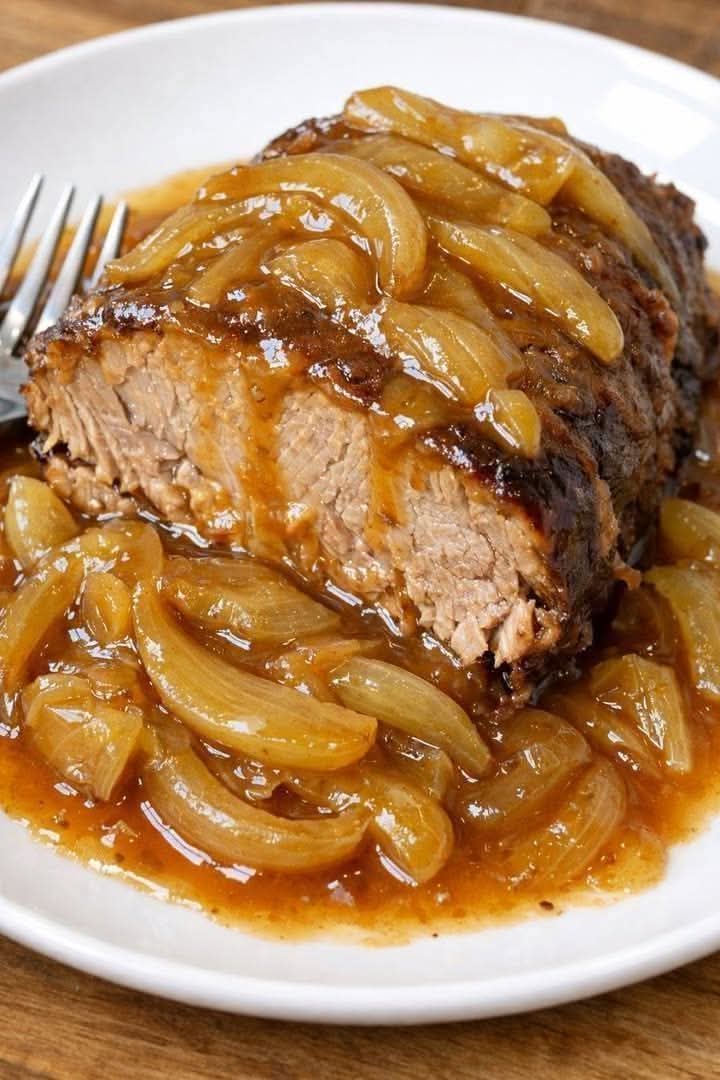
A fork-tender pork shoulder braised in a rich, savory onion gravy made from scratch with butter, caramelized onions, and beef broth. Simple, honest ingredients come together in this comforting farmhouse classic.
Prep Time:
25 minutes
Cook Time:
3–4 hours
Total Time:
3 hours 25 minutes–4 hours 25 minutes
Servings:
6–8
Ingredients
- 3–4 lb boneless pork shoulder (Boston butt), patted dry
- Salt and freshly ground black pepper
- 4 tablespoons unsalted butter
- 3 large yellow onions, thinly sliced
- 3 garlic cloves, minced
- 3 tablespoons all-purpose flour
- 2 cups beef broth (low-sodium recommended)
- 1 bay leaf
- Optional: 1 sprig fresh thyme or ½ teaspoon dried thyme
- Optional: 1 teaspoon Worcestershire sauce
Instructions
- Preheat oven to 325°F (160°C). Season the pork roast generously with salt and pepper on all sides. Let it sit at room temperature for 20–30 minutes.
- Sear the pork: In a large Dutch oven over medium-high heat, melt the butter. Add the pork roast and sear until deeply browned on all sides, about 3–4 minutes per side. Transfer the pork to a plate.
- Cook the onions: Reduce heat to medium. Add the sliced onions to the pot, scraping up any browned bits. Cook, stirring occasionally, for 10–15 minutes until soft and golden. Add the garlic and cook 1 minute more.
- Make the roux: Sprinkle the flour over the onions. Stir continuously and cook for 1–2 minutes. Gradually whisk in the beef broth, stirring until smooth. Add the bay leaf and optional thyme or Worcestershire sauce. Bring to a gentle simmer.
- Braise: Return the pork to the pot, spooning some onions and gravy over the top. Cover with the lid and place in the oven. Braise for 3–4 hours, until the pork is fork-tender and reaches an internal temperature of about 200°F (93°C).
- Finish the gravy: Remove the roast from the pot and transfer to a cutting board. Discard the bay leaf and any herb stems. If the gravy is too thin, simmer it on the stovetop over medium heat to reduce; if too thick, add a splash of broth. Taste and adjust seasoning.
- Shred or slice the pork and serve it with the onion gravy ladled generously over the top. Serve with mashed potatoes, noodles, or crusty bread.
Notes
- For the most tender results, cook the pork to an internal temperature of 195–205°F. This ensures the collagen has broken down, making the meat shreddable.
- Slow Cooker: After searing and building the gravy, transfer to a slow cooker. Cook on LOW for 8–10 hours or HIGH for 5–6 hours.
- Instant Pot: Use Sauté function for searing and building gravy. Pressure cook on HIGH for 60–70 minutes, natural release for 15 minutes.
- Leftovers keep in the refrigerator for up to 4 days and freeze well for up to 3 months.
- For a gluten-free version, use a gluten-free flour blend or thicken with a cornstarch slurry at the end (2 tablespoons cornstarch + 2 tablespoons cold water).
This Amish Onion Gravy Pork Roast is a testament to the beauty of simple, slow-cooked food. With its fall-apart tender meat and rich, savory onion gravy, it’s the kind of meal that brings everyone to the table and keeps them there, savoring every last bite. Make it for your next family dinner, and watch it become a cherished tradition in your home.