Meet the Snake Plant
The Snake Plant, also known as Dracaena trifasciata or Sansevieria, is a popular indoor plant with tall, upright leaves marked in shades of green, silver, and yellow. Its clean vertical shape makes it a favorite for modern homes, offices, bedrooms, and entryways.
This plant is valued because it is easy to maintain and adapts to many indoor conditions. It stores water inside its thick leaves and roots, so it does not need frequent watering. However, simple care habits can help it look fuller, cleaner, and more attractive over time.
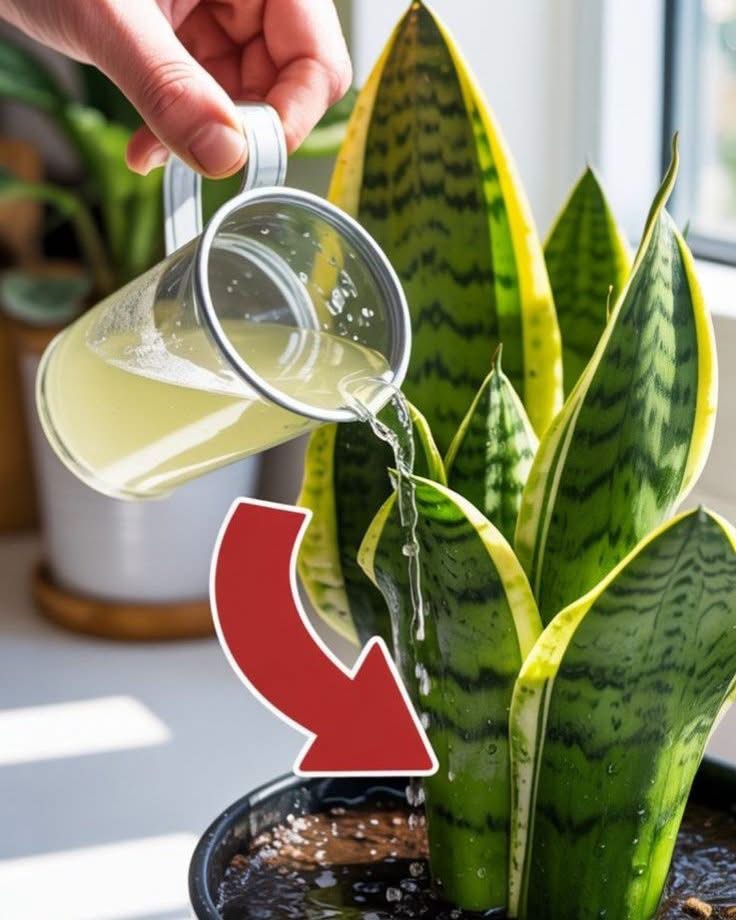
The light yellow liquid shown in the image can be described as a diluted liquid houseplant fertilizer, also called a gentle root tonic. It is not a miracle treatment. It simply gives the plant light nutrients during its active growing period when used correctly.
Why Snake Plants Need Gentle Care
Snake Plants are strong, but they can still suffer when their roots stay wet for too long, when they sit in dark spaces for months, or when fertilizer is used too heavily. The most common problem is overwatering.
A healthy Snake Plant does not need daily attention. It prefers a simple routine: bright or medium indirect light, a pot with drainage, soil that dries fully between waterings, and occasional gentle feeding.
When these conditions are right, the plant is more likely to keep its leaves firm, upright, and richly colored.
What Is the Light Yellow Root Tonic?
For this article, the light yellow liquid is a diluted balanced liquid fertilizer for indoor plants. It is made by mixing a water-soluble houseplant fertilizer with clean water according to the amount written on the product label.
Many liquid fertilizers become pale yellow after they are mixed with water. This is normal. The important point is to use a weak, label-directed solution rather than a strong mixture.
Choose a fertilizer labeled for indoor foliage plants, green plants, or general houseplants. A balanced formula can support routine growth, but it should only be used when the Snake Plant is actively growing and the soil is not already dry or stressed.
How to Use the Liquid Fertilizer Safely
Start by checking the soil. If the potting mix is completely dry, water the plant lightly with plain water first. Fertilizer should not be applied to extremely dry roots.
Prepare the liquid fertilizer exactly as directed on the product label. Do not guess the amount and do not add extra fertilizer because the plant looks weak. More fertilizer does not mean faster growth.
Pour the diluted liquid slowly onto the soil around the outer edge of the pot. Keep the liquid away from the center of the leaf cluster. The water should reach the roots, not collect between the upright leaves.
Apply only enough solution to lightly moisten the soil. Make sure excess water can drain from the bottom of the container. Never leave the pot standing in water afterward.
A light feeding during the spring and summer growing season is usually enough. During cooler months or when the plant is in a dim room, reduce or pause fertilizing because growth naturally slows down.
Do Not Overuse Fertilizer
Too much fertilizer can cause more problems than too little. Excess minerals may build up in the soil and lead to yellow edges, brown tips, or a white crust around the pot rim.
If you see a mineral crust on top of the soil, stop fertilizing for a while. Water the plant slowly with plain water and allow it to drain well. This can help move some accumulated salts through the drainage hole.
The best routine is gentle and consistent. A Snake Plant grows at its own pace, and healthy growth is often slow but steady.
Let the Soil Dry Before Watering Again
Snake Plants store moisture in their leaves, which means they tolerate missed watering better than constantly wet soil. Before watering again, check that the potting mix has dried out.
Insert a finger a few centimeters into the soil. If it still feels moist, wait. If it feels dry and the pot is lighter when you lift it, it may be time to water.
When you water, do it thoroughly but slowly. Allow a little water to pass through the drainage hole, then empty the saucer. This helps the roots receive moisture without sitting in soggy soil.
A small pot near a sunny window may dry faster than a large pot in a darker room. Always check the soil instead of watering by a strict calendar.
Choose Bright, Indirect Light
A Snake Plant can tolerate low light, but it usually looks stronger and more colorful in medium to bright indirect light. Place it near a window where it receives soft daylight without intense afternoon sun hitting the leaves directly.
A spot near an east-facing window is often a lovely choice. A bright north-facing window can also work well. If your room has a south- or west-facing window, position the plant a little away from the glass or use a sheer curtain to soften strong sunlight.
Direct hot sun can scorch the leaves, while very dark corners may slow growth and make the leaf pattern appear less vivid. The right light helps the plant keep its striking green-and-yellow contrast.
Use a Fast-Draining Potting Mix
A Snake Plant needs a soil mix that does not stay wet for long. A cactus or succulent potting mix is often a practical option because it drains more quickly than dense garden soil.
You can also use regular indoor potting soil mixed with perlite, coarse sand, or small orchid bark. These materials create more air spaces around the roots and help excess water move through the pot.
Avoid using heavy outdoor soil in indoor containers. It can compact over time and hold too much moisture around the roots.
Always Choose a Pot With Drainage
A stylish planter can make a Snake Plant look beautiful, but drainage is essential. Choose a pot with at least one drainage hole at the bottom.
Terracotta pots are especially useful because they allow some moisture to evaporate through the sides. A heavy ceramic pot can also be a good choice for tall Snake Plants because it helps keep the upright leaves stable.
If you use a decorative container without holes, keep the plant inside a smaller nursery pot with drainage. Remove the inner pot for watering, allow it to drain completely, then return it to the decorative planter.
Keep Water Out of the Leaf Center
The leaves of a Snake Plant grow upward from the center of the pot. When watering or applying the light yellow root tonic, avoid pouring liquid into the middle of the leaf cluster.
Water trapped between the leaves can remain there for too long. It is safer to pour around the soil near the outside edge of the root zone.
Use a small watering can with a narrow spout, or pour slowly from a cup. This gives you better control and keeps the leaves clean and dry.
Clean the Leaves Gently
Dust can collect on the tall leaves and make the plant look dull. Every few weeks, wipe the leaves gently with a soft, damp cloth.
Support each leaf with one hand while wiping it with the other. Do not use strong cleaners, oils, or shiny sprays. Plain clean water is enough.
Clean leaves make the natural green patterns easier to see and help the plant look more polished in your home décor.
Rotate the Pot for Balanced Growth
Even though Snake Plants grow upright, they can still lean toward the brightest direction in the room. Turn the pot a quarter turn every few weeks to help the plant receive light more evenly.
This is especially helpful when the plant sits close to a window. A simple rotation routine can help the display look straighter and more balanced from every angle.
Repot Only When Necessary
Snake Plants enjoy being slightly snug in their pots. There is no need to repot them too often.
However, it may be time to move the plant when roots are growing through the drainage holes, the pot becomes unstable, or the container starts to bulge. Choose a new pot only one size larger than the current one.
Repotting is best done during active growth. Use fresh, fast-draining soil and avoid fertilizing immediately after repotting. Give the roots a little time to settle into the new mix.
How to Make Your Snake Plant Look Fuller
A Snake Plant naturally grows in upright clusters. To create a fuller look, place several rooted divisions in one wider planter. You can also keep one mature plant in a container that gives it enough room to slowly produce new shoots from the base.
Do not force a fuller look by adding too much fertilizer or water. The best way to encourage a beautiful display is to maintain healthy roots and allow the plant to grow gradually.
If your plant is tall and narrow, use a simple decorative pot cover or place it in a group with lower plants. This creates a balanced indoor arrangement without changing the plant’s natural shape.
Simple Signs Your Snake Plant Is Happy
A healthy Snake Plant usually has upright leaves that feel firm, with clear green patterns and clean yellow edges on variegated varieties.
New leaves may emerge slowly from the soil near the base. This is a positive sign that the roots are comfortable and the plant is receiving suitable light and moisture.
Small changes are normal. Older outer leaves can eventually dry or fade. Remove only leaves that are clearly damaged, yellow, or soft, using clean scissors.
Common Mistakes to Avoid
Do not water a Snake Plant every few days without checking the soil. Wet soil is the main risk for this type of plant.
Do not apply the light yellow fertilizer mixture every time you water. A gentle, occasional feeding during active growth is enough.
Do not pour water into the center of the leaves. Aim for the soil around the root area.
Do not place the plant directly beside a heating vent, air conditioner, or cold winter window. Sudden drafts can stress the leaves.
Do not put it in a completely dark hallway if you want strong color and steady growth. It can tolerate low light, but bright indirect light is more suitable for a fuller, more elegant appearance.
Best Places to Display a Snake Plant
A tall Snake Plant looks especially elegant in an entryway near soft natural light. Its upright leaves create a welcoming, structured look without taking up much floor space.
In a living room, place it beside a sofa, near a bright window, or on a low plant stand. A black, white, beige, or terracotta pot can make the green-and-yellow leaves stand out beautifully.
A Snake Plant also works well in a home office. Its vertical leaves add a calm, modern touch beside a desk or bookshelf.
For a bedroom, choose a bright corner away from cold drafts. A medium-sized Snake Plant in a simple ceramic pot can make the room feel cleaner and more finished.
It can also look attractive in a covered balcony or sheltered patio when temperatures are warm. Keep it protected from harsh afternoon sun and bring it inside if the weather becomes cold.
Final Thoughts
A Snake Plant does not need complicated routines to look impressive. Give it well-draining soil, a pot with drainage holes, bright indirect light, and enough time for the soil to dry between waterings.
The light yellow root tonic can be used as a diluted liquid houseplant fertilizer during active growth, but moderation is the key. Apply it carefully around the soil, keep it away from the center of the leaves, and always follow the label instructions.
With steady care, your Snake Plant can remain a stylish, low-maintenance feature in your home for years.
Safety Note
Use only fertilizers labeled for indoor plants and follow the package directions exactly. Do not mix unknown household liquids, cleaning products, salt, or strong powders into the soil. Keep plant-care products away from children and pets, and never leave the pot standing in excess water.