Meet the Spider Plant
The Spider Plant, scientifically known as Chlorophytum comosum, is one of the most popular indoor plants for homes, apartments, and offices. It is loved for its long, arching green-and-white leaves and the small baby plants that grow from its trailing stems. These little offshoots give the plant its familiar name and make it look especially full and decorative in a hanging basket or tall planter.
A bushy Spider Plant is not created by one “magic” product. It comes from a simple care routine: bright indirect light, careful watering, well-draining soil, gentle feeding, and enough room for healthy roots. Once those basics are in place, the plant can grow into a fuller, more attractive indoor display.
Why Spider Plants Sometimes Look Thin
A Spider Plant may look sparse when it does not receive enough indirect light, when the soil stays wet for too long, or when its roots become overcrowded. It can also grow slowly during colder or darker months, which is perfectly normal.
The goal is not to force fast growth. Instead, create steady, comfortable conditions that encourage new leaves to appear from the center of the plant. With time, these fresh leaves make the whole plant look denser, wider, and more balanced.
Give It Bright, Indirect Light
Light is one of the most important details for a bushier Spider Plant. Place it in a bright room where it receives soft, filtered daylight. A spot a short distance from an east-facing window is often ideal. A bright north-facing window can also work well, especially if the room receives plenty of natural light.
Avoid placing the leaves directly against hot glass or leaving the plant under strong afternoon sun. Intense direct sunlight can fade the leaf stripes and cause dry, brown tips. If your only bright space is near a south- or west-facing window, place the Spider Plant behind a sheer curtain or a few feet away from the window.
When the plant receives consistent indirect light, it is more likely to develop healthy new leaves and maintain its fresh green color.
Water at the Right Time
Spider Plants prefer soil that is lightly moist but never constantly wet. Before watering, check the top layer of the potting mix with your finger. If the upper inch feels dry, it is usually time to water. If it still feels damp, wait a little longer.
Water slowly until a small amount drains from the bottom of the pot. Then empty the saucer so the pot is not sitting in standing water. This keeps the roots healthier and helps prevent a heavy, soggy soil mix.
Overwatering is one of the easiest ways to slow down growth. Roots need air as well as water. If the soil remains soaked, the roots can struggle, and the leaves may lose their crisp, upright look. On the other hand, allowing the soil to become completely dry for long periods can also lead to brown tips and weak growth.
The best routine is simple: check the soil, water thoroughly when needed, and let excess water drain away.
Use a Pot With Drainage Holes
A beautiful decorative pot is great, but your Spider Plant should always have drainage. A pot with holes at the bottom gives extra water a place to escape and keeps the growing medium from becoming too compact.
If you love using a basket, ceramic cover pot, or decorative planter, keep the Spider Plant inside a nursery pot with drainage holes. You can place that nursery pot inside the decorative container and remove it when watering. This small habit can make indoor plant care much easier.
Choose a pot only slightly larger than the root ball when repotting. A container that is far too large holds extra wet soil around the roots, which can slow the plant down. A slightly snug pot is usually better for a Spider Plant than an oversized one.
Choose Light, Airy Soil
A good indoor potting mix should hold some moisture while still draining well. Standard houseplant soil mixed with a little perlite is a practical choice. Perlite helps create tiny air spaces in the mix, so water can drain more easily.
Avoid using garden soil from outside. It can become too dense in indoor pots and may not drain well. Fresh potting mix gives the roots a cleaner, lighter place to spread.
Healthy roots support healthy leaves. When the roots are comfortable, the Spider Plant can direct more energy toward new foliage, baby plants, and fuller growth.
How to Use Powder Fertilizer Safely
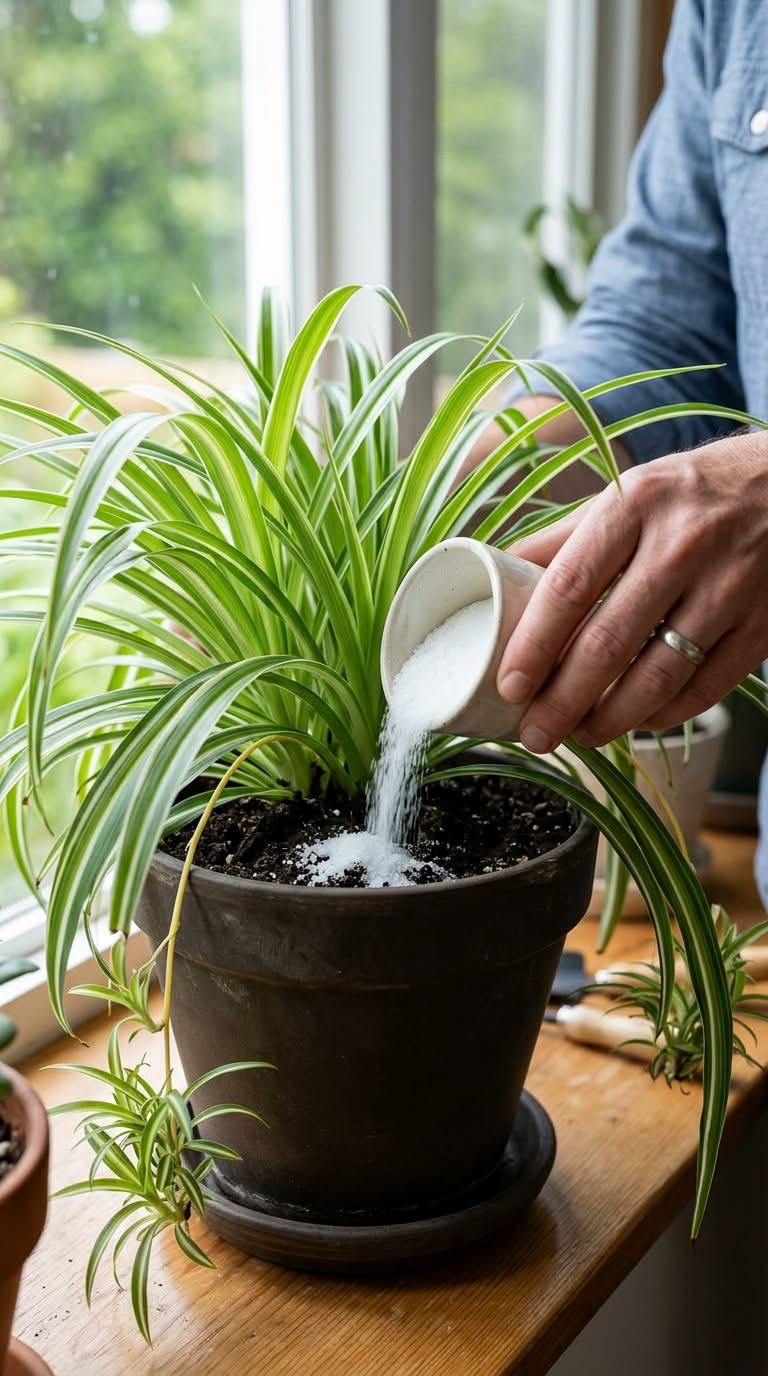
The white powder shown in many Spider Plant photos should not be treated as a mystery household ingredient. For indoor plants, use only a fertilizer that is clearly labeled for houseplants or foliage plants. The product may come as fine powder, crystals, granules, or slow-release pellets.
Read the package label carefully before using it. Different products have different strengths, and using too much fertilizer can leave salts in the soil, create brown leaf tips, and make the plant look less healthy instead of fuller.
For a powdered or water-soluble fertilizer, dissolve it in water exactly as the label directs. Apply the diluted mixture to already-moist soil, not to dry roots and not over the leaves. A gentle feeding during the active growing season is usually enough.
For slow-release granules or pellets, sprinkle only the recommended amount on the soil surface, keeping it a little away from the base of the plant. Water normally afterward. Do not add more because the plant looks thin after a few days. Growth takes time, and extra fertilizer does not produce instant leaves.
Do Not Overfeed the Plant
A Spider Plant does not need frequent heavy feeding. Too much fertilizer is a common reason for brown leaf edges and white crust on top of the soil. A light feeding during active growth is more useful than strong fertilizer added again and again.
If you notice a white mineral crust on the soil or around the pot rim, pause fertilizing. Water the plant slowly with plain water and allow it to drain well. This can help flush some built-up salts through the bottom of the pot.
A slower, balanced routine is always better than trying to push the plant into fast growth.
Trim Old or Damaged Leaves
Removing tired-looking leaves helps the Spider Plant look cleaner and directs attention to the fresh new growth. Use clean scissors to trim brown tips, following the natural shape of the leaf. If a whole leaf is yellow, dry, or damaged, cut it near the base.
Do not remove many healthy leaves at once. The leaves collect light for the plant, so they are important for its continued growth. Simply remove what is clearly dry, broken, or old.
This small grooming step can make a Spider Plant look fuller immediately because the healthy leaves become more visible.
Rotate the Pot Every Week
Indoor plants naturally lean toward their light source. If one side of your Spider Plant gets more light than the other, it can start looking uneven.
Turn the pot a quarter turn every week or two. This gives all sides a fair chance to receive light and helps the leaves grow in a more rounded, balanced shape. It is an easy tip, but it makes a big difference for the overall appearance of the plant.
A rotating routine is especially helpful for Spider Plants placed near a window or on a shelf.
Let It Become Slightly Root-Bound
Spider Plants grow thick, fleshy roots. They usually enjoy being a little snug in their pot and can even produce more baby plants when their roots are slightly crowded.
However, there is a difference between “slightly snug” and “severely overcrowded.” If roots are pushing the plant upward, growing through drainage holes, or cracking a plastic pot, it is time to repot. Move it into a container just one size larger, refresh the potting mix, and water lightly.
A healthy root system gives the plant a strong foundation for bushier top growth.
Add More Spider Plants to the Same Container
One of the easiest ways to create a very full display is to plant several small Spider Plants in one wider container. You can use rooted baby plants from the mother plant or purchase a few small plants with similar leaf colors.
Place them with a little space between each root ball, using fresh potting mix around them. Over time, the leaves will grow outward and overlap, creating the lush, bushy look many people love.
This is also a beautiful idea for a hanging basket. Several small plants can create a soft green waterfall of leaves and baby plants.
Propagate the Baby Plants
Spider Plants often produce small offshoots at the ends of long stems. These baby plants can be used to create new pots or to make the main display fuller.
Choose a baby plant that has small root bumps or early roots at its base. You can place it directly onto moist potting mix in a small pot while it is still attached to the mother plant. Once it has rooted and is growing well, cut the connecting stem.
You can also root a baby plant in water for a short time before planting it in soil. Keep the water fresh and place the cutting in bright, indirect light. Once roots develop, move it into a small pot with well-draining soil.
Keep It Away From Heat and Cold Drafts
A Spider Plant looks best in a stable indoor environment. Keep it away from heater vents, air conditioners, fireplaces, and cold winter drafts. Sudden changes in temperature can dry the tips and stress the leaves.
A comfortable room with average indoor humidity is usually enough. If your home is very dry, avoid placing the plant directly beside a heater. Grouping it near other plants can also create a softer, more humid microclimate around the leaves.
The Best Places to Display a Bushy Spider Plant
A bushy Spider Plant can make almost any room look fresher and more welcoming. Because of its graceful leaves, it works especially well in spaces where the foliage can hang or spread naturally.
A hanging basket in a bright living-room corner is one of the most attractive choices. The long leaves and baby plants can cascade downward and create a relaxed, elegant look without taking up floor space.
It also looks beautiful on a raised plant stand beside an east-facing window. The height allows the leaves to arch freely and gives the plant a more decorative presence.
In a home office, place it on a shelf near soft daylight. The green-and-white stripes can brighten a simple workspace without making it feel crowded.
A Spider Plant can also look lovely in a kitchen near a bright window, as long as it is away from hot cooking steam and direct midday sun. A small pot on a counter corner, open shelf, or windowsill can add a fresh natural detail to the room.
For bedrooms, choose a bright dresser, side table, or hanging planter near a window with filtered light. Its soft, flowing shape gives the space a calm and comfortable look.
Common Mistakes to Avoid
Do not place the Spider Plant in deep shade and expect fast, full growth. It can survive lower light, but bright indirect light supports a stronger, bushier appearance.
Do not water on a strict calendar without checking the soil first. Indoor conditions change with the season, temperature, pot size, and light level.
Do not add too much fertilizer or random kitchen powders to the soil. A labeled houseplant fertilizer used correctly is the safer choice.
Do not leave water sitting in the saucer. Good drainage matters just as much as watering.
Final Thoughts
A bushy Spider Plant is the result of patient, consistent care. Give it bright indirect light, water only when the upper soil starts to dry, use well-draining potting mix, and feed gently with a labeled houseplant fertilizer. Trim damaged leaves, rotate the pot, and use the baby plants to create a fuller arrangement.
With these simple habits, your Spider Plant can become a lush indoor feature that looks beautiful in a hanging basket, on a sunny shelf, or beside a bright window.
Safety Note
Keep fertilizers, powders, and plant-care products in their original labeled containers and use only as directed. Avoid applying unidentified white powders, strong cleaning products, salt, or food ingredients to the soil. Keep all plant products out of reach of children and pets.
Care guidance above aligns with university extension references on bright indirect light, allowing the soil to dry slightly between waterings, moderate feeding,