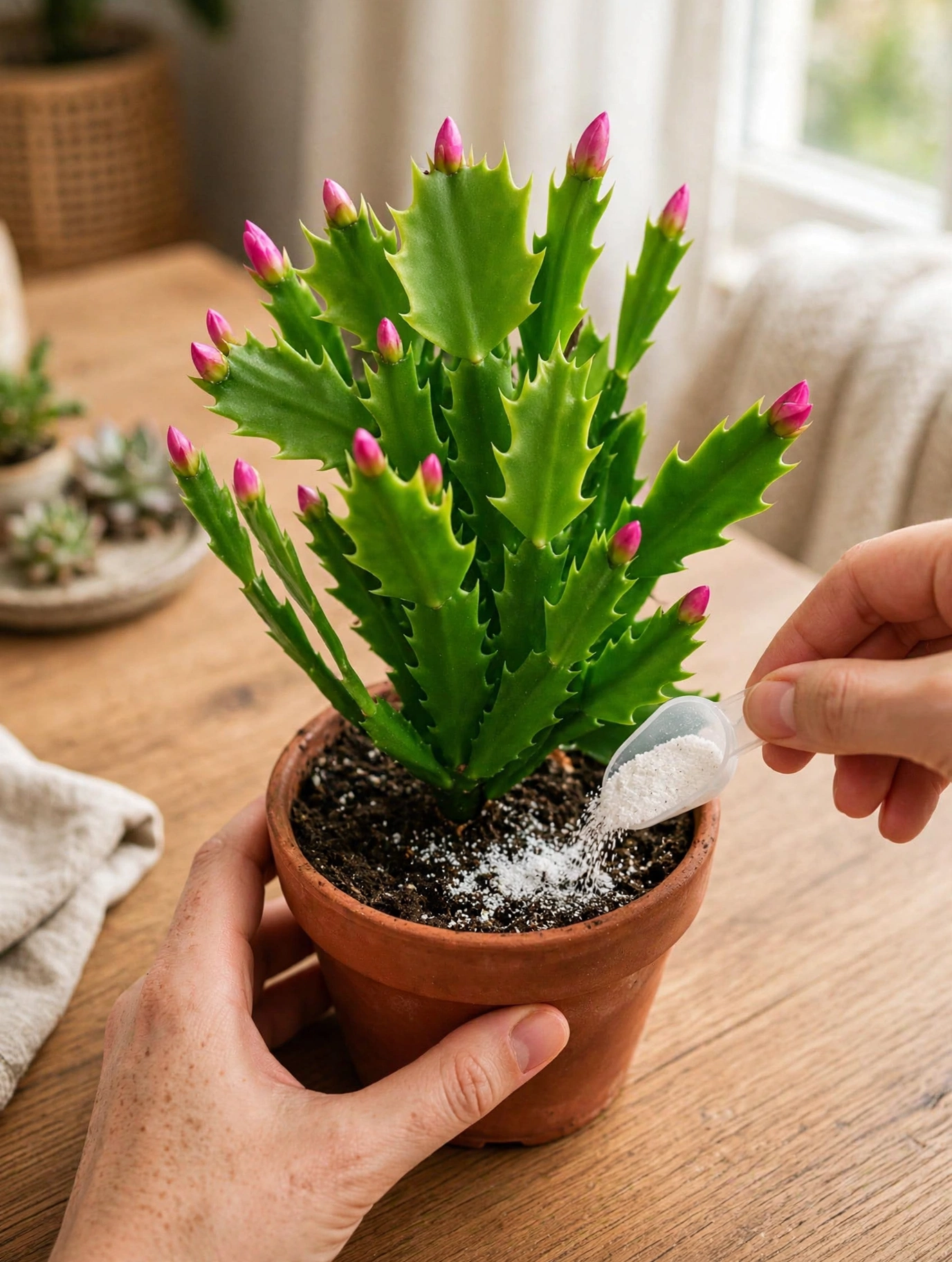
Thanksgiving Cactus Soil Care: A Safe Guide to Light White Powder, Better Buds, and Fuller Indoor Growth
Meta Description: Learn how to care for a Thanksgiving cactus with bright indirect light, well-draining soil, careful watering, and a labeled plant nutrient powder when appropriate. This safe indoor plant care guide explains what supports buds and fuller seasonal growth.
Thanksgiving cactus is one of the most rewarding flowering houseplants for a calm, polished indoor plant display. Its segmented green stems and late-season flowers can make a windowsill, shelf, or hanging planter feel especially inviting when the weather turns cooler. Because these plants are often passed between family members or kept for years, it is easy to understand why homeowners look for simple ways to support healthy buds and fuller growth.
One trend you may see online is a light white powder sprinkled or applied around Thanksgiving cactus soil. It is important to put that idea in context. A white powder is not a universal plant treatment, and it cannot create instant blooms or repair unsuitable growing conditions. Depending on the product, it may be a labeled water-soluble houseplant nutrient, a mineral supplement, or something that should not be used on a plant at all. The safe approach is to identify the product, use only one clearly labeled for ornamental houseplants, and follow its directions exactly.
The real foundation of Thanksgiving cactus care is much less dramatic: bright indirect light, a pot that drains freely, an airy potting mix, steady temperatures, gentle watering, and the seasonal light conditions that encourage buds. When those basics are working together, a suitable nutrient product can be an optional part of a broader indoor plant care routine—not the main event.
Why Thanksgiving Cactus Care Starts With the Basics
Thanksgiving cactus, commonly sold as Schlumbergera truncata, is often grouped with Christmas cactus and other holiday cacti. Despite the name, it is not a desert cactus. In nature, these plants grow in humid, sheltered environments where moisture is available but roots are not left sitting in dense, waterlogged soil. That background explains why a typical “set it and forget it” cactus routine can be disappointing indoors.
For a fuller plant and a more reliable seasonal flower display, roots need air as well as moisture. The stems also benefit from bright, filtered light rather than intense afternoon sun. Bud formation is influenced by the plant’s seasonal environment, especially long, uninterrupted nights and cooler conditions in autumn. A powder, fertilizer, or other add-on cannot replace these basic conditions.
What the Light White Powder May Be—and What It Should Never Be
Before using any white material near your plant, read the label. A product may be a powdered houseplant fertilizer, a mineral supplement, a soluble nutrient blend, or an unrelated household substance. The appearance alone does not tell you whether it belongs in a pot.
For safe Thanksgiving cactus soil care, use only a product that is clearly labeled for ornamental plants or houseplants, has complete directions, and is stored in its original container. If a product needs to be dissolved in water, dissolve it first rather than scattering dry crystals across the soil. If the label does not list indoor plant use, skip it. Never use an unknown kitchen powder, cleaning product, scented powder, or a homemade mixture simply because it is white.
The best houseplant fertilizer choice is the one that matches the label, the season, and your plant’s current condition. During active growth, a balanced, diluted houseplant fertilizer may be appropriate for some growers. Around bud-setting time, a product with a formula intended for flowering houseplants may be an option, but only when used according to the manufacturer’s directions. More fertilizer is not better. Excess fertilizer salts can stress roots and make watering harder to manage.
If your cactus is already blooming, is visibly stressed, or is sitting in soggy soil, do not add a nutrient powder as a quick fix. First correct the care issue. A plant with healthy roots, stable light, and suitable moisture is in a better position to use nutrients normally.
The Best Potting Mix for Thanksgiving Cactus Soil
Well-draining potting mix is one of the most valuable high-intent indoor gardening topics because it affects nearly every part of plant care: watering, root health, fertilizer use, and seasonal growth. Thanksgiving cactus does best in a mix that holds some moisture but still allows air to reach the roots.
Look for a quality indoor potting mix that feels light rather than muddy. Many gardeners improve a standard houseplant mix with an airy amendment such as perlite or fine orchid bark. The exact blend can vary, but the goal stays the same: water should move through the pot instead of pooling at the bottom. A container with drainage holes is essential. Decorative pots without drainage are better used as outer cachepots, with the growing pot removed for watering and allowed to drain fully.
How to Water for Stronger Roots and More Stable Buds
Watering is where many Thanksgiving cactus problems begin. These plants do not like bone-dry soil for long periods, but they also do poorly when roots remain saturated. Check the potting mix before watering instead of following a fixed calendar. When the upper portion of the mix has dried and the pot feels lighter, water thoroughly until moisture runs through the drainage holes.
Let excess water drain completely, then empty the saucer or outer pot. This small step matters because standing water can contribute to root stress, limp segments, and bud drop. A consistent routine is more useful than alternating between drought and soaking.
Before adding any labeled fertilizer or nutrient powder, make sure the mix is not extremely dry. Applying concentrated nutrients to a dry root zone can be harsh on roots. A lightly moist, well-draining mix gives you a safer starting point when the product label recommends feeding.
Light, Temperature, and the Natural Bud-Setting Cycle
Thanksgiving cactus thrives in bright indirect light. An east-facing window, a bright room set back from strong glass, or filtered light near a sheer curtain can work well. Harsh direct summer sun may leave segments pale or stressed, while very low light can reduce growth and make flowering less reliable.
Flower buds are connected to seasonal signals, not a secret soil ingredient. In fall, holiday cacti generally respond to longer dark periods and cooler nights. Indoor lamps, television light, and frequent moving can interrupt that rhythm. Giving the plant a stable location with long, uninterrupted nights and appropriate cool conditions can be more important for buds than changing fertilizers.
Once buds appear, avoid major changes. Keep the pot in a stable spot away from heating vents, cold drafts, and sudden swings in temperature. Do not rotate it constantly or repot it during this sensitive stage. Gentle consistency helps the plant keep its buds and develop flowers naturally over time.
A Safe Way to Use a Labeled Plant Nutrient Product
If you choose to include a plant-safe white powder or soluble nutrient in your houseplant care routine, make it a careful, minimal step. Start by reading the entire label, including the crop list, dilution instructions, frequency, and safety guidance. Use the lower end of the recommended rate for an indoor container plant unless the label specifically directs otherwise.
For products designed to dissolve, mix the recommended amount in water and apply it to the soil, not the stem segments, flower buds, or crown. Pour slowly around the outer root zone until the mix is evenly moistened, then allow the pot to drain. Avoid repeated applications in an attempt to speed up blooming. Nutrient use should be occasional and tied to active growth or the product instructions, not added every time you water.
Keep the product away from the plant’s central crown, segment joints, buds, open flowers, and exposed roots. Do not combine several fertilizers or mineral products in one watering unless a label specifically permits it. Mixing products can make the nutrient concentration unpredictable and may leave excess salts in the potting mix.
If white crust appears on the soil surface or rim of the pot, pause fertilizer use. Flush the pot gently with plain water only if the pot drains freely and the soil is not already waterlogged, then let excess moisture drain away. For persistent problems, refreshing the potting mix may be a better long-term solution.
Signs That Call for Care Changes, Not More Powder
A Thanksgiving cactus communicates through its segments, roots, and soil. Soft or limp segments, yellowing, poor growth, or falling buds do not automatically mean the plant needs nutrients. They can be linked to overwatering, underwatering, compacted soil, temperature changes, insufficient light, pests, or a root problem.
Skip fertilizer or powder products if you notice mold on the soil, fungus gnats, a sour smell, dark damaged roots, persistent sogginess, or unusually soft segments. These signs point to a need for diagnosis and better growing conditions. Check drainage, allow the mix to dry appropriately, inspect for pests, and consider repotting into fresh airy soil when needed.
If you are unsure what a product is or whether it is appropriate for your particular plant, do not use it. A cautious pause is safer than experimenting with an unknown substance. Local garden centers, product labels, and university extension resources can help you compare indoor plant fertilizer options and basic holiday cactus care.
Simple Seasonal Care for a Fuller Indoor Display
A fuller Thanksgiving cactus comes from steady branching and healthy segments over many months. After the flowering period ends and the plant resumes growth, gentle pruning or pinching at segment joints can encourage branching. Use clean tools, remove only a small amount at a time, and avoid heavy pruning during the bud-forming season.
During warm months, protect the plant from intense direct sun. If you place it outdoors in suitable weather, choose a shaded, sheltered location and bring it back inside before cold temperatures arrive. In late summer and fall, focus on stable conditions and the natural day-length changes that help holiday cacti prepare for buds.
Common Mistakes to Avoid With Thanksgiving Cactus Soil Care
The first common mistake is treating every white powder as a helpful plant amendment. Product identity matters. Only clearly labeled, plant-safe products should ever be considered, and they should be used according to their instructions.
The second mistake is using nutrients to compensate for poor drainage. No fertilizer can make a dense, wet potting mix behave like an airy houseplant mix. Improve the soil structure and drainage first.
Do not expect a product to guarantee buds or flowers. A luxury-looking bloom display develops through ordinary care: suitable light, stable temperatures, careful moisture, healthy roots, and patience.
Frequently Asked Questions
Is it safe to sprinkle white powder directly on Thanksgiving cactus soil?
Only if the product label specifically says it can be applied that way. Many powdered plant nutrients are intended to be dissolved in water first. Unknown household powders should never be added to the pot.
Will white powder make my Thanksgiving cactus bloom?
No product can promise blooms. Bud formation depends mostly on the plant’s seasonal light cycle, cooler conditions, stable placement, and overall root health. A properly used nutrient product may support normal growth when the plant needs it, but it is not a bloom guarantee.
What soil should I use for a Thanksgiving cactus?
Use a light, well-draining indoor potting mix that holds some moisture while allowing air around the roots. A pot with drainage holes is just as important as the mix itself.
How often should I fertilize a holiday cactus?
Follow the product label and feed only during the recommended active-growth period. Many growers reduce or pause feeding as the plant moves toward fall bud-setting, but the product directions and your plant’s condition should guide the decision.
Why are the buds dropping from my Thanksgiving cactus?
Bud drop can happen after sudden temperature, light, humidity, or watering changes. Keep the plant in a stable location, avoid waterlogged soil, and do not make major changes once buds have formed.
Final Thoughts
The most useful lesson behind the “light white powder” trend is not that one product creates a dramatic transformation. It is that healthy Thanksgiving cactus soil deserves attention. A clean, well-draining potting mix, proper drainage, bright indirect light, seasonal darkness, and careful watering form the foundation for fuller growth and a more beautiful indoor bloom display.
If you use a white powdered plant product, choose one that is clearly labeled for houseplants, use it sparingly and exactly as directed, and treat it as one small part of a balanced care routine. Give your Thanksgiving cactus time to respond. With steady, realistic care, it can remain a beautiful seasonal houseplant for many years.
Safety Note
Use only clearly labeled products intended for ornamental houseplants, and follow the manufacturer’s instructions exactly. Do not use unknown kitchen, cleaning, or household powders. Keep all plant-care products away from children and pets. Do not apply products to the crown, buds, flowers, segment joints, or exposed roots. Skip feeding when the soil is soggy or when the plant shows soft segments, mold, fungus gnats, a sour smell, or possible root damage. This article provides general indoor gardening information and is not a substitute for product-label directions or local horticultural advice.