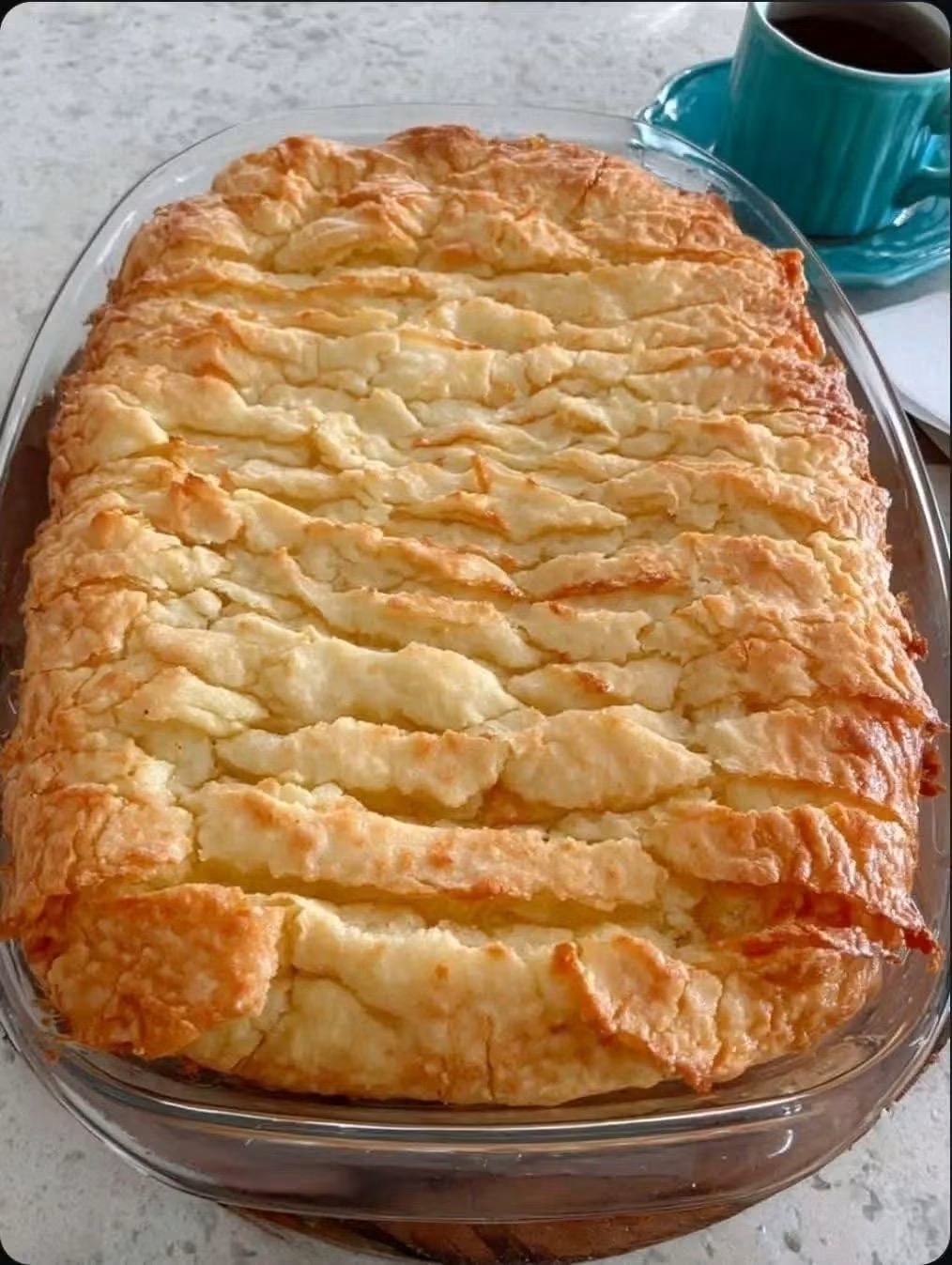
Fluffy Cottage Cheese Egg Bake is a warm, comforting breakfast casserole made with only a few simple ingredients. It has a beautifully golden top, soft edges, and a light, creamy center that makes every slice satisfying without feeling overly heavy.
This easy baked egg recipe is ideal for busy mornings, weekend brunches, family gatherings, and weekly meal preparation. Instead of cooking individual portions of eggs at the stove, you can mix everything in one bowl, pour it into a baking dish, and allow the oven to do most of the work.
Cottage cheese is the ingredient that gives this casserole its special texture. It adds moisture and creaminess while helping the eggs remain soft as they bake. The cheese curds become tender in the oven and blend into the mixture, creating a fluffy breakfast bake that can be cut into generous squares.
Shredded cheese melts throughout the casserole and forms a lightly browned surface. The top may rise, wrinkle, and develop golden ridges while baking, giving the dish a rustic homemade appearance.
The basic recipe uses eggs, cottage cheese, and shredded cheese. Salt, black pepper, and cooking spray can be added for seasoning and convenience, but the three main ingredients create the structure and flavor.
Serve this cottage cheese egg casserole with toast, fresh fruit, avocado, roasted vegetables, breakfast potatoes, or a simple green salad. Leftovers store well in the refrigerator, making this recipe a convenient choice for anyone who prefers to prepare breakfast in advance.
Why This Recipe Is Popular
This cottage cheese egg bake has become popular because it combines simple preparation with a soft and satisfying texture.
Many breakfast casseroles require bread, potatoes, cooked meat, chopped vegetables, sauces, and several preparation steps. This recipe can be assembled in approximately five to ten minutes with ingredients that are easy to find.
Everything is mixed in one bowl, which keeps cleanup simple. Once the casserole goes into the oven, you can prepare coffee, cut fruit, or work on other parts of the meal.
The recipe is also convenient when serving several people. Cooking individual omelets or portions of scrambled eggs can take time, especially during a family breakfast. One large baking dish creates enough food for multiple servings at once.
Cottage cheese helps the eggs remain tender and gives the casserole a creamy interior. Even people who do not usually enjoy cottage cheese may like it in this recipe because the texture changes as it bakes.
The mild flavor also makes the casserole easy to customize. Vegetables, herbs, cooked bacon, ham, sausage, or different cheeses can be added without changing the basic preparation method.
Another reason this recipe is useful is that it reheats well. You can bake it during the weekend, cut it into portions, and enjoy a quick breakfast during the following days.
The Main Ingredients
Eggs form the base of the casserole. They provide structure and allow the mixture to rise slightly while baking.
Large eggs work best because most breakfast recipes are developed using that size. Whisking them thoroughly helps create a more uniform and fluffy texture.
Cottage cheese adds moisture, creaminess, and body. Full-fat cottage cheese produces the richest result, while low-fat cottage cheese creates a slightly lighter casserole.
Small-curd cottage cheese blends easily into the eggs. Large-curd cottage cheese can also be used, although some larger pieces may remain visible in the finished bake.
Shredded cheese provides savory flavor and creates the golden top. Cheddar is a classic option because it has a noticeable flavor and melts well.
Mozzarella produces a mild, creamy casserole. Monterey Jack melts smoothly, while Pepper Jack adds gentle heat.
A combination of cheddar and mozzarella works especially well. Cheddar provides flavor, while mozzarella gives the casserole a softer texture.
Salt and black pepper are optional but recommended. The amount of salt needed will depend on the type of shredded cheese used.
Cooking spray, butter, or oil should be used to grease the baking dish thoroughly so the casserole releases easily.
Simple Cottage Cheese Egg Bake Recipe
The preparation method is easy and does not require special equipment.
Begin by preheating the oven to 350°F or 175°C.
Grease a 9-by-13-inch baking dish with cooking spray, butter, or oil.
Crack the eggs into a large mixing bowl and whisk them until the whites and yolks are fully combined.
Add the cottage cheese and stir until it is evenly distributed.
Mix in most of the shredded cheese, keeping a small amount for the top.
Add salt and black pepper if desired.
Pour the mixture into the prepared baking dish and spread it evenly.
Sprinkle the remaining cheese over the surface.
Bake until the center is set and the top becomes golden.
Allow the casserole to rest before cutting it. The resting time helps the center become firmer and makes the portions easier to serve.
Exact Ingredients
10 large eggs
2 cups cottage cheese
1½ cups shredded cheddar, mozzarella, or Monterey Jack cheese, divided
½ teaspoon salt, optional
¼ teaspoon ground black pepper, optional
Cooking spray, butter, or oil for greasing the baking dish
These quantities make approximately eight servings.
For a smaller household, cut the recipe in half and bake it in an 8-inch square dish. Begin checking the smaller casserole earlier because it may cook more quickly.
Step-by-Step Instructions
Preheat the oven to 350°F or 175°C.
Lightly coat the bottom and sides of a 9-by-13-inch baking dish with cooking spray, butter, or oil.
Make sure the corners are greased because baked eggs can stick firmly to uncoated glass or metal.
Crack the eggs into a large bowl.
Whisk the eggs for approximately one minute, or until the whites and yolks are completely blended.
For a lighter texture, whisk until the mixture looks slightly foamy.
Add the cottage cheese to the eggs.
Stir gently until the cottage cheese is distributed evenly throughout the bowl.
Add one cup of the shredded cheese.
Add the optional salt and ground black pepper.
Stir until all the ingredients are combined.
Pour the egg mixture into the prepared baking dish.
Use a spoon or silicone spatula to spread the cottage cheese and shredded cheese evenly.
Sprinkle the remaining half cup of shredded cheese across the top.
Place the baking dish on the center rack of the preheated oven.
Bake for approximately 35 to 45 minutes.
Begin checking the casserole near the 35-minute mark.
The bake is ready when the edges are lightly browned, the top is golden, and the center no longer looks liquid.
Gently move the dish. The center may have a slight movement, but it should not look wet.
Insert a clean knife near the center. It should come out without uncooked egg mixture.
Remove the baking dish from the oven.
Allow the casserole to rest for 10 to 15 minutes.
The top may sink slightly and develop additional wrinkles as it cools. This is normal for a fluffy baked egg casserole.
Cut the dish into squares and serve warm.
Tips for a Perfect Cottage Cheese Egg Bake
Use room-temperature ingredients when possible. Eggs and cottage cheese that are not extremely cold usually combine more easily and may bake more evenly.
Whisk the eggs thoroughly before adding the cottage cheese. This prevents large streaks of egg white from remaining in the finished casserole.
For a completely smooth texture, blend the eggs and cottage cheese in a blender for approximately 20 to 30 seconds.
Pour the blended mixture into a bowl before stirring in the shredded cheese.
Do not overbake the casserole. Eggs continue cooking for several minutes after the dish is removed from the oven.
Take it out when the center has just set. Waiting until the entire surface feels extremely firm may produce a dry texture.
Drain excess liquid from the cottage cheese when necessary. Some brands contain more liquid than others.
If the container looks unusually watery, stir it well and remove a small amount of the excess liquid before measuring.
Use freshly grated cheese for the smoothest melting. Packaged shredded cheese is convenient, but it may contain ingredients that prevent the pieces from sticking together.
Allow the casserole to rest before slicing. Cutting it immediately can cause the center to break apart.
Grease the dish generously. A thin coating may not be enough to prevent eggs from sticking along the edges.
How to Create a Fluffier Texture
A fluffy cottage cheese egg bake begins with well-whisked eggs.
Whisking introduces small air bubbles into the mixture. These bubbles expand as the casserole heats, helping the top rise.
A blender can make the mixture especially smooth and airy. Blend only the eggs and cottage cheese, then stir in the shredded cheese afterward.
Using a baking dish that is not too large also helps create taller slices. A 9-by-13-inch dish produces medium-thick portions with this recipe.
A smaller dish will create a taller casserole but may require additional baking time.
Do not open the oven repeatedly during the first part of baking. Sudden changes in temperature can cause the center to fall before it has set.
The casserole will naturally settle after it leaves the oven. A small amount of sinking does not mean the recipe failed.
Flavor Variations
For a spinach cottage cheese egg bake, add one cup of chopped fresh spinach.
Frozen spinach can also be used, but it must be thawed and squeezed very dry before being added.
For a ham and cheese version, stir in one cup of finely diced cooked ham.
Cheddar or Swiss cheese pairs especially well with ham.
For a bacon variation, cook the bacon until crisp, drain it, and crumble it before adding it to the egg mixture.
For a sausage breakfast casserole, use fully cooked and drained breakfast sausage.
Allow cooked meat to cool slightly before mixing it with the eggs.
For a vegetable version, add finely chopped bell peppers, green onions, broccoli, or sautéed mushrooms.
Vegetables containing a large amount of water should be cooked before being added.
For an Italian-inspired variation, use mozzarella cheese and add chopped basil, roasted peppers, and a small amount of dried oregano.
For a Mediterranean version, combine cottage cheese with spinach, feta, parsley, and black pepper.
For a spicy egg bake, use Pepper Jack cheese and add diced jalapeño or a pinch of crushed red pepper.
For a garlic herb version, add chopped chives, parsley, dill, and a small amount of garlic powder.
Keep the total amount of additional fillings close to one or two cups. Too many additions can make the casserole heavy or prevent the center from setting properly.
How to Add Vegetables Correctly
Vegetables can improve the flavor and appearance of this breakfast bake, but excess moisture may create a watery casserole.
Fresh spinach can be chopped and added directly in a small amount.
Frozen spinach should be thawed completely. Place it in a clean kitchen towel and squeeze out as much liquid as possible.
Mushrooms release a large amount of water. Sauté them until their moisture evaporates before adding them.
Zucchini should be grated, lightly salted, and squeezed dry.
Tomatoes should be seeded and drained. Roasted or sun-dried tomatoes are often easier to use because they contain less water.
Bell peppers and green onions can usually be added without cooking when they are finely chopped.
Broccoli should be cut into very small pieces. Lightly steaming it first creates a softer texture.
Allow cooked vegetables to cool before stirring them into the egg mixture.
How to Serve Cottage Cheese Egg Bake
Serve the casserole warm after it has rested for approximately 10 minutes.
For a simple breakfast, pair each portion with toast, an English muffin, or a toasted bagel.
Fresh fruit provides a refreshing contrast to the savory cheese. Strawberries, blueberries, melon, grapes, oranges, bananas, and sliced apples all work well.
Avocado adds a creamy texture and mild flavor. Serve it sliced on the side or place it directly over the casserole.
Salsa, hot sauce, pesto, or chopped herbs can be added just before serving.
For a larger brunch, serve the egg bake with roasted breakfast potatoes, pancakes, waffles, yogurt, fresh fruit salad, or sautéed vegetables.
It can also be served for lunch with a green salad or bowl of soup.
For a breakfast sandwich, place a warm square between two slices of toast, an English muffin, or a small roll.
Add spinach, sliced tomato, avocado, or cooked turkey for a more complete sandwich.
Meal Prep and Storage
This casserole is an excellent choice for meal preparation because it can be divided into individual portions.
Allow the finished egg bake to cool before storing it.
Cut it into squares and place the portions in an airtight container.
If stacking the pieces, place parchment paper between the layers.
Store the casserole in the refrigerator for up to four days.
For convenient breakfasts, place one portion in each meal-prep container with fresh fruit, roasted vegetables, or another side dish.
Keep toast and crackers separate so they remain crisp.
The uncooked mixture can also be prepared in advance.
Pour it into the greased baking dish, cover tightly, and refrigerate it overnight.
The following morning, remove the dish from the refrigerator while the oven preheats.
A cold casserole may require a few additional minutes of baking time.
Do not leave the egg bake at room temperature for more than approximately two hours.
How to Reheat Leftovers
To reheat one slice in the microwave, place it on a microwave-safe plate.
Heat for approximately 30 seconds.
Check the center and continue heating in 15-second intervals until warm.
Avoid overheating because eggs can become dry or rubbery.
To reheat several portions in the oven, place them in a baking dish and cover loosely with foil.
Warm at 325°F or 165°C for approximately 10 to 15 minutes.
An air fryer can also be used for individual portions.
Reheat at a moderate temperature for a few minutes, checking often so the edges do not become too dark.
A small spoonful of salsa or a slice of cheese can be added after reheating to refresh the flavor.
How to Freeze Cottage Cheese Egg Bake
Allow the casserole to cool completely.
Cut it into individual portions.
Wrap each square in parchment paper or freezer-safe wrap.
Place the wrapped pieces inside a freezer-safe container or resealable bag.
Remove as much air as possible before sealing.
Label the container with the preparation date.
For the best texture, use the frozen portions within approximately two months.
Thaw the pieces overnight in the refrigerator.
Reheat them in the microwave, oven, or air fryer until warm in the center.
A little moisture may appear after thawing. This is normal and can usually be removed gently with a paper towel.
Freezing may make the texture slightly softer, but the casserole will still be suitable for quick breakfasts.
Common Mistakes to Avoid
Using a baking dish that is too small can cause the mixture to rise over the edges.
Leave enough space for the eggs to expand while baking.
Do not use raw meat in the casserole. Bacon, sausage, ham, turkey, or chicken should be fully cooked before being added.
Avoid adding wet vegetables directly to the egg mixture.
Excess moisture can prevent the center from setting and may create a watery layer.
Do not remove the casserole based only on the color of the top. The surface may become golden before the center is fully cooked.
Check the middle with a knife before removing the dish.
Overbaking is another common mistake. A casserole left in the oven too long can become dry and firm.
Do not slice it immediately after baking. Resting allows the eggs to finish setting.
Avoid adding too much salt before tasting the cheese. Cottage cheese and shredded cheese may already contain enough salt.
Do not worry when the casserole rises in the oven and sinks slightly afterward. This is a normal part of baking eggs.
Frequently Asked Questions
Can I use low-fat cottage cheese?
Yes. Low-fat cottage cheese works well, although the finished casserole may be slightly less creamy than one made with full-fat cottage cheese.
Can I use ricotta instead of cottage cheese?
Ricotta can be used, but the texture will be smoother and denser. Cottage cheese generally creates a lighter result.
Can I blend the cottage cheese?
Yes. Blending it with the eggs produces a smooth texture without visible curds.
Can I use only egg whites?
Yes. You can replace some or all of the whole eggs with egg whites. The casserole may be lighter in color and slightly firmer.
Why is my cottage cheese egg bake watery?
It may need more baking time, or the cottage cheese and additional vegetables may have contained excess liquid.
Why did the top sink after baking?
The eggs expand while hot and settle as the air and steam escape. Slight sinking is completely normal.
Can I make the casserole without shredded cheese?
Yes, but it will have less flavor and a softer surface. The cottage cheese and eggs will still create a baked casserole.
Can I double the recipe?
Yes. Divide the doubled mixture between two baking dishes or use a larger pan. Do not fill the dish too close to the top.
Can I prepare it the night before?
Yes. Cover the uncooked mixture and refrigerate it overnight. Bake it the next morning.
What cheese works best?
Cheddar, mozzarella, Monterey Jack, Colby Jack, Swiss, and Pepper Jack are all suitable choices.
How do I know when it is fully cooked?
The center should be set, and a knife inserted near the middle should come out without wet egg mixture.
Final Thoughts
Fluffy Cottage Cheese Egg Bake is a simple and dependable breakfast recipe that requires very little preparation.
Eggs create the light structure, cottage cheese provides moisture and creaminess, and shredded cheese adds savory flavor with a golden finish.
The casserole can be served for an ordinary family breakfast, prepared for weekend brunch, or divided into portions for several busy mornings.
Its mild flavor makes it easy to customize with vegetables, herbs, cooked meat, or different types of cheese.
Prepare the basic three-ingredient version when you need something easy, or use it as a base for your favorite breakfast fillings.
With its soft center, browned edges, and rustic golden top, this cottage cheese egg casserole can quickly become a regular part of your breakfast and meal-prep routine.
Want the full recipe and simple step-by-step instructions?
Page 2 continues with the full ingredients, cooking tips, and easy directions so you can make this recipe perfectly at home.