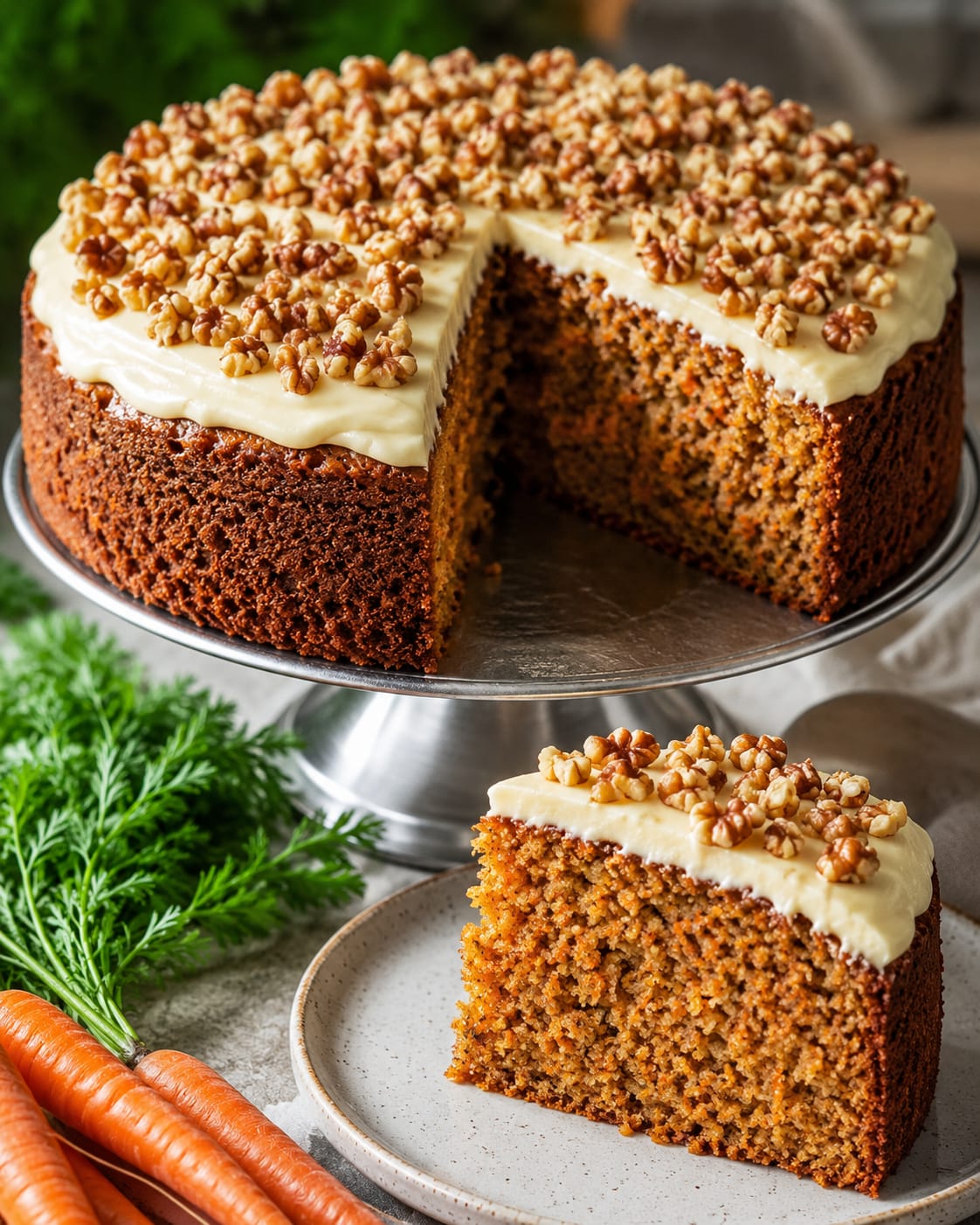
There are cakes you bake for a birthday, and then there are cakes that feel like a celebration of everyday life. Carrot Walnut Cake belongs to the latter—humble, homey, and impossibly moist, perfumed with cinnamon and nutmeg, studded with crunchy walnuts and tender shreds of carrot. It’s the kind of cake that doesn’t need a special occasion to grace your table, yet when you bring it to a potluck or a family dinner, it disappears faster than anything chocolate. Topped with a tangy cream cheese frosting that perfectly balances the warm, earthy sweetness beneath, every forkful is a reminder that the simplest ingredients can create something extraordinary.
This isn’t just any carrot cake—it’s the one you’ll go back to time and again. The crumb is delicate and tender without being greasy, thanks to the perfect ratio of oil to flour. Brown sugar adds a deep, molasses-like note, while a whisper of nutmeg and a generous dose of cinnamon make the kitchen smell like autumn, even in the middle of July. The grated carrots melt into the batter as it bakes, providing natural sweetness and an incredibly soft texture, and the walnuts offer a satisfying crunch in every bite. A handful of crushed pineapple, optional but highly recommended, adds an extra layer of moisture and a subtle tropical brightness that takes this cake from great to unforgettable.
In this comprehensive guide, I’ll walk you through every step of making the ultimate Carrot Walnut Cake—from selecting the freshest ingredients to mastering the perfect cream cheese frosting. You’ll learn the secrets to achieving that dreamy, moist crumb, discover creative variations, and find out how to store and freeze this cake so you can enjoy a slice whenever the craving strikes. Whether you’re a seasoned baker or this is your very first layer cake, this recipe is forgiving, foolproof, and utterly delicious. Let’s preheat the oven and get started.
Why You’ll Love This Carrot Walnut Cake
Incredibly moist and tender. The combination of oil, brown sugar, and freshly grated carrots creates a cake that stays moist for days. There’s no dry, crumbly texture here—just a soft, almost velvety crumb that practically melts on your tongue. The addition of crushed pineapple, if you choose to include it, takes the moisture level over the top without making the cake heavy.
Warm, cozy spices that fill your home with an irresistible aroma. Cinnamon and nutmeg are the dynamic duo that give carrot cake its signature personality. They’re warm and comforting without being overpowering, allowing the sweetness of the carrots and the richness of the walnuts to shine through. Your entire house will smell like a bakery, luring everyone into the kitchen before the timer even goes off.
A perfect balance of flavors and textures. Every bite of this cake is a little symphony: the earthy sweetness of the carrots, the deep caramel notes of the brown sugar, the aromatic spices, the nutty crunch of toasted walnuts, and the luscious tang of cream cheese frosting. The pineapple adds a subtle fruity brightness that keeps the cake from tasting too heavy. It’s a masterclass in how simple ingredients can create complex, deeply satisfying flavor.
Versatile, reliable, and made for sharing. This recipe can be baked as a 9×13-inch sheet cake, two 9-inch rounds for a classic layer cake, a Bundt cake, or even as cupcakes. It’s sturdy enough to hold up under a generous layer of frosting yet tender enough to eat with a fork. It travels well, freezes beautifully, and is a guaranteed hit at birthday parties, holidays, bake sales, and cozy Sunday afternoons.
Ingredient Deep Dive: The Keys to Moisture and Spice
Understanding each ingredient’s role will help you bake the best carrot cake of your life—and empower you to make smart substitutions when needed.
All-Purpose Flour – The Foundation
Two cups of all-purpose flour give the cake structure while keeping it light. For a slightly nuttier flavor, you can replace up to ½ cup with whole wheat pastry flour. Measure the flour carefully—spoon it into the measuring cup and level it off with a knife to avoid a dense cake. If you need a gluten-free option, a high-quality 1:1 gluten-free flour blend works beautifully; look for one that contains xanthan gum for the best texture.
Baking Powder & Baking Soda – The Leaveners
Two teaspoons of baking powder and 1½ teaspoons of baking soda work together to give the cake a beautiful rise and an open, tender crumb. The baking soda also reacts with the slight acidity of the brown sugar and any pineapple or buttermilk you might add, enhancing browning and flavor. Make sure both are fresh—expired leavening agents are a common reason for flat, dense cakes.
Ground Cinnamon & Nutmeg – The Spice Blend
One teaspoon of cinnamon and ½ teaspoon of nutmeg create that classic carrot cake warmth. Cinnamon is the star, delivering sweet, woody notes, while nutmeg adds a hint of nutty, almost slightly peppery depth. You can also add ¼ teaspoon of ground ginger or allspice for a more complex spice profile. Freshly grated nutmeg is a game-changer—its flavor is far more vibrant than pre-ground.
Vegetable Oil & Brown Sugar – The Moisture Dream Team
This cake uses oil instead of butter, which is key to its incredibly moist texture. Oil coats the flour proteins differently, resulting in a softer, more tender crumb that stays moist for days. Use a neutral oil like vegetable, canola, or light olive oil. One cup of oil might sound like a lot, but it’s what makes the cake so luscious. Light brown sugar (1 cup packed) provides moisture, richness, and a delicate molasses flavor that complements the carrots perfectly. Dark brown sugar can be used for a deeper, more robust taste.
Eggs, Vanilla & Sugar
Four large eggs, at room temperature, provide structure, richness, and help emulsify the batter. They bind the ingredients together and give the cake its tender, fine crumb. One cup of granulated sugar (in addition to the brown sugar) balances the spices and carrots with clean sweetness. Two teaspoons of pure vanilla extract round out the flavors and add a warm, aromatic note.
Freshly Grated Carrots – The Star Ingredient
You’ll need about 3 cups of finely grated carrots (roughly 3–4 large carrots). Use the fine side of a box grater; the small shreds blend seamlessly into the batter, adding moisture and a subtle sweetness without being stringy. Pre-shredded store-bought carrots are too thick and dry and won’t give the same result. Take the extra few minutes to grate your own—it makes all the difference.
Walnuts & Optional Pineapple
One cup of roughly chopped walnuts adds a delightful crunch that contrasts beautifully with the soft crumb. Toasting the walnuts for 5–7 minutes in a dry skillet or the oven before adding them intensifies their flavor and adds an even nuttier dimension. An optional ½ cup of well-drained crushed pineapple folds into the batter, adding extra moisture and a hint of tropical sweetness that many bakers swear by. It’s not traditional everywhere, but it’s a wonderful addition that keeps the cake exceptionally moist.
Step-by-Step Baking Instructions
Follow these steps to create a carrot walnut cake that’s moist, perfectly spiced, and beautifully risen.
Step 1: Preheat and Prepare the Pans
Preheat your oven to 350°F (175°C). Grease and flour two 9-inch round cake pans (or one 9×13-inch pan), or line them with parchment paper rounds for easy removal. If making a layer cake, ensure the pans are at least 2 inches deep.
Step 2: Mix the Dry Ingredients
In a large bowl, whisk together the 2 cups of flour, 2 teaspoons baking powder, 1½ teaspoons baking soda, 1 teaspoon cinnamon, ½ teaspoon nutmeg, and ½ teaspoon salt. Whisking aerates the flour and evenly distributes the leaveners and spices. Set aside.
Step 3: Combine the Wet Ingredients
In a separate large mixing bowl, beat together the 1 cup of vegetable oil, 1 cup of granulated sugar, and 1 cup of packed light brown sugar until well combined and slightly lightened, about 2 minutes with a hand mixer or whisk. Add the 4 eggs, one at a time, beating well after each addition. Stir in the 2 teaspoons of vanilla extract.
Step 4: Combine Wet and Dry, Then Fold in Carrots and Walnuts
Gradually add the dry ingredients to the wet mixture, mixing on low speed or folding with a spatula just until no streaks of flour remain. Overmixing can develop gluten and make the cake tough, so stop as soon as everything is incorporated. Gently fold in the 3 cups of freshly grated carrots, the 1 cup of chopped walnuts, and the ½ cup of drained crushed pineapple (if using) until evenly distributed.
Step 5: Pour and Bake
Divide the batter evenly between the prepared cake pans. Smooth the tops with a spatula. Bake in the preheated oven for 30 to 40 minutes for 9-inch rounds, or 40 to 50 minutes for a 9×13-inch pan, until a toothpick inserted in the center comes out clean or with a few moist crumbs. The cakes should be golden brown and pulling away slightly from the edges.
Step 6: Cool Completely
Let the cakes cool in the pans on a wire rack for 10–15 minutes, then run a knife around the edges and invert them onto the rack to cool completely. Frosting a warm cake will result in a melted, runny mess, so be patient—completely cool cakes are essential for a beautiful finish. If you’re short on time, you can place the cooled cakes in the refrigerator for 30 minutes to speed up the process.
Step 7: Frost and Decorate
Once the cakes are cool, prepare the cream cheese frosting (recipe below). Place one cake layer on a serving plate, spread with about 1 cup of frosting, then top with the second layer. Use the remaining frosting to cover the top and sides. Press additional chopped walnuts or finely chopped carrots onto the sides for decoration, or leave it elegantly smooth. Slice and serve at room temperature for the best flavor and texture.
Pro Tips for the Best Carrot Cake Ever
- Grate your own carrots. Pre-shredded carrots are too thick and dry; they won’t soften properly during baking and can leave tough bits in your cake. Use the fine holes of a box grater and you’ll be rewarded with a soft, uniform crumb.
- Don’t overmix the batter. Once you add the flour, mix only until it disappears. Overmixing develops gluten and leads to a dense, tough cake. A light hand is key to a tender texture.
- Toast the walnuts. This quick extra step deepens their flavor and adds a more pronounced crunch. Spread them on a baking sheet and toast at 350°F for 5–7 minutes, then cool before adding to the batter.
- Measure oil and sugar accurately. Too much oil can make the cake greasy; too little can make it dry. Use a liquid measuring cup for oil and a dry measuring cup for sugar, packed for brown sugar. Level off with a straight edge for precision.
- Frost only when completely cool. Even a hint of warmth will melt the cream cheese frosting, causing it to slide off or become soupy. If in doubt, chill the layers for 30 minutes before frosting.
Flavor Twists & Customizations
This carrot walnut cake is a beautiful canvas. Try one of these delicious riffs:
- Spiced Carrot Cake with Raisins: Soak ½ cup of raisins in hot water for 10 minutes, drain, and fold them into the batter along with the carrots. They add a chewy sweetness that pairs wonderfully with the spices.
- Pecan Carrot Cake: Swap the walnuts for toasted pecans. Their buttery flavor and slightly softer crunch provide a different, equally delicious twist.
- Chai-Spiced Carrot Cake: Replace the cinnamon and nutmeg with 2 teaspoons of chai spice blend. The cardamom, ginger, and cloves will give the cake an exotic, warming kick.
- Gluten-Free Carrot Cake: Use a high-quality 1:1 gluten-free flour blend that contains xanthan gum. The cake will be just as moist and delicious.
- Carrot Cupcakes: Divide the batter among 24 lined muffin cups and bake at 350°F for 18–22 minutes. These are perfect for parties and easy to grab-and-go.
The Ultimate Cream Cheese Frosting
No carrot cake is complete without a generous layer of tangy, silky cream cheese frosting. Here’s how to make the perfect batch:
- 8 ounces full-fat cream cheese, softened to room temperature
- ½ cup (1 stick) unsalted butter, softened
- 4 cups powdered sugar, sifted
- 1 teaspoon vanilla extract
- Pinch of salt
Beat the cream cheese and butter together until completely smooth and creamy. Gradually add the sifted powdered sugar, beating on low until combined, then increase speed and whip until light and fluffy. Stir in vanilla and salt. If the frosting is too thick, add a teaspoon of milk or cream; if too thin, add a bit more powdered sugar. Use immediately or refrigerate, but let it soften slightly before spreading.
Storage, Freezing & Make-Ahead Tips
Make-Ahead: The unfrosted cake layers can be baked a day in advance. Wrap them tightly in plastic wrap and store at room temperature. The cream cheese frosting can also be made ahead and refrigerated; bring it to cool room temperature and re-whip before using.
Storing Leftovers: Because of the cream cheese frosting, store the frosted cake covered in the refrigerator. It will stay fresh for up to 5 days. Let slices sit at room temperature for about 20 minutes before serving to take the chill off and soften the frosting slightly.
Freezing: The unfrosted cake layers freeze beautifully. Wrap them tightly in plastic wrap and then foil, and freeze for up to 3 months. Thaw overnight in the refrigerator and frost as usual. You can also freeze individual frosted slices on a baking sheet, then wrap and store; thaw in the fridge.
Want the full recipe and simple step-by-step instructions?
Page 2 continues with the full ingredients, cooking tips, and easy directions so you can make this recipe perfectly at home.