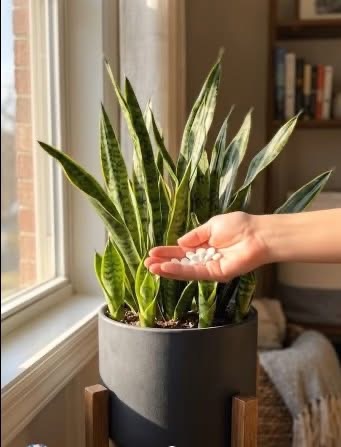
Snake plants are popular indoor plants because they have striking upright leaves, adapt well to many homes, and need less attention than many other houseplants. Their green patterned leaves can make a living room, bedroom, office, or entryway feel more polished and inviting.
The real secret to a fuller snake plant is not a miracle powder or a strong homemade mixture. It is a simple routine: bright indirect light, a pot with drainage, soil that dries properly, careful watering, and gentle feeding only during the growing season. With consistent care, a healthy mature snake plant may naturally produce new shoots, also called pups, from beneath the soil.
Why Snake Plants Are So Easy to Love
Snake plants have strong, architectural leaves that work beautifully with modern, minimalist, rustic, and classic home décor. They can handle average indoor conditions and do not need daily care.
They grow best when they are allowed to dry between waterings. Too much water is the most common reason snake plants struggle, so a simple routine is usually more effective than adding extra products.
The Best Light for a Snake Plant
Place your snake plant in bright, indirect light for the best growth. A spot near a window with filtered sunlight is ideal.
Snake plants can survive in lower light, but they usually grow more slowly there. Avoid leaving the plant in harsh, direct afternoon sun for long periods, especially behind glass, because intense heat can stress the leaves.
Rotate the pot every few weeks so all sides receive light and the leaves grow evenly.
How to Water a Snake Plant Correctly
Water only when the potting mix has dried well below the surface. Test the soil with your finger before watering. If it still feels damp, wait a few more days.
When it is time to water, pour slowly around the soil until water begins to drain from the bottom of the pot. Empty the saucer after a few minutes so the roots are not left sitting in water.
In many homes, snake plants need less water in winter than they do in spring and summer. Always adjust the schedule based on how quickly the soil dries, not only by the calendar.
The Right Soil and Pot
A fast-draining cactus or succulent potting mix is a great choice for snake plants. You can also mix regular indoor potting soil with extra perlite to improve drainage.
Use a pot with drainage holes. A decorative pot without drainage can hold extra water around the roots and create problems over time.
Snake plants like being slightly snug in their pots, but they should be repotted when the container becomes crowded, cracks from root pressure, or the plant becomes too heavy for the pot.
Safe Fertilizer Tips for Fuller Growth
A balanced slow-release houseplant fertilizer can be used during spring and summer if your snake plant is actively growing. Follow the exact amount and timing listed on the fertilizer label.
Do not place unknown white powders, salt, baking soda, or strong kitchen ingredients in the pot. They can build up in the soil and make it harder for roots to absorb water properly.
Fertilizer is a small support, not a replacement for good light, correct watering, and well-draining soil. Feeding too often can damage the roots, so less is usually better.
How Snake Plant Pups Form
A healthy, established snake plant can naturally grow pups from underground stems called rhizomes. These small new shoots usually appear near the base of the mother plant.
Pups are more likely when the plant has stable conditions, adequate light, and a mature root system. There is no safe way to force instant offshoots, but proper care gives the plant the best chance to grow steadily over time.
Let small pups stay attached to the mother plant until they have developed several leaves and a strong root system. This helps them continue growing successfully.
Signs Your Snake Plant Needs Attention
Soft, yellowing leaves often mean the soil has stayed too wet. Let the soil dry completely, check that the pot drains properly, and remove any standing water from the saucer.
Wrinkled or slightly curling leaves can mean the plant has been dry for a long time. Water deeply, then return to letting the soil dry between waterings.
Brown leaf edges may come from inconsistent watering, excess fertilizer, or very dry indoor air. Remove only the damaged parts with clean scissors and focus on a consistent care routine.
Beautiful Places to Display a Snake Plant
A tall snake plant looks elegant beside a sofa, near a bright window, or in an empty corner of a living room. Its upright shape adds height without taking up much floor space.
Place a smaller snake plant on a desk, console table, bedroom dresser, or bookshelf. A simple ceramic pot in white, charcoal, cream, or terracotta makes the leaves stand out beautifully.
Snake plants also work well in entryways and home offices because they have a clean, structured look that complements many interior styles.
Simple Seasonal Care
During spring and summer, your snake plant may grow more quickly. This is the best time to provide brighter indirect light and, if needed, a light feeding according to the product label.
During fall and winter, growth often slows. Water less often and skip fertilizer until the plant begins actively growing again.
Keep the plant away from cold drafts, heaters, and air-conditioning vents. Stable temperatures help it stay healthy and attractive.
Safety Note
Snake plants are not safe for pets if chewed. Keep the pot out of reach of cats, dogs, and small children who may be tempted to touch or eat the leaves.
Always follow the label instructions for any fertilizer, keep products stored safely, and wash hands after handling plant food or potting mix.
Final Thoughts
A beautiful snake plant does not need complicated tricks. Give it bright indirect light, dry soil between waterings, a draining pot, and gentle seasonal care.
With patience and consistent conditions, your snake plant can grow stronger, stay fuller, and may naturally reward you with new pups over time.