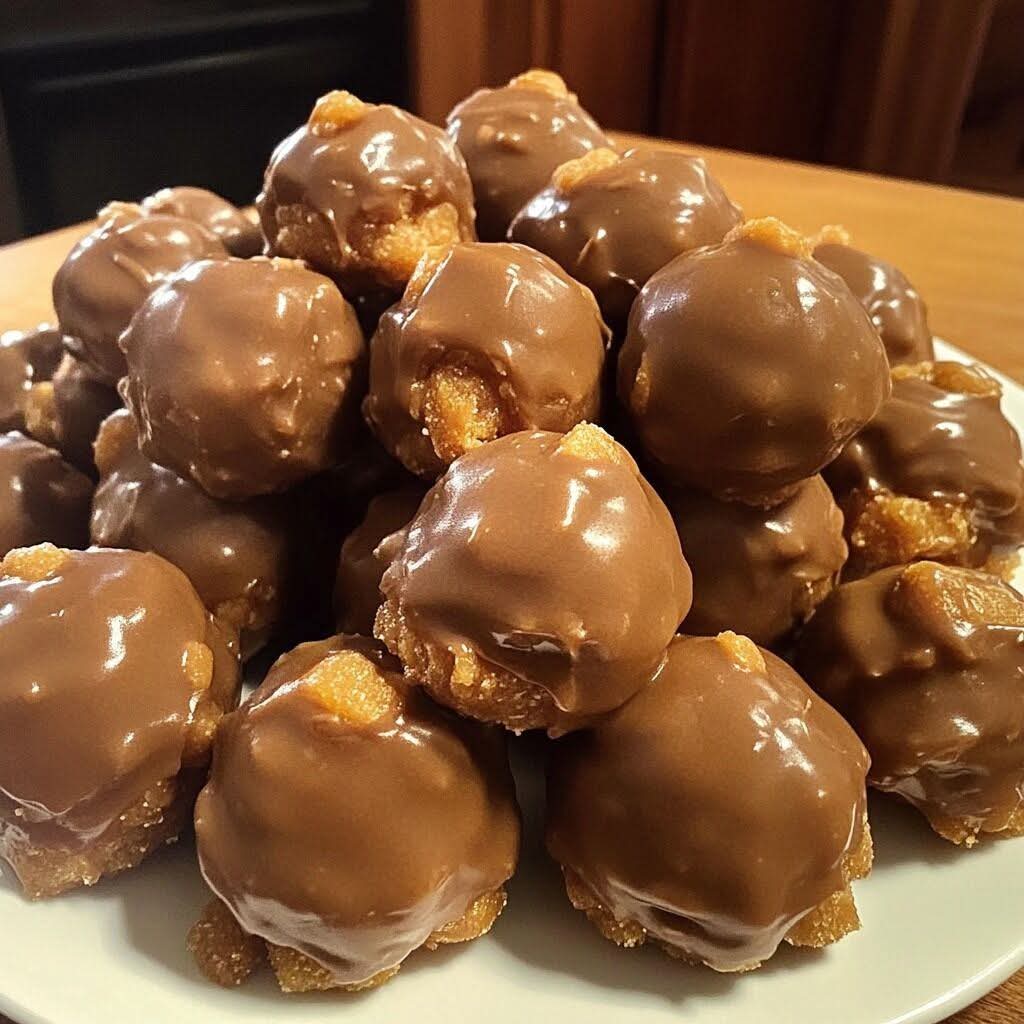
Nutritional Information
Approximate values per ball (based on 30 balls):
- Calories: 140
- Carbohydrates: 16g
- Protein: 3g
- Fat: 8g
- Saturated Fat: 4g
- Fiber: 1g
- Sugar: 14g
- Sodium: 45mg
Using dark chocolate and reducing the powdered sugar will lower the sugar content.
Frequently Asked Questions
Q: Can I use a different candy bar instead of Butterfinger?
A: Yes. Reese’s cups, crushed Oreos, or even toffee bits are great substitutes. Each will give the treats a different flavor profile.
Q: Why are my balls too soft?
A: If the mixture is too soft, it wasn’t chilled enough. Chill the mixture for at least 45 minutes before rolling. If it’s still too soft, add a little more powdered sugar.
Q: Can I use a different type of chocolate for dipping?
A: Yes. You can use milk chocolate, dark chocolate, or white chocolate. Just make sure to use high‑quality chocolate for the best results.
Q: Can I make these without cream cheese?
A: Yes. You can substitute the cream cheese with an additional ½ cup of peanut butter and ¼ cup of powdered sugar. The texture will be slightly different but still delicious.
Q: How do I get the chocolate to coat evenly?
A: Use a fork to dip the balls, tapping off the excess chocolate. Make sure the balls are well‑chilled before dipping.
Q: Can I double this recipe?
A: Yes. Double all the ingredients. The chilling time remains the same.
Q: What’s the best way to crush the Butterfinger?
A: Place the Butterfinger bars in a zip‑top bag and crush with a rolling pin. You can also use a food processor – pulse a few times to get a mix of crumbs and chunks.
Q: Can I add a drizzle of caramel?
A: Yes. Drizzle caramel sauce over the chocolate coating before it sets for an extra layer of flavor.
The Story of the Butterfinger Candy Bar
The Butterfinger candy bar has been a beloved treat since its introduction in 1923. Created by the Curtiss Candy Company, it was named through a contest – the winning entry described the candy’s “buttery” flavor and “finger‑licking” goodness. Over the years, Butterfinger became known for its distinctive crispy, flaky, peanut butter‑filled center, enrobed in a thick layer of chocolate.
These Butterfinger Balls are a celebration of that classic candy. By incorporating crushed Butterfinger into a creamy peanut butter center and dipping it in chocolate, you’re capturing all the flavors of the original candy bar – but in a homemade, customizable form that’s even more delicious.
Whether you’re making them for a holiday gathering, a party, or simply because you’re craving something sweet, these Butterfinger Balls are a reminder that the best treats often start with a classic and become something even better.
Final Thoughts
Butterfinger Balls are the treat that delivers on every level. They’re creamy, crunchy, and utterly irresistible – the kind of candy that earns rave reviews and recipe requests. With a simple no‑bake technique and a few basic ingredients, you can create a treat that’s better than anything you’d find at the store.
Whether you’re making them for a party, a holiday, or simply because you’re craving something sweet and satisfying, this recipe is a guaranteed winner. It’s proof that you don’t need complicated techniques or exotic ingredients to create something truly spectacular. Sometimes, the simplest recipes – made with care and love – are the most delicious.
So grab your Butterfinger bars, cream cheese, and chocolate, and get ready to make a treat that will become a family favorite. These Butterfinger Balls are about to become a staple in your kitchen – and once you try them, you’ll never go back to store‑bought candy again.