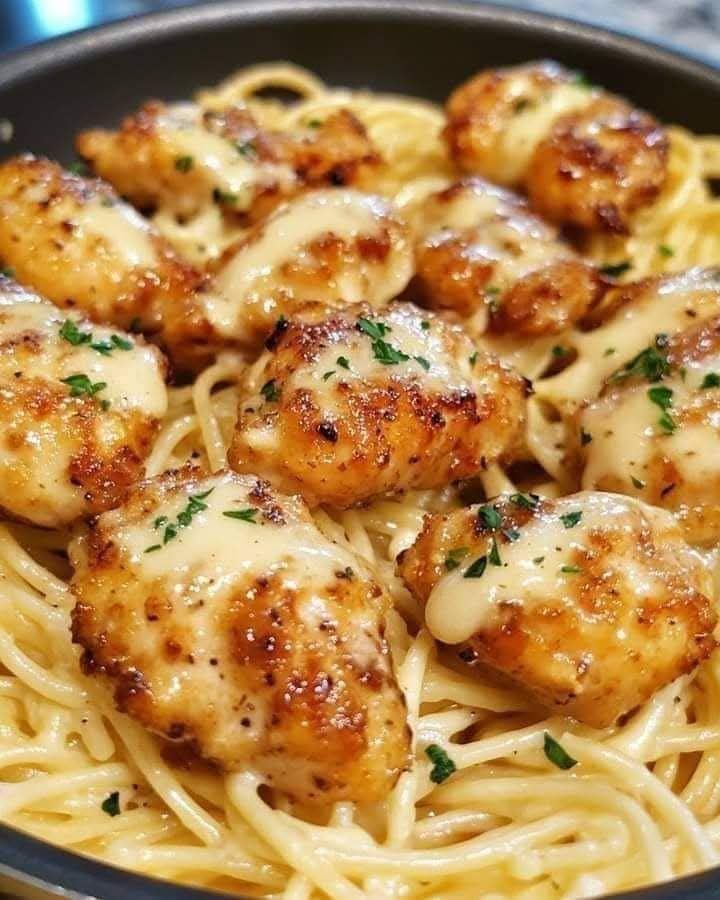
There are meals that feel like a warm hug on a plate, and then there is this—Golden, juicy bites of chicken seared in a fragrant garlic butter, paired with a luxuriously creamy Parmesan pasta that clings to every strand of spaghetti or fettuccine. This Garlic Butter Chicken Bites with Creamy Parmesan Pasta is a restaurant-quality dish that comes together in just over 30 minutes using simple, everyday ingredients. The chicken is impossibly tender, kissed with garlic and herbs, and the pasta is draped in a velvety sauce that balances rich cream, nutty Parmesan, and a hint of lemon. It’s the kind of dinner that makes a regular Tuesday feel like a celebration, and it’s guaranteed to become a family favorite. Whether you need a quick weeknight hero, an impressive date-night meal, or just a deeply satisfying bowl of comfort, this recipe delivers on every level. One bite, and you’ll understand why it’s destined to earn a permanent spot in your rotation.
This dish is a masterclass in balance and simplicity. The chicken is cut into bite-sized pieces for quick, even cooking, then seasoned generously and seared in a combination of olive oil and butter until a deep, golden-brown crust forms. That crust is where all the flavor lives—the caramelized bits that later deglaze into the pasta sauce, infusing it with savory depth. The garlic is added at just the right moment, blooming in the hot butter until it’s fragrant and sweet, but not burnt. The creamy Parmesan sauce is built in the same skillet, using heavy cream, freshly grated Parmesan, and a splash of starchy pasta water to create a silky emulsion that coats every noodle beautifully. The chicken bites are then nestled back into the pasta, soaking up the sauce, and a final sprinkle of fresh parsley adds a pop of color and freshness. The result is a dish that tastes like it came from a high-end Italian restaurant, yet it’s made in a single skillet (plus a pot for the pasta) with minimal cleanup. The flavors are bold but harmonious: the richness of butter and cream, the sharp, nutty bite of Parmesan, the aromatic warmth of garlic, and the bright, herbaceous finish of parsley. It’s pure, unapologetic comfort food that satisfies on every level, and it’s a dish you’ll be proud to serve to anyone who walks through your door.
In this comprehensive guide, I’ll walk you through every detail of creating this incredible meal. We’ll explore the best cuts of chicken to use, the secrets to achieving perfectly seared, juicy bites, how to make a smooth, never-grainy Parmesan cream sauce, and all the ways you can customize this dish with different pastas, proteins, and vegetables. You’ll find step-by-step instructions, pro tips, make-ahead advice, and a complete recipe card. Let’s fire up that skillet and get ready to create a bowl of pure, creamy, garlicky bliss.
Why You’ll Love This Garlic Butter Chicken Pasta
Incredibly juicy, golden chicken bites. The chicken is cut into small, uniform pieces, which means it cooks quickly and evenly. Searing the pieces in a hot skillet with a blend of olive oil and butter creates a beautiful, caramelized crust that locks in the juices. The garlic is added toward the end, perfuming the butter without burning. The result is chicken that’s tender, flavorful, and perfectly golden on the outside—a far cry from dry, bland breast meat. Each bite is a little explosion of savory, garlicky goodness. The bite-sized pieces also make the dish easy to eat and ensure that every forkful has the perfect ratio of chicken to pasta.
A luscious, creamy Parmesan sauce that coats every strand of pasta. The sauce is built in the same skillet used to cook the chicken, which means all those flavorful browned bits get incorporated into the cream. Heavy cream, butter, and freshly grated Parmesan melt together into a velvety, rich sauce that’s perfectly seasoned with garlic, salt, and a touch of black pepper. A splash of starchy pasta water helps emulsify the sauce, giving it a silky, restaurant-quality texture that clings beautifully to the pasta. It’s creamy without being heavy, and the Parmesan adds a nutty, salty depth that makes the sauce irresistible. You’ll want to lick the bowl clean.
A complete, satisfying meal in under 40 minutes. While the pasta water comes to a boil and the noodles cook, you’ll prepare the chicken and the sauce. By the time the pasta is al dente, the chicken is seared, the sauce is ready, and everything comes together in one glorious skillet. The active time is minimal, and the result is a hearty, impressive dinner that looks and tastes like it took hours. It’s the perfect solution for busy weeknights when you need a fast, reliable meal that everyone will love. The cleanup is also minimal—just one pot for the pasta and one skillet for the chicken and sauce. That’s a win in any home cook’s book.
Endlessly customizable to your taste and pantry. Use any pasta shape you love—fettuccine, penne, spaghetti, or even short pasta like rigatoni. Swap the chicken for shrimp or salmon, or make it vegetarian by omitting the meat and adding sautéed mushrooms or roasted broccoli. You can adjust the garlic to your preference (I like a lot!), add a pinch of red pepper flakes for a gentle heat, or stir in some fresh spinach or sun-dried tomatoes for extra color and flavor. The basic method of searing protein, building a cream sauce in the same pan, and tossing with pasta is a versatile template you’ll use again and again. This particular version, with its generous garlic butter and Parmesan, is a classic that never fails to impress. It’s the kind of recipe that becomes a beloved staple, passed from one home cook to another, and it’s sure to be a hit with your family and friends.
Ingredient Deep Dive: The Savory, Creamy Cast
Each ingredient in this recipe is carefully chosen to create a harmonious balance of flavors and textures. Let’s explore them in detail.
For the Garlic Butter Chicken Bites
Boneless, Skinless Chicken Breasts: One pound of chicken breasts, cut into bite-sized pieces (about 1-inch cubes). Chicken breasts are lean, cook quickly, and absorb the garlic butter flavor beautifully. For the juiciest result, choose breasts that are similar in thickness so they cook at the same rate. You can also use boneless, skinless chicken thighs—they’re even more tender and forgiving. Pat the chicken dry with paper towels before seasoning; this helps achieve a better sear and prevents steaming. The chicken is seasoned simply with salt, black pepper, garlic powder, and a pinch of Italian seasoning. These basic seasonings enhance the natural flavor of the meat without overpowering the garlic butter sauce. Cutting the chicken into uniform pieces ensures even cooking and makes the dish easy to eat. The chicken is the protein star, and when cooked properly, it’s tender, juicy, and packed with flavor.
Olive Oil and Unsalted Butter: Two tablespoons of olive oil and four tablespoons of unsalted butter are used to sear the chicken and build the sauce. The combination of oil and butter is key: the oil has a higher smoke point, allowing the chicken to develop a deep, golden crust without burning, while the butter adds rich, nutty flavor. The butter is added after the initial sear, along with the garlic, to create that aromatic garlic butter bath that coats the chicken. Using unsalted butter allows you to control the salt level of the dish. As the butter melts, it picks up the browned bits from the bottom of the skillet, which are packed with flavor. The butter also forms the base of the creamy sauce later on. The fat carries the flavors of the garlic and herbs, making every bite rich and satisfying. If you prefer a dairy-free option, you can use all olive oil, but the butter adds an irreplaceable depth and silkiness to the sauce.
Fresh Garlic: Four large cloves of garlic, minced, are the aromatic star of the dish. Fresh garlic is essential here—its pungent, sweet, slightly spicy flavor infuses the butter and the cream sauce. The garlic is added to the skillet after the chicken has been seared and removed, so it gently cooks in the butter without burning. Burnt garlic can become bitter, so it’s important to sauté it just until fragrant, about 30–60 seconds. The garlic mellows as it cooks, becoming sweet and nutty. It’s the backbone of the entire dish, and its aroma will fill your kitchen and draw everyone to the table. You can adjust the amount of garlic to your taste; if you’re a true garlic lover, add an extra clove or two. Minced garlic from a jar can be used in a pinch, but fresh garlic provides the most vibrant flavor.
For the Creamy Parmesan Pasta
Pasta: You’ll need 8 ounces of dried pasta, such as fettuccine, linguine, spaghetti, or penne. Long, flat noodles like fettuccine are classic for creamy sauces because they provide plenty of surface area for the sauce to cling to. Short pastas like penne or rigatoni also work well, trapping the sauce inside their tubes. Cook the pasta in a large pot of generously salted water until al dente—it should still have a slight bite, as it will continue to cook slightly when tossed with the hot sauce. Reserve at least 1 cup of the starchy pasta water before draining; this liquid gold is essential for thinning the sauce and helping it emulsify into a silky, cohesive coating. The starch in the water binds the sauce to the pasta, preventing it from becoming watery or separating. The pasta is the canvas for the creamy sauce, and it should be perfectly cooked to provide a satisfying, tender bite.
Heavy Cream: One cup of heavy cream (or heavy whipping cream) is the foundation of the luscious sauce. Its high fat content creates a rich, velvety texture that’s stable and won’t curdle when heated. Heavy cream reduces slightly as it simmers, thickening naturally without the need for flour or cornstarch. You can substitute with half-and-half for a lighter sauce, but it won’t be as thick or rich, and it’s more prone to curdling if the heat is too high. For a dairy-free version, full-fat canned coconut milk can be used, though the flavor will change. The cream should be at room temperature to prevent it from seizing when added to the hot skillet. As it simmers with the garlic butter and Parmesan, it transforms into a luxurious sauce that’s perfectly balanced—rich, but not overwhelmingly heavy.
Parmesan Cheese: One cup of freshly grated Parmesan cheese (Parmigiano-Reggiano is ideal) is the key to the sauce’s savory, nutty depth. Freshly grated Parmesan melts smoothly and evenly into the cream, creating a silky, homogeneous sauce. Pre-grated, shelf-stable Parmesan often contains anti-caking agents that can prevent proper melting and leave a grainy texture. Invest in a block of good-quality Parmesan and grate it yourself on the small holes of a box grater or a Microplane. The cheese adds saltiness and umami, so you’ll need less added salt. It also helps thicken the sauce as it melts. Stir the Parmesan in gradually, off the heat or over very low heat, to prevent it from becoming stringy. The result is a sauce with a deep, complex cheese flavor that perfectly complements the garlic butter chicken. A sprinkle of extra Parmesan on top before serving is always a good idea.
Fresh Parsley and Lemon (Optional): A handful of fresh, flat-leaf parsley, finely chopped, adds a bright, herbaceous note and a pop of color to the finished dish. It cuts through the richness of the cream and butter, making the dish feel fresh and balanced. A squeeze of fresh lemon juice right before serving enhances the flavors even further, adding a subtle acidity that brightens the entire dish. These are optional but highly recommended; they elevate the dish from simple comfort food to something that tastes restaurant-quality. A few lemon wedges on the side allow everyone to adjust the brightness to their own liking. The parsley also adds a beautiful visual contrast against the pale pasta and golden chicken, making the plate look as good as it tastes.
Step-by-Step: From Skillet to Bowl
Follow these detailed steps for perfectly seared chicken and a silky, creamy Parmesan pasta every time.
Step 1: Cook the Pasta
Bring a large pot of generously salted water to a rolling boil. The water should taste like the sea—this is your only chance to season the pasta itself. Add the 8 ounces of pasta and cook according to the package directions until al dente. Before draining, use a ladle or a measuring cup to reserve about 1 cup of the starchy pasta water. Set it aside. Drain the pasta, but do not rinse it. Toss it with a drizzle of olive oil to prevent sticking while you prepare the chicken and sauce. The pasta water is a crucial ingredient; its starch will help emulsify the sauce, making it smooth and creamy. Don’t skip this step!
Step 2: Season and Sear the Chicken
While the pasta cooks, pat the chicken pieces dry with paper towels. In a medium bowl, toss the chicken with ½ teaspoon salt, ¼ teaspoon black pepper, ½ teaspoon garlic powder, and ½ teaspoon Italian seasoning (or dried oregano). Make sure each piece is well coated. Heat a large, heavy-bottomed skillet (preferably stainless steel or cast iron) over medium-high heat. Add the 2 tablespoons of olive oil and let it shimmer. Working in a single layer, place the chicken pieces in the skillet. Do not overcrowd the pan; if necessary, cook the chicken in two batches. Let the chicken sear undisturbed for 3–4 minutes on the first side, until a deep golden-brown crust forms. The chicken should release easily from the pan when it’s ready to flip. Use tongs to turn each piece and sear the other side for another 3–4 minutes. The internal temperature should reach 165°F. Transfer the cooked chicken to a plate and tent loosely with foil to keep it warm. The browned bits left in the skillet are pure flavor—do not wipe them out.
Step 3: Build the Garlic Butter and Cream Sauce
Reduce the heat under the same skillet to medium-low. Add the 4 tablespoons of unsalted butter and let it melt, scraping up any browned bits from the bottom of the pan with a wooden spoon. Once the butter is melted and slightly foamy, add the minced garlic. Cook, stirring constantly, for 30–60 seconds until the garlic is fragrant and just beginning to turn golden. Be careful not to let it burn. Pour in the 1 cup of heavy cream, stirring to combine. Bring the sauce to a gentle simmer, then reduce the heat to low. Let it cook for 2–3 minutes, stirring occasionally, until it thickens slightly. Gradually add the freshly grated Parmesan cheese, a handful at a time, stirring continuously until each addition is fully melted before adding more. Continue stirring until all the cheese is incorporated and the sauce is smooth and velvety. If the sauce seems too thick, add a splash of the reserved pasta water (a few tablespoons at a time) until it reaches your desired consistency. Taste the sauce and season with salt, pepper, and a pinch of red pepper flakes if you like a little heat. The sauce should be creamy, rich, and deeply flavorful.
Step 4: Combine Pasta, Chicken, and Sauce
Add the drained pasta directly to the skillet with the cream sauce. Use tongs or a large spoon to toss the pasta, ensuring every strand is coated in the luscious sauce. Add a few more splashes of pasta water as needed to keep the sauce loose and silky. The pasta will absorb some of the sauce, so it’s okay if it seems a little thin at first. Nestle the seared chicken bites into the pasta, along with any juices that have accumulated on the plate. Gently fold everything together until the chicken is evenly distributed. If you’re adding spinach or other quick-cooking vegetables, fold them in now and let the residual heat wilt them. The skillet will look like a glorious, creamy, garlicky masterpiece. Sprinkle with fresh chopped parsley and a squeeze of lemon juice for brightness. Remove from heat.
Step 5: Serve and Enjoy
Transfer the pasta and chicken to a large serving bowl or individual plates. Top with an extra sprinkle of Parmesan cheese, a few cracks of black pepper, and a final drizzle of good olive oil if desired. Serve immediately, with lemon wedges on the side for those who want an extra burst of acidity. The dish is best enjoyed hot, while the sauce is at its creamiest and the chicken is still warm. Pair it with a simple green salad, garlic bread, or a glass of crisp white wine. Watch it disappear—this is one of those meals that has everyone reaching for seconds before they’ve even finished their first bowl. The combination of tender chicken, rich garlic butter, and creamy Parmesan pasta is simply unbeatable.
Pro Tips for Perfectly Seared Chicken and Silky Sauce
- Dry the chicken thoroughly and don’t overcrowd the pan. Moisture is the enemy of a good sear. Pat the chicken pieces with paper towels until they’re completely dry to the touch. This allows them to brown rather than steam. Also, give each piece plenty of space in the skillet; if they’re too close together, the temperature will drop, and the chicken will release moisture and stew. Cook in batches if necessary, and let the skillet come back up to temperature between batches. A proper sear creates the flavorful brown bits that are the foundation of the sauce.
- Grate your own Parmesan and add it off the heat. Pre-grated cheese often contains starches that prevent smooth melting. Grating a block of Parmigiano-Reggiano fresh ensures a silky, lump-free sauce. Add the cheese gradually, stirring constantly, and keep the heat low. High heat can cause the cheese to separate and become grainy or stringy. For the smoothest sauce, you can even remove the skillet from the heat while you stir in the cheese. The residual heat of the cream is enough to melt it. This small step makes a big difference in the final texture.
- Use starchy pasta water to achieve the perfect sauce consistency. That cloudy, starchy water is liquid gold. It helps the cream sauce emulsify with the pasta, creating a silky, cohesive coating that isn’t greasy or separated. Add it a little at a time until the sauce reaches a loose, velvety consistency. As the pasta absorbs the sauce, it will tighten up, so starting a little thinner than you think is ideal. The starch also helps the sauce cling to the noodles, so every bite is perfectly coated. Don’t skip this step—it’s a technique used in Italian kitchens for a reason.
- Don’t overcook the garlic. Garlic can go from fragrant and golden to bitter and burnt in seconds. Add it after the chicken has been removed and the butter is melted, and keep the heat at medium-low. Stir constantly, and as soon as it becomes aromatic, add the cream to stop the cooking. Burnt garlic will ruin the flavor of the entire dish. If you’re nervous, you can sauté the garlic for 30 seconds, then immediately add the cream. The garlic will continue to infuse the sauce as it simmers gently. This method ensures a mellow, sweet garlic flavor that permeates every bite.
- Finish with fresh herbs and lemon. A sprinkle of fresh parsley and a squeeze of lemon juice right before serving might seem small, but they make a world of difference. They brighten the rich, heavy sauce, cutting through the fat and adding a fresh, vibrant note. The acid from the lemon also helps balance the saltiness of the Parmesan. Even a tiny squeeze can elevate the dish from good to great. Don’t underestimate the power of a fresh finish. It’s the kind of touch that makes your home cooking taste like it came from a professional kitchen.
Flavor Twists & Customizations
This recipe is a beautiful starting point for all sorts of delicious adaptations. Here are a few of my favorites.
- Chicken and Broccoli Alfredo: Add 2 cups of small broccoli florets to the pasta water during the last 2–3 minutes of cooking. Drain the pasta and broccoli together, then proceed with the sauce. The broccoli adds a pop of green, a subtle earthy flavor, and extra nutrition. This classic combination is always a hit. You can also use asparagus or peas for a similar effect. The creamy Parmesan sauce pairs beautifully with the tender-crisp vegetables.
- Cajun Chicken Pasta: Season the chicken with a generous amount of Cajun or blackening seasoning instead of the Italian herbs. Add sautéed bell peppers and onions to the skillet along with the garlic. The spicy, smoky Cajun flavors blend wonderfully with the creamy Parmesan sauce. A sprinkle of sliced green onions on top adds freshness. This version has a gentle heat that’s incredibly addictive. Serve with a wedge of lemon to brighten the flavors.
- Sun-Dried Tomato and Spinach: Stir in ½ cup of chopped, oil-packed sun-dried tomatoes (drained) and a few handfuls of fresh baby spinach along with the pasta. The tomatoes add a sweet-tart intensity, and the spinach wilts beautifully into the hot sauce. A pinch of red pepper flakes adds a subtle kick. This variation is reminiscent of a Tuscan-style pasta and is absolutely gorgeous. The colors are stunning, and the flavors are rich and complex.
- Lemon Herb Chicken Pasta: Increase the lemon juice and add the zest of one lemon to the sauce. Use fresh basil and parsley for the herbs. The bright, citrusy sauce is lighter and perfect for spring and summer. You can also add a splash of white wine to the skillet before the cream to deglaze and add complexity. The lemon cuts through the richness and makes the dish feel refreshing. It’s a lovely variation for warmer weather.
- Mushroom and Thyme Chicken Pasta: Before cooking the chicken, sauté 8 ounces of sliced cremini mushrooms in the skillet with a little butter until golden and any liquid has evaporated. Remove the mushrooms and set aside, then proceed with the recipe. Add the mushrooms back to the sauce along with the pasta, and stir in 1 teaspoon of fresh thyme leaves. The earthy mushrooms and woodsy thyme add a cozy, autumnal depth to the dish. This version is especially comforting on a chilly evening.
Serving Suggestions & Pairings
This garlic butter chicken pasta is a complete meal on its own, but a few simple sides can round it out beautifully. A crisp green salad with a lemon vinaigrette or a simple arugula salad with shaved Parmesan is the perfect accompaniment—the fresh, peppery greens balance the richness of the cream sauce. Garlic bread or warm, crusty Italian bread is almost mandatory for mopping up every last drop of that luscious sauce. For a vegetable side, steamed green beans, roasted asparagus, or sautéed zucchini are excellent choices. If you’re serving a crowd, this dish pairs wonderfully with a charcuterie board or a bowl of marinated olives for an Italian-inspired feast. A glass of Pinot Grigio, Chardonnay, or a light red like Chianti complements the creamy, garlicky flavors beautifully. For a non-alcoholic option, a sparkling water with a slice of lemon is refreshing. The pasta is best served immediately, but it holds well on the table for a short time. If you’re hosting a dinner party, you can keep it warm in a low oven (covered) for about 20 minutes, though the sauce may thicken. Just add a splash of reserved pasta water or milk to loosen it. Present the dish in a large, shallow serving bowl, garnished with extra Parmesan, parsley, and a crack of black pepper. It looks stunning, smells divine, and tastes even better.
Storage, Reheating & Meal Prep
Meal Prep: The components of this dish can be prepped ahead of time to make weeknight cooking even faster. You can cut the chicken into bite-sized pieces and season them up to 24 hours in advance; store them in an airtight container in the refrigerator. The Parmesan can be grated ahead and stored in a sealed bag in the fridge. The garlic can be minced and kept in a small container. You can even cook the pasta, toss it with a little olive oil, and refrigerate it for up to 2 days. When you’re ready to cook, simply sear the chicken, build the sauce, and reheat the pasta directly in the skillet with the sauce. The entire process will take about 15 minutes. This is a great strategy for busy weeknights.
Storing Leftovers: Transfer any cooled leftovers to an airtight container and refrigerate for up to 3 days. The pasta will absorb the sauce as it sits, so it may become thicker. When reheating, you’ll want to add a splash of milk, cream, or chicken broth to loosen it back to a creamy consistency. The chicken will still be tender, though the breading-like sear will soften. Leftovers make a fantastic lunch the next day.
Reheating: The best way to reheat this dish is on the stovetop. Place the pasta and chicken in a skillet or saucepan over medium-low heat. Add a splash of milk or cream and a little water or broth, and stir gently until the sauce is loosened and the dish is heated through. The microwave can also be used: place a portion in a microwave-safe bowl, add a splash of liquid, cover loosely, and heat in 30–45 second intervals, stirring in between, until hot. Avoid high heat, as it can cause the cream sauce to separate. The dish will still be delicious, though the pasta may be slightly softer than when freshly made. A fresh sprinkle of Parmesan and parsley can revive the flavors.
Freezing: While creamy pasta dishes can be frozen, the texture of the sauce may change slightly upon thawing. The cream can separate and become grainy, and the pasta can become mushy. If you plan to freeze, it’s best to freeze the chicken and the sauce separately from the pasta. Cook the chicken and sauce as directed, let cool, and freeze in an airtight container for up to 2 months. Thaw overnight in the refrigerator, reheat gently, and toss with freshly cooked pasta. If you freeze the entire dish together, be prepared for a slightly altered texture. It will still be edible, but not as creamy as fresh. Given how quick the dish is to make, freezing is rarely necessary. The chicken alone can be frozen after searing, then added to a fresh batch of sauce and pasta. This is a better approach if you want to prep ahead for the freezer.
Want the full recipe and simple step-by-step instructions?
Page 2 continues with the full ingredients, cooking tips, and easy directions so you can make this recipe perfectly at home.