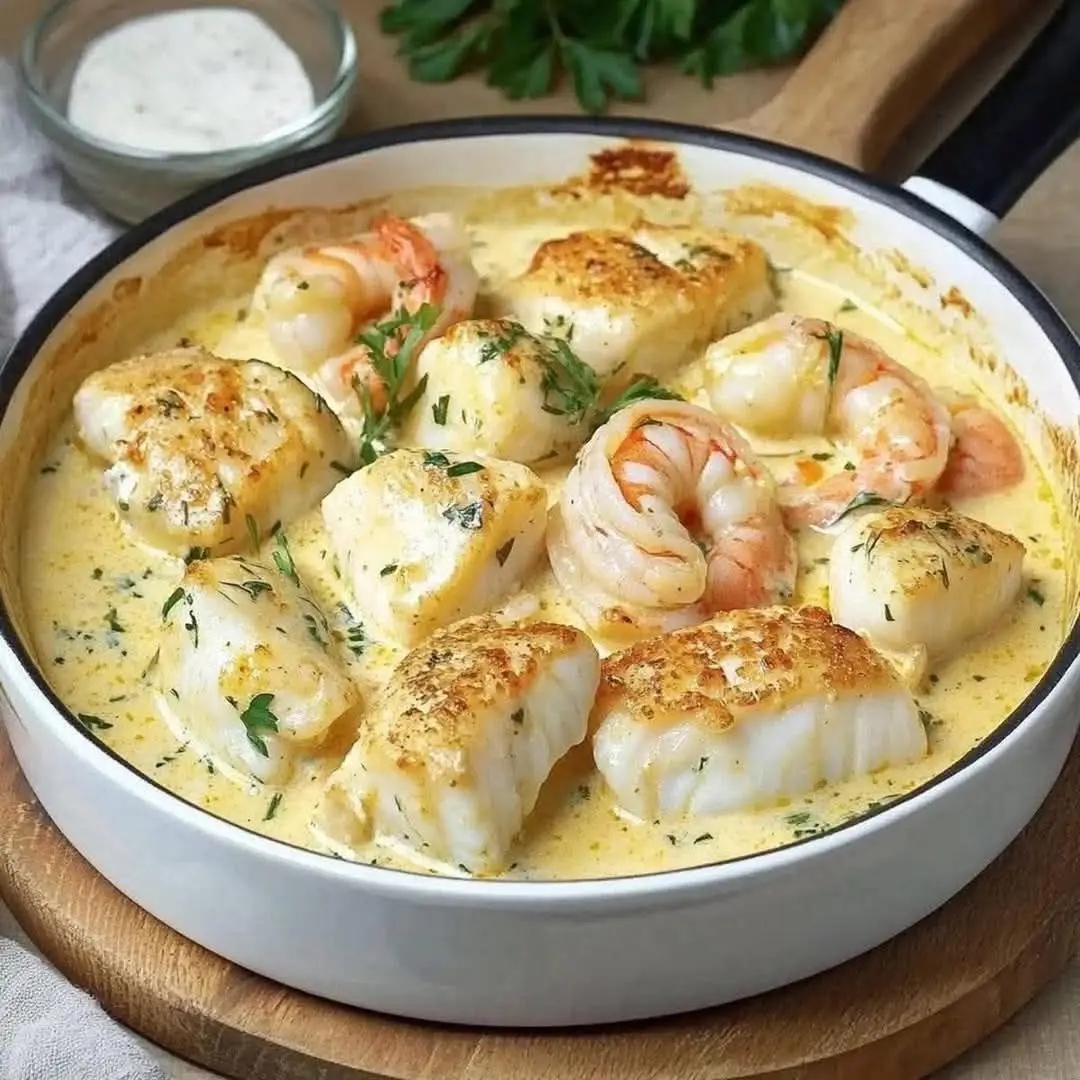
When you’re craving something elegant yet effortless, a dish that feels like a special occasion but comes together in a single skillet on a busy weeknight, this Shrimp and Cod in Creamy Garlic Sauce is the answer. Tender, flaky cod fillets and plump, juicy shrimp are nestled together in a velvety, garlic-infused cream sauce that’s brightened with fresh lemon and finished with a sprinkle of Parmesan. Each bite delivers the delicate sweetness of the seafood, the rich, savory depth of the sauce, and a hint of herbs that makes it sing. It’s the kind of meal that looks and tastes like it came from a fine dining kitchen, yet it requires just a handful of simple ingredients and about 20 minutes of active time. Serve it over rice, pasta, or with crusty bread to soak up every last drop of that luscious sauce, and prepare to be asked for the recipe again and again.
What makes this dish so brilliant is the way the two types of seafood complement each other. Cod is a mild, firm white fish that holds its shape beautifully in the sauce, breaking into large, tender flakes when cooked. Shrimp adds a contrasting texture—a satisfying, slightly springy bite and a natural sweetness that enhances the overall flavor. The creamy garlic sauce is the perfect unifier, made by gently sautéing fresh garlic in butter, then simmering with heavy cream and a touch of Parmesan until it thickens into a silky, luxurious coating. A squeeze of lemon juice at the end cuts through the richness, and a sprinkle of fresh parsley adds a pop of color and freshness. You can customize it with your favorite herbs, add a pinch of red pepper flakes for heat, or toss in some spinach or sun-dried tomatoes for extra depth. It’s a flexible, foolproof recipe that adapts to your pantry and your palate. And because both shrimp and cod cook so quickly, you’ll have a stunning dinner on the table in less than half an hour—perfect for impressing guests or treating yourself on a cozy night in.
In this comprehensive guide, we’ll walk through every detail of creating this creamy, dreamy seafood dish. We’ll explore the best types of cod and shrimp to buy, the secrets to a perfectly smooth, non-curdled cream sauce, clever variations and add-ins, and all the tips for storing and reheating leftovers. Let’s get that skillet hot and fill the kitchen with the aroma of garlic and butter.
Why You’ll Love This Shrimp and Cod in Creamy Garlic Sauce
An elegant one-pan meal in under 30 minutes. From start to finish, this dish is ready in about 20 minutes. The shrimp and cod cook in the same skillet, in the same sauce, creating layers of flavor while minimizing dishes. It’s the perfect solution for a quick yet impressive weeknight dinner, a romantic date night, or a last-minute dinner party. The presentation is gorgeous: the white fish and pink shrimp nestled in a glossy, garlicky cream sauce, garnished with vibrant green parsley.
Rich, garlicky, and deeply comforting. The sauce is the star here—butter, fresh garlic, heavy cream, and Parmesan come together in a velvety emulsion that coats every piece of seafood. It’s indulgent without being heavy, thanks to the brightening touch of lemon juice and the herbal freshness of parsley. The garlic is mellowed by cooking gently in butter, releasing its sweet, aromatic flavor without any harsh bite. Each spoonful of sauce is so good you’ll want to drink it.
Nutritious and packed with protein. Cod is a lean, flaky white fish that’s high in protein and low in fat, while shrimp provides additional lean protein and important nutrients like selenium and vitamin B12. The cream sauce, though rich, is used in moderation to coat the seafood rather than drowning it. This dish is a wonderful way to incorporate more seafood into your diet, and it’s naturally low in carbs, making it suitable for keto, low-carb, and gluten-free lifestyles.
Endlessly versatile and adaptable. You can use any firm white fish in place of cod—halibut, haddock, tilapia, or even salmon. Swap the shrimp for scallops, or use just one type of seafood if you prefer. The sauce can be customized with different herbs, a splash of white wine, or a spoonful of pesto. You can add vegetables like spinach, cherry tomatoes, or artichoke hearts. It’s a flexible template that you can make your own, ensuring it never gets boring.
Ingredient Deep Dive: The Seafood and Sauce Stars
Each component of this dish is chosen to create a harmonious balance of textures and flavors. Let’s break them down.
Cod Fillets – The Flaky, Mild Canvas
You’ll need two 6-ounce cod fillets (about 12 ounces total). Cod is ideal for this dish because of its firm, flaky texture and mild, slightly sweet flavor. It holds together well during cooking and doesn’t overpower the delicate sauce. Look for fillets that are about 1-inch thick and have a pearly white, translucent appearance. Fresh cod should smell clean and briny, not fishy. If fresh isn’t available, frozen cod works beautifully—just thaw it completely in the refrigerator overnight and pat it very dry before cooking. Excess moisture can cause the fish to steam rather than sear, so a thorough pat-down with paper towels is essential. You can substitute other firm white fish like halibut, haddock, pollock, or tilapia. Even salmon works wonderfully, though it will give the dish a richer, oilier character. The key is to ensure the fillets are of similar thickness so they cook evenly.
Shrimp – The Sweet, Juicy Bite
Half a pound of large raw shrimp (peeled and deveined, tails on or off) adds a succulent, slightly sweet contrast to the flaky cod. The tails are often left on for visual appeal, but you can remove them for easier eating. Use large or extra-large shrimp (21–30 count per pound) so they stay plump and juicy. Pat them dry as well. If using frozen shrimp, thaw them completely in the refrigerator or under cold running water, then pat dry. Raw shrimp cook in just a few minutes, so they’re added to the pan after the cod has had a head start. This ensures both proteins finish cooking at the same time. You can also use pre-cooked shrimp if that’s what you have, but add them at the very end just to warm through, as they’ll become rubbery if overcooked.
Butter, Garlic, and Heavy Cream – The Sauce Trilogy
The sauce starts with 2 tablespoons of unsalted butter, melted in the skillet. Butter provides a rich, nutty base and helps the garlic cook gently without burning. Four large cloves of garlic, minced, are sautéed in the butter for about 30–60 seconds until fragrant. Don’t let the garlic brown, or it will become bitter. The heavy cream (¾ cup) is then added and brought to a gentle simmer. Heavy cream is the ideal choice because its high fat content prevents curdling and creates a luxuriously smooth sauce. Half-and-half or milk can be substituted in a pinch, but the sauce will be thinner and more prone to separating, so you may need to simmer it a bit longer to thicken. For a dairy-free version, full-fat canned coconut milk is the best alternative, though the flavor will shift slightly. The cream simmers gently to thicken and meld with the garlic.
Parmesan Cheese, Lemon, and Herbs – The Flavor Finishers
A quarter cup of freshly grated Parmesan cheese is stirred into the sauce at the end, adding a nutty, salty depth and helping to thicken the sauce further. Always grate your own Parmesan from a block; pre-grated cheese often contains anti-caking agents that can prevent smooth melting. The juice of half a lemon (about 1 tablespoon) is squeezed in just before serving. The acidity cuts through the richness of the cream and butter, brightening the entire dish. Freshly chopped parsley (2 tablespoons) adds a pop of color and a mild, fresh herbaceous note. You can also use fresh basil, chives, or dill. A pinch of salt and freshly ground black pepper season the sauce. Be conservative with the salt initially—Parmesan is salty, and you can adjust at the end. A pinch of red pepper flakes can be added with the garlic for a subtle heat.
Step-by-Step: Skillet to Table in 20 Minutes
This dish is a straightforward, one-pan wonder. Follow these detailed steps for perfectly cooked seafood and a silky, garlicky cream sauce.
Step 1: Prepare the Seafood
Pat the cod fillets and the shrimp completely dry with paper towels. Season both sides of the cod generously with salt and freshly ground black pepper. Season the shrimp lightly as well. This step is essential: dry seafood sears better and won’t release excess water into the sauce. Let the cod sit at room temperature for a few minutes while you start the skillet, which helps it cook more evenly.
Step 2: Sear the Cod
Heat a large nonstick or well-seasoned cast-iron skillet over medium-high heat. Add 2 tablespoons of butter and let it melt until it’s foamy and just starting to turn golden. Carefully place the cod fillets in the skillet, presentation side down. Sear for 3–4 minutes without moving them, until a golden-brown crust forms. Gently flip the fillets using a thin spatula and cook for another 2–3 minutes. The cod doesn’t need to be fully cooked through at this stage; it will finish cooking in the sauce. Transfer the cod to a plate and set aside. The browned bits left in the pan are flavor gold.
Step 3: Build the Creamy Garlic Sauce
Reduce the heat to medium-low. If the pan looks dry, add a tiny splash of olive oil. Add the minced garlic and cook, stirring constantly, for 30–60 seconds until fragrant—do not let it brown. Pour in the heavy cream, scraping up any browned bits from the bottom of the pan with a wooden spoon (this deglazes the pan and incorporates all that flavor). Bring the cream to a gentle simmer and let it cook for 2–3 minutes, stirring occasionally, until it thickens slightly. Stir in the grated Parmesan cheese until it melts and the sauce becomes smooth and creamy.
Step 4: Add the Shrimp and Return the Cod
Add the seasoned shrimp to the simmering sauce in a single layer. Let them cook for 1–2 minutes on one side, then flip them. Gently nestle the cod fillets back into the skillet, along with any juices that have accumulated on the plate. Spoon some of the sauce over the top of the fish and shrimp. Reduce the heat to low, cover the skillet with a lid, and let everything simmer gently for 3–5 minutes, until the shrimp are pink and opaque, the cod flakes easily with a fork, and the sauce is hot and bubbly. The internal temperature of the fish should reach 145°F. Be careful not to overcook; the shrimp will become rubbery if left too long.
Step 5: Finish and Serve
Remove the skillet from the heat. Squeeze the juice of half a lemon over the dish, and sprinkle with fresh chopped parsley. Taste the sauce and adjust seasoning with additional salt, pepper, or lemon juice as needed. Serve immediately, spooning plenty of the creamy garlic sauce over the seafood. Pair with your choice of sides—rice, pasta, mashed potatoes, or crusty bread are all ideal for soaking up the sauce.
Pro Tips for Perfectly Cooked Seafood and a Silky Sauce
- Dry the seafood thoroughly. Moisture is the enemy of a good sear and can cause the sauce to become watery. Pat the cod and shrimp with paper towels until they feel dry to the touch. This simple step makes a significant difference in the final texture and flavor.
- Don’t overcook the seafood. Cod and shrimp both cook quickly. The cod should be opaque and flake easily with a fork, while the shrimp should be pink and firm. Overcooking will make the cod dry and the shrimp rubbery. Start checking for doneness at the minimum suggested time; you can always cook it a bit longer, but you can’t undo overdone seafood.
- Use heavy cream for the best texture. Its high fat content prevents curdling when heated and creates a thick, velvety sauce. If you use a lower-fat alternative, reduce the heat and stir constantly; a teaspoon of cornstarch mixed with a little cold water can be added to help thicken the sauce if necessary. Full-fat coconut milk is a great dairy-free alternative that also resists curdling.
- Simmer, don’t boil. High heat can cause the cream sauce to separate or curdle, especially after the lemon juice is added. Keep the heat at medium-low or low once the cream is added, and just let it gently bubble. A vigorous boil can also cause the Parmesan to clump.
- Finish with fresh lemon and herbs. These final touches brighten the rich sauce and make the dish taste vibrant and balanced. The acid from the lemon is essential—it cuts through the fat and brings all the flavors to life. Fresh parsley adds color and a clean, herbal finish.
Flavor Twists & Customizations
This creamy seafood dish is a wonderful base for all sorts of creative additions and substitutions.
- Creamy Tuscan Shrimp and Cod: Add ½ cup of chopped sun-dried tomatoes (drained from oil) and a handful of fresh baby spinach to the sauce along with the garlic. The spinach will wilt into the sauce, adding color and nutrition. This variation, often called “Tuscan,” is incredibly popular and adds a sweet, tangy depth from the sun-dried tomatoes.
- Spicy Cajun Version: Season the cod and shrimp with Cajun seasoning instead of just salt and pepper. Add a pinch of cayenne pepper to the cream sauce along with the garlic. Serve over dirty rice or with a side of sautéed bell peppers and onions for a New Orleans-inspired meal. The heat pairs beautifully with the cool, creamy sauce.
- Lemon Herb with White Wine: After sautéing the garlic, deglaze the pan with ¼ cup of dry white wine (such as Pinot Grigio or Sauvignon Blanc). Let it reduce by half, then proceed with the cream. The wine adds a bright acidity and a sophisticated depth. Finish with fresh dill and chives instead of parsley for a lighter, spring-like flavor.
- Seafood Medley: Add scallops, mussels, or chunks of salmon along with the shrimp and cod. Scallops should be seared briefly before the sauce is built, while mussels can be added with the shrimp and steamed until they open. This turns the dish into a luxurious seafood feast that’s perfect for special occasions.
- Low-Carb / Keto Version: The recipe as written is already low in carbs, but you can further reduce them by omitting any pasta or rice. Serve the seafood and sauce over cauliflower rice, zucchini noodles, or simply in a bowl with a side of steamed broccoli. The sauce is naturally keto-friendly, and it’s incredibly satisfying on its own.
What to Serve with Creamy Garlic Shrimp and Cod
This dish is saucy and rich, so it pairs beautifully with simple sides that can soak up every last drop. Fluffy white rice, brown rice, or jasmine rice is a classic choice, absorbing the garlic cream sauce perfectly. Buttery mashed potatoes or creamy polenta create a cozy, indulgent base. For a low-carb option, cauliflower rice or zucchini noodles work wonderfully. Angel hair pasta or fettuccine tossed in a little olive oil makes a complete meal. A side of steamed asparagus, green beans, or roasted broccoli adds color, texture, and a fresh contrast. Crusty sourdough bread or garlic bread is practically mandatory for mopping up the sauce. For a restaurant-worthy presentation, serve in shallow bowls with a sprinkle of extra Parmesan and a lemon wedge on the side. A crisp white wine, such as Chardonnay or Sauvignon Blanc, complements the creamy garlic sauce beautifully.
Storage, Reheating & Meal Prep
Meal Prep: You can prepare the sauce base (butter, garlic, cream, Parmesan) up to a day ahead and store it covered in the refrigerator. When ready to serve, gently reheat the sauce in a skillet while you sear the cod and cook the shrimp. The seafood itself is best cooked fresh, as it only takes a few minutes. However, you can portion out the cod and shrimp and have them seasoned and ready to go.
Storing Leftovers: Transfer any cooled leftovers to an airtight container and refrigerate for up to 2 days. The sauce may thicken as it sits. Reheat gently, as seafood can become tough if overheated. The flavor of the sauce often improves the next day as the garlic mellows.
Reheating: The best way to reheat is on the stovetop over low heat. Place the seafood and sauce in a skillet with a splash of milk or cream to loosen the sauce. Cover and warm gently until just heated through—do not boil. The microwave can be used for quick reheating, but use low power in short bursts to avoid overcooking the seafood. The sauce may separate slightly if microwaved; a gentle stir will bring it back together.
Freezing: Freezing is not recommended for this dish, as both the cream sauce and the seafood can undergo undesirable texture changes. The sauce may separate and become grainy upon thawing, and the seafood can become mushy. If you must freeze, do so with the sauce alone (without the seafood), and add freshly cooked shrimp and cod when you’re ready to serve. The sauce can be frozen in an airtight container for up to 1 month; thaw overnight in the fridge and reheat gently, whisking to re-emulsify.
Want the full recipe and simple step-by-step instructions?
Page 2 continues with the full ingredients, cooking tips, and easy directions so you can make this recipe perfectly at home.