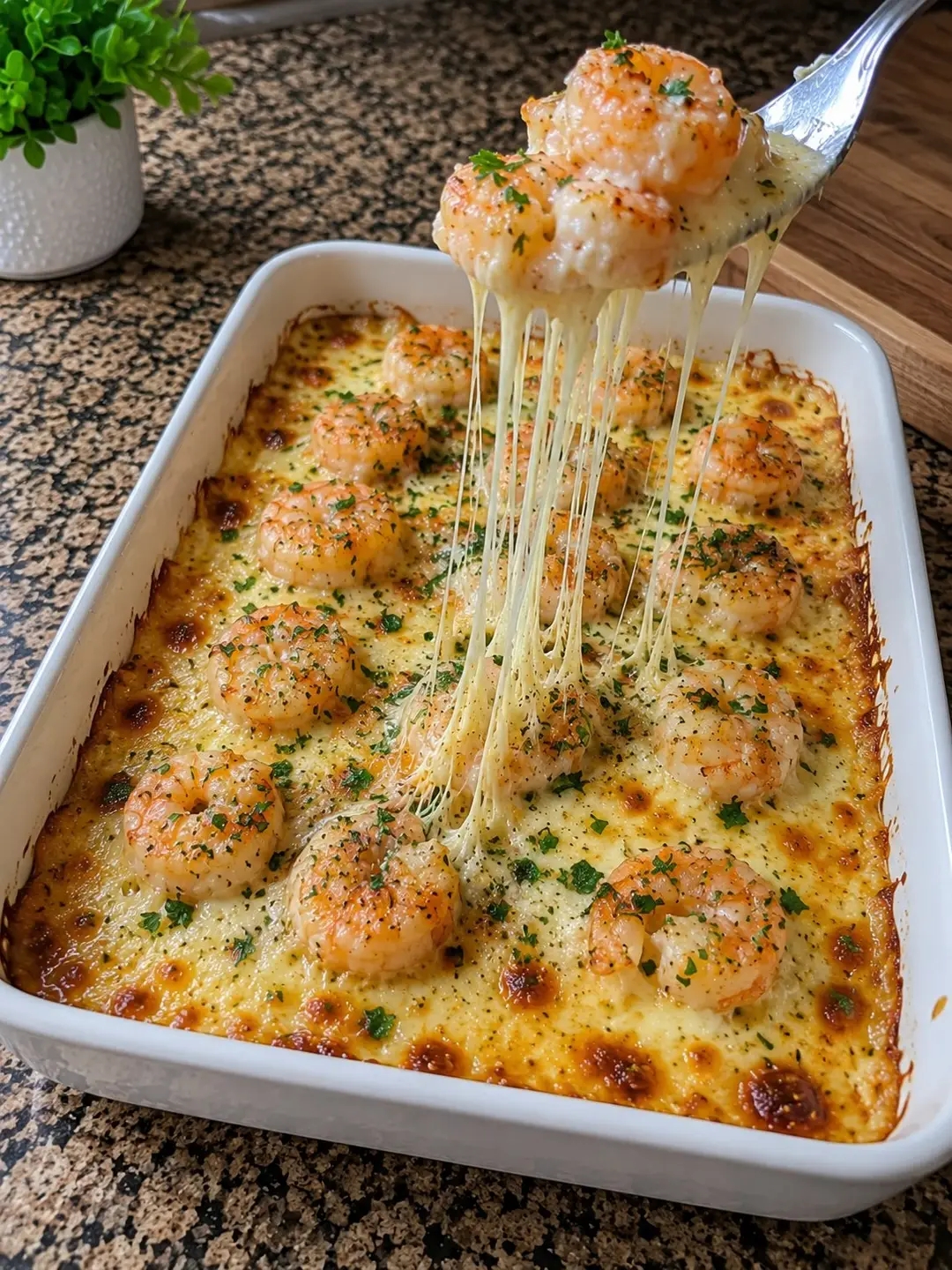
In a world where food can either fuel inflammation or fight it, this Anti-Inflammatory Cheesy Garlic Shrimp Bake stands out as a delicious, intentional choice. It’s a warm, bubbling casserole that combines succulent shrimp, tender baby spinach, sweet cherry tomatoes, and a creamy, garlicky sauce infused with turmeric and ginger—two of nature’s most powerful anti-inflammatory ingredients. A light blanket of melted mozzarella and Parmesan adds that irresistible cheesy pull, while a sprinkle of crunchy walnuts on top provides a satisfying texture contrast. Every bite is a harmony of flavors: the brightness of lemon, the earthy warmth of spices, the richness of olive oil, and the savory depth of seafood. This isn’t just a healthy dinner; it’s a deeply comforting, one-dish meal that leaves you feeling nourished, satisfied, and utterly content. Whether you’re looking to support your body’s natural healing processes or simply want a delicious, feel-good dinner, this bake delivers on every level.
Chronic inflammation is linked to a host of health issues, from joint pain to heart disease, and the foods we eat play a significant role in managing it. This recipe was crafted with that knowledge at heart, bringing together ingredients celebrated for their anti-inflammatory properties. Shrimp provides lean protein and astaxanthin, a potent antioxidant. Extra-virgin olive oil, the cornerstone of the Mediterranean diet, is rich in oleocanthal, which acts similarly to ibuprofen in the body. Fresh garlic, turmeric, and ginger form a powerful anti-inflammatory trifecta, while leafy greens and tomatoes add fiber, vitamins, and phytonutrients. Even the cheese is used thoughtfully—just enough to create that crave-worthy, golden-brown top without overwhelming the dish. It’s a meal that doesn’t taste like “health food” but instead feels like a cozy, indulgent casserole you’d crave on a chilly evening. And because everything bakes together in one dish, it’s wonderfully easy to prepare, making it a perfect weeknight dinner for anyone seeking balance and flavor in every bite.
In this comprehensive guide, we’ll walk through everything that makes this dish so special: the specific anti-inflammatory benefits of each ingredient, step-by-step instructions for a flawless bake, tips for customizing it to your dietary needs, and all the storage and pairing suggestions you need. Whether you’re following an anti-inflammatory diet, cooking for a loved one with specific health needs, or simply looking for a delicious, feel-good meal, this cheesy garlic shrimp bake is about to become a staple in your kitchen. Let’s preheat the oven and get started.
Why You’ll Love This Anti-Inflammatory Shrimp Bake
A true anti-inflammatory powerhouse. Every ingredient in this dish was chosen for its ability to help reduce inflammation in the body. Turmeric and ginger provide powerful curcuminoids and gingerols, compounds studied for their effects on joint pain and overall inflammation. Garlic and olive oil further amplify the benefits, while shrimp adds omega-3 fatty acids. It’s a meal that works in harmony with your health goals, without sacrificing flavor.
Cheesy, garlicky, and absolutely comforting. Just because it’s healthy doesn’t mean it skimps on taste. The garlic cream sauce, made with a touch of Greek yogurt and a sprinkle of Parmesan, is rich and velvety. Melted mozzarella on top creates that irresistible golden, bubbly crust. The flavors of lemon, spinach, and tomatoes bring freshness, balancing the richness perfectly. It’s the kind of comfort food that leaves you feeling light and energized, not heavy and sluggish.
Quick, one-dish meal with minimal cleanup. The shrimp and vegetables cook together in a single baking dish, meaning less time spent at the sink. The preparation involves a brief sauté of aromatics and a quick whisk of the sauce, followed by a hands-off bake. In about 30 minutes, you have a stunning, restaurant-quality dinner on the table. It’s ideal for busy weeknights when you need something fast, nourishing, and satisfying.
Easily adaptable for multiple dietary needs. The recipe is naturally gluten-free, and with a simple swap, it can be made dairy-free or paleo. You can adjust the vegetables based on what’s in season, swap the shrimp for chicken or salmon, or use a different cheese blend. The core anti-inflammatory principles remain, but the dish can flex to your preferences. It’s a forgiving recipe that encourages experimentation.
The Anti-Inflammatory Ingredient Lineup
Let’s explore each ingredient and how it contributes to both the flavor and the health benefits of this dish.
Shrimp – Lean Protein and Astaxanthin
One pound of large raw shrimp, peeled and deveined. Shrimp is a fantastic source of lean, complete protein, which is essential for muscle repair and immune function. It also contains astaxanthin, a powerful carotenoid antioxidant that gives shrimp its pink color and has been shown to reduce markers of inflammation and oxidative stress. Shrimp cooks quickly, making it perfect for a fast bake. For the most sustainable and anti-inflammatory choice, look for wild-caught shrimp. If you don’t eat shrimp, you can substitute with firm white fish chunks or even chickpeas for a plant-based version (though the protein profile will change).
Extra-Virgin Olive Oil – The Mediterranean Miracle
Two tablespoons of high-quality extra-virgin olive oil are used to sauté the aromatics and create the base of the sauce. Olive oil is rich in monounsaturated fats and contains oleocanthal, a natural phenolic compound that has been shown to have anti-inflammatory effects similar to low-dose ibuprofen. It’s a cornerstone of the Mediterranean diet, consistently linked to reduced chronic disease risk. Using a good-quality, cold-pressed olive oil ensures you get the maximum benefit. Its fruity, slightly peppery flavor also enhances the other ingredients beautifully.
Garlic, Turmeric, and Ginger – The Anti-Inflammatory Trifecta
Four large garlic cloves, minced, provide a potent dose of allicin, a sulfur compound with strong anti-inflammatory and immune-boosting properties. One teaspoon of ground turmeric adds a warm, earthy flavor and the active compound curcumin, renowned for its ability to fight inflammation at the molecular level. To enhance curcumin absorption, we include a pinch of black pepper, which contains piperine—a compound that increases curcumin bioavailability by up to 2,000%. One teaspoon of freshly grated ginger contributes gingerols, which help reduce oxidative stress and soothe digestive inflammation. Together, these three create a powerful, aromatic base that permeates the entire dish with both flavor and function.
Baby Spinach and Cherry Tomatoes – Colorful Antioxidants
Four cups of fresh baby spinach are folded into the bake just before it goes into the oven. Spinach is packed with vitamins A, C, and K, as well as flavonoids that have anti-inflammatory and antioxidant effects. It wilts beautifully in the heat, adding a silky texture and vibrant green color. One cup of halved cherry tomatoes brings lycopene, a carotenoid antioxidant that becomes even more bioavailable when cooked. The tomatoes burst during baking, releasing their sweet, tangy juices into the sauce. Together, these vegetables add fiber, bulk, and a beautiful array of phytonutrients.
Greek Yogurt and Cheeses – Creamy, with Benefits
Half a cup of plain full-fat Greek yogurt replaces heavy cream, providing a tangy, creamy base with a boost of protein and gut-friendly probiotics. It also adds calcium and reduces the need for excess cheese. We use ½ cup of shredded part-skim mozzarella for that classic cheese pull and golden crust, plus 2 tablespoons of finely grated Parmesan for a nutty, savory depth. Cheeses are used in moderation to keep the dish light while still delivering the comforting, cheesy experience we all love. For a dairy-free version, you can use a plant-based yogurt and dairy-free cheese alternatives.
Lemon Juice and Walnuts – Finishing Touches
A tablespoon of fresh lemon juice added at the end brightens the entire dish, and its vitamin C supports collagen production and immune health. A quarter cup of chopped walnuts sprinkled on top before baking provides a satisfying crunch and a dose of alpha-linolenic acid (ALA), a plant-based omega-3 fatty acid with anti-inflammatory properties. Walnuts also add a lovely earthy flavor that complements the shrimp and garlic. You can toast them lightly beforehand for an even deeper taste. The combination of lemon and walnuts gives the bake a fresh, vibrant finish that balances the creamy cheese.
Step-by-Step: From Stovetop to Oven
This dish comes together in a skillet and then finishes in the oven. Follow these steps for a perfectly cooked, creamy, and nutrient-packed meal.
Step 1: Preheat and Prep
Preheat your oven to 400°F (200°C). Lightly grease a 9×13-inch baking dish or a similar-sized oven-safe skillet with a little olive oil. Pat the shrimp dry with paper towels and season them lightly with a pinch of salt, pepper, and a tiny dusting of turmeric. This step helps the shrimp develop a nice sear and infuses them with flavor from the start.
Step 2: Sauté the Aromatics
In a large skillet over medium heat, warm the 2 tablespoons of extra-virgin olive oil. Add the minced garlic and sauté for about 30 seconds until fragrant, being careful not to let it burn. Stir in the turmeric, grated ginger, and a generous pinch of black pepper. Cook for another 30 seconds, stirring constantly, until the spices bloom and become deeply aromatic. This step activates the fat-soluble compounds in the spices, maximizing both their flavor and their health benefits. If the mixture seems dry, add a tiny splash of water or broth to prevent sticking.
Step 3: Sear the Shrimp (Optional but Recommended)
Increase the heat to medium-high and add the seasoned shrimp to the skillet in a single layer. Sear for 1–2 minutes per side, just until they turn pink and opaque on the outside. They will finish cooking in the oven, so avoid overcooking at this stage. Transfer the shrimp to a plate and set aside. This quick sear adds a caramelized flavor that deepens the overall dish, but if you’re short on time, you can skip it and add the raw shrimp directly to the baking dish.
Step 4: Make the Creamy Sauce
Reduce the heat to low. In the same skillet, add the Greek yogurt, Parmesan cheese, and lemon juice. Stir gently until the sauce is smooth and heated through—don’t let it boil, or the yogurt may curdle. The residual heat from the pan is usually enough to warm everything. The sauce should be thick, creamy, and fragrant with garlic and spice. Taste and adjust salt if needed; the Parmesan already provides saltiness, so go lightly.
Step 5: Assemble the Bake
Spread the baby spinach evenly in the bottom of the greased baking dish. Scatter the halved cherry tomatoes over the spinach. Arrange the seared shrimp on top of the vegetables. Pour the creamy garlic sauce over everything, using a spatula to gently spread it so it coats the shrimp and vegetables. Sprinkle the shredded mozzarella evenly over the top, followed by the chopped walnuts. The walnuts add a lovely crunch and an extra layer of anti-inflammatory omega-3s.
Step 6: Bake Until Bubbly and Golden
Place the dish in the preheated oven and bake for 12 to 15 minutes, until the cheese is melted, bubbly, and beginning to turn golden brown in spots. The shrimp should be fully cooked through (opaque and firm) and the spinach wilted. If you desire a more deeply browned top, switch the oven to broil for the final 1–2 minutes, keeping a close eye to prevent the nuts and cheese from burning. The walnuts should be fragrant and lightly toasted.
Step 7: Garnish and Serve
Remove the dish from the oven and let it rest for a few minutes. Garnish with a sprinkle of fresh chopped parsley or additional lemon zest. Serve immediately, scooping generous portions onto plates alongside your chosen accompaniment. The sauce will be thin in the dish but coats everything beautifully. Enjoy the warm, nourishing goodness.
Pro Tips for a Creamy, Perfectly Cooked Bake
- Don’t overbake the shrimp. Shrimp cook very quickly and can become rubbery if exposed to high heat for too long. The brief sear plus the short oven time ensures they stay tender and succulent. If you skip the sear, bake just until the shrimp are opaque all the way through—start checking at 10 minutes.
- Use full-fat Greek yogurt to prevent curdling. Low-fat or fat-free yogurts contain more water and are more likely to separate when heated. Full-fat yogurt provides a more stable, creamy texture. Stirring it in off the heat or over very low heat minimizes the risk of curdling. If you’re concerned, you can temper the yogurt by whisking a little of the warm sauce into it before adding it to the pan.
- Activate the turmeric with heat and black pepper. Curcumin is fat-soluble and better absorbed with piperine from black pepper. Sautéing the turmeric in olive oil with a generous pinch of pepper maximizes its bioavailability. This simple step turns a delicious spice into a potent functional ingredient.
- Add the spinach raw—it will wilt perfectly in the oven. There’s no need to pre-cook the spinach. It will steam and wilt in the heat of the dish, releasing just enough moisture to keep everything tender without making the casserole watery. Use fresh, dry baby spinach for the best results.
- Toast the walnuts beforehand for extra flavor. While the walnuts will toast slightly during baking, giving them a quick toast in a dry skillet for 2–3 minutes before adding them to the dish enhances their nuttiness and crunch. This is an optional but recommended step that adds depth to every bite.
Customizations & Substitutions
This recipe is meant to adapt to your needs and what’s available. Here are a few easy ways to make it your own.
- Make it dairy-free: Replace the Greek yogurt with a plain, unsweetened dairy-free yogurt (coconut or almond-based). Use dairy-free mozzarella and Parmesan alternatives, or omit the cheese entirely and double the walnut topping for crunch. The flavor will still be rich and satisfying thanks to the olive oil, garlic, and spices.
- Swap the protein: Instead of shrimp, try chunks of salmon, firm white fish, or even thinly sliced chicken breast (pounded to an even thickness). Cooking times may vary: salmon will take a similar amount of time; chicken should be cooked through to 165°F, so you may need to extend the baking time or sear it longer beforehand.
- Add more vegetables: Artichoke hearts, zucchini slices, or roasted red peppers are wonderful additions. You can also stir in a can of drained, rinsed chickpeas or white beans for extra fiber and protein. The more colorful vegetables, the more antioxidants you’ll pack into each serving.
- Spice it up: Add a pinch of red pepper flakes or a finely diced fresh chili along with the garlic for a gentle kick. The heat can actually help stimulate circulation and add another dimension to the anti-inflammatory benefits. A dash of smoked paprika also adds a lovely depth.
- Go grain-free or low-carb: The bake is already low in carbs, served on its own or over cauliflower rice. If you’re not avoiding grains, serve it over quinoa or brown rice for a more substantial meal. Either way, the dish shines as the star.
What to Serve with This Shrimp Bake
This dish is a complete meal on its own, with protein, healthy fats, and plenty of vegetables. However, a few simple sides can round out the plate. Serve it over a bed of fluffy quinoa or brown rice to soak up the delicious sauce. Cauliflower rice is a great low-carb alternative. A side of steamed broccoli or roasted asparagus adds even more green goodness. A crisp cucumber-tomato salad dressed with lemon and olive oil complements the warm bake perfectly. For a grain-free bread option, almond flour biscuits or a slice of toasted sourdough can sop up every last drop of the creamy garlic sauce. A glass of white wine or a cup of ginger-turmeric tea beautifully echoes the flavors and adds to the anti-inflammatory theme.
Storage, Meal Prep & Reheating
Meal Prep: You can assemble the entire dish (without baking) up to a day in advance. Cover and refrigerate. When ready to cook, let it sit at room temperature for 15–20 minutes while the oven preheats, then bake as directed, adding 5–7 minutes to the cooking time to account for the cold start. The shrimp can also be prepped: peel, devein, and season them, then store in the refrigerator.
Storing Leftovers: Transfer any cooled leftovers to an airtight container and refrigerate for up to 3 days. The shrimp will remain tender, and the spinach, while softer, will still taste wonderful. The sauce may thicken upon standing; a gentle reheat will restore its creamy texture.
Reheating: Warm individual portions gently in the microwave at medium power to avoid overcooking the shrimp. For a better texture, reheat in a 325°F oven for 8–10 minutes, or in a skillet over low heat with a splash of water or broth. Avoid high heat, which can make the shrimp rubbery.
Freezing: Freezing is not recommended, as shrimp can become tough and the creamy yogurt sauce may separate upon thawing. This dish is best enjoyed fresh. If you need to freeze, consider freezing the sauce base and shrimp separately (raw, seasoned shrimp freeze well), then assemble and bake when ready to serve.
Want the full recipe and simple step-by-step instructions?
Page 2 continues with the full ingredients, cooking tips, and easy directions so you can make this recipe perfectly at home.