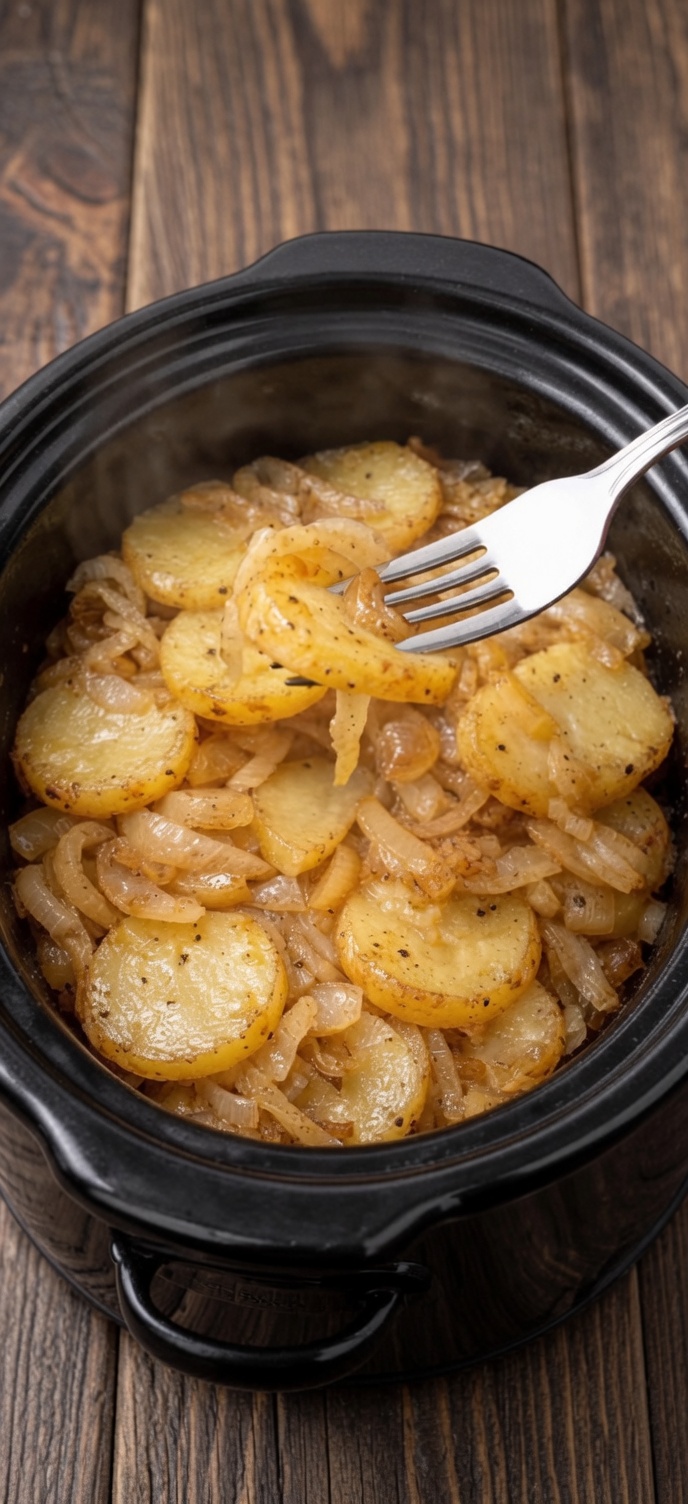
Garlic Butter Potatoes and Onions
For a stronger savory flavor, add three or four minced garlic cloves.
Place the garlic between the potato and onion layers.
You can also combine the softened butter with garlic powder, dried parsley, and black pepper before adding it to the slow cooker.
Garlic butter potatoes pair especially well with roasted chicken, steak, pork chops, or grilled vegetables.
Fresh garlic has a stronger flavor, while garlic powder distributes more evenly.
Cheesy Slow Cooker Potatoes
Add one and a half cups of shredded cheddar, Monterey Jack, mozzarella, or Colby Jack near the end of cooking.
Wait until the potatoes are tender.
Sprinkle the cheese over the top, cover the slow cooker, and cook for another fifteen to twenty minutes.
The cheese should melt without making the potatoes excessively soft.
Freshly shredded cheese usually melts more smoothly than packaged shredded cheese.
Creamy Potato and Onion Variation
After the potatoes become tender, stir in half a cup of sour cream or softened cream cheese.
Add it gradually and fold gently so the slices remain intact.
A small amount of warm milk or heavy cream can also be added.
Creamy potatoes work well with ham, chicken, meatloaf, or roasted beef.
Do not add dairy at the beginning because it may separate during long cooking.
Bacon Potatoes and Onions
Cook six slices of bacon until crisp.
Drain them and crumble them into small pieces.
Add half of the bacon during the final thirty minutes.
Sprinkle the rest over the potatoes before serving.
Bacon adds smoky flavor and salt, so reduce the additional salt in the recipe.
Chopped green onions and shredded cheddar can also be added for a loaded-potato variation.
Sausage and Potato Meal
Add sliced smoked sausage or fully cooked kielbasa to transform the side dish into a simple meal.
Place the sausage between the potato layers.
Cook according to the original instructions.
The sausage releases flavorful juices that coat the potatoes and onions.
Use fully cooked sausage and check the package instructions.
Serve the completed dish with a green salad, steamed vegetables, or warm bread.
Ham and Potato Variation
Add two cups of diced cooked ham.
Place the ham between the potato and onion layers.
Ham contains salt, so use less seasoning at the beginning.
Cheddar cheese can be added during the final twenty minutes.
This variation is useful for using leftover holiday ham.
Herb-Roasted Flavor
Add dried thyme, rosemary, parsley, or Italian seasoning.
Rosemary has a strong flavor, so use it lightly.
A good starting point is half a teaspoon of dried rosemary or one teaspoon of dried thyme.
Fresh herbs can be sprinkled over the potatoes after cooking.
Adding the fresh herbs at the end preserves their color and aroma.
Paprika and Onion Potatoes
Add one teaspoon of smoked or sweet paprika.
Paprika gives the potatoes a warmer color and a mild earthy flavor.
Smoked paprika pairs well with sausage, bacon, beef, or barbecue meals.
A small amount of cayenne pepper may be added for heat.
Begin with a small pinch because it becomes stronger as the dish cooks.
Ranch-Style Slow Cooker Potatoes
Sprinkle a small packet of dry ranch seasoning over the potato layers.
Use unsalted butter and avoid adding extra salt until the dish is finished.
Ranch-seasoned potatoes taste delicious with chicken, burgers, barbecue, or grilled vegetables.
Cheddar cheese and bacon can be added near the end for a richer variation.
French Onion Potatoes
Add one packet of dry onion soup mix for a stronger onion flavor.
Because the soup mix contains significant sodium, use unsalted butter and avoid additional salt.
Mix the seasoning with the potato slices before layering them with the fresh onions.
This variation creates a darker, more savory sauce.
Serve it with roast beef, meatloaf, chicken, or pork.
Vegan Slow Cooker Potatoes
Replace the butter with olive oil or plant-based butter.
Use approximately one-third cup of olive oil or six tablespoons of dairy-free butter.
Season with garlic, herbs, salt, and black pepper.
Check the labels of seasoning blends to make sure they contain no dairy ingredients.
The vegetables will still become soft and flavorful without traditional butter.
What to Serve With Potatoes and Onions
Slow Cooker Potatoes and Onions pair well with roasted chicken, grilled chicken, steak, pork chops, sausage, meatloaf, hamburgers, baked fish, or turkey.
For breakfast, serve them with scrambled eggs, fried eggs, bacon, or breakfast sausage.
For a vegetarian meal, pair them with roasted vegetables, beans, salad, or a plant-based protein.
The potatoes can also be served with sour cream, shredded cheese, chopped herbs, or gravy.
Holiday Serving Ideas
This potato recipe is useful for holiday meals because it keeps the oven available for meat, casseroles, rolls, or desserts.
Serve the potatoes with turkey, ham, roast beef, chicken, or pork.
Add fresh parsley before serving for color.
Transfer the potatoes to a warm serving bowl or keep them inside the slow cooker on the Warm setting for a short period.
Avoid leaving them on Warm for many hours because they may become overly soft.
Breakfast Potato Bowls
Place the warm potatoes and onions inside serving bowls.
Top them with scrambled eggs, shredded cheese, chopped bacon, sausage, avocado, or salsa.
The buttery potatoes create a filling breakfast or brunch meal.
Leftover potatoes can be reheated inside a skillet to create crisp edges before adding the toppings.
How to Make the Potatoes Crispier
Slow-cooker potatoes remain soft rather than deeply crisp.
For a crisp finish, transfer the cooked potatoes to a greased baking sheet.
Arrange them in a single layer.
Broil for several minutes until the edges become golden.
Watch them carefully because the butter and onions can brown quickly.
You can also cook leftover potatoes inside a hot skillet with a small amount of oil.
Meal-Prep Instructions
Prepare the potatoes according to the recipe and allow them to cool.
Divide them between airtight meal-prep containers.
Add chicken, sausage, eggs, vegetables, or another protein.
Refrigerate for up to four days.
Keep sauces or sour cream inside separate containers.
Reheat only the portion you plan to eat.
How to Store Leftovers
Transfer the cooled potatoes and onions to an airtight container.
Refrigerate them for up to four days.
Include some of the buttery cooking liquid so the potatoes remain moist.
Do not leave cooked potatoes at room temperature for longer than two hours.
During warm weather, refrigerate them sooner.
Discard leftovers that develop an unusual odor, color, or texture.
How to Reheat Slow Cooker Potatoes
The potatoes can be reheated inside the microwave, oven, air fryer, or skillet.
For microwave reheating, place one portion inside a microwave-safe dish and cover it loosely.
Heat for one minute, stir gently, and continue heating in shorter intervals.
For oven reheating, spread the potatoes inside a baking dish and cover with foil.
Warm at 350°F until hot.
For crispy edges, reheat them inside a skillet with a small amount of butter or oil.
Can You Freeze Potatoes and Onions?
Cooked potatoes can be frozen, but their texture may become softer after thawing.
Allow the dish to cool completely.
Transfer it to a freezer-safe container.
Freeze for up to two months.
Thaw overnight inside the refrigerator.
Reheat gently in the oven or skillet.
Yukon Gold and red potatoes usually hold their texture better than Russet potatoes after freezing.
Can the Ingredients Be Prepared Ahead?
The onions can be sliced one day in advance and stored inside an airtight container.
Potatoes can be peeled and sliced several hours before cooking.
Keep the sliced potatoes submerged in cold water inside the refrigerator.
Drain and dry them thoroughly before placing them inside the slow cooker.
Do not leave sliced potatoes exposed to air because they may discolor.
Why Are My Potatoes Still Hard?
The slices may be too thick or the slow cooker may not have reached the correct temperature.
Continue cooking with the lid closed.
Avoid adding cold ingredients during cooking.
A very full slow cooker may require more time.
Check that the appliance is working properly and that the cooker is not overfilled.
Why Did My Potatoes Become Mushy?
The potatoes were probably sliced too thinly or cooked for too long.
Use thicker and evenly sized rounds.
Begin checking the dish near the early end of the cooking range.
Russet potatoes soften faster than waxier varieties.
Choose Yukon Gold or red potatoes when you want firmer slices.
Why Is There Too Much Liquid?
Potatoes and onions naturally release water while cooking.
Do not add broth unless the recipe specifically requires it.
Remove the lid during the final fifteen minutes when the dish looks too wet.
You can also transfer the cooked potatoes using a slotted spoon.
The remaining liquid can be spooned lightly over the servings.
Why Are the Potatoes Dry?
The cooker may be too large, the lid may not seal properly, or the potatoes may have cooked too long.
Make sure the butter is distributed between the layers.
Add two or three tablespoons of broth near the end when necessary.
Avoid adding large quantities of liquid.
Why Did the Potatoes Turn Brown or Gray?
Raw sliced potatoes can discolor when exposed to air.
Prepare them shortly before cooking or keep them submerged in cold water.
Drain and dry them before use.
A small amount of discoloration is usually harmless and may become less noticeable after cooking.
Can I Use Frozen Potatoes?
Frozen sliced or diced potatoes can be used, but the texture may be softer.
Do not thaw them for a long period at room temperature.
Add them directly according to the package instructions.
Frozen hash browns may break apart and create a casserole-like texture rather than distinct potato rounds.
Can I Add Broth?
A small amount of chicken or vegetable broth may be added when you prefer a saucier dish.
Use only one-quarter cup to begin.
The slow cooker traps moisture, and too much broth can make the potatoes watery.
Broth is usually unnecessary when enough butter and onions are used.
Can I Double the Recipe?
Yes.
Use a larger slow cooker and avoid filling it more than approximately three-quarters full.
A larger quantity may require additional cooking time.
Keep the slices evenly sized and distribute the butter between all the layers.
Check several potato pieces from different areas before serving.
Can I Make This Recipe in the Oven?
Yes.
Arrange the sliced potatoes, onions, and butter inside a covered baking dish.
Bake at 375°F for approximately forty-five to sixty minutes.
Stir gently halfway through.
Remove the cover during the final fifteen minutes when you want lightly browned edges.
Can I Make It on the Stovetop?
Yes.
Place the sliced potatoes, onions, butter, and a small splash of water inside a large covered skillet.
Cook over medium-low heat.
Stir gently every few minutes.
Remove the lid near the end and allow the excess moisture to evaporate.
Continue cooking until the potatoes become tender and lightly golden.
Final Thoughts
3-Ingredient Slow Cooker Potatoes and Onions are a simple comfort-food recipe made with potatoes, sliced onions, and butter.
The slow cooker gently softens the vegetables and allows the natural onion flavor to spread through every layer.
Use evenly sliced Yukon Gold potatoes, distribute the butter throughout the cooker, and avoid adding unnecessary liquid.
Serve the potatoes with chicken, beef, pork, sausage, eggs, vegetables, or holiday dishes.
Customize the recipe with garlic, herbs, cheese, bacon, ranch seasoning, sausage, ham, or mild spices.
This affordable and easy side dish is perfect for busy weeknights, family dinners, potlucks, and holidays.