Introduction
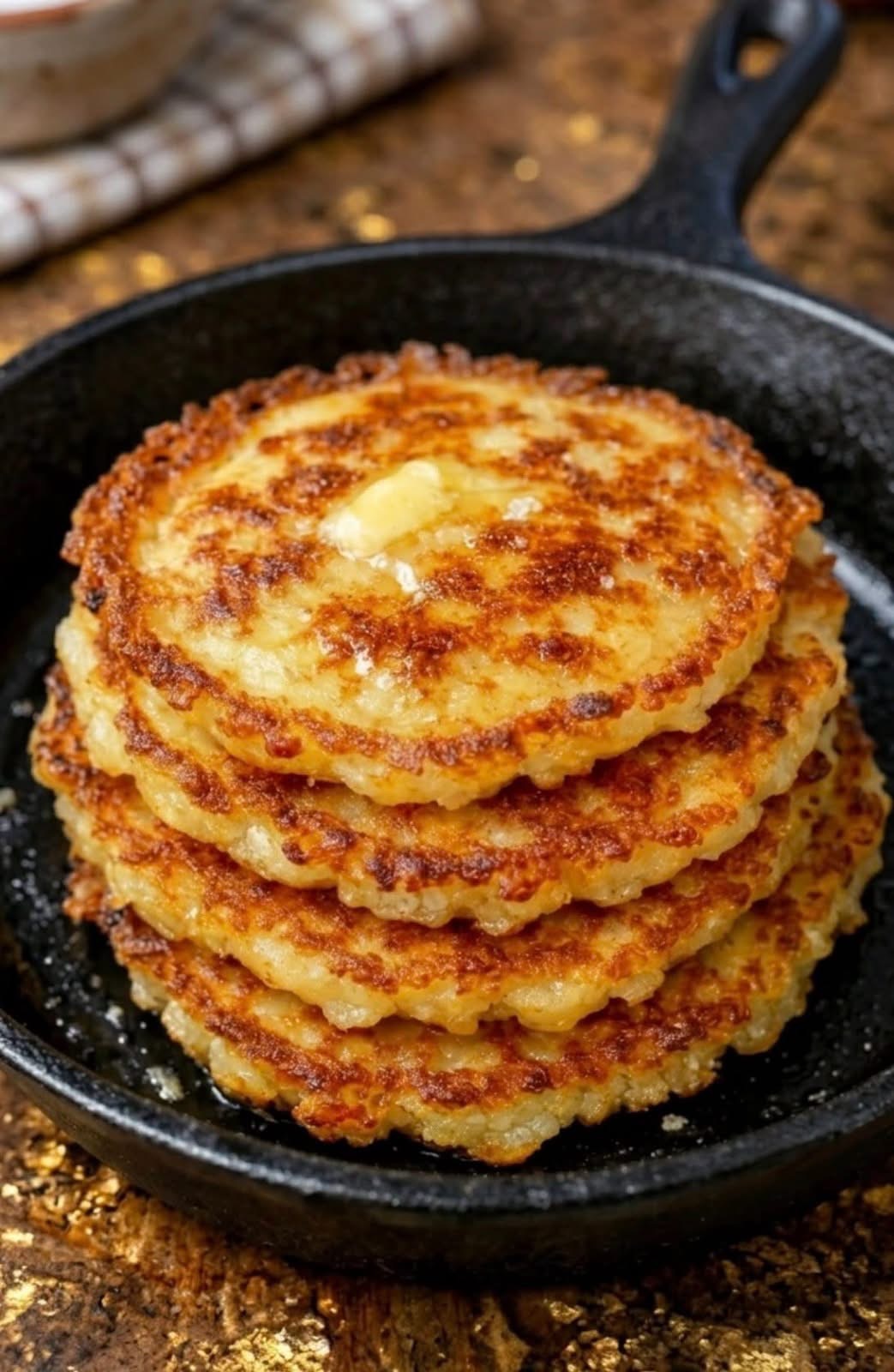
These Crispy Golden Potato Pancakes are beautifully browned around the edges, tender in the center, and filled with comforting homemade flavor.
They are prepared with grated potatoes, onion, eggs, flour, and simple seasonings, then cooked in a skillet until both sides develop a deep golden crust.
Potato pancakes are affordable, satisfying, and easy to serve for breakfast, lunch, dinner, or as a warm appetizer. They pair well with sour cream, applesauce, eggs, smoked salmon, roasted vegetables, or a simple green salad.
The recipe uses basic ingredients that are easy to find in most kitchens. With the correct preparation, the pancakes remain crisp rather than oily, and the centers cook completely without becoming heavy.
Why This Recipe Is Popular
Potato pancakes are popular because they transform a few inexpensive ingredients into a warm and filling meal.
Freshly grated potatoes create a textured center, while direct contact with the hot skillet produces crisp, caramelized edges.
The recipe is easy to adjust according to personal taste. Garlic, cheese, fresh herbs, spices, or vegetables can be added without changing the basic cooking method.
Potato pancakes can also be prepared in advance, refrigerated, frozen, and reheated when needed.
They are especially useful when you need a family-friendly recipe that works as a side dish, snack, or main meal.
Recipe Information
The preparation time is approximately twenty minutes.
The cooking time is approximately twenty-five minutes.
The total time is about forty-five minutes.
This recipe provides approximately ten medium potato pancakes.
Main Ingredients
Russet potatoes are ideal because they contain a high level of starch, which helps the pancakes become crisp and hold their shape.
Onion provides moisture, sweetness, and savory flavor.
Eggs bind the grated potatoes together.
Flour absorbs excess liquid and creates additional structure.
Salt and black pepper provide simple seasoning without covering the natural potato flavor.
Oil or clarified butter creates a golden and crisp exterior.
Ingredients
You will need two pounds of Russet potatoes, one small yellow onion, two large eggs, one-quarter cup of all-purpose flour, one teaspoon of salt, half a teaspoon of black pepper, half a teaspoon of garlic powder, and approximately one-quarter cup of neutral cooking oil.
Fresh parsley or chives can be added for extra color and flavor.
Sour cream and applesauce may be served alongside the finished pancakes.
The Best Potatoes to Use
Russet potatoes usually provide the crispiest result because they are naturally starchy and contain less moisture than many waxy varieties.
Yukon Gold potatoes can also be used. They create a creamier center and a slightly buttery flavor, although the edges may be less crisp.
Red potatoes are not the best first choice because they contain more moisture and less starch.
When using a combination of potato varieties, include at least half Russet potatoes to help the pancakes hold together.
Choose potatoes that feel firm and have no large green areas, mold, or strong sprouts.
Should the Potatoes Be Peeled?
Peeling is optional.
Peeled potatoes create a smoother appearance and a softer center.
Leaving the skin on adds texture, color, and a slightly more rustic flavor.
When keeping the skin, scrub the potatoes thoroughly under running water and remove any damaged areas.
Older or thick-skinned potatoes are usually better peeled.
How to Grate the Potatoes
Use the large holes of a box grater to create visible potato strands.
A food processor fitted with a shredding attachment can also be used and is helpful when preparing a larger batch.
Grate the potatoes shortly before mixing the batter because exposed potato flesh can darken quickly.
Grate the onion with the potatoes or chop it very finely.
The onion adds flavor and may help slow some discoloration.
Remove the Excess Moisture
Removing moisture is one of the most important steps in this recipe.
Place the grated potatoes and onion inside a clean kitchen towel or several layers of cheesecloth.
Gather the towel around the mixture and squeeze firmly over the sink or a bowl.
Continue squeezing until very little liquid comes out.
Wet potatoes create soft and oily pancakes because the skillet must evaporate the water before browning can begin.
Dry potato shreds become crisp more quickly and require less cooking time.
Save the Potato Starch
When the potato liquid is collected inside a bowl, allow it to rest for several minutes.
A white layer of natural potato starch may settle at the bottom.
Carefully pour away the clear liquid while leaving the starch behind.
Add the starch back to the grated potatoes.
This natural starch helps bind the mixture and creates a crisp texture.
This step is optional but especially useful when the potatoes appear very wet.
Prepare the Potato Mixture
Place the squeezed potatoes and onion inside a large mixing bowl.
Add the eggs, flour, salt, black pepper, and garlic powder.
Mix until the flour and eggs are evenly distributed.
The mixture should feel moist but should not contain a large amount of loose liquid.
If water begins collecting at the bottom of the bowl, stir again and add one additional tablespoon of flour.
Avoid adding too much flour because the pancakes can become heavy and bread-like.
Allow the Mixture to Rest Briefly
Let the potato mixture rest for approximately five minutes.
This gives the flour and natural starch time to absorb moisture.
Stir again before shaping the first pancake.
Do not leave the raw potato mixture at room temperature for a long period because the potatoes may continue releasing water and darkening.
For the best texture, begin cooking soon after mixing.
Choose the Right Skillet
A cast-iron skillet is excellent because it maintains steady heat and creates a deeply golden crust.
A heavy stainless-steel skillet also works well.
A large nonstick skillet is easier for beginners and may require slightly less oil.
The skillet should be wide enough to cook several pancakes without crowding them.
Crowding lowers the pan temperature and makes the pancakes steam instead of crisp.
Choosing the Cooking Oil
Use an oil that can handle medium or medium-high heat.
Good choices include avocado oil, canola oil, vegetable oil, sunflower oil, or light olive oil.
Clarified butter can also be used for a richer flavor.
Regular butter may burn before the pancakes are fully cooked, so combine it with a small amount of oil when you want buttery flavor.
Add enough oil to lightly cover the bottom of the skillet.
The pancakes should fry in a shallow layer rather than float in deep oil.
Heat the Skillet Properly
Place the skillet over medium heat and allow it to warm for several minutes.
Add the oil and wait until it appears shiny.
Drop a tiny amount of potato mixture into the pan.
It should begin sizzling immediately without burning.
When the oil is not hot enough, the pancakes absorb more fat and become greasy.
When it is excessively hot, the outside browns before the center has time to cook.
Adjust the heat throughout cooking when necessary.
Shape the Potato Pancakes
Scoop approximately one-quarter cup of the potato mixture for each pancake.
Place it carefully inside the hot skillet.
Use the back of a spoon or spatula to flatten the mixture into a round shape approximately one-third of an inch thick.
Thin pancakes become crisp more easily.
Very thick pancakes may brown outside while remaining undercooked in the center.
Keep a small amount of space between the pancakes.
Cook the First Side
Cook the pancakes without moving them for approximately three to four minutes.
The edges should become visibly golden and crisp.
Wait until the bottom develops a firm crust before attempting to turn them.
Moving the pancakes too early can cause them to break apart.
Use a thin, wide spatula to lift one edge and check the color.
Turn the Pancakes Carefully
Slide the spatula completely beneath each pancake.
Turn it in one smooth motion.
Cook the second side for another three to four minutes.
The finished pancake should be golden brown on both sides and cooked through in the center.
Reduce the heat slightly if the surface is becoming dark too quickly.
Drain the Cooked Pancakes
Transfer the cooked pancakes to a plate lined with paper towels or to a wire rack placed over a baking sheet.
A wire rack allows air to circulate around the pancakes and helps preserve the crisp texture.
Paper towels absorb excess oil but may trap some steam beneath the pancakes.
Avoid stacking them immediately because trapped steam can soften the crust.
Keep the Pancakes Warm
Preheat the oven to approximately 200°F.
Arrange the cooked pancakes in a single layer on a wire rack over a baking sheet.
Place them inside the warm oven while cooking the remaining batches.
Do not cover them tightly.
A tight cover traps steam and reduces crispness.
Serve the pancakes as soon as possible for the best texture.
Adjust the Batter Between Batches
Potatoes continue releasing moisture while they sit.
Stir the mixture before cooking every batch.
When liquid collects at the bottom, remove some with a spoon or add a very small amount of flour.
Check the oil level between batches and add more when necessary.
Allow the skillet to reheat before adding the next pancakes.
How to Know When They Are Fully Cooked
The outside should be evenly golden and crisp.
The center should feel tender without tasting raw or crunchy.
The pancakes should hold together when lifted.
A medium pancake usually requires approximately six to eight minutes of total cooking time.
The exact time depends on the pan temperature and thickness.
Simple Recipe Overview
Grate the potatoes and onion.
Squeeze out as much liquid as possible.
Combine them with eggs, flour, salt, pepper, and garlic powder.
Heat a thin layer of oil inside a skillet.
Add small portions of potato mixture and flatten them.
Cook until the first side is deeply golden.
Turn and cook the second side.
Drain briefly and serve warm.
Tips for Extra-Crispy Potato Pancakes
Remove as much moisture as possible from the grated potatoes.
Use a high-starch potato variety.
Keep the pancakes thin and evenly shaped.
Make sure the skillet and oil are fully heated before adding the mixture.
Avoid overcrowding the pan.
Cook the pancakes until a firm crust forms before turning them.
Keep cooked pancakes on a wire rack rather than stacking them.
Serve them shortly after cooking.
Common Mistakes to Avoid
Do not skip squeezing the grated potatoes because excess water prevents proper browning.
Do not use a cold skillet.
Avoid adding too much flour.
Do not make the pancakes excessively thick.
Do not press them repeatedly while cooking because this can make the centers dense.
Avoid turning them before the crust has formed.
Do not stack hot pancakes inside a covered container
Want the full recipe and simple step-by-step instructions?
Page 2 continues with the full ingredients, cooking tips, and easy directions so you can make this recipe perfectly at home.
Cheesy Potato Pancakes
Cheese adds richness and creates crisp, caramelized edges.
Add approximately one cup of shredded cheddar, mozzarella, Monterey Jack, or Gruyère to the potato mixture.
Freshly shredded cheese usually melts more smoothly than packaged cheese.
When using salty cheese, reduce the added salt slightly.
Cheesy potato pancakes taste delicious with sour cream, ranch dressing, tomato soup, or scrambled eggs.
Garlic and Herb Potato Pancakes
Add two minced garlic cloves to the potato mixture.
Stir in chopped parsley, chives, dill, or green onions.
Fresh herbs add color and a lighter flavor that balances the richness of the fried potatoes.
Dried herbs may also be used, but fresh herbs usually provide a brighter result.
Garlic and herb pancakes pair especially well with yogurt sauce or grilled chicken.
Loaded Potato Pancakes
Add shredded cheddar cheese, chopped green onions, and small pieces of cooked bacon.
Use slightly less salt because bacon and cheese both contain sodium.
Serve the finished pancakes with sour cream and additional chopped green onions.
This variation has flavors similar to a loaded baked potato and works well as a party appetizer or weekend breakfast.
Onion Potato Pancakes
For a stronger onion flavor, use one large onion instead of a small one.
Cooked caramelized onions may also be added, but they should be cooled and drained before mixing.
Green onions or chives create a milder flavor.
Grated onion adds moisture, so squeeze it together with the potatoes before combining the batter.
Spicy Potato Pancakes
Add a small amount of cayenne pepper, smoked paprika, red pepper flakes, chopped jalapeño, or hot sauce.
Pepper Jack cheese can also be mixed into the potatoes.
Begin with a small quantity of spice and add more according to taste.
Serve spicy potato pancakes with sour cream, avocado sauce, ranch dressing, or a cool cucumber salad.
Potato and Zucchini Pancakes
Replace part of the grated potato with grated zucchini.
Zucchini contains a large amount of water, so squeeze it very thoroughly before adding it to the mixture.
A good starting ratio is three parts potato to one part zucchini.
Add another tablespoon of flour if the batter remains loose.
This version has a slightly lighter texture and adds more vegetables to the meal.
Potato and Carrot Pancakes
Add one grated carrot to the potato mixture.
Carrots add natural sweetness and color.
Squeeze the grated carrot with the potato when it appears very moist.
A small amount of cumin, paprika, or parsley pairs well with the carrot flavor.
These pancakes are especially good with yogurt sauce or roasted chicken.
Mashed Potato Pancake Variation
Leftover mashed potatoes can also be transformed into pancakes.
Combine approximately two cups of cold mashed potatoes with one egg, half a cup of shredded cheese, one-quarter cup of flour, and chopped herbs.
Shape the mixture into patties.
Cook them inside a lightly oiled skillet until golden on both sides.
Mashed potato pancakes have a softer center and a smoother texture than pancakes made from grated raw potatoes.
Gluten-Free Potato Pancakes
Replace the all-purpose flour with cornstarch, potato starch, rice flour, or a one-to-one gluten-free baking blend.
Begin with approximately three tablespoons and add more only when necessary.
Check that all seasonings and serving sauces are gluten-free.
Potatoes naturally contain no gluten, so the recipe is easy to adapt.
Dairy-Free Potato Pancakes
The basic recipe is naturally dairy-free when cooked with vegetable oil.
Do not add cheese, butter, sour cream, or dairy-based sauces.
Serve with applesauce, dairy-free yogurt, avocado sauce, salsa, or a simple herb dressing.
Check prepared sauces carefully because some may contain hidden dairy ingredients.
Egg-Free Potato Pancakes
Egg helps bind the potato mixture, but it can be replaced.
Combine one tablespoon of ground flaxseed with three tablespoons of water.
Allow the mixture to rest until thick, then add it to the potatoes.
Additional potato starch or flour may be needed for stability.
Handle egg-free pancakes gently and wait until a firm crust forms before turning them.
Air-Fryer Potato Pancakes
Preheat the air fryer to 375°F.
Lightly spray the basket or tray with oil.
Shape the potato mixture into thin patties and arrange them in a single layer.
Spray the tops lightly with oil.
Cook for approximately eight minutes.
Turn the pancakes and continue cooking for another six to eight minutes.
The air-fryer version uses less oil but may not develop exactly the same fried texture as the skillet method.
Oven-Baked Potato Pancakes
Preheat the oven to 425°F.
Line a metal baking sheet with parchment paper and brush it lightly with oil.
Arrange small portions of potato mixture on the pan and flatten them.
Brush or spray the tops with oil.
Bake until the bottoms become golden, then turn carefully and continue baking.
The total cooking time is usually twenty-five to thirty minutes.
A preheated metal sheet helps the bottoms become crisp more quickly.
What to Serve With Potato Pancakes
Potato pancakes can be served with sour cream, applesauce, Greek yogurt, ranch dressing, garlic sauce, smoked salmon, eggs, roasted vegetables, grilled chicken, sausage, or salad.
For breakfast, serve them with fried eggs and sliced avocado.
For lunch, add smoked salmon, cream cheese, cucumber, and fresh dill.
For dinner, pair them with roasted meat, vegetables, or soup.
For a traditional sweet and savory combination, serve warm pancakes with cold applesauce.
Sour Cream Herb Sauce
Combine sour cream with chopped chives, parsley, dill, lemon juice, salt, and black pepper.
Stir until smooth.
Refrigerate the sauce for approximately twenty minutes before serving.
The cool and tangy sauce provides a pleasant contrast to the warm and crisp pancakes.
Greek yogurt may replace sour cream for a lighter variation.
Garlic Yogurt Sauce
Combine plain Greek yogurt with minced garlic, lemon juice, olive oil, salt, black pepper, and chopped herbs.
Allow the sauce to rest briefly so the garlic flavor can develop.
Serve it cold beside the hot potato pancakes.
This sauce works especially well with herb, zucchini, or carrot variations.
Homemade Applesauce for Serving
Peel and chop several apples.
Place them inside a saucepan with a small amount of water, cinnamon, and sugar according to taste.
Cover and cook over medium-low heat until the apples become soft.
Mash them for a rustic texture or blend until smooth.
Allow the applesauce to cool before serving it with warm potato pancakes.
Meal-Prep Instructions
Cook the potato pancakes and allow them to cool completely.
Arrange them inside an airtight container with parchment paper between the layers.
Refrigerate for up to four days.
Keep sauces inside separate containers.
Reheat the pancakes inside the oven, air fryer, or skillet shortly before eating.
The microwave is convenient but produces a softer texture.
How to Store Leftovers
Place cooled potato pancakes inside an airtight container.
Separate the layers with parchment paper.
Refrigerate for up to four days.
Do not seal the container while the pancakes are still very hot because condensation can make them soggy.
Avoid leaving cooked pancakes at room temperature for longer than two hours.
Discard leftovers that develop an unusual odor, appearance, or texture.
How to Reheat Potato Pancakes
The oven and air fryer provide the best reheated texture.
Place the pancakes on a baking sheet and warm them at 375°F until hot and crisp.
In an air fryer, reheat them at approximately 350°F for several minutes.
A skillet can also be used with a very small amount of oil.
Turn the pancakes once during reheating.
Microwaving works quickly but will not restore the original crisp crust.
Can You Freeze Potato Pancakes?
Yes.
Allow the cooked pancakes to cool completely.
Arrange them in a single layer on a baking sheet and freeze until firm.
Transfer them to a freezer-safe container with parchment paper between the layers.
Freeze for up to three months.
Reheat from frozen inside the oven or air fryer.
Adding a light spray of oil helps restore the crisp surface.
Can the Raw Mixture Be Prepared Ahead?
Preparing the raw potato mixture too far in advance is not recommended.
Grated potatoes release moisture and may darken while sitting.
For the best result, grate, squeeze, mix, and cook them shortly before serving.
You may peel the potatoes several hours in advance and keep them submerged in cold water.
Dry them thoroughly before grating.
Why Are My Potato Pancakes Falling Apart?
The mixture may contain too much moisture or not enough binding ingredients.
Squeeze the potatoes more thoroughly.
Make sure the eggs and flour are evenly combined.
Allow the batter to rest briefly before cooking.
Wait until the first side develops a firm crust before turning.
Use a wide spatula and turn the pancake in one smooth motion.
Why Are the Pancakes Soggy?
The potatoes may not have been squeezed enough.
The skillet may have been too cool.
The pan may also have been overcrowded.
Cook smaller batches and allow the skillet to return to the correct temperature between batches.
Drain the finished pancakes on a wire rack and avoid covering them tightly.
Why Are the Centers Raw?
The pancakes may be too thick or the cooking temperature may be too high.
Flatten each portion before cooking.
Use medium heat so the center has enough time to soften while the exterior browns.
When the outside becomes dark too quickly, lower the heat and continue cooking gently.
Why Are the Pancakes Greasy?
Oil that is not hot enough can be absorbed by the potato mixture.
Preheat the skillet and oil before adding the batter.
Do not add a new pancake until the oil sizzles gently.
Drain the cooked pancakes immediately.
Avoid using a very deep layer of oil.
Why Did the Potatoes Turn Gray?
Grated potatoes darken when exposed to air.
Work quickly after grating.
Mixing the onion with the potatoes may help slow discoloration.
A small amount of lemon juice can also be added, although too much may affect the flavor.
Slight discoloration is usually harmless and becomes less visible after cooking.
Why Are the Pancakes Too Dense?
The batter may contain too much flour or may have been pressed too firmly.
Add only enough flour to hold the mixture together.
Flatten gently rather than compressing the potatoes into a solid patty.
Freshly grated potato strands create a lighter and more textured center.
Can I Use Frozen Hash Browns?
Yes.
Thaw the shredded hash browns completely and squeeze out as much moisture as possible.
Combine them with eggs, flour, onion, and seasonings.
The finished texture may differ slightly from freshly grated potatoes, but frozen hash browns are a convenient shortcut.
Can I Use Sweet Potatoes?
Yes.
Sweet potatoes create softer and slightly sweeter pancakes.
Combine them with some Russet potato for additional starch and structure.
Cinnamon, smoked paprika, cumin, or chili powder pair well with sweet potato.
Watch the pancakes carefully because their natural sugars can brown quickly.
Can I Double the Recipe?
Yes.
Prepare a double quantity of the ingredients.
Cook the pancakes in several batches without overcrowding the skillet.
Keep the cooked pancakes warm in a low oven on a wire rack.
Stir the raw mixture regularly because potatoes continue releasing liquid.
Final Thoughts
Crispy Golden Potato Pancakes are a comforting and versatile recipe made with grated potatoes, onion, eggs, flour, and simple seasonings.
The most important step is removing excess moisture before cooking.
A hot skillet, thin patties, and adequate space between each portion help create deeply golden and crisp edges.
Serve the pancakes with sour cream, applesauce, yogurt sauce, eggs, smoked salmon, vegetables, or roasted meat.
Customize them with cheese, bacon, garlic, herbs, zucchini, carrots, or mild spices.
Whether prepared for breakfast, lunch, dinner, or a family gathering, these homemade potato pancakes deliver a warm, crisp, and satisfying result.