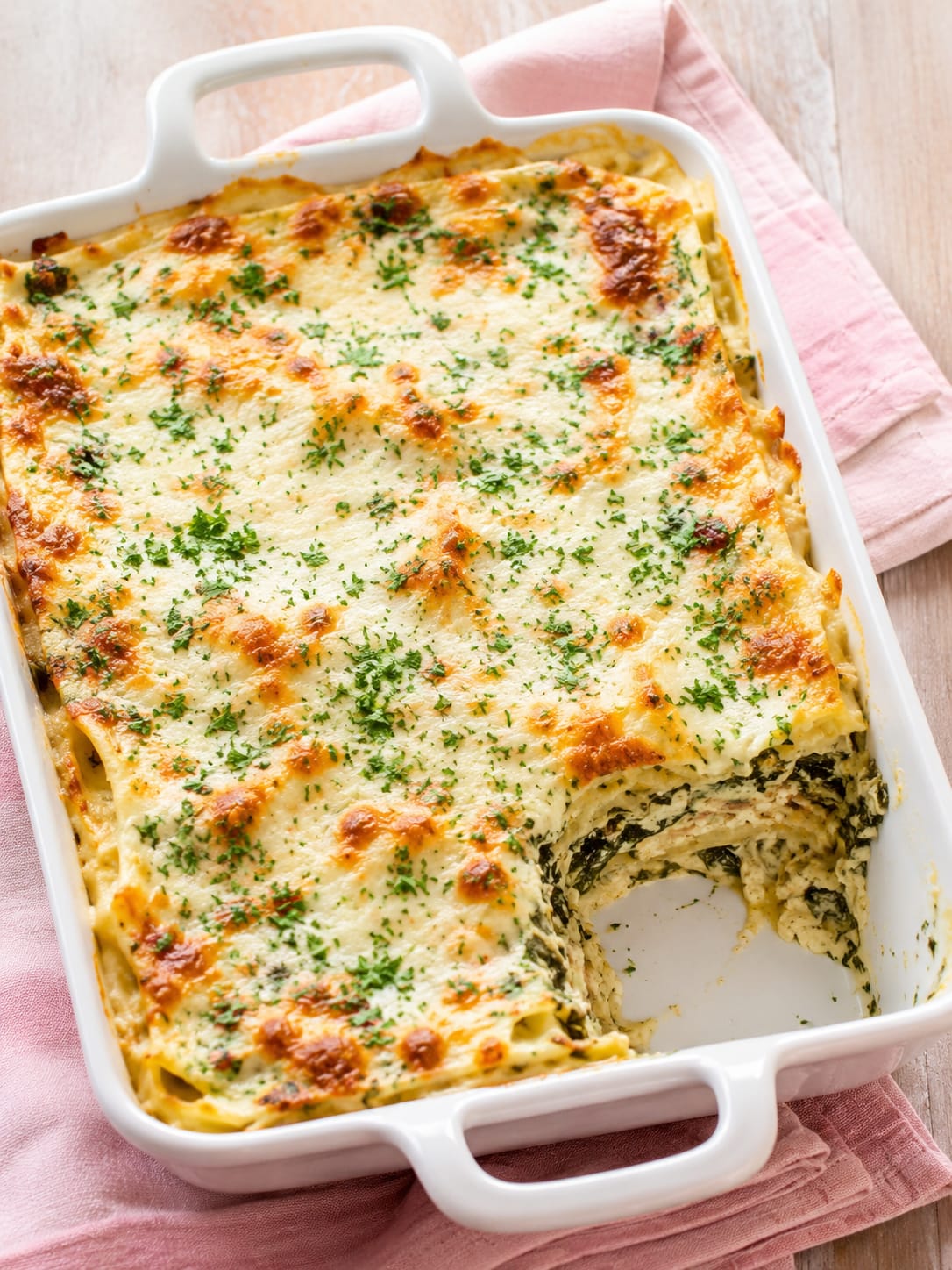
Lasagna is the ultimate comfort food—layers of tender noodles, rich meat sauce, creamy ricotta, and bubbly melted cheese that feel like a warm hug on a plate. But if you’re following a low-carb or keto lifestyle, traditional pasta-heavy lasagna can feel like a distant memory. That’s where this Low-Carb Chicken Lasagna comes in. Instead of wheat noodles, we use thin, tender slices of zucchini as the delicate layers that separate a luscious, garlicky chicken and ricotta filling from blankets of gooey mozzarella and Parmesan. The result is every bit as satisfying as the classic, with that same fork-tender texture, savory depth, and glorious cheese pull—but with a fraction of the carbs. It’s a dish that will make everyone at the table happy, whether they’re counting carbs or not, and it’s so delicious you won’t even miss the pasta.
This isn’t a watery, bland “diet” version of lasagna. By roasting the zucchini slices briefly before layering, we remove excess moisture and concentrate their flavor, so the final dish is firm, sliceable, and deeply savory. The filling is a rich blend of shredded rotisserie chicken (or any cooked chicken you have on hand), creamy ricotta, an egg to bind, plenty of garlic and Italian herbs, and just enough Parmesan to add a nutty, salty depth. A simple sugar-free marinara or Alfredo sauce ties it all together, and a generous crown of mozzarella on top bakes into a golden, bubbly crust. It’s a complete meal that’s high in protein, incredibly satisfying, and perfect for meal prep, family dinners, or impressing guests on a low-carb plan. And because zucchini is so neutral, the flavors of the chicken, cheese, and herbs shine through brilliantly.
In this comprehensive guide, I’ll walk you through every step of making the best low-carb chicken lasagna you’ll ever taste. We’ll cover how to choose and prepare the zucchini to avoid sogginess, how to build the creamiest, most flavorful filling, and all the tips, tricks, and variations you need to make this recipe your own. Whether you’re strictly keto, watching your carb intake, or simply looking for a deliciously lighter way to enjoy lasagna, this recipe is destined to become a household favorite. Let’s preheat the oven and layer up some comfort.
Why You’ll Love This Low-Carb Chicken Lasagna
All the comfort of classic lasagna without the carbs. By swapping traditional noodles for thinly sliced zucchini, we slash the carbohydrates while keeping the beloved layered structure intact. A generous serving of this lasagna contains a fraction of the carbs of regular pasta lasagna, making it a perfect fit for keto, low-carb, and diabetic-friendly meal plans. Yet it’s so rich, cheesy, and satisfying that even carb lovers will go back for seconds.
Firm, sliceable layers—not a watery mess. The biggest challenge with vegetable-based lasagnas is sogginess. This recipe solves that problem by pre-roasting the zucchini slices to drive off excess moisture before assembling the lasagna. The result is a dish that slices cleanly and holds its shape beautifully, with distinct layers that look as good as they taste. No puddles of water in the bottom of the pan, no mushy vegetables—just perfectly tender “noodles” that complement the creamy filling.
High in protein, rich in flavor. Shredded chicken and ricotta cheese form the hearty base of the filling, providing a serious protein boost that keeps you full for hours. Garlic, Italian herbs, and Parmesan infuse every layer with aromatic, savory depth. The mozzarella on top melts into an irresistible golden-brown blanket. It’s a meal that feels indulgent while nourishing your body, with over 30 grams of protein per serving.
Meal-prep friendly and versatile. This lasagna can be assembled up to two days ahead and baked when needed, or frozen for a future effortless dinner. It’s endlessly customizable: use ground chicken or turkey instead of shredded, swap the marinara for a creamy Alfredo sauce, or add spinach, mushrooms, or bell peppers to the filling. It’s a recipe you’ll make again and again, adapting it to whatever you have on hand.
Ingredient Deep Dive: The Pasta-Free Layers
Understanding each component ensures that every batch of this low-carb lasagna turns out perfectly—firm, creamy, and bursting with flavor.
Zucchini – The “Noodle” Replacement
You’ll need 3 to 4 medium zucchini, sliced lengthwise into thin planks about ⅛ to ¼ inch thick. A mandoline makes quick, even work of this, but a sharp knife is fine. The zucchini takes the place of traditional lasagna noodles, creating tender, mild layers that soak up the flavors of the sauce and filling. To prevent a watery lasagna, the slices must be pre-roasted (or grilled, or salted) to remove excess moisture. After roasting, they’ll be slightly shrunken and pliable—perfect for layering. Yellow squash can also be used interchangeably or in combination. Do not use eggplant here without similar moisture-removal treatment; it contains even more water.
Cooked Chicken – The Hearty, Lean Protein
Two cups of shredded or finely chopped cooked chicken form the meaty base of the filling. Rotisserie chicken is a fantastic shortcut, providing tender, flavorful meat with minimal effort. You can also use leftover roasted chicken, poached chicken breasts, or even drained canned chicken in a pinch. The chicken should be well-seasoned; if it’s plain, add a pinch of salt, pepper, and Italian herbs when shredding. Ground chicken or turkey can be substituted—brown it in a skillet with garlic and Italian seasoning before layering. The chicken adds protein and substance, turning a vegetable side dish into a complete, satisfying main course.
Ricotta, Egg, and Parmesan – The Creamy Filling
A 15-ounce container of full-fat ricotta cheese forms the creamy core of the filling. Full-fat ricotta provides a rich, slightly grainy texture that’s classic in lasagna. One large egg is beaten into the ricotta to help bind the filling and give it structure when baked, so it doesn’t ooze out. Half a cup of grated Parmesan cheese adds a salty, nutty depth and enhances the savory profile. To this base, you’ll add the shredded chicken, minced garlic (2 cloves), 1 teaspoon of Italian seasoning, salt, and pepper. The mixture should be thick and cohesive. If you don’t have ricotta, you can substitute an equal amount of full-fat cottage cheese, blended until smooth; the texture will be slightly different but still delicious. For a dairy-free version, use a plant-based ricotta alternative and skip the Parmesan, though the flavor and texture will differ.
Marinara Sauce – The Savory, Tangy Element
One and a half cups of sugar-free or low-sugar marinara sauce provides the tangy, tomatoey layer that defines lasagna. Look for a brand with no added sugar and minimal carbs, such as Rao’s, Primal Kitchen, or a simple homemade sauce. You can also use a creamy Alfredo sauce for a white lasagna variation—just ensure it’s low-carb (made with heavy cream and Parmesan, no flour). The sauce is spread between the layers, adding moisture and that classic Italian-American flavor. A little sauce on the bottom of the dish prevents sticking, and a final layer on top keeps everything moist during baking.
Mozzarella Cheese – The Gooey, Golden Crown
Two cups of shredded low-moisture mozzarella cheese are scattered generously between the layers and piled on top. Low-moisture, part-skim mozzarella melts beautifully and creates those irresistible cheese pulls. Fresh mozzarella contains too much water and will make the lasagna soupy, so avoid it here. You can use whole-milk mozzarella for a richer taste, or a blend of mozzarella and provolone for extra flavor. The cheese on top browns into a beautiful golden crust under the broiler. If you’d like, add a sprinkle of extra Parmesan over the top layer for a nutty, crispy finish.
Step-by-Step: Building the Perfect Low-Carb Lasagna
Follow these detailed steps for a lasagna that’s firm, creamy, and bursting with Italian flavor.
Step 1: Preheat and Prep the Zucchini
Preheat your oven to 400°F (200°C). Slice the zucchini lengthwise into planks about ⅛ to ¼ inch thick. Arrange them in a single layer on a large baking sheet (or two sheets) lined with parchment paper. Lightly brush or spray both sides with olive oil and sprinkle with a pinch of salt and pepper. Roast for 10–12 minutes, flipping halfway through, until the zucchini is just tender and some of the moisture has evaporated. They should look slightly shrunken and dry to the touch. Remove from the oven and let them cool slightly. This step is crucial for preventing a watery lasagna. Reduce the oven temperature to 375°F (190°C) after roasting.
Step 2: Make the Chicken and Ricotta Filling
In a large mixing bowl, combine the ricotta cheese, egg, grated Parmesan, minced garlic, Italian seasoning, salt, and pepper. Stir until smooth and well-combined. Fold in the shredded cooked chicken until evenly distributed. The filling should be thick and spoonable. Taste and adjust seasonings—it should be well-seasoned, as the zucchini is mild.
Step 3: Assemble the Lasagna Layers
Spread a thin layer of marinara sauce (about ¼ cup) in the bottom of an 8×8-inch square baking dish or a similar-sized casserole dish. This prevents sticking and adds moisture. Place a layer of roasted zucchini planks over the sauce, overlapping them slightly to create a solid “noodle” layer. Spread half of the chicken-ricotta mixture over the zucchini, smoothing it to the edges. Sprinkle with a handful of shredded mozzarella. Spoon about ⅓ cup of marinara sauce over the cheese. Repeat the layers: another layer of zucchini planks, the remaining chicken-ricotta mixture, more mozzarella, and another ⅓ cup of sauce. Finish with a final layer of zucchini on top, the remaining marinara sauce, and a generous covering of the remaining mozzarella cheese. If desired, sprinkle extra Parmesan on top for a crispy, golden crust.
Step 4: Bake Until Bubbly and Golden
Place the assembled lasagna in the oven (now at 375°F) and bake for 30 to 35 minutes, until the cheese is melted, bubbly, and beginning to turn golden. If the top is browning too quickly but the center isn’t hot, tent loosely with foil. During the last 2–3 minutes, you can switch to broil to achieve a beautifully browned, slightly crisp cheese top—watch carefully so it doesn’t burn. The lasagna should be hot all the way through, with an internal temperature around 165°F.
Step 5: Rest, Slice, and Serve
Remove the lasagna from the oven and let it rest for 10 to 15 minutes before slicing. This resting time is essential—it allows the layers to set and the lasagna to firm up, making it much easier to cut clean slices that hold their shape. The wait also prevents burnt tongues. Slice into squares with a sharp spatula or knife and serve warm, garnished with fresh basil or parsley if desired. Pair with a simple green salad for a complete, satisfying low-carb meal.
Pro Tips for a Firm, Never-Soggy Lasagna
- Pre-cook the zucchini to remove moisture. Roasting, grilling, or even salting and patting dry are essential steps. Do not skip this. Raw zucchini releases a tremendous amount of water as it bakes, which will ruin the texture of your lasagna. The goal is to drive off as much liquid as possible before assembly.
- Don’t over-sauce. Using too much marinara can also make the lasagna soupy. A thin, even layer is all you need between the zucchini and filling. The sauce should enhance, not drown. If your marinara is very thin, simmer it on the stovetop for a few minutes to reduce and thicken it before using.
- Let it rest before slicing. This is critical for a clean cut. Cutting into the lasagna straight from the oven will cause the layers to slide apart. Ten to fifteen minutes of resting allows the cheese and egg to set, resulting in beautiful, distinct layers. The lasagna will still be plenty hot.
- Use low-moisture mozzarella. Fresh mozzarella packed in water will release liquid and make the lasagna watery. Stick with the block or pre-shredded low-moisture variety. Pre-shredded is convenient, but block cheese that you shred yourself melts a bit smoother.
- Season every layer. The zucchini, the ricotta mixture, and even the sauce benefit from a little extra seasoning. A sprinkle of salt, pepper, and Italian herbs between the layers builds flavor throughout the dish, ensuring every bite is delicious rather than relying solely on the cheese.
Flavor Twists & Customizations
This low-carb lasagna is a perfect canvas for creativity. Try these delicious variations.
- Spinach and Mushroom Chicken Lasagna: Sauté 8 ounces of sliced mushrooms and 2 cups of fresh spinach until wilted and any liquid has evaporated. Fold the cooked vegetables into the chicken-ricotta filling. This adds earthy, savory depth and a boost of vitamins, making the lasagna even more hearty.
- Creamy Alfredo Chicken Lasagna: Replace the marinara sauce with a low-carb Alfredo sauce. Layer the zucchini with the chicken-ricotta mixture, Alfredo sauce, and mozzarella. The result is a rich, decadent white lasagna that’s reminiscent of chicken Alfredo pasta. Add a pinch of nutmeg to the ricotta for a classic touch.
- Buffalo Chicken Lasagna: Swap the marinara for a mixture of buffalo wing sauce and a little ranch dressing. Use a combination of mozzarella and crumbled blue cheese. The spicy, tangy flavor is a game-changer, and it’s perfect for game day or anyone who loves buffalo chicken dip. Top with sliced green onions.
- Ground Turkey or Beef Lasagna: Instead of shredded chicken, brown 1 pound of ground turkey or lean ground beef with garlic and Italian seasoning. Drain any excess fat and use this in place of the chicken in the filling. This version is closer to a traditional meat lasagna but still low-carb thanks to the zucchini noodles.
- Pesto Chicken Lasagna: Replace the marinara with ½ cup of basil pesto mixed with ½ cup of heavy cream or Alfredo sauce. The bright, herby pesto pairs beautifully with the chicken and ricotta. Add sun-dried tomatoes (drained and chopped) between the layers for an extra pop of flavor.
What to Serve with Chicken Lasagna
This lasagna is a satisfying meal on its own, but a few simple sides can complete the plate. A crisp green salad with a lemon vinaigrette or a simple balsamic dressing provides a fresh, acidic contrast to the rich, cheesy layers. Steamed broccoli, roasted asparagus, or sautéed green beans add color and a bit of crunch. For a more substantial side, consider garlic-roasted mushrooms or a Caprese salad with ripe tomatoes, fresh mozzarella, and basil. If you’re not strictly low-carb, a side of garlic bread or crusty Italian bread is always welcome for mopping up any leftover sauce. A glass of dry red wine, like Chianti or Cabernet Sauvignon, pairs beautifully with the savory, cheesy flavors.
Storage, Meal Prep & Reheating
Make-Ahead: Assemble the entire lasagna (without baking) up to 2 days in advance. Cover tightly with plastic wrap and refrigerate. When ready to bake, let it sit at room temperature for 20 minutes while the oven preheats, then bake as directed, adding 5–10 minutes to the covered baking time to ensure the center is hot. You can also bake it fully, cool it, and reheat it the next day; the flavors deepen beautifully.
Storing Leftovers: Transfer cooled slices to an airtight container and refrigerate for up to 4 days. The lasagna slices even better after it has fully chilled, making it perfect for meal-prep lunches. The zucchini will continue to soften slightly, but the layers will hold together well.
Reheating: Warm individual portions in the microwave until heated through. For a crisper top, reheat slices in a 350°F oven or toaster oven for 10–12 minutes, or in an air fryer at 350°F for 4–5 minutes. The oven method helps maintain the best texture, especially if you like a slightly crisped cheese topping.
Freezing: This lasagna freezes beautifully. Assemble it completely (without baking) in a freezer-safe dish, cover tightly with plastic wrap and then foil, and freeze for up to 3 months. To bake, thaw overnight in the refrigerator, then bake as directed, adding 10–15 minutes to the baking time. You can also bake from frozen; cover with foil and bake at 375°F for about 60–70 minutes, then uncover and bake 15–20 minutes more until bubbly and hot. The texture of the zucchini will be slightly softer, but the flavor remains outstanding.
Want the full recipe and simple step-by-step instructions?
Page 2 continues with the full ingredients, cooking tips, and easy directions so you can make this recipe perfectly at home.