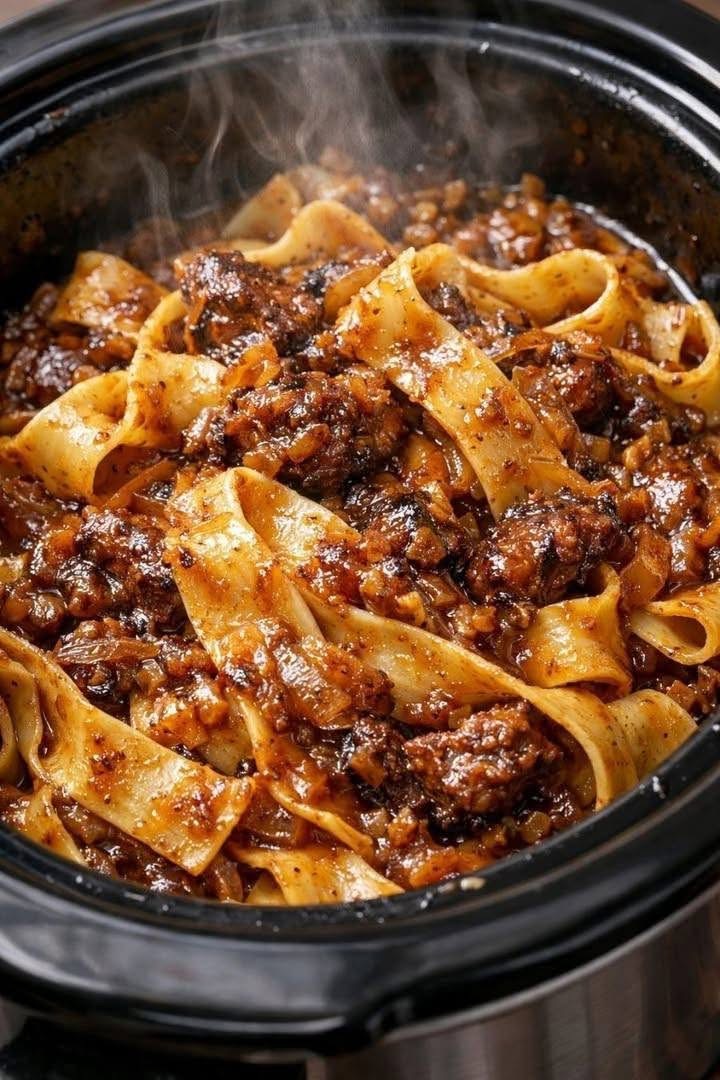
There is something incredibly satisfying about a slow cooker meal that fills the kitchen with the aroma of tender beef, caramelized onions, garlic, herbs, and a rich tomato-based sauce. This Slow Cooker Beef Ragu with Pappardelle is exactly that kind of recipe.
The dish combines chunks of beef cooked low and slow until they become fork-tender with a deeply flavored sauce that coats every ribbon of pasta. Wide pappardelle noodles are especially good for beef ragu because their broad surface holds onto the thick sauce, giving you plenty of beef and savory flavor in every bite.
This recipe is ideal for busy weekdays, relaxed weekends, family dinners, meal prep, or whenever you want a restaurant-style pasta dinner without spending hours standing over the stove.
Most of the cooking happens inside the slow cooker. Once the beef, vegetables, seasonings, tomatoes, and broth are added, the crockpot does the hard work. Near serving time, cook the pasta separately, toss everything together, and dinner is ready.
The result is a hearty pasta dish with tender beef, a glossy sauce, sweet onions, garlic, tomatoes, herbs, and plenty of comforting flavor.
Why This Slow Cooker Beef Ragu Is So Popular
Slow cooker beef recipes remain popular because they transform affordable cuts of beef into incredibly tender meals with minimal effort.
Beef ragu is especially appealing because it combines two favorite comfort foods: slow-cooked beef and pasta.
Another reason this recipe works so well is the texture. Instead of using only ground beef, chunks of beef are slowly braised until they begin to fall apart. This gives the sauce a richer, more rustic texture.
The wide pasta catches the sauce rather than allowing it to collect at the bottom of the bowl.
It is also an excellent make-ahead recipe. The ragu often tastes even better the following day because the garlic, onion, tomato, beef, and herbs have more time to develop together.
And unlike delicate pasta sauces that need to be served immediately, beef ragu reheats beautifully.
Recipe Information
Prep Time: 20 minutes
Cook Time: 7–8 hours on LOW or 4–5 hours on HIGH
Pasta Cooking Time: 10–12 minutes
Total Time: Approximately 8 hours 30 minutes
Servings: 6
Difficulty: Easy
Cooking Method: Slow Cooker / Crockpot
Cuisine: Italian-inspired comfort food
Best For: Family dinner, Sunday dinner, meal prep, cold-weather meals, pasta night
Main Ingredients
Beef is the foundation of the recipe. Chuck roast is one of the best options because the connective tissue slowly breaks down during cooking, creating tender beef and contributing body to the sauce.
Pappardelle is the classic pasta choice for a hearty ragu. These long, wide ribbons are substantial enough to support a thick meat sauce.
Crushed tomatoes create the base of the sauce. They provide acidity, sweetness, and enough liquid to slowly cook the beef.
Tomato paste adds concentration. Cooking it briefly before adding it to the slow cooker can deepen its flavor.
Onion contributes natural sweetness and builds the savory foundation of the sauce.
Garlic adds another layer of flavor and works especially well with tomatoes and beef.
Beef broth helps create the braising liquid while reinforcing the meaty flavor.
Italian herbs such as oregano, thyme, rosemary, or basil give the sauce a warm aromatic quality.
Worcestershire sauce is optional but adds savory depth.
Parmesan cheese can be added at serving time for a salty, nutty finish.
Ingredients
For the Beef Ragu:
2 1/2 pounds beef chuck roast, cut into large chunks
1 1/2 teaspoons salt
1 teaspoon black pepper
2 tablespoons olive oil
1 large yellow onion, finely chopped
4 cloves garlic, minced
2 tablespoons tomato paste
1 can, 28 ounces, crushed tomatoes
1 cup beef broth
2 teaspoons Worcestershire sauce
1 teaspoon dried oregano
1 teaspoon dried basil
1/2 teaspoon dried thyme
1/2 teaspoon dried rosemary
1/2 teaspoon red pepper flakes, optional
1 bay leaf
1 teaspoon brown sugar, optional
For the Pasta:
12–16 ounces pappardelle pasta
Salt for the pasta water
For Serving:
Freshly grated Parmesan cheese
Chopped fresh parsley
Fresh basil, optional
Extra black pepper
How to Choose the Best Ingredients
Choosing the right beef makes a significant difference.
Look for a chuck roast with visible marbling throughout the meat. Small streaks of fat melt during slow cooking and help keep the beef tender.
Very lean cuts can become dry after several hours of cooking, so chuck roast is usually a better choice than lean sirloin.
If pappardelle is unavailable, tagliatelle is an excellent substitute.
Fettuccine also works because it has enough width to hold the sauce.
Rigatoni or another large tubular pasta can be used if you prefer shorter noodles.
For tomatoes, choose good-quality canned crushed tomatoes because they form a major part of the sauce.
Whole peeled tomatoes can also be used. Crush them by hand before adding them to the slow cooker.
Use low-sodium beef broth when possible so you can control the final salt level yourself.
Fresh garlic is preferable to garlic powder for this recipe because it contributes a fuller flavor after several hours of cooking.
Prepare the Beef
Remove the chuck roast from its packaging and pat it dry with paper towels.
Cut the roast into approximately 2-inch chunks.
Season generously with salt and freshly ground black pepper.
Heat olive oil in a large skillet over medium-high heat.
Working in batches, add the beef without overcrowding the pan.
Sear the beef for approximately 2–3 minutes per side until a dark brown crust develops.
The beef does not need to cook completely because it will finish cooking in the slow cooker.
Transfer the browned beef to the crockpot.
Searing is technically optional, but it is highly recommended. Browning creates a deeper, more complex flavor that cannot develop as strongly when raw beef is placed directly into the slow cooker.
Prepare the Onion and Garlic
After removing the beef, reduce the skillet heat to medium.
Add the chopped onion.
Cook for approximately 4–5 minutes, stirring occasionally, until softened.
Add the minced garlic and cook for approximately 30 seconds.
Do not allow the garlic to burn.
Add the tomato paste.
Stir and cook for another minute or two.
Cooking tomato paste briefly helps remove some of its raw flavor and creates a richer sauce.
Pour approximately 1/2 cup of the beef broth into the skillet.
Scrape the bottom with a wooden spoon to release all the browned bits from the beef.
Those browned bits contain concentrated flavor.
Pour everything from the skillet into the slow cooker.
Step-by-Step Instructions
Place the browned beef inside the slow cooker.
Add the cooked onion, garlic, and tomato paste mixture.
Pour in the crushed tomatoes.
Add the remaining beef broth.
Stir in Worcestershire sauce, oregano, basil, thyme, rosemary, and optional red pepper flakes.
Add the bay leaf.
If your tomatoes taste particularly acidic, add one teaspoon of brown sugar. This is optional and should be adjusted according to taste.
Cover the slow cooker.
Cook on LOW for approximately 7–8 hours.
For faster cooking, use HIGH for approximately 4–5 hours.
The exact cooking time depends on the size of the beef pieces and your specific slow cooker.
The beef is ready when it easily separates with a fork.
Remove the bay leaf.
Transfer the beef pieces to a plate or shallow bowl.
Use two forks to shred or break the beef into smaller pieces.
Return the shredded beef to the slow cooker.
Stir it into the sauce.
Leave the slow cooker uncovered for approximately 15–20 minutes if the sauce needs to thicken slightly.
Meanwhile, bring a large pot of salted water to a boil.
Cook the pappardelle according to the package instructions until al dente.
Before draining the pasta, reserve approximately one cup of the pasta cooking water.
Drain the noodles.
You can serve the pasta in individual bowls and spoon the beef ragu over the top, or gently combine the pasta directly with the ragu.
For the dish shown in the photo, tossing the noodles with the beef sauce creates that rich, glossy appearance.
Add a splash of pasta water if needed to help loosen the sauce and coat the noodles evenly.
Finish with grated Parmesan, fresh parsley, basil, or freshly cracked black pepper.
Serve immediately.
Tips for the Best Slow Cooker Beef Ragu
Brown the beef first whenever possible.
Searing creates caramelized flavors that make the finished ragu taste much richer.
Avoid cutting the beef into very small pieces before slow cooking. Larger chunks remain juicier and are easier to shred.
Cook primarily on LOW when time allows. A slower cooking temperature gives tough beef cuts more time to become tender.
Do not constantly open the slow cooker lid. Each time the lid is lifted, heat escapes and cooking time can increase.
Taste the sauce before adding extra salt. Beef broth, Worcestershire sauce, Parmesan, and pasta water can all contribute salt.
Cook the pasta separately rather than inside the slow cooker. Pasta can easily become too soft when cooked for an extended period.
Keep some pasta water before draining the noodles. The starch in the water can help the ragu cling to the pasta.
Let the beef cook until it truly becomes fork-tender. If the beef still feels firm or chewy, it usually needs more time.
How to Make the Sauce Richer
For a deeper restaurant-style ragu, there are several easy options.
Add a small amount of finely diced carrot and celery with the onion.
This creates a classic aromatic vegetable base.
A splash of red wine can also be used after browning the beef. Let it simmer for a few minutes before transferring the mixture to the slow cooker.
If you prefer not to cook with wine, simply use additional beef broth.
A small Parmesan rind can be placed inside the slow cooker during cooking and removed before serving.
Another option is to stir in one tablespoon of butter just before serving. This gives the sauce a slightly richer finish and glossy appearance.
Flavor Variations
One of the advantages of beef ragu is that the base recipe can easily be customized.
For a spicy beef ragu, increase the red pepper flakes.
For an herb-forward version, add extra rosemary and thyme.
For a vegetable-rich sauce, add finely diced carrots, celery, or mushrooms.
For a creamier finish, stir a small splash of heavy cream into the finished sauce.
For a tomato-heavy version, add an additional cup of crushed tomatoes.
For extra garlic flavor, use five or six garlic cloves.
You can also replace part of the beef with Italian sausage for a different flavor profile.
Best Pasta for Beef Ragu
Pappardelle is one of the best choices because the noodles are wide enough to support heavy meat sauces.
Tagliatelle is another excellent option.
Fettuccine works when pappardelle is difficult to find.
Rigatoni is especially useful when serving young children because it is easier to eat than long ribbons of pasta.
Penne and ziti can also be used.
Even mashed potatoes or creamy polenta can replace the pasta entirely.
The most important thing is choosing something that can hold plenty of sauce.
How to Serve Slow Cooker Beef Ragu
This dish is filling enough to serve as a complete meal, but simple sides can make dinner feel more complete.
Garlic bread is one of the easiest pairings.
The crisp bread is perfect for collecting any remaining sauce from the plate.
A simple green salad provides fresh contrast to the rich pasta.
Roasted broccoli, asparagus, or green beans are also excellent choices.
For a more traditional Italian-inspired meal, serve the ragu with crusty bread and a salad dressed with olive oil and vinegar.
Finish each plate with freshly grated Parmesan.
Fresh parsley or basil adds color and brightness.
Meal Prep
Beef ragu is an excellent meal-prep recipe because the sauce stores and reheats well.
Prepare the ragu during the weekend and store it separately from the pasta.
When you are ready to eat, cook fresh pasta and reheat the amount of sauce needed.
Keeping the pasta separate prevents it from absorbing too much sauce while stored.
You can portion the finished ragu into individual containers for quick lunches or dinners.
How to Store Leftovers
Allow the ragu to cool before transferring it to airtight containers.
Store the beef ragu in the refrigerator for approximately 3–4 days.
For the best texture, store pasta separately.
If the pasta has already been mixed with the sauce, it can still be refrigerated, but the noodles will continue absorbing moisture.
When reheating, add a small splash of beef broth, water, or tomato sauce if the mixture appears too thick.
How to Reheat Beef Ragu
The stovetop is one of the best reheating methods.
Place the ragu in a saucepan over medium-low heat.
Add a splash of broth or water.
Cover and heat slowly, stirring occasionally.
You can also microwave individual portions.
Heat in short intervals and stir between each interval for more even reheating.
If reheating pasta and sauce together, a tablespoon or two of water can help restore some moisture.
Can You Freeze Beef Ragu?
Yes.
The beef sauce freezes very well.
Allow it to cool completely before transferring it into freezer-safe containers or bags.
Freeze individual portions for easier future meals.
For the best quality, use frozen beef ragu within approximately 2–3 months.
Thaw overnight in the refrigerator before reheating.
For better pasta texture, freeze the sauce alone rather than freezing it already mixed with the noodles.
Cook fresh pasta when you are ready to serve.
Common Mistakes to Avoid
One common mistake is using beef that is too lean.
Slow cooker recipes benefit from cuts that contain some connective tissue and marbling.
Another mistake is removing the beef too early.
Chuck roast can sometimes appear cooked before it has reached the tender stage. Continue cooking until it separates easily with a fork.
Using too much liquid can also make the sauce watery.
Remember that slow cookers trap moisture, so very little liquid evaporates during cooking.
Avoid overcooking the pasta.
Pappardelle should remain slightly firm before being combined with the sauce.
Do not skip seasoning adjustments at the end.
Tomato products and beef broth vary significantly in saltiness and acidity.
Taste the finished sauce before serving and adjust the salt, pepper, herbs, or acidity as needed.
Frequently Asked Questions
Can I put raw beef directly into the slow cooker?
Yes, but browning the beef first produces a richer flavor and better overall sauce.
What beef is best for slow cooker ragu?
Chuck roast is one of the best options because it becomes tender after long, slow cooking.
Can I use ground beef?
Yes. Brown the ground beef first, drain excess fat, and then continue with the recipe. The texture will be different but still delicious.
Can I make beef ragu without wine?
Absolutely. This recipe uses beef broth and does not require wine.
Can I use a different pasta?
Yes. Tagliatelle, fettuccine, rigatoni, penne, or ziti all work well.
Why is my beef still tough?
It probably needs additional cooking time. Tough slow-cooked beef often becomes tender when allowed to cook longer.
How can I thicken slow cooker ragu?
Remove the lid during the final 20–30 minutes and allow some moisture to evaporate. You can also add a little additional tomato paste.
Can I prepare this recipe the night before?
Yes. Prepare the ingredients and refrigerate them separately or assemble the slow cooker insert if your manufacturer allows refrigerated inserts. Begin cooking the following morning.
Can I make this recipe ahead for guests?
Yes. Beef ragu is actually a great make-ahead meal because the sauce develops even more flavor after resting overnight.
What should I serve with beef ragu?
Garlic bread, salad, roasted vegetables, Parmesan cheese, and fresh herbs are all excellent choices.
Final Thoughts
Slow Cooker Beef Ragu with Pappardelle is the kind of comforting dinner that delivers rich flavor without requiring constant attention in the kitchen.
Tender pieces of chuck roast slowly cook with onions, garlic, tomatoes, herbs, and beef broth until they become incredibly soft and flavorful. Once shredded and mixed back into the sauce, the beef creates a thick, hearty ragu that perfectly coats wide ribbons of pasta.
It is an excellent choice for family dinners, weekend meals, entertaining, or meal prep because most of the cooking happens automatically inside the crockpot.
Serve it hot with freshly grated Parmesan, chopped parsley, and crusty garlic bread for an easy slow cooker dinner that looks impressive but remains simple enough for everyday cooking.