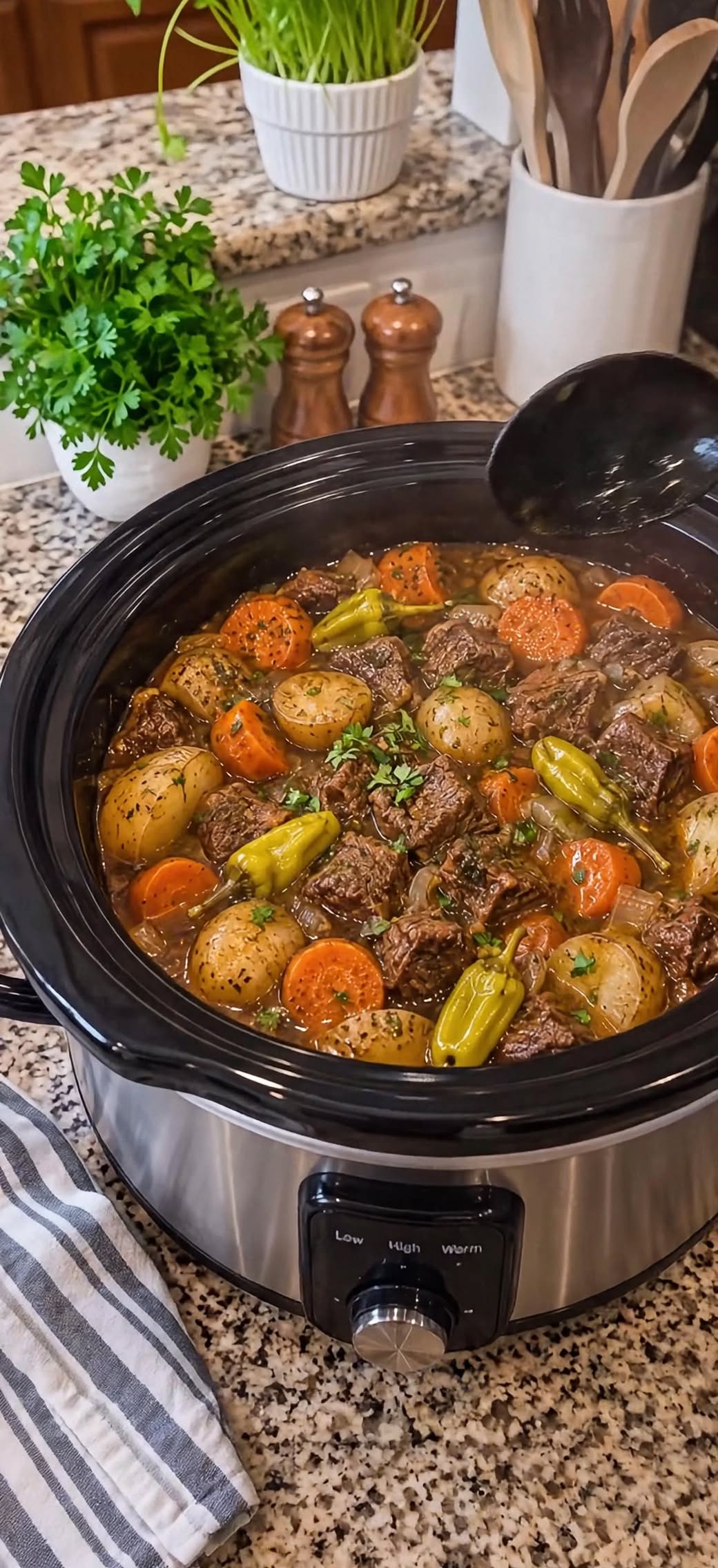
This Slow Cooker Mississippi Pot Roast with Potatoes and Carrots is a hearty one-pot dinner filled with fork-tender beef, buttery baby potatoes, sweet carrots, onions, and tangy pepperoncini peppers simmered in a rich savory gravy.
Traditional Mississippi pot roast is famous for its incredibly simple combination of beef, ranch-style seasoning, gravy seasoning, butter, and pepperoncini. This version turns that classic into a complete family meal by adding potatoes and carrots directly to the slow cooker.
After several hours of gentle cooking, the chuck roast becomes tender enough to pull apart with a fork while the vegetables absorb the flavorful beef juices. It is an excellent recipe for busy weekdays, Sunday dinner, cold-weather comfort food, or meal prep.
Recipe Rating: 9.8/10 ⭐
Prep Time: 20 minutes
Cook Time: 8–9 hours on LOW
Total Time: About 9 hours
Servings: 6–8
Category: Dinner / Slow Cooker / Beef
Cuisine: American Comfort Food
Why You’ll Love This Slow Cooker Pot Roast
The biggest advantage of pot roast is that the slow cooker transforms a relatively tough cut of beef into something remarkably tender.
Chuck roast contains connective tissue that gradually breaks down during long, gentle cooking. Instead of becoming dry, the meat develops the soft texture that makes classic pot roast so satisfying.
Adding potatoes and carrots turns it into a complete meal in one pot.
The pepperoncini peppers are another important part of the recipe. They add a mild tanginess that cuts through the richness of the beef and butter without making the dish overwhelmingly spicy.
Best of all, most of the cooking is hands-off.
Once everything is inside the slow cooker, you can leave it to cook for several hours.
Ingredients
For the Pot Roast
3½–4 pound beef chuck roast
1½ tablespoons olive oil
1 teaspoon freshly ground black pepper
½ teaspoon garlic powder
½ teaspoon onion powder
1 large yellow onion, roughly chopped
4 garlic cloves, minced
1½ pounds baby Yukon Gold potatoes
4 large carrots, cut into thick rounds
6–8 whole pepperoncini peppers
¼ cup pepperoncini juice
For the Savory Gravy
1 packet ranch seasoning mix
1 packet au jus gravy mix
1½ cups low-sodium beef broth
1 tablespoon Worcestershire sauce
1 teaspoon Dijon mustard
4 tablespoons unsalted butter
½ teaspoon dried thyme
½ teaspoon dried parsley
Freshly ground black pepper to taste
Optional Gravy Thickener
2 tablespoons cornstarch
2 tablespoons cold water
For Serving
Fresh chopped parsley
Warm dinner rolls or biscuits
Choose the Right Beef
Chuck roast is the ideal cut for this recipe.
It has enough marbling and connective tissue to withstand several hours of slow cooking.
During cooking, that connective tissue gradually softens, giving the beef its characteristic fork-tender texture while contributing richness to the cooking liquid.
Try to choose a roast with visible marbling distributed throughout the meat rather than one enormous piece of exterior fat.
You can leave the roast whole or cut it into several large chunks.
Cutting it into large pieces creates more exposed surfaces for seasoning and can make serving easier.
Prepare the Potatoes and Carrots
Baby Yukon Gold potatoes are particularly good in the slow cooker because they have a creamy interior while maintaining their shape relatively well.
Small potatoes can remain whole.
Cut larger potatoes in half.
Peel the carrots if desired and cut them into thick pieces.
Avoid slicing the carrots too thinly because they will cook for several hours and can become overly soft.
Keep the vegetables relatively large so they remain substantial when the beef is ready.
Season the Chuck Roast
Pat the beef dry with paper towels.
Season it with black pepper, garlic powder, and onion powder.
You will notice that the recipe uses very little additional salt.
That is intentional.
Ranch seasoning, au jus mix, pepperoncini, Worcestershire sauce, and beef broth can all contain significant sodium.
It is much easier to add salt after cooking than to correct an overly salty pot roast.
Brown the Beef for Extra Flavor
Browning is technically optional, but it improves the final flavor.
Heat olive oil in a heavy skillet over medium-high heat.
Once hot, add the chuck roast.
Allow it to brown deeply on the first side before turning.
Brown all major surfaces.
You are not trying to cook the center.
The purpose is to develop a flavorful exterior.
Transfer the browned roast to the slow cooker.
Deglaze the Skillet
After removing the beef, reduce the heat slightly.
Add a small amount of the beef broth to the skillet.
Use a wooden spoon to scrape the browned bits from the bottom.
Those browned pieces contain concentrated roasted beef flavor.
Pour the liquid directly into the slow cooker.
This simple step prevents some of the best flavor from being left behind in the skillet.
Assemble the Slow Cooker
Arrange the onions, potatoes, and carrots around the beef.
Add the garlic.
Place the pepperoncini peppers throughout the vegetables.
Sprinkle the ranch seasoning and au jus seasoning over the beef.
Pour in the beef broth, pepperoncini juice, Worcestershire sauce, and Dijon mustard.
Sprinkle in thyme and parsley.
Finally, place the butter over the beef.
There is no need to completely cover the meat with liquid.
The beef and vegetables will release additional moisture during cooking.
Cook the Mississippi Pot Roast
Cover the slow cooker and cook on:
LOW: approximately 8–9 hours
or
HIGH: approximately 5–6 hours.
For the best texture, I recommend the LOW setting.
Slow, gentle cooking gives the connective tissue in chuck roast enough time to soften properly.
Try not to repeatedly open the lid.
Every time the slow cooker is opened, heat and steam escape.
Start checking the meat near the end of the cooking window.
The roast is ready when a fork slides into it easily and the meat begins separating with very little pressure.
Why LOW Is Better for Pot Roast
Pot roast needs time.
Cooking on HIGH can work when necessary, but LOW generally produces a more consistently tender result.
The goal is not simply to reach a safe internal temperature.
A chuck roast can technically be cooked yet still feel tough.
The extended cooking period allows collagen-rich connective tissue to break down.
This is why a tough pot roast sometimes needs more cooking rather than less.
If the meat still resists a fork, give it additional time.
How to Keep Potatoes From Becoming Mushy
Use waxy or all-purpose potatoes such as Yukon Gold or baby potatoes.
Avoid cutting them into tiny pieces.
Place them around the roast rather than crushing them beneath a very heavy piece of beef.
If your slow cooker runs particularly hot and you prefer firmer vegetables, you can add the potatoes and carrots after the beef has already cooked for approximately 1–2 hours on LOW.
For maximum convenience, however, adding everything at the beginning works well when the vegetables are kept large.
What Do Pepperoncini Add?
Pepperoncini are one of the signature ingredients associated with Mississippi pot roast.
They provide acidity and a mild pepper flavor.
That acidity is important because pot roast contains several rich ingredients: beef, butter, gravy, and concentrated meat juices.
The peppers help balance that richness.
Whole pepperoncini are generally mild, although heat levels vary.
Adding some of their brine intensifies the tangy flavor.
If your family prefers a very mild roast, reduce the pepperoncini juice.
How to Make the Gravy Thicker
When the beef and vegetables are tender, carefully transfer them to a serving platter if you want to thicken the remaining liquid.
Mix cornstarch and cold water in a small bowl until completely smooth.
Stir the slurry into the hot cooking liquid.
Cover and cook on HIGH for approximately 10–15 minutes, or until the gravy reaches your desired consistency.
Remember that gravy will continue thickening slightly as it cools.
Do not add dry cornstarch directly to the slow cooker because it can form lumps.
How to Make the Gravy More Flavorful
Taste the cooking liquid before adjusting anything.
If it needs more savory depth, add a small splash of Worcestershire sauce.
If it tastes excessively rich, a tiny amount of pepperoncini juice can brighten it.
If it needs additional pepper, freshly ground black pepper works beautifully.
Only add salt after tasting.
The seasoning mixes already contain sodium, so extra salt may not be necessary.
Classic Mississippi Pot Roast Variation
For a more traditional version, omit the potatoes and carrots.
Cook the chuck roast with ranch seasoning, au jus mix, butter, and pepperoncini.
Serve the shredded beef over mashed potatoes.
Spoon the cooking juices generously over everything.
This version is excellent for sandwiches as well.
Pile shredded beef onto toasted rolls and add provolone cheese for an easy second meal.
Garlic Herb Pot Roast Variation
For a less seasoning-packet-forward version, increase the fresh garlic and herbs.
Use rosemary, thyme, parsley, onion powder, and additional beef broth.
A spoonful of tomato paste can also deepen the gravy.
This variation has more of a traditional Sunday pot roast flavor while retaining the convenient slow cooker method.
Spicy Mississippi Pot Roast
For additional heat, add more pepperoncini and several tablespoons of their brine.
You can also include crushed red pepper flakes.
For a milder family dinner, keep the pepperoncini whole rather than chopping them into the sauce.
What to Serve with Mississippi Pot Roast
Because potatoes and carrots cook directly with the beef, this recipe is already a complete meal.
Still, a few simple sides make it even better.
Warm dinner rolls are excellent because they can soak up the rich gravy.
Buttermilk biscuits are another classic choice.
Green beans, roasted broccoli, Brussels sprouts, or a fresh salad provide a lighter contrast to the beef.
If you have plenty of gravy, creamy mashed potatoes are always welcome even though potatoes are already included in the slow cooker.
Turn Leftovers Into Beef Sandwiches
Leftover pot roast makes excellent sandwiches.
Shred the cold beef and remove large pieces of excess fat.
Warm the meat with several spoonfuls of gravy.
Pile it onto toasted hoagie rolls.
Add provolone, mozzarella, or Swiss cheese.
Broil briefly until the cheese melts.
Serve with some of the warmed cooking liquid for dipping.
This is an easy way to turn one slow cooker dinner into two completely different meals.
Pot Roast Meal Prep
Divide the beef, potatoes, carrots, and gravy among airtight meal-prep containers.
Make sure each serving contains some gravy.
The liquid helps keep the beef moist during reheating.
Add a green vegetable separately if you want a more balanced meal.
Pot roast is particularly useful for meal prep because its flavor often becomes even richer after spending a night in the refrigerator.
How to Store Leftovers
Refrigerate cooked pot roast and vegetables promptly in airtight containers.
For best quality and food safety, use refrigerated leftovers within approximately 3–4 days.
Store the beef with some of its cooking liquid rather than completely dry.
The gravy protects the meat during refrigeration and reheating.
Best Way to Reheat Pot Roast
For individual portions, the microwave is convenient.
Place beef, vegetables, and gravy in a microwave-safe dish and heat until thoroughly hot.
For larger portions, use a covered saucepan or Dutch oven over low heat.
Add a little beef broth if the gravy has become excessively thick.
Slow, gentle reheating is preferable to aggressively boiling the meat.
Can You Freeze Mississippi Pot Roast?
Yes.
Cooked pot roast freezes very well.
Allow the beef and gravy to cool before transferring them to freezer-safe containers.
Freeze the beef together with some gravy to protect it from drying.
For best quality, use within approximately 2–3 months.
Thaw overnight in the refrigerator before reheating.
Potatoes can become slightly softer or grainier after freezing, so if freezer meal prep is your priority, you may prefer freezing primarily the beef and gravy.
Make-Ahead Instructions
You can prepare many ingredients the night before.
Cut the onions and carrots.
Wash the potatoes.
Measure the seasonings.
The beef can also be trimmed and prepared ahead.
Store everything safely in the refrigerator.
The next morning, brown the beef, assemble the slow cooker, and start cooking.
If mornings are especially busy, browning the beef the evening before is also an option. Refrigerate it promptly in a covered container and assemble the recipe the following day.
Common Mistakes to Avoid
Using a very lean roast: Chuck roast works because it contains connective tissue and marbling.
Cutting vegetables too small: Small pieces can become overly soft after eight hours.
Adding lots of extra salt: Ranch seasoning, au jus mix, broth, and pepperoncini already contribute sodium.
Using too much liquid: A slow cooker traps moisture, and the ingredients release additional liquid.
Opening the lid repeatedly: This releases heat.
Stopping cooking while the beef is tough: Tough chuck roast frequently needs additional cooking time.
Adding cornstarch without water: Always prepare a cold-water slurry.
Shredding everything immediately: Let the meat rest briefly before serving so it retains more of its juices.
Frequently Asked Questions
What is the best beef for Mississippi pot roast?
Chuck roast is generally the best choice because its marbling and connective tissue respond extremely well to slow cooking.
Do I need to sear the roast first?
No, but searing creates additional browned flavor and is worth the extra few minutes when possible.
Are pepperoncini peppers spicy?
They are generally mild and tangy rather than intensely hot, although individual products vary.
Can I leave out the pepperoncini?
Yes, although they are one of the defining flavors of Mississippi-style pot roast. For a milder version, simply use fewer peppers and less brine.
Can I use regular potatoes?
Yes. Yukon Gold and red potatoes work especially well. Cut larger potatoes into substantial chunks.
Why is my pot roast tough?
It probably needs more time. Chuck roast becomes tender only after its connective tissue has had enough time to break down.
Can I cook it overnight?
Technically a slow cooker can operate for extended periods when used according to its manufacturer’s directions, but for recipe quality it is better to time cooking so the roast does not remain cooking long after becoming tender.
Can I make this without seasoning packets?
Yes. Use beef broth, garlic, onion, herbs, Worcestershire sauce, and a homemade seasoning blend instead.
Final Thoughts
This Slow Cooker Mississippi Pot Roast with Potatoes and Carrots combines three things that make a recipe especially useful: minimal hands-on preparation, a complete one-pot meal, and leftovers that reheat beautifully.
Chuck roast slowly transforms into fork-tender beef while potatoes, carrots, onions, and pepperoncini absorb the savory cooking juices.
The keys to the best result are simple: choose chuck roast, brown it when you have time, keep the vegetables fairly large, cook primarily on LOW, and resist the temptation to stop cooking before the beef becomes genuinely tender