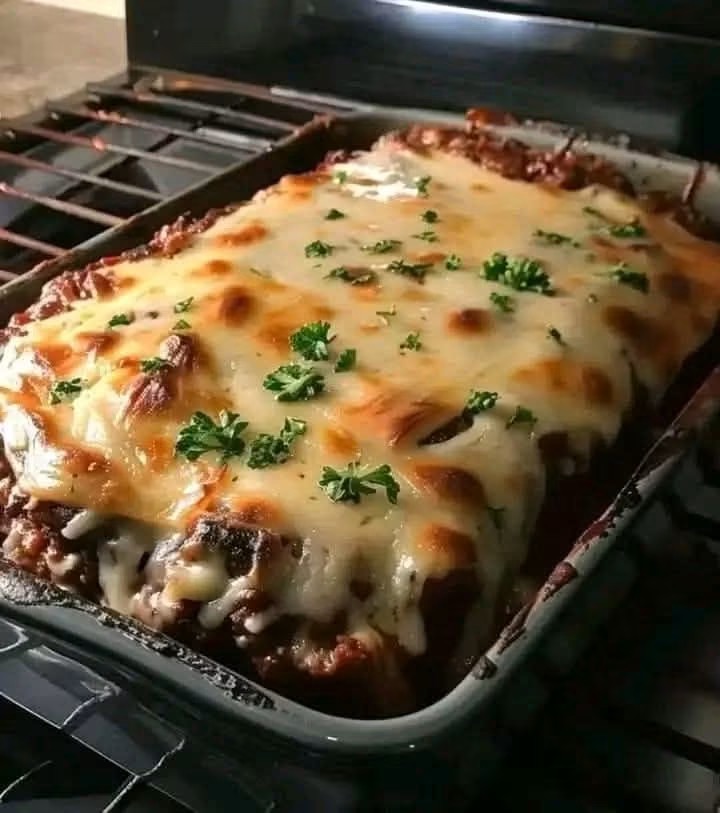
There is a moment when you pull a casserole out of the oven and the cheese is still moving. Blistered in spots, molten underneath, meat sauce creeping up the sides of the dish. Nobody needs convincing after that.
This baked beef and potato casserole is what happens when you take everything good about lasagna and shepherd’s pie and let them share a pan. Layers of tender potato, a deeply seasoned beef sauce, and a blanket of cheese browned until it looks like the photo.
Table of Contents
• Why You Will Love This Recipe
• Recipe Overview
• Ingredients
• The Layering Logic That Makes This Work
• How to Get That Perfect Browned Cheese Top
• How to Make Cheesy Baked Beef and Potato Casserole
• Tips for the Best Casserole
• Variations
• What to Serve With This Casserole
• Make-Ahead and Storage
• Frequently Asked Questions
• Nutrition
• Final Thoughts
[AD SLOT 1 — after the table of contents]
Why You Will Love This Recipe
It is a complete meal in one dish. Meat, starch, and dairy in a single pan means one thing to cook, one thing to serve, and one thing to wash.
It feeds a family for very little. Ground beef and potatoes are among the cheapest ingredients in the store, and this stretches two pounds of food into eight generous servings.
It is genuinely make-ahead friendly. Assemble it in the morning or the night before, refrigerate, and slide it into the oven when people start asking what’s for dinner.
Children eat it without negotiation. There is nothing challenging in it, nothing to pick around, and the cheese does most of the persuading.
It reheats better than almost anything else. The layers set overnight and cut into clean squares the next day, which makes leftovers feel intentional rather than sad.
Recipe Overview
Prep time: 25 minutes
Cook time: 55 minutes
Resting time: 15 minutes
Total time: about 1 hour 35 minutes
Servings: 8
Difficulty: Easy to moderate
Equipment: 9×13 inch baking dish, large skillet, mandoline or sharp knife, aluminum foil
Ingredients
For the beef sauce:
• 2 pounds ground beef, 80/20
• 1 large yellow onion, finely diced
• 4 cloves garlic, minced
• 2 tablespoons tomato paste
• 1 can (28 ounces) crushed tomatoes
• 1/2 cup beef broth
• 1 tablespoon Worcestershire sauce
• 2 teaspoons dried oregano
• 1 teaspoon dried basil
• 1/2 teaspoon smoked paprika
• 1/4 teaspoon red pepper flakes, optional
• 1 1/2 teaspoons fine sea salt
• 1/2 teaspoon black pepper
• 1 teaspoon sugar
For the potato layers:
• 2 1/2 pounds Yukon Gold potatoes, peeled and sliced 1/8 inch thick
• 2 tablespoons olive oil
• 1 teaspoon fine sea salt
• 1/2 teaspoon black pepper
• 1/2 teaspoon garlic powder
For the cheese topping:
• 3 cups shredded low-moisture mozzarella
• 1 cup shredded Gruyère or sharp white cheddar
• 1/2 cup grated Parmesan
• 1/2 cup heavy cream
For finishing:
• Chopped fresh parsley
• Cracked black pepper
[AD SLOT 2 — after the ingredient list]
The Layering Logic That Makes This Work
Every layer in a casserole has a job, and problems come from ignoring that. The bottom layer needs to be sturdy enough to support everything above it, which is why potato goes down first rather than sauce.
Potatoes contain starch that gelatinizes as it heats, absorbing surrounding liquid and setting into layers that hold together when cut. This is the same principle behind gratin, and it is why thin, even slices matter more than most people think.
Yukon Golds sit in a useful middle ground between waxy and starchy. They hold their shape under a heavy meat layer while still releasing enough starch to bind the whole thing together.
The beef sauce needs to be thicker than a pasta sauce would be. Excess liquid has nowhere to evaporate under a cheese lid, and a watery casserole is almost always a sauce problem rather than a baking problem.
Heavy cream poured over the potatoes before the cheese does something specific. It fills gaps between slices and carries fat into the layers, which keeps the potato from tasting dry against the rich meat.
Cheese belongs only on top, not distributed through the middle. Cheese trapped between layers turns rubbery and greasy, while cheese on the surface gets the direct heat it needs to brown properly.
How to Get That Perfect Browned Cheese Top
Browning on cheese comes from the Maillard reaction between milk proteins and lactose, which needs surface temperatures well above what a covered dish can reach. That is why the foil comes off for the last stretch.
Low-moisture mozzarella is essential for the classic melt and stretch. Fresh mozzarella carries far too much water and will leave puddles across the surface.
Blending cheeses gives you both qualities you want. Mozzarella provides the stretch, while Gruyère, cheddar, or Parmesan brings the browning and the flavor, since aged cheeses have more free amino acids to react.
Shred your own cheese if you can spare four minutes. Pre-shredded cheese is coated in cellulose or potato starch to prevent clumping, and that coating interferes with a smooth melt.
Position the dish in the upper third of the oven for the uncovered phase. Radiant heat from the top element is what creates those dark blistered spots rather than an even beige surface.
Two minutes under the broiler at the very end finishes the job. Stay in the kitchen and watch it, because the difference between beautiful and burnt happens fast.
[AD SLOT 3 — before the instructions]
How to Make Cheesy Baked Beef and Potato Casserole
Step 1: Preheat and prep
Heat the oven to 375°F and grease a 9×13 inch baking dish. Peel and slice the potatoes 1/8 inch thick, then toss them with the olive oil, salt, pepper, and garlic powder.
Step 2: Brown the beef
Cook the ground beef in a large skillet over medium-high heat, breaking it apart, until deeply browned, about 8 minutes. Drain off all but about two tablespoons of fat.
Step 3: Build the sauce
Add the onion and cook 4 minutes until softened, then the garlic for 30 seconds. Stir in the tomato paste and cook one minute until it darkens.
Step 4: Simmer until thick
Add the crushed tomatoes, broth, Worcestershire, herbs, paprika, pepper flakes, salt, pepper, and sugar. Simmer uncovered for 12 to 15 minutes until thick enough to hold a line when you drag a spoon through it.
Step 5: Layer the casserole
Arrange half the potatoes in overlapping rows across the bottom, spread over half the meat sauce, then repeat with the remaining potatoes and sauce. Press down gently to compact the layers.
Step 6: Bake covered
Pour the heavy cream evenly over the surface, cover tightly with foil, and bake for 45 minutes. The potatoes should be tender when pierced with a knife.
Step 7: Add cheese and brown
Remove the foil, scatter all three cheeses over the top, and return to the oven uncovered for 12 to 15 minutes. Broil for the final 2 minutes if you want deeper color.
Step 8: Rest before cutting
Let the casserole rest for 15 minutes before serving. This is not optional if you want squares rather than scoops.
[AD SLOT 4 — after the instructions]
Tips for the Best Casserole
Slice the potatoes thin and evenly. A mandoline set to 1/8 inch takes two minutes and guarantees every slice finishes cooking at the same moment. Uneven slices give you both raw and mushy potato in the same bite.
Reduce the sauce more than feels necessary. It should look almost too thick in the skillet, because the potatoes and cheese will release moisture during baking. A loose sauce going in means a soupy casserole coming out.
Drain the beef fat properly. Two pounds of 80/20 beef renders a surprising amount, and fat that stays in the pan pools on top of the finished dish and makes the cheese greasy.
Cover tightly during the first bake. Trapped steam is what cooks the potato layers through, and a loose foil seal is the most common reason for undercooked potatoes in the middle.
Rest it properly before serving. Fifteen minutes lets the starch set and the layers firm up, which is the entire difference between a clean square and a landslide on the plate.
Season each component separately. The potatoes, the meat, and the cream all need their own salt. Seasoning only the sauce leaves you with bland potato layers.
Variations
Ground lamb and feta: swap the beef for lamb, add a teaspoon of cinnamon, and crumble feta into the cheese topping for a moussaka-adjacent version.
Sweet potato: replace half the Yukon Golds with sweet potato for a sweeter, softer result that plays well with the smoked paprika.
Mushroom and beef: add 8 ounces of sliced mushrooms with the onions. They add depth and let you use less meat without anyone noticing.
Vegetarian lentil: use 3 cups of cooked brown lentils in place of the beef and vegetable broth instead of beef broth. Add an extra tablespoon of tomato paste for body.
White sauce version: skip the tomatoes entirely and layer the beef with a simple béchamel, then top with cheese. Richer, milder, and excellent for children.
[AD SLOT 5 — after the variations]
What to Serve With This Casserole
A sharp green salad is the ideal partner. Arugula or romaine with a mustard vinaigrette cuts through the richness better than anything cooked.
Roasted or steamed green vegetables work well on the side. Broccoli, green beans, or asparagus with lemon give the plate contrast without competing.
Garlic bread is unnecessary and also very good. If you serve it, keep the portions of casserole smaller, because this is a heavy dish already.
For a crowd, add a bowl of quick-pickled onions or cucumbers on the table. Acid is what keeps people coming back for a second square.
Make-Ahead and Storage
Assemble ahead: build the casserole through the layering step, cover, and refrigerate for up to 24 hours. Add 10 to 15 minutes to the covered baking time when cooking from cold.
Refrigerator: store cooled leftovers covered for up to 4 days. The layers set fully overnight and cut beautifully.
Freezer: freeze the assembled unbaked casserole for up to 3 months, or freeze baked portions individually. Thaw overnight in the refrigerator before baking or reheating.
Reheating: cover with foil and warm at 350°F for 20 to 25 minutes. Individual portions reheat well in the microwave at 70 percent power.
Frequently Asked Questions
Do I need to par-boil the potatoes? No, as long as they are sliced thin and the dish is covered tightly for the first 45 minutes. The trapped steam handles it.
Why is my casserole watery? Almost always an under-reduced sauce or undrained beef fat. Simmer the sauce longer next time and pour off the rendered fat.
Can I use frozen potato slices or hash browns? Frozen sliced potatoes work in a pinch. Thaw and pat them very dry first, since ice crystals turn into extra liquid in the pan.
Can I make this in a smaller dish? Yes, halve everything and use an 8×8 inch dish. Keep the covered bake at about 35 minutes and check the potatoes with a knife.
What if the cheese browns before the potatoes are done? Lay a sheet of foil loosely over the top and continue baking. The cheese is finished long before the potatoes in most ovens.
Can I use ground turkey or chicken? Yes, though they are much leaner. Add a tablespoon of olive oil when browning and be a little more generous with the seasoning.
Nutrition
Per serving, based on 8 servings, approximate:
Calories: 585
Total fat: 34 g
Saturated fat: 17 g
Carbohydrates: 34 g
Fiber: 4 g
Sugars: 7 g
Protein: 36 g
Sodium: 890 mg
Values are estimates and will vary with beef fat content, cheese choice, and portion size.
[AD SLOT 6 — before the conclusion]
Final Thoughts