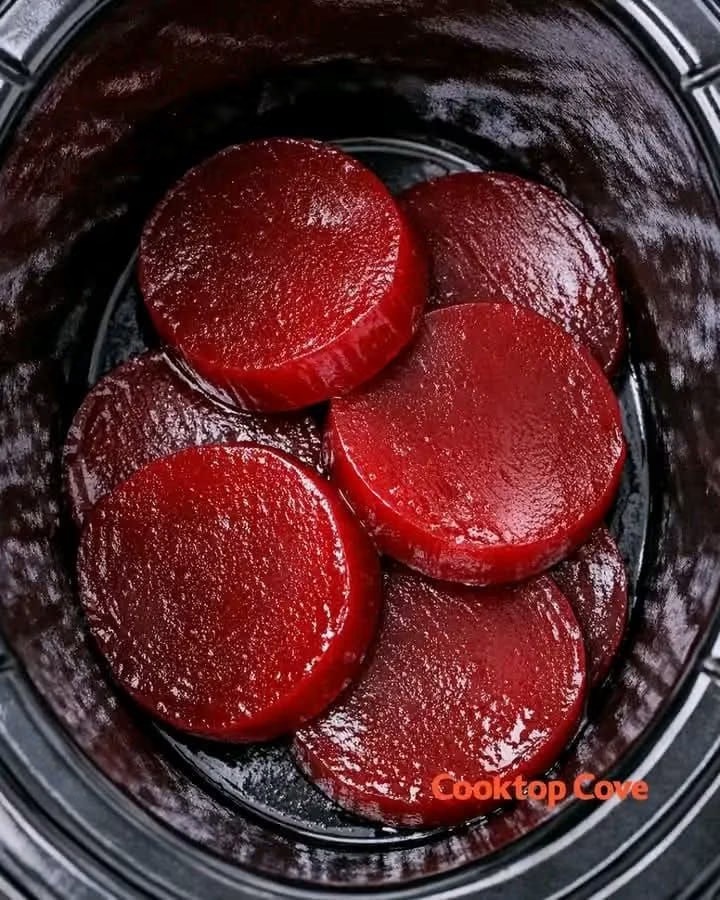
Some side dishes shout for attention. This one just glows quietly in the corner of your table until somebody asks what it is, and then the plate empties in about four minutes.
These slow cooker ruby-glazed beets are tender, sweet-tart, and coated in a thick, glossy glaze that clings to every slice. You do about ten minutes of work, walk away, and come back to something that looks like it came out of a restaurant kitchen.
Table of Contents
• Why You Will Love This Recipe
• Recipe Overview
• Ingredients
• The Science Behind That Glossy Ruby Glaze
• How to Choose and Prep Beets Like a Pro
• How to Make Slow Cooker Ruby-Glazed Beets
• Tips for the Best Glazed Beets
• Variations
• What to Serve With Glazed Beets
• Make-Ahead and Storage
• Frequently Asked Questions
• Nutrition
• Final Thoughts
[AD SLOT 1 — after the table of contents]
Why You Will Love This Recipe
It is almost entirely hands-off. Slice, stir, cover, wait. The slow cooker does the tenderizing while you handle the rest of dinner or simply leave the house.
The color is genuinely stunning. Beets cooked slowly in a covered pot hold onto their pigment instead of bleeding it into a pot of boiling water, so what you get is that deep jewel red you see in the photo.
It solves the beet problem for people who think they hate beets. The earthy note that puts some eaters off gets balanced by sweetness and acid, and what remains is closer to a candied vegetable than a salad ingredient.
It scales beautifully for holidays. A six-quart slow cooker will happily hold enough for a crowd, and it frees up your oven and stovetop on the busiest cooking day of the year.
It reheats better than most vegetable sides. The glaze protects the slices, so day-two beets taste like day-one beets, which is not something you can say about roasted broccoli.
Recipe Overview
Prep time: 15 minutes
Cook time: 4 hours on high, or 7 to 8 hours on low
Total time: about 4 hours 15 minutes
Servings: 6 to 8 as a side
Difficulty: Easy
Equipment: 5 to 6 quart slow cooker, vegetable peeler, sharp knife, small bowl for the slurry
Ingredients
For the beets:
• 3 pounds fresh beets (about 6 medium), peeled and cut into 1/2-inch thick rounds
• 1/2 cup water or unsweetened apple juice
• 1/4 teaspoon fine sea salt
For the ruby glaze:
• 1/2 cup granulated sugar, or 1/2 cup packed light brown sugar for a deeper flavor
• 1/3 cup apple cider vinegar
• 1/4 cup fresh orange juice
• 2 tablespoons cornstarch
• 2 tablespoons unsalted butter
• 1/4 teaspoon ground cinnamon
• 1/8 teaspoon ground cloves, optional
• 1/2 teaspoon fine sea salt
• Pinch of black pepper
For finishing, optional:
• 1 teaspoon orange zest
• Flaky sea salt
• Chopped fresh dill or parsley
[AD SLOT 2 — after the ingredient list]
The Science Behind That Glossy Ruby Glaze
The color comes from betalains, the water-soluble pigments that make beets red. They escape easily into cooking liquid, which is exactly why boiled beets turn pale while the water turns crimson. In a slow cooker you use very little liquid, so the pigment stays largely where you want it.
Betalains are also heat-sensitive over long periods, and acid helps stabilize them. That is one of the reasons this recipe includes vinegar and orange juice rather than sugar alone. The acid does double duty, brightening the flavor and protecting the color.
The glossiness itself comes from gelatinized cornstarch. When starch granules are heated in liquid, they absorb water, swell, and burst, thickening the surrounding liquid into a translucent, light-reflecting coating. That is the difference between beets sitting in juice and beets wearing a glaze.
Sugar contributes more than sweetness. As the liquid reduces, the increased sugar concentration raises viscosity and helps the glaze cling instead of pooling, which is why the last hour uncovered matters so much.
Finally, slow gentle heat breaks down pectin in the beet cell walls gradually and evenly. That is what gives you slices that are fully tender all the way to the center without collapsing into mush at the edges.
How to Choose and Prep Beets Like a Pro
Look for firm beets with smooth, unwrinkled skin. Softness or shriveling means moisture loss, and those beets will cook unevenly and taste flat.
Choose beets of similar size, ideally around 3 inches across. Uniform beets give you uniform slices, and uniform slices finish cooking at the same time.
If the greens are still attached and look fresh, keep them. Beet greens are excellent sautéed with garlic and olive oil, so you get a second dish out of the same purchase.
Peel with a standard vegetable peeler before slicing rather than after cooking. It is faster, cleaner, and lets the glaze penetrate the surface of every slice.
Cut slices about 1/2 inch thick. Thinner slices tend to break apart during the long cook, and thicker ones can stay firm in the middle.
Wear gloves if you care about your hands, and cut on a plastic or glass board rather than a porous wooden one. Beet juice sets quickly on wood.
[AD SLOT 3 — before the instructions]
How to Make Slow Cooker Ruby-Glazed Beets
Step 1: Prep the beets
Trim the tops and root ends, peel the beets, then cut them into 1/2-inch rounds. Place them in the slow cooker insert in an even layer as much as possible.
Step 2: Add the cooking liquid
Pour in the water or apple juice and sprinkle with the 1/4 teaspoon of salt. You are not trying to submerge the beets, only to create enough steam for them to cook.
Step 3: Cook until tender
Cover and cook on high for 3 hours or on low for 6 hours. Test with the tip of a paring knife; it should slide into a slice with only slight resistance.
Step 4: Mix the glaze
While the beets cook, whisk together the sugar, vinegar, orange juice, cornstarch, cinnamon, cloves, salt, and pepper in a small bowl until completely smooth. Whisk again right before pouring, since cornstarch settles fast.
Step 5: Add the glaze
Pour the mixture over the tender beets and add the butter in small pieces. Stir gently with a silicone spatula to coat everything without breaking the slices.
Step 6: Thicken uncovered
Cook uncovered on high for 45 to 60 minutes, stirring once or twice. The liquid will reduce, darken, and turn thick and glossy, coating the back of a spoon.
Step 7: Finish and serve
Turn off the heat and let the beets rest for 10 minutes so the glaze sets slightly. Finish with orange zest, flaky salt, or fresh herbs if you like, and serve warm.
[AD SLOT 4 — after the instructions]
Tips for the Best Glazed Beets
Never add cornstarch directly to hot liquid. It will seize into lumps instantly. Always whisk it into cold or room-temperature liquid first, then pour the smooth slurry in.
Resist the urge to lift the lid during the first cooking phase. Every peek releases steam and adds roughly 15 to 20 minutes to the cook time. Slow cookers rely on trapped moisture and pressure-free steam to work.
Taste the glaze before the final hour. Beets vary in natural sugar depending on variety and season, so you may want a splash more vinegar for brightness or a spoonful more sugar for balance.
Stir gently and rarely. Cooked beet slices are fragile, and aggressive stirring turns beautiful rounds into a purple hash. A silicone spatula and a folding motion protect the shape.
Let them sit before serving. Ten minutes off the heat lets the starch fully set and the flavors settle, and it is the difference between a runny sauce and a true glaze.
Save a spoonful of the glaze. It is fantastic drizzled over roasted carrots, brushed on chicken thighs, or whisked into a vinaigrette the next day.
Variations
Maple and thyme: replace the sugar with 1/3 cup pure maple syrup and add three sprigs of fresh thyme during the final hour. The result is woodsier and less candy-sweet.
Balsamic and rosemary: swap the cider vinegar for balsamic and add a small rosemary sprig. This version leans savory and pairs beautifully with red meat.
Cranberry-orange: stir in 1/2 cup fresh or frozen cranberries with the glaze. They burst and add tartness plus a little natural pectin for extra body.
Honey-ginger: use honey in place of the sugar and add a tablespoon of freshly grated ginger. Bright, warming, and excellent alongside roast pork.
Golden beets: use golden or Chioggia beets for an amber version. The flavor is milder and slightly sweeter, and the presentation is unexpected.
[AD SLOT 5 — after the variations]
What to Serve With Glazed Beets
They shine next to rich, savory roasts. Think roast chicken, pork loin, brisket, or a holiday ham where the sweet-tart glaze cuts through the fat.
They are exceptional with anything creamy and tangy. Crumbled goat cheese, feta, whipped ricotta, or a spoonful of labneh on the plate turns the side into something close to a composed salad.
For a vegetarian plate, serve them over farro, wild rice, or lentils with toasted walnuts. The grains soak up the extra glaze and the nuts add crunch.
Cold leftovers are wonderful on a green salad with arugula, orange segments, and pistachios. Do not skip this; it may become your favorite way to eat them.
Make-Ahead and Storage
Refrigerator: store in an airtight container for up to 5 days. The flavor actually improves after a day as the glaze soaks further into the slices.
Freezer: freeze in a sealed container for up to 3 months. The texture softens slightly on thawing, but the color and flavor hold up well.
Reheating: warm gently in a covered saucepan over low heat with a splash of water or orange juice. The microwave works too at 50 percent power in short bursts.
Make-ahead strategy: cook the beets completely, cool, and refrigerate. On serving day, reheat with the glaze in the slow cooker on low for about an hour.
Frequently Asked Questions
Can I use canned beets? Yes, and it cuts the time dramatically. Drain them well, add them with the glaze, and cook uncovered on high for 30 to 40 minutes.
Do I have to peel the beets? For this recipe, yes. The skin turns leathery over a long cook and blocks the glaze from adhering properly.
Why is my glaze still thin? Either the lid stayed on during the final phase or the cornstarch needed more time at temperature. Cook uncovered on high for another 20 minutes and it will tighten.
Can I make this on the stovetop? Absolutely. Simmer the sliced beets covered in a saucepan with the water for about 25 minutes, then add the glaze and simmer uncovered until thick.
Are the beets supposed to be sweet? They land between sweet and tangy, similar to classic Harvard beets. Reduce the sugar to 1/3 cup if you prefer a more savory result.
How do I get beet stains off my hands and counters? Lemon juice and salt work well on skin, and a paste of baking soda and water handles most countertops if you act quickly.
Nutrition
Per serving, based on 8 servings, approximate:
Calories: 145
Total fat: 3 g
Saturated fat: 1.8 g
Carbohydrates: 29 g
Fiber: 4 g
Sugars: 23 g
Protein: 2 g
Sodium: 320 mg
Values are estimates and will vary with beet size, sugar choice, and portioning.
[AD SLOT 6 — before the conclusion]
Final Thoughts
The best side dishes are the ones that ask almost nothing of you and still make the table look considered. This is one of those. A little slicing, a whisk of glaze, and the slow cooker handles the rest.
Make it once for a weeknight dinner and you will find yourself making it again for a holiday, because it travels well, reheats well, and disappears fast. Save a little of that glaze; you will want it on something else before the week is out.