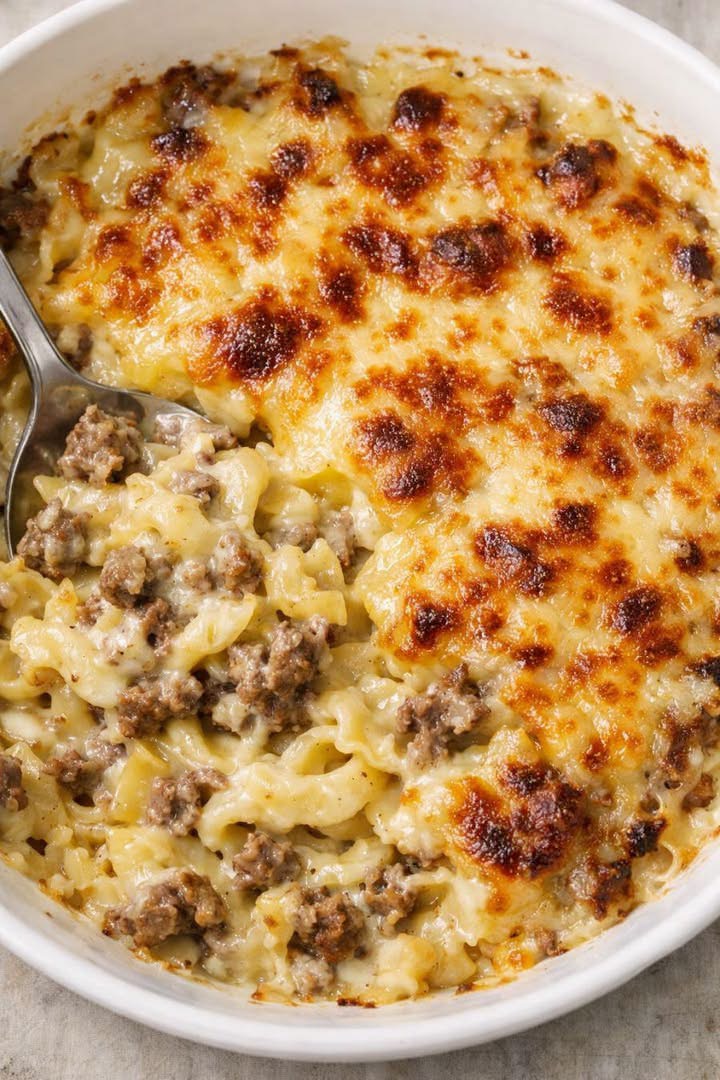
This baked mac and cheese is built around a proper stovetop cheese sauce, folded through pasta and browned beef, then finished under the broiler until the top blisters into golden and dark brown patches. It is the version that comes out of the dish in thick spoonfuls rather than as a dry, sliceable block.
The sauce is deliberately looser than looks right when it goes into the dish. Pasta continues absorbing liquid in the oven, and a sauce that seems correct at that stage will be pasty by the time it reaches the table.
Everything happens in about forty-five minutes, and only the broiler needs watching.
Why You Will Love This Recipe
The top is the point. Two minutes under the broiler gives you the blistered, uneven browning that no amount of baking produces.
It stays creamy inside. A loose sauce plus undercooked pasta means the interior is still saucy when the top is done.
It is a full meal. Beef, pasta, and cheese sauce in one dish, no sides required.
It feeds eight cheaply. Ground beef and pasta are among the cheapest ways to feed a crowd well.
It reheats better than most baked pasta. A splash of milk stirred in brings it right back.
Recipe Overview
Prep time: 15 minutes
Cook time: 30 minutes
Total time: About 45 minutes
Yield: 8 servings
Difficulty: Easy
Best for: Weeknight dinners, potlucks, feeding a family, meal prep
Ingredients
For the Pasta and Beef
• 1 pound (450 g) short pasta such as cavatappi, elbows, or campanelle
• 1 pound (450 g) ground beef, 85/15
• 1 small yellow onion, finely diced
• 3 cloves garlic, minced
• 1 teaspoon kosher salt
• 1/2 teaspoon black pepper
• 1 teaspoon Worcestershire sauce
For the Cheese Sauce
• 4 tablespoons unsalted butter
• 1/4 cup (30 g) all-purpose flour
• 3 cups (720 ml) whole milk, warmed
• 1/2 cup (120 ml) heavy cream
• 1 teaspoon Dijon mustard
• 1/2 teaspoon onion powder
• 1/2 teaspoon garlic powder
• 1/4 teaspoon ground nutmeg
• 1/2 teaspoon black pepper
• 2 cups (225 g) shredded sharp cheddar
• 1 cup (110 g) shredded Gruyère or Monterey Jack
For the Top
• 1 1/2 cups (170 g) shredded cheddar and mozzarella, mixed
• 1/4 teaspoon smoked paprika, optional
Choosing the Right Pasta and Cheese
Short ridged pasta is the correct shape. Cavatappi, campanelle, elbows, and shells all have curves and ridges that trap sauce. Smooth shapes let it slide off.
Cook the pasta two minutes under the package time. It finishes in the oven, and fully cooked pasta going into a baked dish comes out soft and bloated.
Sharp cheddar carries the flavour. Mild cheddar melts fine but tastes of very little once diluted into three cups of milk.
Gruyère or Monterey Jack handles the melt. Cheddar alone can turn slightly grainy. A second, better-melting cheese keeps the sauce smooth.
Shred your own cheese. Pre-shredded is coated with starch or cellulose that resists melting and leaves a grainy texture. This matters more in a cheese sauce than almost anywhere else.
Avoid pre-grated Parmesan and processed slices. The first is too dry, the second makes the sauce slick rather than creamy.
Why the Sauce Must Look Too Thin
A cheese sauce that coats a spoon perfectly on the stovetop will be stiff and pasty after twenty minutes in the oven.
Pasta keeps absorbing. Even undercooked pasta continues drinking liquid from the sauce throughout baking, and it takes considerably more than most people expect.
Aim for a sauce that pours easily and looks slightly loose in the dish. It should move when you tilt the pan.
If it looks right in the bowl, add another half cup of warm milk. This is the single most common fix for dry baked mac and cheese.
Warm the milk before adding it to the roux. Cold milk into hot roux causes lumps and takes far longer to thicken.
How to Make Cheesy Beef Mac and Cheese
Step 1: Cook the pasta
Bring a large pot of well-salted water to a boil and cook the pasta for two minutes less than the package directs.
Drain but do not rinse. The starch on the surface helps the sauce cling.
Step 2: Brown the beef
Heat a large skillet over medium-high heat and add the ground beef. Break it apart and cook for 6 to 8 minutes, until browned with some dark crusty pieces.
Do not stir constantly. Letting the beef sit in contact with the pan is what produces the browning that gives the dish depth.
Step 3: Add the aromatics
Add the diced onion and cook for 3 minutes until softened. Add the garlic, salt, pepper, and Worcestershire and cook for 1 minute more.
Drain off excess fat and set the beef aside.
Step 4: Make the roux
Preheat the oven to 375°F (190°C) and butter a 9×13 inch baking dish.
Melt the butter in a large saucepan over medium heat. Whisk in the flour and cook for 2 minutes, whisking constantly, until it smells faintly nutty.
Cooking the flour removes the raw pasty taste. Two minutes is the minimum.
Step 5: Build the sauce
Pour in the warmed milk gradually, whisking constantly. Add the cream and bring to a gentle simmer, whisking, for 4 to 5 minutes until it thickens.
Stir in the Dijon, onion powder, garlic powder, nutmeg, and black pepper.
Step 6: Melt in the cheese
Remove the pan from the heat. Add the cheddar and Gruyère a handful at a time, stirring until each addition melts before adding more.
Off the heat is essential. Cheese added over direct heat separates and turns grainy.
Step 7: Combine
In a large bowl, combine the drained pasta, the beef, and the cheese sauce. Fold until everything is coated.
The mixture should look distinctly saucy, almost soupy. Add warm milk if it does not.
Step 8: Bake
Transfer to the buttered dish and spread evenly. Scatter the topping cheese across the surface and dust with smoked paprika if using.
Bake for 18 to 20 minutes, until bubbling at the edges.
Step 9: Broil and rest
Switch to the broiler for 2 to 3 minutes, watching constantly, until the top is golden with dark browned patches.
Let the dish rest for 10 minutes before serving. The sauce sets slightly and stops running across the plate.
Tips for the Best Baked Mac and Cheese
Undercook the pasta by two full minutes. This is not a suggestion. Fully cooked pasta turns mushy in the oven.
Warm the milk first. Thirty seconds in the microwave prevents lumps and speeds up the thickening.
Add cheese off the heat, gradually. Dumping it in at once over a burner is how cheese sauce breaks.
Make the sauce looser than feels right. Dry baked mac and cheese is almost always a sauce that looked perfect before baking.
Watch the broiler continuously. The difference between golden and burnt is about forty seconds.
Common Mistakes to Avoid
Using pre-shredded cheese. The anti-caking coating gives a gritty sauce, and this is the most noticeable place it shows.
Boiling the sauce after the cheese goes in. The proteins tighten and squeeze out fat, leaving an oily, split sauce.
Skipping the roux cook time. Undercooked flour tastes raw and chalky through the whole dish.
Baking too long. Twenty minutes is enough to heat through. Longer dries out the interior.
Serving immediately. Ten minutes of rest is what lets the sauce set into something spoonable.
Easy Variations
• Cheeseburger mac. Add 2 tablespoons of yellow mustard, chopped pickles, and crumbled bacon.
• Spicy. Add 1 diced jalapeño with the onion and swap the Gruyère for Pepper Jack.
• Chili mac. Add 1 tablespoon of chili powder and 1 teaspoon of cumin to the beef, plus a cup of drained kidney beans.
• Breadcrumb topping. Toss 1 cup of panko with 2 tablespoons of melted butter and scatter over the cheese before baking.
• Italian sausage. Replace the beef with crumbled Italian sausage.
• Stovetop only. Skip the baking entirely and serve straight from the pot, with a little extra cheese stirred in.
What to Serve With It
A sharp green salad with vinaigrette is the best partner, because the dish needs acidity more than it needs another rich side.
Roasted broccoli, green beans, or steamed peas all work and can be stirred straight into leftovers.
Garlic bread is traditional if unnecessary. Pickles, coleslaw, or a tomato salad do more to balance the plate.
Make-Ahead and Storage
Make-ahead: Assemble the whole dish, cover, and refrigerate for up to 24 hours. Add 10 minutes to the bake time from cold, and add a splash of milk over the top before baking.
Refrigerator: Store in an airtight container for up to 4 days.
Freezer: Freeze the assembled unbaked dish for up to 2 months. Thaw overnight before baking. Baked leftovers freeze acceptably but lose some creaminess.
To reheat: Warm covered at 325°F for 20 minutes with 2 tablespoons of milk stirred through, or in a pan over low heat. The milk is what stops it drying out.
Frequently Asked Questions
Why is my baked mac and cheese dry?
The sauce was too thick going in, or the pasta was fully cooked before baking. Both are fixed next time by loosening the sauce and undercooking the pasta.
Why did my cheese sauce turn grainy?
Either pre-shredded cheese, or cheese added over direct heat. Melt it off the burner, a handful at a time.
Can I use milk instead of cream?
Yes. Use 3 1/2 cups of whole milk total. The result is slightly less rich but still good.
What is the best cheese combination?
Sharp cheddar for flavour plus Gruyère or Monterey Jack for melt. Roughly two parts cheddar to one part of the other.
Can I make it without beef?
Yes. Leave it out entirely, or substitute Italian sausage, shredded chicken, or sautéed mushrooms.
Do I have to broil it?
No, but the broiler is what produces the blistered top. Baking alone gives an evenly golden but flatter-looking surface.
Nutrition Information
Approximate values per serving, based on 8 servings:
• Calories: 640
• Total fat: 36 g
• Saturated fat: 20 g
• Carbohydrates: 48 g
• Protein: 32 g
• Sodium: 720 mg
Nutrition is estimated and will vary with brands and portion sizes.
Final Thoughts
Baked mac and cheese lives or dies on two decisions made before it reaches the oven: undercook the pasta, and make the sauce looser than looks correct.
Get those right, brown the beef properly, and give the top two minutes under the broiler. The rest is just cheese doing what cheese does.