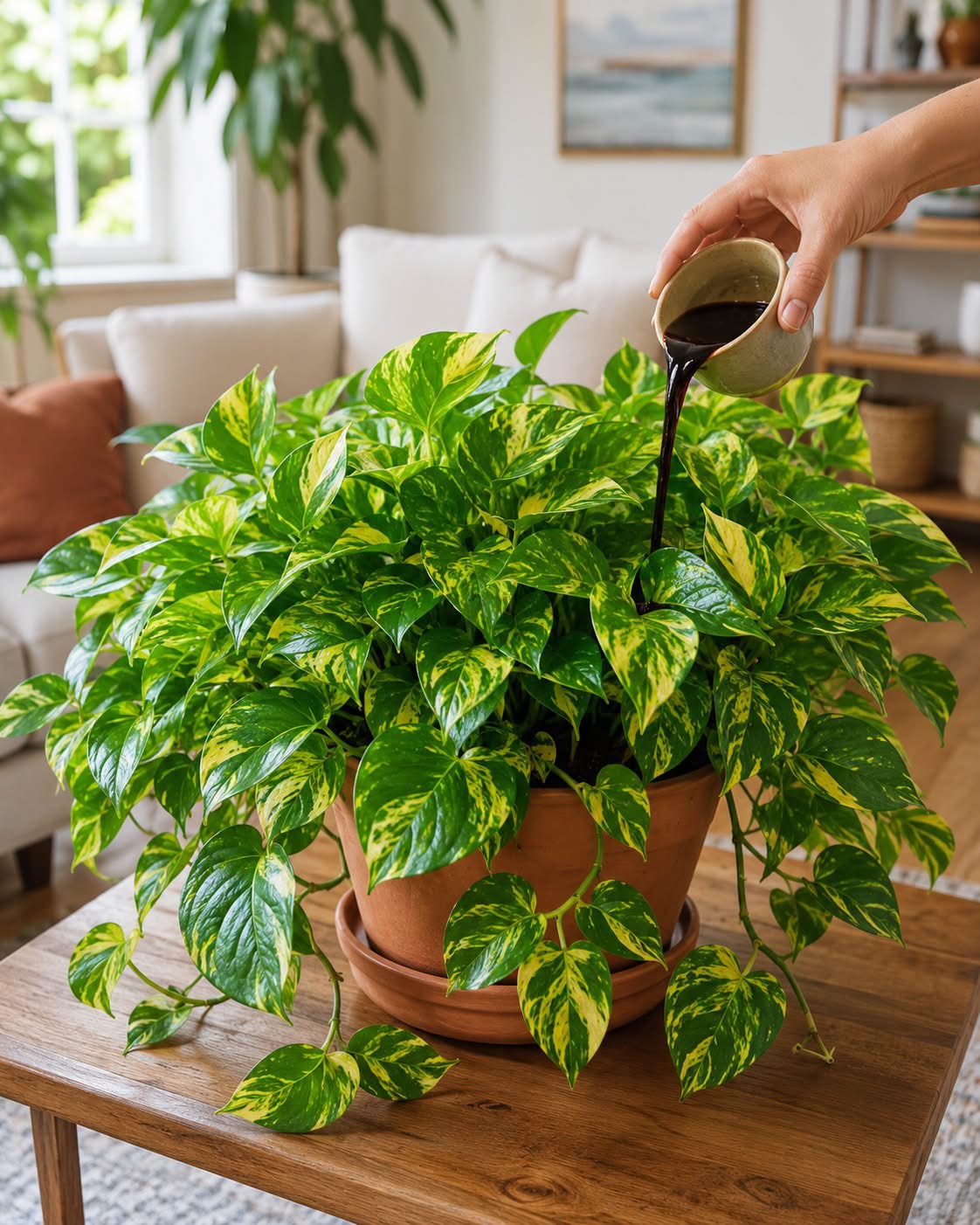
Golden Pothos is one of the most loved indoor plants because it is easy to grow, adapts to many homes, and creates a lush, elegant look with very little effort. Its heart-shaped leaves feature beautiful green and golden-yellow patterns, and its long vines can trail from shelves, climb a support, or spill over the edge of a decorative pot.
A healthy Golden Pothos can become full, bushy, and vibrant when it receives the right light, water, soil, and occasional pruning. The plant in the photo looks dense and attractive, but the dark liquid being poured into the pot is not recommended. Coffee, tea, soda, milk, sweet drinks, and unknown homemade mixtures can harm the roots, attract pests, and make the soil smell unpleasant.
The safest way to care for Golden Pothos is simple: use clean water, a pot with drainage holes, airy soil, bright indirect light, and a labeled houseplant fertilizer during the growing season. These basics give much better results than viral plant tricks.
Why Golden Pothos Is Perfect for Indoor Spaces
Golden Pothos is a versatile plant that fits many rooms and decorating styles. Its vines bring softness to shelves, tables, bookcases, and hanging baskets. The golden variegation adds color without requiring flowers, making it a beautiful choice for homes, offices, and apartments.
It is also forgiving. If you occasionally forget to water it, the plant can usually recover as long as the roots are healthy. However, this does not mean it should be neglected. Consistent care helps the leaves stay larger, shinier, and more colorful.
Golden Pothos can be trained to trail downward or grow upward. When it climbs a moss pole or support, it can develop larger leaves over time. When it trails from a high shelf or hanging basket, the long vines create a relaxed, natural display.
The Best Light for Golden Pothos
Golden Pothos grows best in bright indirect light. This means the room should be bright, but strong sunlight should not hit the leaves for many hours.
An east-facing window is a great place for pothos because it provides gentle morning light. A spot near a south- or west-facing window can also work if the plant is kept a few feet away from the glass or protected with a sheer curtain.
Bright indirect light helps maintain the yellow and green variegation. In low light, Golden Pothos can survive, but the leaves may become more green and the plant may grow slowly. The stems can also become long and sparse, with more space between the leaves.
Avoid intense direct afternoon sun. It can scorch the leaves and create brown or faded patches. If the leaves start looking washed out or dry, move the pot slightly farther from the window.
How to Water Golden Pothos
Golden Pothos likes soil that dries slightly between waterings. Before adding water, check the top two inches of the potting mix with your finger. If the soil feels dry, it is time to water.
Water slowly around the soil until a little water comes out of the drainage holes. Let the pot drain completely, then empty the saucer. Leaving the pot in standing water can cause root stress and yellow leaves.
Do not water on the same day every week without checking the soil. A plant near a bright window may dry out faster than one in a cooler room. The pot size, soil mix, season, and humidity all affect how often it needs water.
Overwatering is one of the most common pothos problems. If the soil stays wet for several days, let it dry more before watering again. A healthy pothos prefers steady care, not constantly wet roots.
Why Dark Kitchen Liquids Are Not Recommended
Videos often show coffee, tea, sugary water, soda, or dark homemade liquids being poured onto pothos soil. These methods may look interesting, but they are not a reliable way to improve plant growth.
Coffee and tea can change the soil balance, leave residue, and encourage fungus gnats. Sweet liquids can attract pests and create unwanted microbial growth. Milk can sour in the soil and cause odor or root problems.
Golden Pothos does not need these products. Plain water is the best choice for regular watering. When the plant needs nutrition, use a balanced fertilizer made for indoor plants and follow the label directions carefully.
A healthy routine is safer than a dramatic trick. Good light, proper drainage, and careful watering will do much more for your pothos than unknown liquid mixtures.
Choosing the Right Pot and Soil
A Golden Pothos should always grow in a pot with drainage holes. Drainage allows extra water to leave the container and helps prevent soggy soil around the roots.
You can place the nursery pot inside a decorative ceramic pot, basket, or cover pot. Just remember to remove it when watering or make sure no water remains at the bottom of the decorative container.
Use a loose indoor potting mix that drains well. A simple mix of houseplant soil and perlite works very well. For even better airflow, add a small amount of orchid bark.
The soil should hold a little moisture but should not feel heavy or muddy. If water sits on top of the soil instead of soaking in, the mix may be compacted and need refreshing.
How to Make Golden Pothos Fuller
A full, bushy Golden Pothos does not happen only from watering. The best way to create a thicker plant is through pruning and propagation.
When a vine becomes very long, trim it just above a node. A node is the small bump or point where a leaf and aerial root grow from the stem. New growth can develop near the cut point, helping the original plant branch out.
Use clean scissors and remove only a few stems at a time. You do not need to cut the entire plant back. A light trim every few months can help the pothos keep a balanced, full shape.
The cut pieces can become new plants. Take a cutting with at least one node and one or two leaves. Place the node in clean water, keeping the leaves above the waterline. Once roots are a few inches long, plant the cutting back into the original pot.
Adding rooted cuttings around the outer edge of the pot is one of the best ways to create a dense, luxury-looking pothos display.
How to Encourage Bigger Leaves
Light is important for leaf size. A pothos in a brighter room usually creates stronger growth and larger leaves than a plant kept in a dark corner.
You can also train your pothos to climb. Add a moss pole, trellis, wall clips, or a simple support. Secure the vines gently and make sure the plant has bright indirect light.
Climbing gives the plant a more upright growth habit and can encourage more mature-looking leaves. Keep the support stable and avoid tying stems too tightly.
Pruning long bare vines also directs the plant’s energy toward new growth. Combined with good light and regular care, this can make the plant look fuller and healthier over time.
Fertilizing Golden Pothos Safely
Golden Pothos does not need heavy fertilizing. A balanced liquid fertilizer for indoor plants is enough during spring and summer, when the plant is actively growing.
Use the fertilizer at the label-recommended dilution. Apply it about once a month during the growing season. If your pothos is in low light or growing slowly, feed it less often.
Always avoid fertilizing a very dry or stressed plant. Water lightly first if the soil is extremely dry. Too much fertilizer can create a buildup of salts in the soil and may damage the roots.
Stop or reduce fertilizer in fall and winter, when growth naturally slows down. The plant will need less nutrition during this period.
Best Places to Display Golden Pothos
Golden Pothos looks beautiful in a bright living room. Place it on a wooden plant stand near a window where it gets filtered daylight. Let the vines trail naturally over the sides of the pot for a soft, welcoming look.
A high shelf or bookcase is another excellent choice. The trailing leaves can fall down the side of the shelf and make the space look more relaxed and green.
A hanging basket near an east-facing window is perfect for mature pothos vines. The plant can grow long and full without taking up table space.
In a bedroom, display pothos on a dresser, side table, or plant stand near a bright window. Avoid placing it directly beside heaters, air conditioners, or cold drafts.
In a kitchen, keep the plant away from direct heat and cooking steam. A bright shelf or counter corner can work well as long as the pot drains properly.
Repotting Golden Pothos
Repot your pothos when the roots become tightly packed, circle the bottom of the pot, or grow through the drainage holes. Another sign is when the soil dries very quickly after watering.
The best time to repot is spring or early summer. Choose a pot only one size larger than the old one. A pot that is too large can hold too much moisture and make watering more difficult.
Gently remove the plant from its pot and loosen the outer roots if they are tightly wrapped. Place it in fresh potting mix at the same depth as before. Water lightly after repotting and keep the plant in bright indirect light.
Wait about a month before fertilizing a newly repotted pothos. This gives the roots time to settle into the fresh soil.
Common Golden Pothos Problems
Yellow leaves often mean the plant is receiving too much water. Check the soil and let it dry more between waterings. Make sure the pot has drainage holes.
Brown leaf edges may be caused by inconsistent watering, dry indoor air, direct sunlight, or fertilizer buildup. Trim damaged sections if desired and adjust the care routine.
Long vines with small leaves usually mean the plant needs more bright indirect light or a light pruning. Trim the vines and propagate the cuttings to create a fuller pot.
Leaves that become mostly green may mean the plant is in low light. Move it closer to a bright window while keeping it away from harsh direct sun.
Frequently Asked Questions
How often should I water Golden Pothos?
Water when the top two inches of soil feel dry. The timing depends on the room, light, weather, and pot size.
Can Golden Pothos grow in a dark room?
It can survive in low light, but it will grow more slowly and may lose some of its yellow variegation. Bright indirect light gives the best results.
Can I use coffee for Golden Pothos?
No. Coffee and other kitchen liquids are not recommended. Use plain water and labeled houseplant fertilizer when needed.
How can I make my pothos bushier?
Prune long vines above nodes, root the cuttings, and plant the rooted cuttings back into the same container.
Is Golden Pothos safe for pets?
Keep Golden Pothos out of reach of pets and children. A high shelf, hanging basket, or plant stand is a safer display location.
Final Safety Note
Golden Pothos grows best with simple, consistent care. Avoid pouring coffee, tea, milk, soda, sugar water, or unknown dark liquids into the soil. These can cause pests, odor, and root problems.
Use bright indirect light, a well-draining potting mix, a container with drainage holes, clean water, and a labeled houseplant fertilizer at the proper dilution. With occasional pruning and good placement, your Golden Pothos can stay full, bright, and beautiful for years.