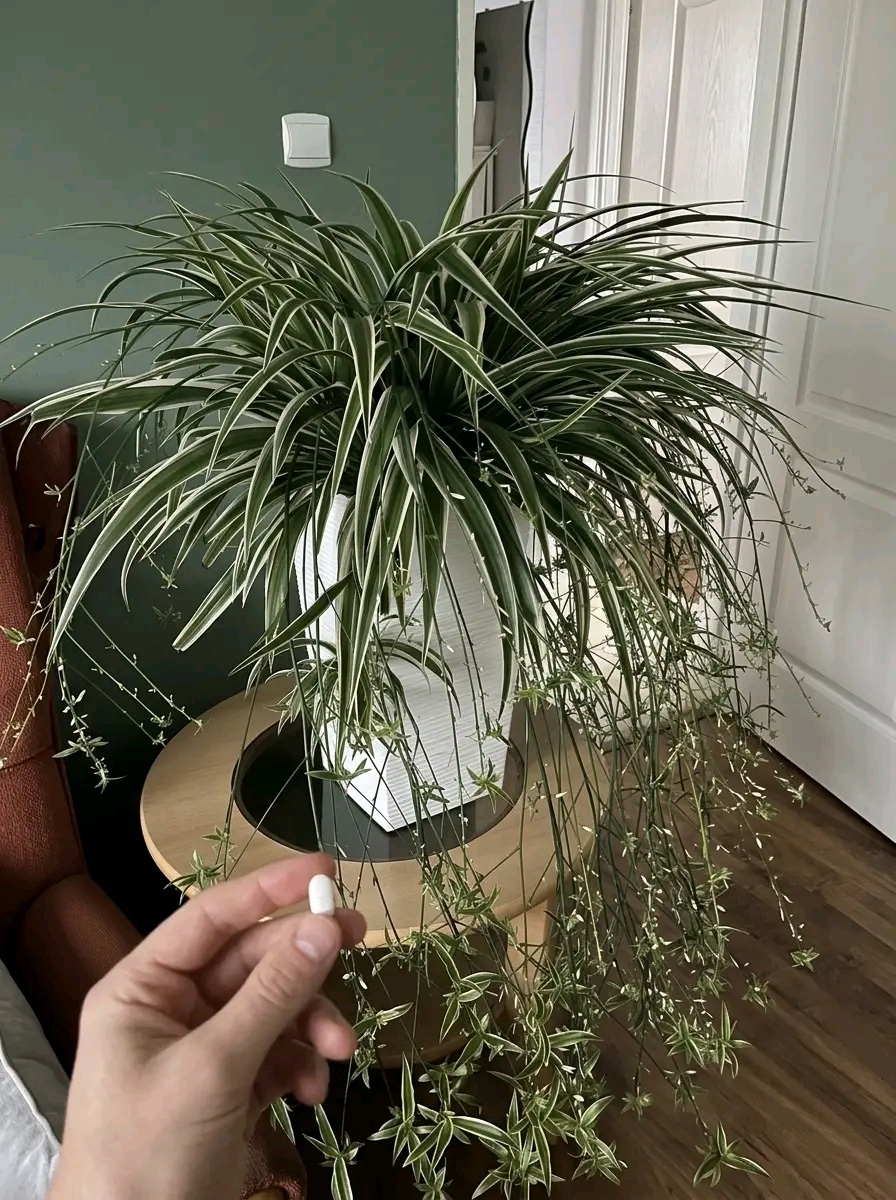
Spider plants are popular houseplants because their long striped leaves create a soft, full display, and their trailing baby plants look beautiful in hanging baskets or on shelves. With simple, consistent care, a spider plant can grow lush, produce more offshoots, and stay attractive year-round.
The secret is not a capsule or an unknown household product. Spider plants do best with bright indirect light, a pot that drains well, careful watering, and light feeding during the growing season.
Give Your Spider Plant Bright Indirect Light
Spider plants grow best near a bright window with filtered light. An east-facing window is often ideal because it provides gentle morning sun.
They can tolerate lower light, but growth may become slower and the leaf stripes may look less vibrant. Avoid strong afternoon sun, which can scorch the leaves and create brown tips.
Use a Pot With Good Drainage
Choose a pot with drainage holes and use a light indoor potting mix. Spider plants enjoy evenly moist soil, but their roots should never sit in standing water.
If you use a decorative cover pot, make sure the plant is still in a nursery pot with holes inside. Empty any extra water that collects in the bottom.
Water When the Top Soil Feels Dry
Check the top inch of soil before watering. When it feels dry, water slowly until a little water drains from the bottom of the pot.
Allow the extra water to drain away, then wait until the top of the soil begins to dry again. During warm, bright months, spider plants may need water more often than during winter.
Do Not Put Capsules or Pills in the Soil
Avoid using vitamins, medicine capsules, household powders, sugary water, milk, or other unknown liquids in the pot. These products can harm the roots, encourage fungus, or attract pests.
For a safe feeding routine, use a balanced houseplant fertilizer diluted according to the label. Apply it only during spring and summer, and only to moist soil.
Feed Lightly During Active Growth
Spider plants do not need heavy fertilizer. A light feeding once a month during the growing season is usually enough.
Too much fertilizer can build up in the soil and cause brown leaf tips. If you notice white crust on the soil or pot edge, flush the pot with plain water and let it drain well.
Trim Brown Tips Carefully
Brown tips are common and do not always mean the plant is unhealthy. They can happen from dry indoor air, inconsistent watering, fertilizer buildup, or minerals in tap water.
Use clean scissors to trim only the brown section, following the natural pointed shape of the leaf. Avoid cutting deep into healthy green tissue.
Encourage More Baby Spider Plants
A mature, healthy spider plant may produce long stems with small baby plants. Bright indirect light, regular watering, and a slightly snug pot can help encourage this natural growth.
Do not rush the process with strong fertilizer. Spider plants usually produce more offshoots when they are settled and receiving steady care.
How to Root the Baby Plants
When a baby spider plant has small roots, place it in a small pot of moist potting mix while it is still attached to the parent plant. Once it begins growing, cut the connecting stem.
You can also place the baby plant in water until roots grow, then move it into soil. Keep the new plant in bright indirect light while it establishes.
Best Places to Display a Spider Plant
Spider plants look especially beautiful in these spaces:
- A hanging basket near a bright window
- A shelf where the baby plants can trail downward
- A bathroom with natural light
- A living room corner on a plant stand
- A bright kitchen window
- A home office with filtered daylight
Final Note
A fuller spider plant comes from patient, consistent care. Give it bright indirect light, a draining pot, water when the soil starts to dry, and light fertilizer during the growing season. Skip the capsules and household tricks, and let the plant grow naturally into a lush, elegant display.