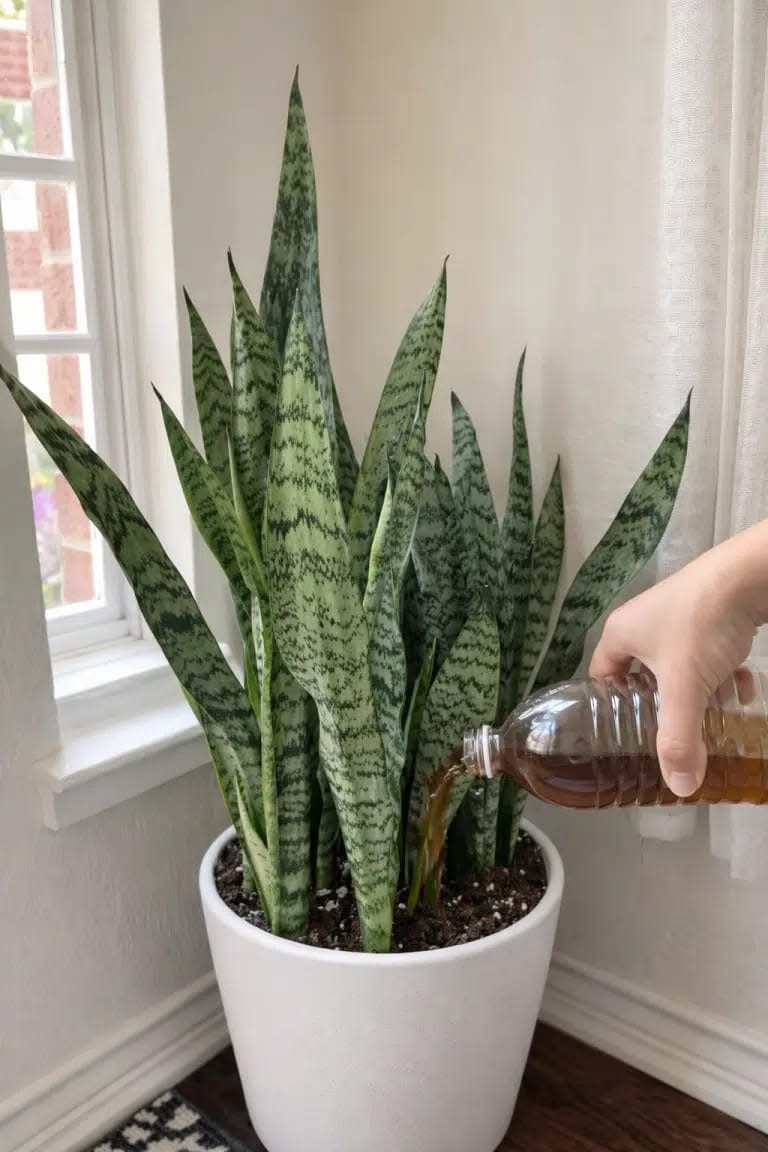
Snake plants are one of the easiest houseplants to grow. Their upright, patterned leaves look stylish in almost any room, and they tolerate busy schedules better than many other indoor plants.
The best way to keep a snake plant healthy is not a mystery liquid or a homemade soil tonic. A bright spot, well-draining soil, and careful watering are the habits that encourage sturdy leaves and steady new growth.
Give Your Snake Plant the Right Light
Snake plants can tolerate lower light, but they grow best in bright, indirect light. Place yours near a window where it receives plenty of daylight without intense all-day sun hitting the leaves.
A few hours of gentle morning sun is usually fine. Very hot afternoon sun through glass can scorch the foliage, especially during summer.
Use a Pot With Drainage
Good drainage is essential for snake plants. Choose a pot with drainage holes and use a fast-draining cactus or succulent potting mix.
If the plant sits in a decorative pot without drainage, keep it in a smaller nursery pot with holes inside the cover pot. Always empty standing water from the outer container.
Water Only When the Soil Is Dry
The most common problem with snake plants is overwatering. Before watering, check several inches down into the soil. If the soil is still moist, wait.
When it is dry, water slowly around the outer root zone until a small amount drains from the bottom. Then allow the soil to dry again before the next watering.
In many homes, this may be every 2 to 4 weeks during active growth and even less often in winter.
Avoid Kitchen Liquids and Unknown Plant “Tonics”
Some photos show dark homemade liquids being poured into snake plant soil. It is safer to avoid coffee, tea, milk, sugary water, or untested mixtures. These can attract pests, create odors, or leave the soil too wet.
For reliable nutrition, use a balanced houseplant fertilizer or cactus fertilizer during spring and summer. Dilute it according to the label and apply only to already-moist soil.
Feed Lightly During the Growing Season
Snake plants do not need heavy feeding. Use fertilizer once a month from spring through summer, then stop fertilizing during the cooler, darker months.
Too much fertilizer can damage roots and cause brown leaf tips. A light routine is more effective than using extra product.
Keep the Leaves Clean
Dust can collect on the broad leaves and make the plant look dull. Wipe the leaves gently with a soft, damp cloth every few weeks.
Avoid leaf-shine products or oily sprays. Clean leaves naturally look glossy and can receive light more efficiently.
Repot Only When Needed
Snake plants enjoy being slightly snug in their pot. Repot when roots are crowded, the pot is cracking, or the plant is drying out unusually fast.
Choose a new pot only 1 to 2 inches wider than the current one. A pot that is too large holds excess moisture and can make root problems more likely.
Encourage New Pups Naturally
New shoots, often called pups, usually appear when the plant is healthy and has enough bright light. Let the roots settle after repotting, water carefully, and avoid constantly moving the plant.
Patience is important. Snake plants grow slowly, but consistent care helps them produce fuller clumps over time.
Best Places to Display a Snake Plant
Snake plants look especially beautiful in these spaces:
- Beside a bright living room window
- In a tall pot near an entryway
- On a bedroom floor beside a dresser
- In a home office with filtered daylight
- In a clean bathroom with a window
- On a covered patio during warm weather
Final Note
A healthy snake plant needs simple, consistent care: bright indirect light, a draining pot, dry soil between waterings, and light fertilizer during the growing season. Skip the homemade liquids, and your plant will have the best chance to stay strong, upright, and beautifully green.