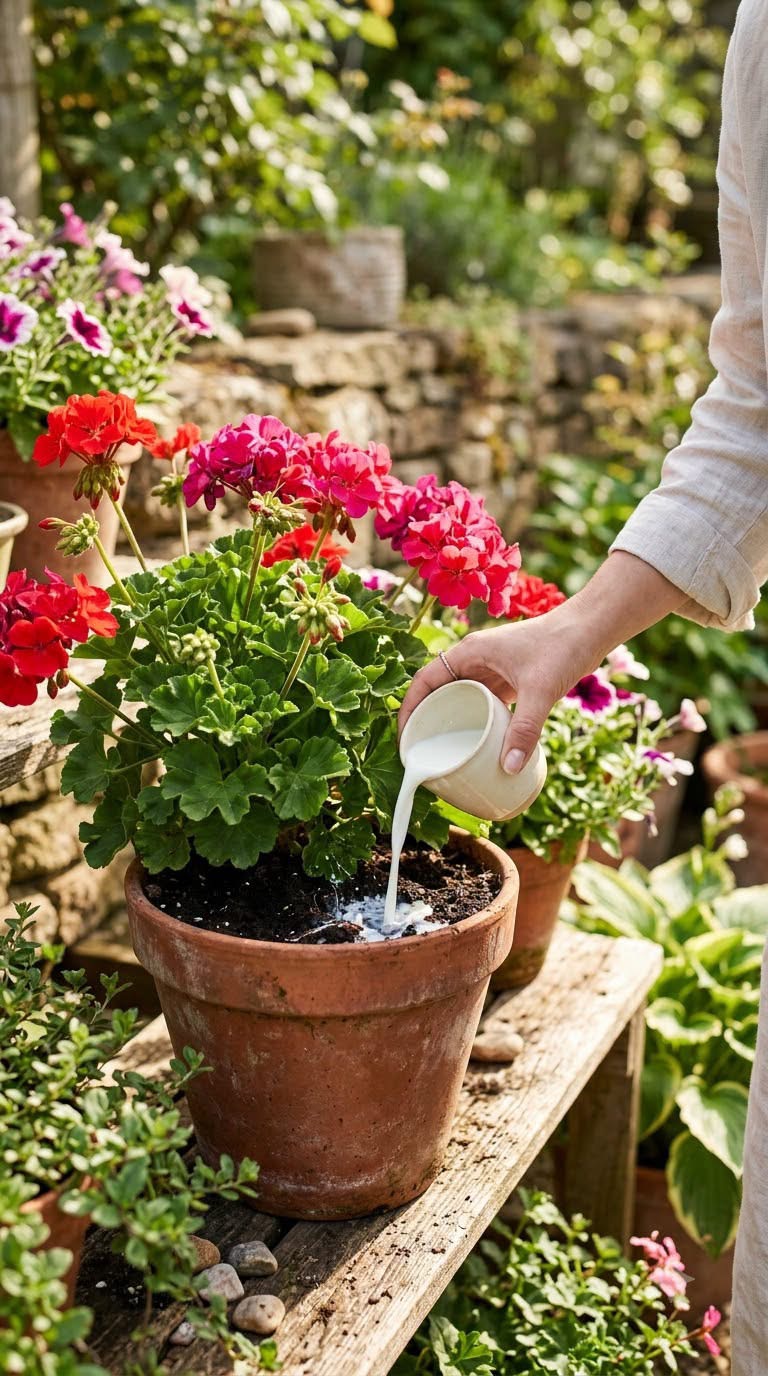
Geraniums are classic container plants loved for their colorful flower clusters, scented leaves, and easy-going nature. With the right sunlight, drainage, watering routine, and gentle feeding, they can bloom beautifully from spring through fall.
The most reliable way to keep geraniums healthy is simple: give them plenty of sun, avoid soggy roots, and remove faded flowers regularly. Consistent care works far better than using kitchen liquids or untested “plant hacks.”
Choose the Right Location
Geraniums thrive in a bright location with at least 4 to 6 hours of direct sunlight each day. Morning sun is ideal in very hot climates because it provides strong light without exposing the plant to the harshest afternoon heat.
A sunny balcony, patio table, front porch, windowsill, or garden bench can make geraniums look especially elegant. Group several pots together in different flower colors for a full, cheerful display.
Use a Pot With Drainage
Always grow geraniums in a pot with drainage holes. Their roots can rot if water stays trapped at the bottom of the container.
Use a light, well-draining potting mix made for containers. If your soil feels heavy or stays wet for many days, refresh it with a quality potting mix and make sure excess water can flow out freely.
Water the Right Way
Check the soil with your finger before watering. Water only when the top inch of soil feels dry.
Water slowly at the base of the plant until a little water runs out through the drainage holes. Then empty the saucer under the pot so the roots are never left sitting in water.
Geraniums usually need more water during hot, sunny weeks and less water during cool or rainy weather.
Skip Milk and Other Kitchen Liquids
Some photos show people pouring milk or other homemade liquids into plant pots. It is best to avoid this routine. Milk can create odors, encourage fungus or pests, and make the soil unhealthy over time.
For dependable results, use plain water and a balanced fertilizer made for flowering container plants. Follow the product label carefully and never add more than recommended.
Feed for Better Blooms
During active growth in spring and summer, feed geraniums with a liquid fertilizer for flowering plants every 2 to 4 weeks, following the label directions.
Choose a fertilizer with balanced nutrients or one made for blooming plants. Too much fertilizer can create lots of leaves with fewer flowers, so a light and regular feeding routine is best.
Deadhead Faded Flowers
Remove spent flower clusters as soon as they start to fade. Cut the flower stem down to where it meets the main stem instead of pulling it off.
Deadheading helps the plant put its energy into new buds instead of producing seeds. It also keeps the pot looking neat and full of color.
Pinch Back Leggy Growth
If your geranium becomes long and sparse, pinch or trim back the tips of the stems. This encourages the plant to branch out and become bushier.
Use clean scissors and trim just above a leaf joint. You can save healthy cuttings and root them in moist potting mix to make new plants.
Watch for Common Problems
Yellow leaves often mean the soil is staying too wet. Let the soil dry slightly between waterings and check that the pot drains well.
Few flowers may mean the plant needs more sunlight, regular deadheading, or a small amount of fertilizer. Brown crispy leaf edges can happen during very hot weather or when the pot dries out completely.
Best Places to Display Geraniums
Geraniums add instant color to many spaces around the home:
- A sunny front porch beside the entrance
- A balcony railing with matching terracotta pots
- A patio table as a bright centerpiece
- A garden bench surrounded by herbs and flowering plants
- A sunny kitchen window for a fresh, cheerful look
- A stone walkway or outdoor staircase lined with colorful containers
Final Note
Healthy geraniums do not need complicated tricks. Bright sun, well-draining soil, careful watering, occasional fertilizer, and regular deadheading are the simple habits that create fuller leaves and more beautiful blooms all season long.