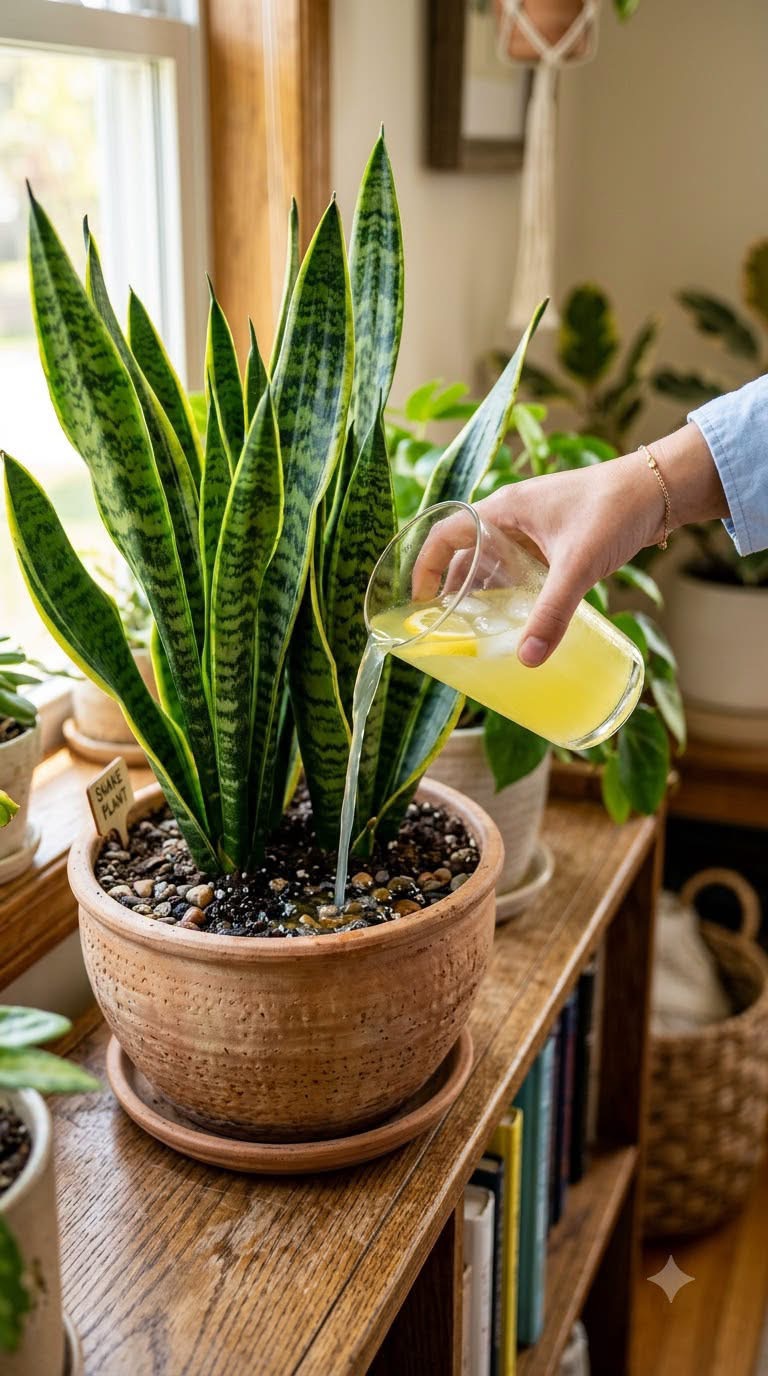
Snake plants are one of the easiest and most stylish houseplants to grow. Their upright green leaves bring a clean, modern look to any room, and they can adapt well to ordinary indoor conditions.
The best way to keep a snake plant looking full and healthy is simple: use a draining pot, give it bright indirect light, and let the soil dry before watering again. Strong homemade liquids, including lemon water, are not necessary and can upset the soil balance.
Why Snake Plants Are a Favorite Houseplant
Snake plants have bold leaves with beautiful green patterns and yellow edges. They are perfect for people who want an attractive indoor plant without a complicated care routine.
They also look elegant in terracotta pots, white ceramic planters, dark modern containers, and woven baskets. Their tall shape adds height to shelves, side tables, office corners, and living rooms.
The Best Light for a Snake Plant
Place your snake plant in bright, indirect light for the best leaf color and steady growth. A spot near a window with filtered sunlight is ideal.
Snake plants can tolerate lower light, but they will grow slowly. Avoid strong direct afternoon sun for long periods because it can stress or fade the leaves.
Rotate the pot every few weeks so all sides receive light and the plant grows evenly.
How to Water a Snake Plant Correctly
Always check the soil before watering. Push your finger a few inches into the potting mix. If it still feels damp, wait before adding more water.
When the soil has dried well, use plain room-temperature water. Pour slowly around the outer area of the soil until a little water drains from the bottom.
Empty the saucer after a few minutes. Letting the pot sit in water can cause the roots to struggle over time.
Why Plain Water Is Best
Snake plants do not need lemon water, vinegar water, salt water, or strong kitchen mixtures. These liquids can change the soil conditions and may irritate the roots.
For everyday care, clean water and a well-draining potting mix are the safest choice. A healthy plant grows best when its routine stays simple and consistent.
If you want to feed your plant, use a balanced houseplant fertilizer during spring and summer, following the product label exactly.
The Right Pot and Soil
Choose a pot with drainage holes. Terracotta is a great option because it helps extra moisture evaporate more easily.
Use a fast-draining mix, such as cactus or succulent soil. You can also add perlite to regular indoor potting soil to improve drainage.
Snake plants like being slightly snug in their pots. Repot only when the pot becomes crowded, cracked from root pressure, or too small to support the plant.
How to Keep Leaves Looking Glossy
Snake plant leaves naturally have a beautiful sheen. Simply wipe dust away with a soft damp cloth every few weeks.
Avoid oily leaf-shine products. They can leave residue on the leaves and are not needed for a clean, healthy look.
Remove damaged leaf tips with clean scissors if needed, following the natural pointed shape of the leaf.
Signs Your Snake Plant Needs Attention
Yellow or soft leaves often mean the soil has stayed too wet. Let the pot dry completely and make sure water can drain freely.
Wrinkled leaves may mean the plant has gone too long without water. Water it thoroughly, then return to a dry-between-waterings routine.
Pale or stretched growth can mean the plant needs more light. Move it gradually closer to a bright window rather than placing it immediately in harsh sunlight.
Beautiful Places to Display a Snake Plant
A tall snake plant looks beautiful in a living-room corner beside a sofa, near a sunny entryway, or next to a home-office desk.
Place a medium-size plant on a low stand or bookshelf to add height and natural color. Smaller pots work well on bedside tables, kitchen counters, and bathroom shelves with enough light.
Terracotta pots create a warm, natural style, while white or black ceramic pots give the plant a clean modern look.
Seasonal Care Tips
During spring and summer, your snake plant may need water slightly more often because light and temperatures are higher. This is also the best time for light fertilizer if the plant is actively growing.
During fall and winter, growth slows down. Water less frequently and skip fertilizer until the growing season returns.
Keep the plant away from cold windows, heaters, and air-conditioning vents for stable indoor conditions.
Safety Note
Snake plants should be kept out of reach of pets and small children because chewing the leaves can cause irritation. Wash your hands after pruning or repotting, and store all fertilizer products safely.
Final Thoughts
A beautiful snake plant does not need complicated tricks. Bright indirect light, plain water, dry soil between waterings, and a pot with drainage are the real keys to strong, glossy leaves.
Keep the routine simple, and your snake plant can remain a beautiful part of your home for years.