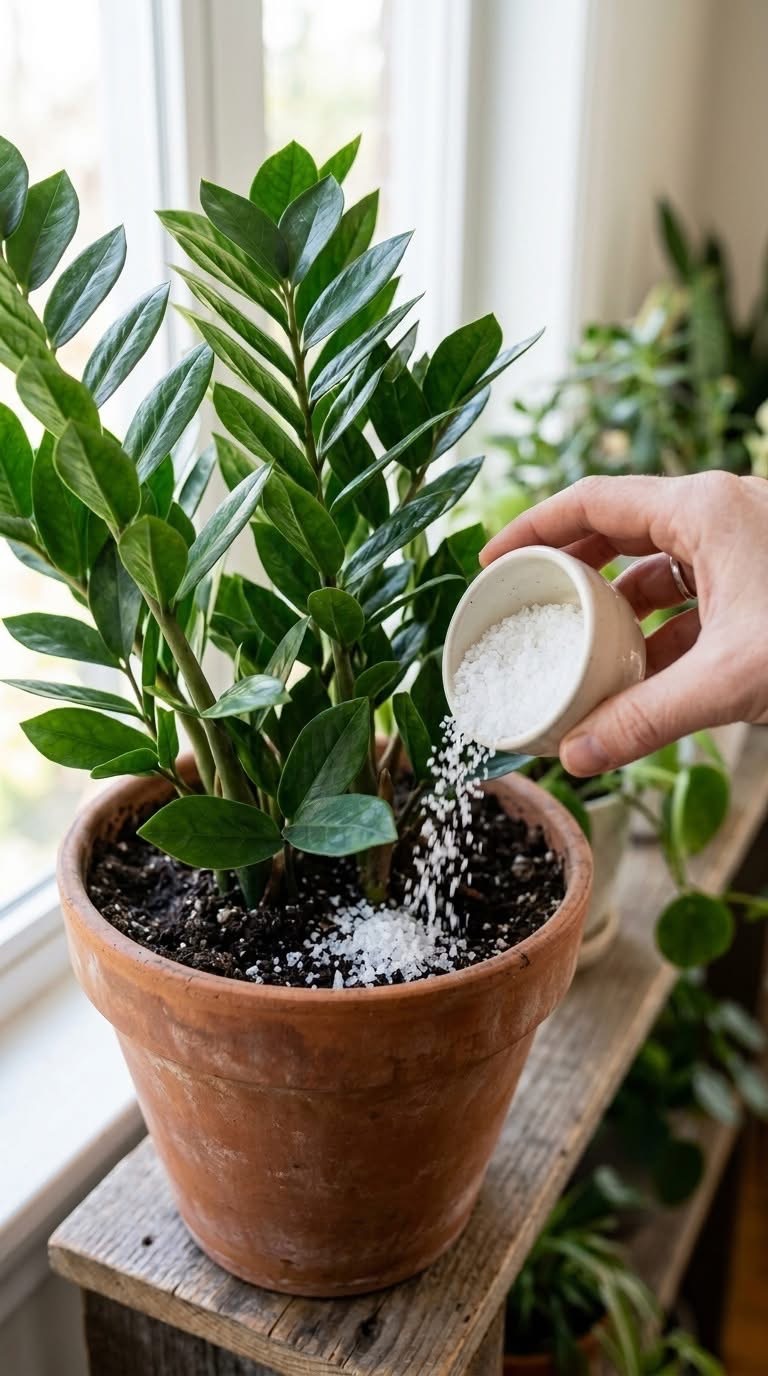
The ZZ plant, also known as Zamioculcas zamiifolia, is one of the most stylish and low-maintenance indoor plants. Its naturally glossy green leaves and upright stems make it a beautiful choice for living rooms, bedrooms, offices, and bright entryways.
A healthy ZZ plant does not need complicated tricks or strong homemade mixtures. The best routine is simple: give it a draining pot, let the soil dry well, provide gentle indirect light, and feed lightly only during active growth.
Why ZZ Plants Are So Popular
ZZ plants have thick underground rhizomes that store water, which is why they can handle missed waterings better than many houseplants. Their deep green leaves give any room a clean, modern look.
They are especially useful for people who want an elegant indoor plant without a demanding care schedule. With consistent basic care, a ZZ plant can stay attractive for many years.
The Best Light for a ZZ Plant
ZZ plants grow best in bright, indirect light. Place the pot a few feet from a window, or use a sheer curtain to soften direct sun.
They can tolerate lower-light rooms, but their growth will be slower. Avoid strong afternoon sun directly on the leaves because it can cause faded patches or leaf stress.
Rotate the pot every few weeks so the plant grows evenly and keeps its full, balanced shape.
How to Water a ZZ Plant
Water only when the potting mix has dried almost completely. Push a finger a few inches into the soil or lift the pot to check whether it feels light.
When the soil is dry, water slowly until a little water drains from the bottom of the pot. Empty the saucer after a few minutes so the roots do not sit in standing water.
ZZ plants generally need much less water during the cooler months. It is safer to wait a little longer than to water too often.
The Right Pot and Potting Mix
Use a pot with drainage holes. This is one of the most important parts of ZZ plant care because the roots and rhizomes need air around them.
Choose a loose, fast-draining indoor plant mix. You can improve drainage by mixing in perlite or using a cactus and succulent potting mix.
Repot only when the plant becomes crowded, the roots push against the pot, or the container feels too small. ZZ plants like a slightly snug pot, so there is no need to repot too early.
Safe Fertilizer Use
If your ZZ plant is actively growing during spring and summer, you can use a balanced houseplant fertilizer or a slow-release fertilizer made for indoor plants. Always use it exactly as directed on the label.
Avoid adding salt, baking soda, unknown white powders, or strong kitchen products to the soil. These can build up in the pot and interfere with healthy root growth.
Fertilizer is optional for a stable ZZ plant. Proper watering, drainage, and light make the biggest difference.
How to Keep the Leaves Glossy
The leaves of a ZZ plant naturally have a beautiful shine. You do not need leaf-shine sprays to make them look good.
Wipe dusty leaves gently with a soft, damp cloth. This keeps the foliage clean and allows light to reach the leaf surface more easily.
Do not use oils or heavy household products on the leaves. A clean damp cloth is the simplest and safest way to keep the plant looking fresh.
Signs Your ZZ Plant Needs Attention
Yellow leaves often mean the soil has stayed wet for too long. Let the soil dry fully, check that the pot drains, and reduce watering.
Wrinkled stems or dry-looking leaves can mean the plant has gone too long without water. Water it deeply, then allow the soil to dry before watering again.
Pale growth may mean the plant needs brighter indirect light. Move it closer to a window gradually rather than placing it immediately in intense direct sun.
Beautiful Places to Display a ZZ Plant
A large ZZ plant looks elegant beside a sofa, in a quiet corner of the living room, or near a bright window. Its upright stems make it a perfect choice for adding height to a room.
Place a smaller ZZ plant on an office desk, bedside table, bookshelf, or hallway console. Terracotta, matte black, white ceramic, and woven baskets all complement its rich green leaves.
Because it has such a clean shape, the ZZ plant also works beautifully in modern apartments, minimalist spaces, and cozy homes with natural wood furniture.
Simple Seasonal Care
In spring and summer, check the plant more often because warmer temperatures and brighter days may dry the soil faster. This is also the best time for gentle fertilizer, if needed.
In fall and winter, growth naturally slows. Water less often and avoid feeding until the plant begins growing again.
Keep the plant away from cold drafts, heaters, and air-conditioning vents. Stable indoor conditions help the leaves stay strong and attractive.
Safety Note
ZZ plants should be kept out of reach of pets and young children because the leaves can be irritating if chewed or handled carelessly. Wash hands after pruning or repotting, and keep plant-care products stored safely.
Final Thoughts
The best ZZ plant care routine is built on patience and consistency. Let the soil dry, use a draining pot, provide soft indirect light, and keep the leaves clean.
With this simple care, your ZZ plant can keep its deep green, glossy appearance and become a beautiful part of your home décor for years.