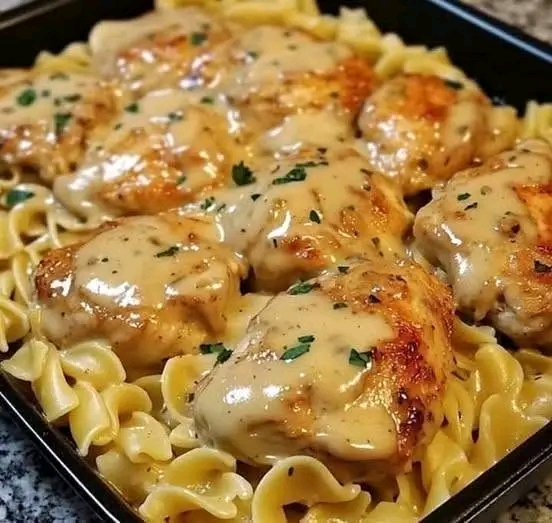
This One-Pan Chicken with Buttered Noodles is a cozy, family-friendly dinner made with tender seasoned chicken, soft egg noodles, butter, garlic, broth, and Parmesan cheese. Everything comes together in one deep skillet, creating a rich and comforting meal with minimal cleanup.
The chicken is browned first to build flavor, then the noodles cook directly in the seasoned broth. As the pasta softens, it absorbs the chicken juices, butter, garlic, and herbs, creating a silky sauce without requiring a separate pot.
This easy chicken and noodles recipe is ideal for busy weeknights, Sunday dinner, cold-weather meals, meal prep, and evenings when you need a filling homemade dinner made from simple grocery-store ingredients.
The dish is mild enough for children but easy to customize with mushrooms, peas, spinach, broccoli, lemon, cream, cheddar, or red pepper flakes. It can be prepared with chicken breasts, chicken thighs, or leftover cooked chicken.
Serve it on its own or pair it with green beans, roasted broccoli, carrots, peas, a crisp salad, garlic bread, or dinner rolls.
Why You Will Love This One-Pan Chicken and Noodles Recipe
The entire meal is prepared in one deep skillet, which means fewer dishes and easier cleanup.
The noodles cook in broth rather than plain water, allowing them to absorb more flavor.
Butter and Parmesan create a simple, creamy coating without requiring a heavy sauce.
The recipe uses affordable ingredients and can feed a family without an expensive grocery list.
It is also flexible. Chicken breasts, thighs, rotisserie chicken, or leftover roasted chicken can all be used with small adjustments.
Leftovers reheat well when a splash of broth or milk is added, making the recipe practical for meal prep.
What Is One-Pan Chicken with Buttered Noodles?
One-Pan Chicken with Buttered Noodles is a skillet dinner that combines browned chicken and egg noodles in a savory butter sauce.
Unlike traditional buttered noodles, which are boiled separately and tossed with butter afterward, this version cooks the noodles directly in chicken broth.
The starch released by the noodles combines with butter and Parmesan to create a light, silky sauce that coats both the pasta and chicken.
The result is similar to old-fashioned chicken and noodles but faster, richer, and easier to prepare on a busy evening.
Ingredients for One-Pan Chicken with Buttered Noodles
For the Chicken
- 1 1/2 pounds boneless, skinless chicken breasts or thighs
- 1 tablespoon olive oil
- 1 teaspoon garlic powder
- 1 teaspoon onion powder
- 1 teaspoon paprika
- 1/2 teaspoon dried thyme
- 3/4 teaspoon salt
- 1/2 teaspoon black pepper
For the Buttered Noodles
- 4 tablespoons butter, divided
- 3 cloves garlic, minced
- 4 cups low-sodium chicken broth
- 12 ounces wide egg noodles
- 1/2 cup grated Parmesan cheese
- 1 tablespoon fresh parsley, chopped
- Salt and black pepper, to taste
Optional Additions
- 1/2 cup heavy cream or half-and-half
- 1 cup frozen peas
- 2 cups baby spinach
- 1 cup sliced mushrooms
- 1 teaspoon lemon zest
- 1 tablespoon fresh lemon juice
- Crushed red pepper flakes
Ingredient Notes
Chicken Breasts
Chicken breasts create a lean, mild-flavored dinner and cook quickly when cut into even pieces.
For the most consistent result, use breasts of similar thickness or slice larger pieces horizontally.
Chicken Thighs
Boneless chicken thighs contain more fat and usually remain juicier during cooking.
They may need a few extra minutes depending on thickness.
Wide Egg Noodles
Wide egg noodles are ideal because they cook quickly and absorb the buttered broth well.
Extra-wide noodles create a more rustic texture, while medium noodles produce a softer, more compact dish.
Chicken Broth
The noodles absorb the broth as they cook, so choose one with good flavor.
Low-sodium broth is recommended because Parmesan and butter also contribute salt.
Butter
Butter gives the noodles their classic rich flavor.
Using part of the butter for cooking and adding the remainder at the end creates a fresher, silkier finish.
Parmesan Cheese
Parmesan adds saltiness, depth, and a lightly creamy texture.
Freshly grated Parmesan melts more smoothly than many packaged grated cheeses.
Garlic
Fresh garlic gives the buttered noodles a savory homemade flavor.
Garlic powder can be substituted when fresh garlic is unavailable.
Kitchen Equipment
You will need a large deep skillet or sauté pan with a lid, cutting board, sharp knife, measuring cups, measuring spoons, wooden spoon, tongs, and instant-read thermometer.
A 12-inch skillet with high sides is ideal because the noodles need room to soften and move through the broth.
How to Make One-Pan Chicken with Buttered Noodles
Step 1: Prepare the Chicken
Pat the chicken dry with paper towels.
Season both sides with garlic powder, onion powder, paprika, thyme, salt, and black pepper.
Step 2: Heat the Skillet
Place a large deep skillet over medium-high heat.
Add the olive oil and one tablespoon of butter.
Allow the butter to melt and the skillet to become hot.
Step 3: Brown the Chicken
Add the chicken in a single layer.
Cook for approximately four to six minutes on the first side without moving it excessively.
Turn and cook the second side until browned.
The chicken does not need to be completely cooked if it will finish later in the pan.
Step 4: Remove the Chicken
Transfer the browned chicken to a clean plate.
Cover loosely and set aside.
Step 5: Cook the Garlic
Reduce the heat to medium.
Add one tablespoon of butter to the same skillet.
Add the minced garlic and cook for approximately 30 seconds.
Stir constantly so it does not burn.
Step 6: Add the Broth
Pour in the chicken broth.
Use a wooden spoon to scrape the browned bits from the bottom of the skillet.
These bits add important flavor to the noodles.
Step 7: Add the Egg Noodles
Bring the broth to a gentle boil.
Add the wide egg noodles and stir carefully.
Press them into the liquid as they begin to soften.
Step 8: Simmer the Noodles
Reduce the heat to medium-low.
Cover the skillet and cook for approximately five minutes.
Remove the lid, stir gently, and continue cooking until the noodles are almost tender.
Add a small amount of extra broth or water when the pan becomes dry before the noodles are cooked.
Step 9: Return the Chicken
Place the chicken and any collected juices back into the skillet.
Nestle the pieces among the noodles.
Cover and cook until the chicken reaches 165°F in the thickest part and the noodles are tender.
Step 10: Add the Remaining Butter
Remove the skillet from the heat.
Add the remaining two tablespoons of butter.
Stir gently until melted and evenly distributed.
Step 11: Add the Parmesan
Sprinkle in the Parmesan gradually.
Stir until it melts into the noodles and broth.
Add a splash of broth when the sauce seems too thick.
Step 12: Finish and Serve
Taste and adjust the salt and black pepper.
Sprinkle with fresh parsley.
Serve immediately while the noodles are hot and silky.
How Long to Cook the Chicken
Cooking time depends on whether you use chicken breasts or thighs and how thick the pieces are.
Boneless chicken breasts usually need approximately eight to 12 minutes total, depending on thickness.
Boneless thighs may need approximately 10 to 14 minutes.
Use an instant-read thermometer and remove the chicken from direct heat once the center reaches 165°F.
Do not rely only on color because large pieces can brown before the centers are fully cooked.
How to Keep the Chicken Juicy
Use evenly sized pieces.
Pat the chicken dry before seasoning.
Brown it over medium-high heat without cooking it completely at the beginning.
Finish the chicken gently with the noodles.
Use a food thermometer and stop cooking at 165°F.
Allow the chicken to rest briefly before slicing when serving it on top of the noodles.
How to Keep Egg Noodles from Becoming Mushy
Add the noodles only after the broth begins simmering.
Cook them over moderate heat rather than a violent boil.
Stir gently and only as needed.
Begin checking before the package cooking time is complete.
Remove the pan from the heat when the noodles are just tender.
Serve promptly because they continue absorbing liquid while sitting.
How to Prevent Dry Buttered Noodles
Use enough broth to cook the noodles fully.
Keep extra warm broth nearby in case the pan dries too quickly.
Add the final butter after removing the skillet from the heat.
Serve immediately.
When reheating leftovers, add broth, milk, or cream.
How to Make the Noodles Creamier
Add one-half cup of heavy cream or half-and-half after the noodles are tender.
Reduce the heat before adding dairy.
Stir gently and avoid a strong boil.
Cream cheese can also be added in small pieces for a thicker, tangier sauce.
Extra Parmesan creates a richer cheese flavor.
Tips for the Best One-Pan Chicken and Noodles
Use a deep skillet with a lid.
Brown the chicken before cooking the noodles.
Scrape the browned bits into the broth.
Use low-sodium broth.
Stir the noodles gently.
Add extra broth only as needed.
Check the chicken with a thermometer.
Add butter and Parmesan after reducing or removing the heat.
Serve immediately for the best texture.
Easy One-Pan Chicken and Noodle Variations
Creamy Chicken and Buttered Noodles
Add heavy cream or half-and-half near the end.
Garlic Parmesan Chicken and Noodles
Increase the garlic and Parmesan and finish with parsley.
Lemon Chicken and Noodles
Add lemon zest and fresh lemon juice after cooking.
Mushroom Chicken and Noodles
Sauté sliced mushrooms after removing the chicken, then proceed with the garlic and broth.
Chicken and Pea Noodles
Add frozen peas during the final three to four minutes.
Chicken and Spinach Noodles
Stir baby spinach into the finished dish until wilted.
Chicken Broccoli Noodles
Add small steamed broccoli florets near the end.
Cheddar Chicken and Noodles
Replace part of the Parmesan with shredded sharp cheddar.
Spicy Chicken and Noodles
Add cayenne, red pepper flakes, hot sauce, or Cajun seasoning.
Herb Butter Chicken Noodles
Add fresh thyme, rosemary, sage, or dill.
Rotisserie Chicken Buttered Noodles
Skip the raw chicken cooking step and stir shredded rotisserie chicken into the noodles near the end.
Can You Use Chicken Thighs?
Yes. Boneless, skinless thighs are flavorful and remain juicy.
They may need slightly more cooking time than thin chicken breasts.
Check the thickest part with a thermometer and cook to 165°F.
Can You Use Leftover Chicken?
Yes. Cook the noodles in broth as directed.
Add chopped or shredded cooked chicken during the final few minutes, just long enough to heat it through.
This is a good way to use leftover roasted, grilled, or rotisserie chicken.
Can You Use Another Pasta Shape?
Yes, but liquid and cooking times will change.
Small shells, rotini, bow ties, or broken fettuccine can work.
Thicker pasta shapes may require more broth and additional simmering time.
Egg noodles remain the easiest choice for a quick one-pan recipe.
Can You Make It Gluten-Free?
Use gluten-free egg-style noodles or another short gluten-free pasta.
Check the broth, Parmesan, seasonings, and optional sauces for gluten-containing ingredients.
Gluten-free pasta may soften or break more quickly, so stir carefully and check early.
Can You Make It Dairy-Free?
Replace butter with olive oil or a dairy-free butter alternative.
Omit Parmesan or use a dairy-free grated cheese.
Use nutritional yeast for extra savory flavor when desired.
Can You Make It Ahead?
The chicken can be seasoned up to one day ahead and refrigerated.
The vegetables and optional additions can also be prepared in advance.
For the best noodle texture, cook the complete dish shortly before serving.
If necessary, prepare it several hours ahead and reheat gently with extra broth.
What to Serve with One-Pan Chicken and Buttered Noodles
Green Beans
Steamed, roasted, or sautéed green beans add freshness and color.
Broccoli
Roasted or steamed broccoli balances the buttery noodles.
Carrots
Glazed or roasted carrots pair well with the mild chicken.
Peas
Peas can be served on the side or stirred directly into the noodles.
Garden Salad
A crisp salad with vinaigrette cuts through the richness.
Garlic Bread
Garlic bread makes the meal especially filling and comforting.
Dinner Rolls
Soft rolls are useful for collecting the buttery sauce.
How to Turn It into a Complete Family Dinner
Serve one piece of chicken over a generous portion of buttered noodles.
Add green beans, peas, broccoli, or carrots.
Finish with parsley and extra Parmesan.
Serve with salad, garlic bread, or dinner rolls.
For dessert, add apple crisp, pudding, brownies, or fresh fruit.
How to Store Leftovers
Allow the chicken and noodles to cool slightly.
Transfer them to airtight food storage containers.
Refrigerate within two hours.
Store for up to three to four days.
The noodles continue absorbing broth during storage and will become thicker.
How to Reheat Chicken with Buttered Noodles
Stovetop Method
Place the chicken and noodles in a skillet or saucepan.
Add a splash of broth, milk, or water.
Cover and warm over low heat, stirring gently.
Microwave Method
Place one portion in a microwave-safe dish.
Add a spoonful of broth or milk.
Cover loosely and heat in short intervals.
Stir the noodles between intervals for even heating.
Oven Method
Place the leftovers in a covered baking dish with extra broth.
Warm at 325°F until hot throughout.
Can You Freeze Chicken with Buttered Noodles?
The cooked chicken freezes well, but egg noodles may become softer after thawing.
Allow the dish to cool completely.
Transfer it to freezer-safe containers with a small amount of extra broth.
Freeze for up to two months.
Thaw overnight in the refrigerator.
Reheat gently and add fresh butter, broth, or Parmesan as needed.
For the best texture, freeze the cooked chicken separately and prepare fresh noodles later.
Meal-Prep Ideas
Divide the chicken and noodles into individual containers.
Add green beans, peas, broccoli, or carrots.
Keep extra Parmesan and parsley in separate small containers.
Add a spoonful of broth before reheating.
Label each container with the preparation date.
Common Mistakes to Avoid
Do not use a skillet that is too small.
Avoid overcrowding the chicken while browning.
Do not burn the garlic.
Avoid adding all the broth at once when using a different noodle shape.
Do not overcook the egg noodles.
Avoid cooking the chicken beyond 165°F.
Do not add Parmesan over extremely high heat.
Avoid reheating leftovers without extra liquid.
Frequently Asked Questions
Can I Use Chicken Thighs?
Yes. Boneless thighs work very well and remain juicy.
Can I Use Rotisserie Chicken?
Yes. Add it near the end so it heats without drying out.
What Noodles Are Best?
Wide egg noodles are the easiest and most traditional choice.
Why Are My Noodles Dry?
They may need additional broth, butter, or cream.
Why Are My Noodles Mushy?
They were probably cooked too long or left sitting in the hot pan.
Can I Add Cream?
Yes. Add heavy cream or half-and-half near the end.
Can I Add Vegetables?
Yes. Peas, spinach, mushrooms, broccoli, and carrots all work well.
Can I Use Another Cheese?
Yes. Cheddar, mozzarella, Asiago, or Romano can be used.
How Do I Know the Chicken Is Done?
Cook until the thickest part reaches 165°F.
Can I Make It Ahead?
Yes, although the noodle texture is best when served fresh.
How Long Do Leftovers Keep?
Store them in the refrigerator for three to four days.
Can It Be Frozen?
Yes, but the noodles may become softer after thawing.
How Many People Does It Serve?
The recipe serves approximately six people.
Food Safety and Allergy Notes
This recipe commonly contains wheat, eggs, and dairy.
Keep raw chicken refrigerated until cooking.
Wash your hands before and after handling raw poultry.
Clean cutting boards, knives, utensils, counters, and sinks that contact raw chicken.
Do not place cooked chicken on a plate that held raw poultry unless it has been washed.
Cook chicken to an internal temperature of 165°F.
Refrigerate leftovers within two hours.
Review noodles, broth, butter alternatives, cheese, and seasonings for allergen warnings.
Why This Recipe Is Great for Families
The ingredients are affordable and easy to find.
The flavor is mild, buttery, and familiar.
Everything cooks in one pan.
The meal can be customized with different vegetables and cheeses.
Leftovers are easy to portion for lunch.
The recipe works for both busy weeknights and relaxed weekend dinners.
Printable One-Pan Chicken with Buttered Noodles Recipe
One-Pan Chicken with Buttered Noodles
Prep Time: 15 minutes
Cook Time: 25 to 30 minutes
Total Time: Approximately 45 minutes
Yield: 6 servings
Category: Dinner
Cooking Method: Stovetop
Cuisine: American comfort food
Ingredients
Chicken
- 1 1/2 pounds boneless, skinless chicken breasts or thighs
- 1 tablespoon olive oil
- 1 teaspoon garlic powder
- 1 teaspoon onion powder
- 1 teaspoon paprika
- 1/2 teaspoon dried thyme
- 3/4 teaspoon salt
- 1/2 teaspoon black pepper
Buttered Noodles
- 4 tablespoons butter, divided
- 3 cloves garlic, minced
- 4 cups low-sodium chicken broth
- 12 ounces wide egg noodles
- 1/2 cup grated Parmesan cheese
- 1 tablespoon chopped fresh parsley
- Salt and black pepper, to taste
Instructions
- Pat the chicken dry.
- Season both sides with garlic powder, onion powder, paprika, thyme, salt, and pepper.
- Heat the olive oil and one tablespoon butter in a large deep skillet over medium-high heat.
- Add the chicken in a single layer.
- Cook for four to six minutes on the first side.
- Turn and brown the second side.
- Transfer the chicken to a clean plate.
- Reduce the heat to medium.
- Add one tablespoon butter and the minced garlic.
- Cook for approximately 30 seconds.
- Pour in the chicken broth.
- Scrape the browned bits from the bottom of the skillet.
- Bring the broth to a gentle boil.
- Add the egg noodles.
- Reduce the heat to medium-low and cover.
- Cook for approximately five minutes.
- Uncover and stir gently.
- Continue cooking until the noodles are almost tender.
- Add extra broth when necessary.
- Return the chicken and collected juices to the skillet.
- Cover and cook until the chicken reaches 165°F and the noodles are tender.
- Remove the skillet from the heat.
- Add the remaining two tablespoons butter.
- Stir until melted.
- Add the Parmesan gradually.
- Stir until the noodles are evenly coated.
- Taste and adjust the seasoning.
- Sprinkle with parsley.
- Serve immediately.
Storage
Store leftovers in airtight containers in the refrigerator for three to four days.
Reheating
Reheat gently with a splash of broth, milk, or water.
Freezing
Freeze for up to two months. For the best texture, freeze the chicken separately and prepare fresh noodles later.
Important Tip
Remove the skillet from high heat before adding the final butter and Parmesan. This keeps the sauce smooth and prevents the cheese from becoming grainy.
Final Thoughts
This One-Pan Chicken with Buttered Noodles combines juicy seasoned chicken, tender egg noodles, garlic, butter, broth, Parmesan, and herbs in one comforting skillet dinner.
The noodles cook directly in the seasoned broth, absorbing the chicken flavor while releasing enough starch to create a light, silky sauce.
For the best result, brown the chicken first, use a deep skillet, stir the noodles gently, monitor the broth level, and stop cooking the chicken when it reaches 165°F.
Customize the recipe with mushrooms, peas, spinach, broccoli, cream, cheddar, lemon, Cajun seasoning, or red pepper flakes.
Serve it with green beans, carrots, salad, garlic bread, dinner rolls, or roasted vegetables.
With affordable ingredients, minimal cleanup, flexible variations, and classic family-friendly flavor, One-Pan Chicken with Buttered Noodles is an easy comfort-food dinner worth adding to your regular meal rotation.