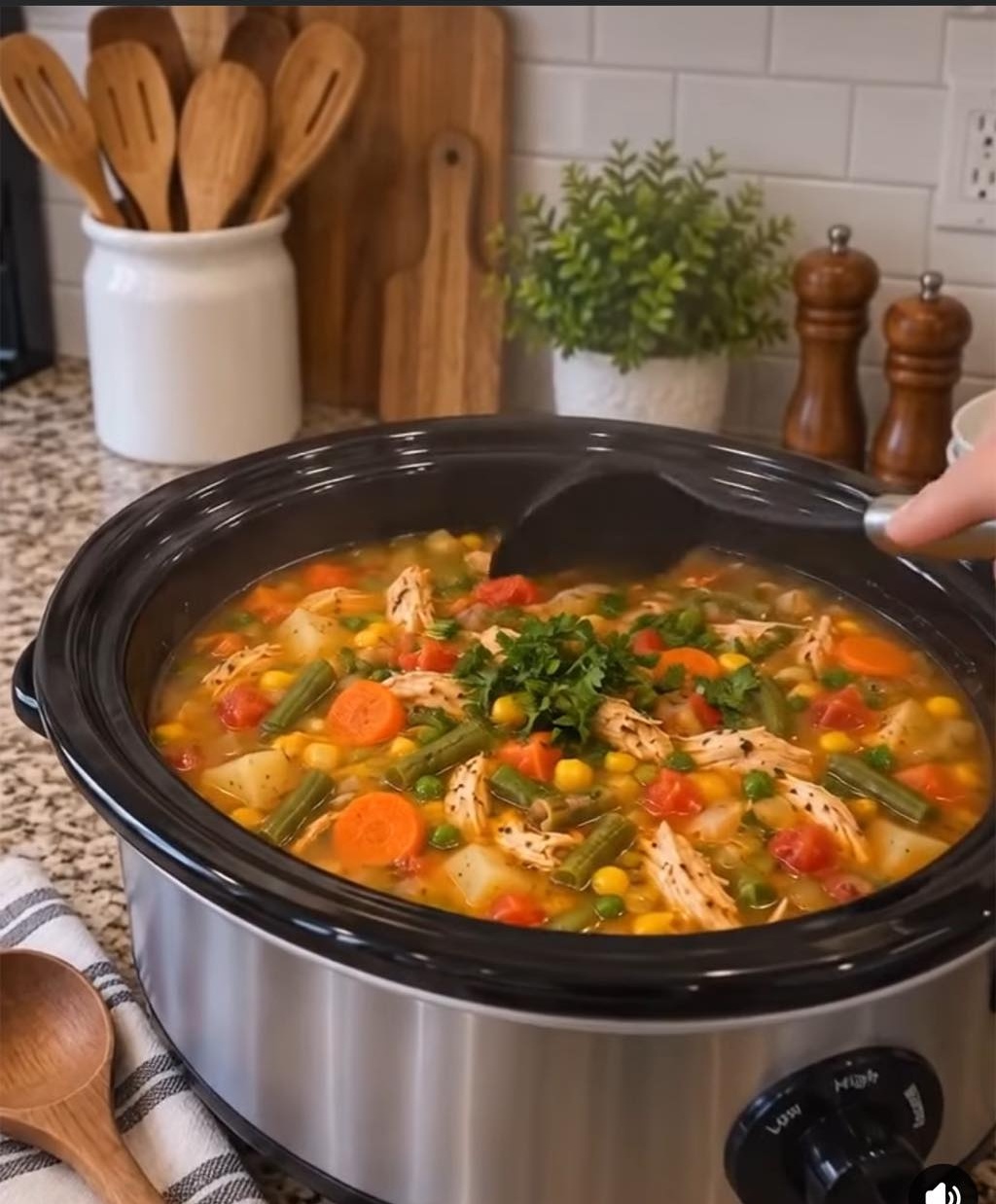
Slow Cooker Chicken Vegetable Soup is an easy, comforting meal packed with tender shredded chicken, potatoes, carrots, green beans, corn, peas, tomatoes, and flavorful broth. Everything comes together in the crockpot for a simple family dinner that requires minimal hands-on cooking.
This recipe is especially useful on busy days because most of the ingredients can go directly into the slow cooker. As the chicken cooks slowly with the vegetables, broth, garlic, and seasonings, it becomes tender enough to shred easily while adding savory flavor throughout the soup.
The combination of chicken and vegetables makes every spoonful hearty without requiring a heavy cream sauce. Potatoes add substance, carrots provide mild sweetness, and corn and peas add color and texture. Green beans stay pleasantly firm when added at the right time, while diced tomatoes give the broth additional flavor.
Serve this soup with warm dinner rolls, crusty bread, cornbread, crackers, or a simple sandwich for an easy complete meal.
Why This Recipe Is Popular
Slow cooker chicken soup is popular because it requires relatively little preparation.
Instead of watching a pot on the stove, you can assemble most of the ingredients in the crockpot and let them cook slowly.
It is also a practical recipe for families because the ingredients are familiar and easy to find.
Chicken provides the main protein, while potatoes and vegetables make the soup substantial enough for dinner.
Another advantage is flexibility.
You can use fresh or frozen vegetables, adjust the seasonings, replace some vegetables with whatever you already have, or add rice, noodles, or beans.
The leftovers are also convenient for lunch the following day.
Recipe Information
Prep Time: 20 minutes
Cook Time on LOW: 6–7 hours
Cook Time on HIGH: 3–4 hours
Total Time: About 6 hours 30 minutes
Servings: 6–8
Difficulty: Easy
Cooking Method: Slow Cooker
Main Ingredient: Chicken
Best For: Family dinner, meal prep, cool-weather meals, easy weeknight dinners
Main Ingredients
Chicken forms the savory base of the soup.
Boneless, skinless chicken breasts create lean pieces of shredded chicken, while chicken thighs provide a slightly richer flavor.
Potatoes make the soup more filling.
Carrots add sweetness and hold their texture well during slow cooking.
Green beans provide freshness and color.
Corn adds little bursts of sweetness.
Peas are best added toward the end so they stay bright and tender.
Diced tomatoes add acidity and another layer of flavor to the broth.
Chicken broth brings all of the ingredients together.
Onion, garlic, herbs, salt, and black pepper provide the seasoning.
Ingredients
1 1/2 pounds boneless, skinless chicken breasts or thighs
4 medium Yukon Gold potatoes, peeled and cubed
3 large carrots, sliced
1 medium yellow onion, chopped
3 cloves garlic, minced
1 1/2 cups cut green beans
1 cup corn kernels
1 cup frozen peas
1 can (14.5 ounces) diced tomatoes, with juices
6 cups low-sodium chicken broth
1 teaspoon salt, plus more as needed
1 teaspoon freshly ground black pepper
1 teaspoon dried Italian seasoning
1/2 teaspoon dried thyme
1/2 teaspoon paprika
1/2 teaspoon garlic powder
1 bay leaf
2 tablespoons chopped fresh parsley
1 tablespoon lemon juice, optional
How to Choose the Best Chicken
Both chicken breasts and chicken thighs work well.
Chicken breasts have a mild flavor and shred easily once tender.
Chicken thighs contain slightly more fat and usually remain very juicy after several hours of slow cooking.
You can also use a combination of breasts and thighs.
Choose boneless, skinless pieces for the easiest preparation.
If the chicken pieces are extremely thick, they may take slightly longer to cook.
Always cook chicken until it reaches a safe internal temperature of 165°F.
How to Choose the Vegetables
Choose firm potatoes without soft spots.
Yukon Gold potatoes are excellent because they become tender while holding their shape reasonably well.
Russet potatoes can also be used, but they tend to break down more.
Choose firm carrots and slice them into similar-sized rounds.
Fresh green beans work particularly well, although frozen green beans are convenient.
Frozen corn and peas can be added without thawing.
For the best texture, peas should be added toward the end rather than cooking for several hours.
Prepare the Chicken
Pat the chicken dry.
Trim away any excess fat.
Season lightly with salt, black pepper, paprika, and garlic powder.
Place the chicken in the bottom of the slow cooker.
There is no need to cut it into small pieces because it will be shredded after cooking.
Leaving the chicken in larger pieces can help it stay tender.
Prepare the Vegetables
Peel the potatoes if desired.
Cut them into approximately one-inch cubes.
Peel and slice the carrots.
Chop the onion.
Mince the garlic.
Trim the green beans and cut them into bite-sized pieces.
Try to keep the potatoes and carrots relatively uniform in size so they cook evenly.
Step-by-Step Instructions
Place the chicken in the bottom of a 6-quart slow cooker.
Add the cubed potatoes.
Add the carrots and chopped onion.
Add the minced garlic.
Pour in the diced tomatoes with their juices.
Add the chicken broth.
Season with salt, black pepper, Italian seasoning, thyme, paprika, and garlic powder.
Add the bay leaf.
Stir the vegetables gently without disturbing the chicken too much.
Cover the slow cooker.
Cook on LOW for approximately six to seven hours.
Alternatively, cook on HIGH for approximately three to four hours.
During the final 45 minutes, add the green beans and corn.
Cover and continue cooking.
Once the chicken reaches 165°F and is tender, carefully remove it from the slow cooker.
Place it on a cutting board or plate.
Use two forks to shred the chicken into bite-sized pieces.
Return the shredded chicken to the crockpot.
During the final 10 to 15 minutes, add the frozen peas.
Stir gently.
Taste the broth.
Adjust the salt and black pepper if necessary.
Remove the bay leaf.
If desired, stir in one tablespoon of fresh lemon juice.
Sprinkle generously with chopped parsley.
Serve hot.
Why Some Vegetables Are Added Later
Different vegetables require different cooking times.
Potatoes, carrots, and onions can handle several hours in the slow cooker.
They need enough time to become completely tender.
Green beans cook more quickly.
Adding them later helps them maintain better color and texture.
Corn can withstand more cooking, but adding it toward the end preserves its sweetness and texture.
Frozen peas need very little cooking.
They should generally be stirred in during the final few minutes.
This approach creates a soup where the vegetables remain distinct instead of becoming overly soft.
Tips for the Best Results
Cut the potatoes into similar-sized pieces.
Slice the carrots evenly.
Place the chicken near the bottom where it remains surrounded by hot liquid.
Use low-sodium chicken broth so you can control the final seasoning.
Do not add the peas at the beginning.
They can become extremely soft after several hours.
Check the chicken for doneness rather than relying only on cooking time.
Different slow cookers can cook at different speeds.
Shred the chicken only after it has become fully cooked and tender.
Taste the soup at the end before adding extra salt.
Fresh parsley should be added near serving time for the freshest flavor.
How to Make the Broth More Flavorful
Chicken broth provides the main base, but simple ingredients can make it even better.
Onion and garlic are essential.
Dried thyme works especially well with chicken and vegetables.
Italian seasoning provides a mixture of familiar herbs.
A bay leaf can add subtle depth during the long cooking time.
Freshly ground black pepper adds warmth.
A small splash of lemon juice at the end can brighten the entire soup without making it taste strongly of lemon.
For additional savory flavor, a small amount of Worcestershire sauce can also be added.
Chicken Thigh Variation
Chicken thighs are an excellent alternative to chicken breasts.
Use approximately 1 1/2 pounds of boneless, skinless thighs.
Follow the same preparation.
Chicken thighs can remain especially tender during slow cooking and provide a slightly richer broth.
Remove them once fully cooked, shred the meat, and return it to the soup.
Rotisserie Chicken Variation
If you already have cooked rotisserie chicken, you can shorten the cooking process.
Prepare the potatoes, carrots, onion, tomatoes, broth, and seasonings in the slow cooker.
Cook until the vegetables are tender.
Shred approximately three cups of cooked rotisserie chicken.
Add it during the final 30 minutes.
Because the chicken is already cooked, it only needs enough time to heat through and absorb some of the broth flavor.
Chicken and Rice Variation
Rice can turn this vegetable soup into an even heartier meal.
For the easiest method, cook the rice separately.
Spoon cooked rice into individual bowls and ladle the hot chicken soup over it.
Keeping the rice separate prevents it from continuing to absorb broth while the soup is stored.
If rice is cooked directly in the crockpot, monitor it carefully because cooking times vary significantly by type.
Chicken Noodle Variation
Cook egg noodles separately according to package instructions.
Drain them.
Add noodles to individual bowls before serving.
Pour the hot chicken vegetable soup over them.
This method keeps the noodles from becoming too soft, especially if you plan to refrigerate leftovers.
Small pasta shapes can also be used.
Chicken and Bean Variation
Beans can add even more substance.
Cannellini beans, great northern beans, or chickpeas are all good options.
Drain and rinse one 15-ounce can.
Add the beans during the final 30 minutes.
Because canned beans are already cooked, they only need enough time to become hot.
Spicy Chicken Vegetable Soup
For a little heat, add crushed red pepper flakes.
Start with approximately 1/4 teaspoon.
You can also add diced jalapeño or a small amount of cayenne pepper.
For a Southwestern-style variation, add chili powder and cumin.
Black beans can replace the potatoes, and extra corn works well with these flavors.
How to Serve Chicken Vegetable Soup
Crusty bread is one of the easiest accompaniments.
Dip slices directly into the flavorful broth.
Dinner rolls are another family-friendly choice.
Cornbread pairs particularly well with the corn and chicken.
A grilled cheese sandwich can turn the soup into an especially comforting meal.
For something lighter, serve a green salad on the side.
You can also sprinkle each bowl with additional parsley or freshly ground black pepper.
Make-Ahead Instructions
This soup can be partially prepared the evening before.
Chop the carrots, onion, and green beans.
Store them in separate airtight containers in the refrigerator.
The chicken can also be trimmed in advance and refrigerated safely.
Potatoes are best cut closer to cooking time because exposed raw potatoes can discolor.
Alternatively, keep peeled potato pieces submerged in cold water in the refrigerator, then drain them thoroughly before cooking.
Meal Prep and Storage
Chicken vegetable soup works very well for meal prep.
Allow the finished soup to cool.
Divide it into airtight containers.
Refrigerate for up to three to four days.
The flavor often becomes even more developed after the soup rests overnight.
If you are adding rice or noodles, consider storing them separately.
This keeps them from absorbing too much broth.
How to Reheat
Transfer the soup to a saucepan.
Warm over medium-low heat, stirring occasionally.
Heat until the chicken and vegetables are thoroughly hot.
Individual servings can also be microwaved.
Place the soup in a microwave-safe bowl.
Cover loosely.
Heat in intervals, stirring between each interval.
If the soup has thickened during storage, add a splash of chicken broth.
Can You Freeze Chicken Vegetable Soup?
Yes.
Chicken vegetable soup generally freezes well.
Allow it to cool completely.
Transfer to freezer-safe containers, leaving a little room for expansion.
Freeze for up to approximately three months for best quality.
Thaw overnight in the refrigerator.
Reheat gently on the stovetop.
Potatoes may become slightly softer after freezing, but the soup will still be flavorful.
If you plan specifically to freeze the soup, you can leave the potatoes out and add freshly cooked potatoes when reheating.
Common Mistakes to Avoid
Do not cut the potatoes extremely small.
Small pieces can become too soft during long cooking.
Avoid adding all vegetables at the beginning.
Peas and green beans benefit from shorter cooking times.
Do not repeatedly remove the slow cooker lid.
Each time the lid is lifted, heat escapes and cooking can take longer.
Avoid adding too much salt before the soup has finished cooking.
Broth and other ingredients already contribute sodium.
Do not continue cooking the chicken for hours after it reaches doneness.
Overcooked chicken breast can become dry even when surrounded by broth.
Do not forget to remove the bay leaf before serving.
Frequently Asked Questions
Can I use chicken breasts?
Yes. Boneless, skinless chicken breasts work very well.
Can I use chicken thighs?
Absolutely. Chicken thighs provide a slightly richer flavor and stay tender.
Can I use frozen vegetables?
Yes. Frozen corn, peas, and green beans are convenient options.
Can I add noodles?
Yes. For the best texture, cook noodles separately and add them when serving.
Can I add rice?
Yes. Cooked rice can be added to individual bowls.
Can I use sweet potatoes?
Yes. Sweet potatoes can replace some or all of the regular potatoes.
Can I add beans?
Yes. Cannellini beans, great northern beans, and chickpeas all work well.
Why are my vegetables mushy?
They may have cooked too long or been cut too small.
Can I make this soup ahead?
Yes. It reheats well and works nicely for meal prep.
How do I know the chicken is cooked?
The thickest part should reach an internal temperature of 165°F.
Final Thoughts
Slow Cooker Chicken Vegetable Soup is a simple family meal filled with tender shredded chicken, potatoes, carrots, green beans, corn, peas, tomatoes, herbs, and savory chicken broth.
The slow cooker handles most of the work while the vegetables and chicken develop plenty of flavor. Adding quicker-cooking vegetables toward the end keeps the finished soup colorful and gives every ingredient a better texture.
You can serve it exactly as written or customize it with rice, noodles, beans, additional vegetables, or a little spice.
Pair a warm bowl with crusty bread, cornbread, or a simple salad for an easy dinner, then save the leftovers for a convenient lunch the following day.