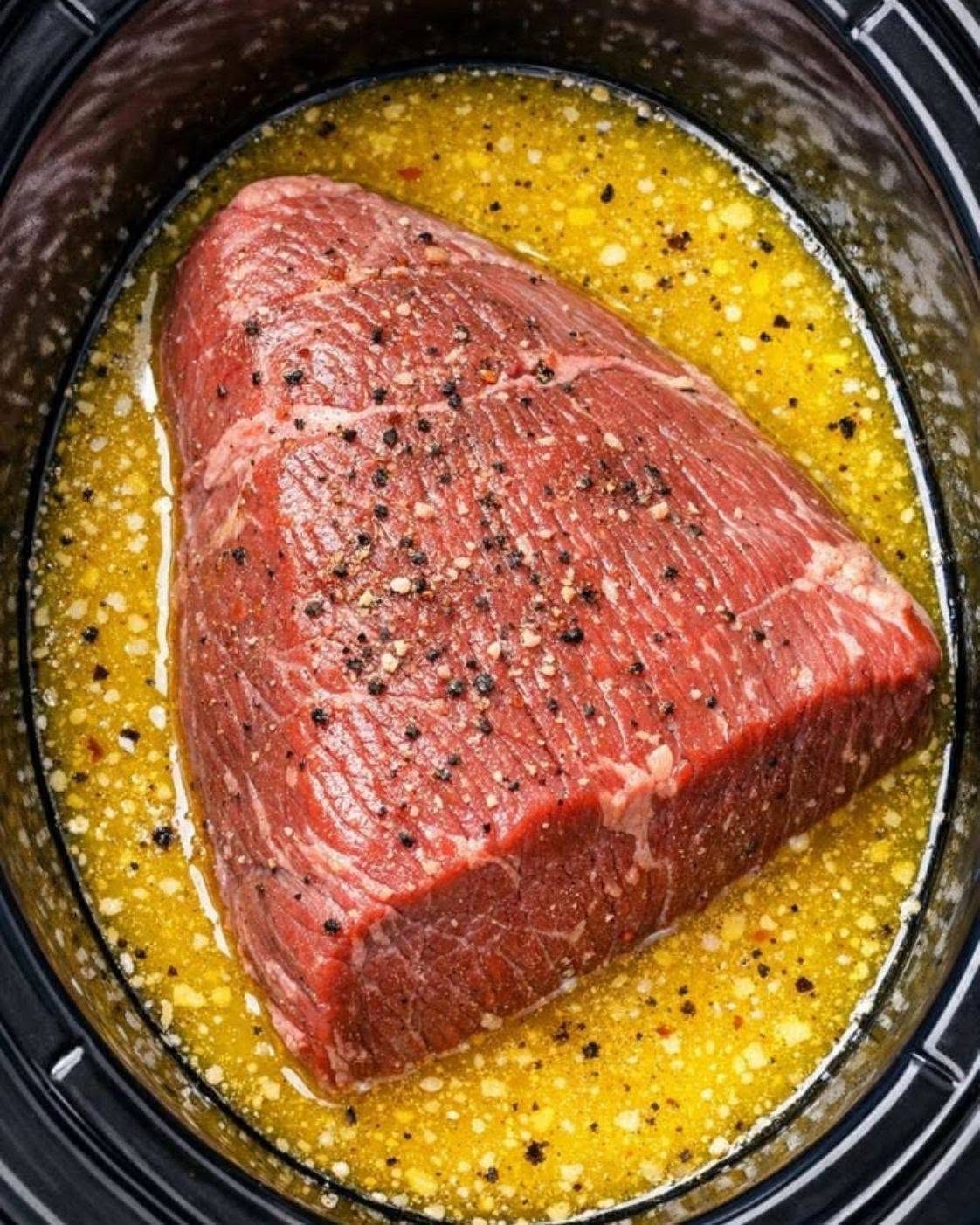
A good slow cooker beef roast is one of those recipes that proves simple ingredients can create an incredibly satisfying dinner. This Slow Cooker Butter Beef Roast combines a large beef roast with butter, savory seasonings, garlic, black pepper, and a flavorful cooking liquid that slowly transforms the meat into tender, pull-apart beef.
The beauty of this recipe is how little hands-on work it requires. Once the seasoned roast and buttery mixture are added to the crockpot, the slow cooker handles almost everything. Several hours later, the beef becomes soft enough to shred with a fork while the surrounding juices turn into a rich sauce that can be spooned over every serving.
It is the kind of meal that works especially well when you want something hearty without spending the entire afternoon in the kitchen. Serve it with creamy mashed potatoes, egg noodles, rice, roasted vegetables, or warm bread and you have an easy family dinner that feels like classic comfort food.
The leftovers are also incredibly useful. Shredded beef can become sandwiches, tacos, rice bowls, baked potato toppings, or a quick second dinner later in the week.
Why This Slow Cooker Butter Beef Roast Is So Popular
Slow cooker beef roast recipes have remained popular for years because they take a relatively tough cut of beef and turn it into something remarkably tender.
Chuck roast and similar cuts contain connective tissue and marbling that need time to soften. Slow cooking gives that connective tissue several hours to break down, producing the soft texture that makes crockpot beef so satisfying.
The butter adds richness to the cooking liquid and helps carry the flavors of garlic, pepper, and seasonings throughout the dish.
Another advantage is simplicity.
This is not a recipe that requires constant stirring, complicated techniques, or numerous pots and pans.
After a short preparation, the roast can cook unattended for most of the day.
That makes it particularly useful for busy families, weekend dinners, meal prep, and anyone who wants a substantial homemade dinner with minimal effort.
Recipe Information
Prep Time: 15 minutes
Cook Time on LOW: 8–9 hours
Cook Time on HIGH: 4–5 hours
Total Time: Approximately 8 hours 15 minutes
Servings: 6–8
Difficulty: Easy
Cooking Method: Slow Cooker / Crockpot
Main Ingredient: Beef chuck roast
Best For: Family dinners, Sunday dinner, meal prep, comfort food
Main Ingredients
Beef chuck roast is the foundation of the recipe.
Chuck contains enough fat and connective tissue to remain flavorful during long cooking and becomes tender when given sufficient time.
Butter gives the sauce richness and blends beautifully with the beef juices.
Beef broth provides moisture and creates the base for the finished sauce.
Garlic adds savory depth.
Black pepper creates a warm, slightly sharp flavor that balances the richness of the butter.
Paprika adds color and subtle flavor.
Worcestershire sauce adds another savory layer and helps make the cooking juices taste more developed.
Onion powder and garlic powder distribute seasoning throughout the roast.
Dried herbs such as thyme can be added for additional aroma.
Ingredients
3 to 4 pounds beef chuck roast
6 tablespoons unsalted butter
1 cup low-sodium beef broth
4 cloves garlic, minced
1 tablespoon Worcestershire sauce
1 teaspoon kosher salt
1 teaspoon freshly ground black pepper
1 teaspoon garlic powder
1 teaspoon onion powder
1 teaspoon paprika
1/2 teaspoon dried thyme
1/4 teaspoon crushed red pepper flakes, optional
1 tablespoon olive oil, optional for searing
2 tablespoons cornstarch, optional
3 tablespoons cold water, optional
Fresh parsley for serving, optional
How to Choose the Best Beef Roast
For slow cooker recipes, chuck roast is one of the most reliable choices.
Look for a roast with visible marbling throughout the meat rather than one that is completely lean.
Those thin streaks of fat gradually melt while the roast cooks and contribute to both tenderness and flavor.
A three- to four-pound roast usually fits comfortably inside a standard slow cooker.
If you purchase a very large roast, make sure it fits without being tightly pressed against the lid.
Blade roast or other slow-cooking beef cuts can also work.
Cuts designed for quick cooking, such as expensive steaks, are not necessary for this recipe.
The slow cooker works best with cuts that benefit from longer cooking.
Prepare the Beef
Remove the roast from its packaging.
Pat it dry thoroughly with paper towels.
Season all sides with salt, black pepper, garlic powder, onion powder, paprika, and dried thyme.
Press the seasoning gently against the surface so it stays attached.
At this point you can place the beef directly into the slow cooker.
However, for deeper flavor, you can sear it first.
Heat one tablespoon of olive oil in a large skillet over medium-high heat.
Once hot, add the roast.
Brown it for approximately three minutes on each side.
You do not need to cook the center.
The goal is only to develop a browned crust.
Transfer the beef into the slow cooker.
Prepare the Butter Sauce
Place the butter in a small saucepan over low heat.
Allow it to melt gently.
Add the minced garlic and cook for approximately 30 seconds to one minute.
The garlic should become fragrant without turning dark brown.
Add the beef broth and Worcestershire sauce.
Stir well.
Add a little black pepper and the optional red pepper flakes.
Remove the saucepan from the heat.
Pour the butter mixture around and over the roast.
There should be enough liquid around the meat to create moisture, but the roast does not need to be completely submerged.
Slow cookers trap steam extremely well, and the beef will release additional juices as it cooks.
Step-by-Step Instructions
Pat the chuck roast dry and season it on all sides.
If desired, heat olive oil in a skillet and brown the beef.
Transfer the roast to the slow cooker.
Melt butter in a small saucepan.
Add minced garlic and cook briefly.
Pour in the beef broth.
Add Worcestershire sauce and stir.
Pour the warm butter mixture over and around the roast.
Sprinkle a little additional black pepper on top.
Cover the slow cooker securely.
Cook on LOW for approximately eight to nine hours.
For a faster option, cook on HIGH for about four to five hours.
LOW is usually the better choice for chuck roast because the longer cooking period allows the connective tissue to soften gradually.
Begin checking the meat near the end of the recommended cooking time.
Insert a fork into the roast.
If the beef easily separates, it is ready.
If it still feels firm, cover the slow cooker and continue cooking.
Once tender, carefully transfer the roast to a serving platter.
Allow it to rest for about ten minutes.
Shred the beef using two forks or cut it into large tender pieces.
Spoon some of the buttery cooking liquid over the meat before serving.
Why Low and Slow Works Best
Chuck roast contains collagen.
During slow cooking, collagen gradually converts into gelatin.
That process creates the moist, tender texture associated with good pot roast.
Cooking beef at a very high temperature for too short a time does not give the connective tissue enough opportunity to soften.
That is why a roast can technically be cooked yet still seem tough.
When a slow cooker roast is still difficult to shred, additional cooking time is often the solution.
This is also why LOW is usually preferable to HIGH when your schedule allows.
Tips for the Best Results
Use a well-marbled roast.
A little visible fat is beneficial for slow cooker beef.
Season generously.
A large piece of meat needs enough seasoning to flavor both the exterior and the cooking liquid.
Avoid adding too much broth.
The roast itself releases considerable moisture while cooking.
Use unsalted butter when possible.
This allows you to control the overall saltiness more easily.
Avoid opening the slow cooker repeatedly.
Every time the lid is removed, heat escapes.
Check tenderness with a fork rather than relying entirely on time.
Different slow cookers can cook at slightly different rates.
Let the meat rest briefly before shredding.
This gives the juices a chance to redistribute.
How to Make a Thick Gravy
The buttery cooking liquid is delicious as it is, but you can easily turn it into thicker gravy.
After removing the roast, pour approximately two cups of cooking liquid into a saucepan.
Bring the liquid to a gentle simmer.
In a small bowl, mix two tablespoons cornstarch with three tablespoons cold water.
Whisk until completely smooth.
Slowly pour the mixture into the simmering liquid while whisking.
Continue cooking for two to three minutes.
The sauce should begin to thicken.
Taste before adding salt because the broth and beef juices may already provide enough seasoning.
Spoon the gravy over the shredded roast, mashed potatoes, or vegetables.
Flavor Variations
A slow cooker butter roast is very easy to customize.
For extra garlic, use six cloves instead of four.
For stronger herb flavor, add fresh rosemary or thyme.
For a smoky version, use smoked paprika.
For a slightly spicy finish, add crushed red pepper flakes.
For a deeper savory sauce, add an additional teaspoon of Worcestershire sauce.
For onion flavor, place thick onion wedges underneath the roast.
You can also add mushrooms during the last few hours of cooking.
For a slightly tangy flavor, stir a teaspoon of Dijon mustard into the broth mixture.
Add Potatoes for a Complete Dinner
Potatoes work especially well with this recipe.
Small Yukon Gold or baby potatoes can be added directly to the crockpot.
Place them around the sides of the roast.
If using larger potatoes, cut them into substantial chunks.
Very small pieces may become too soft during eight hours of cooking.
The potatoes absorb some of the buttery beef juices, making them especially flavorful.
If your slow cooker is crowded, prepare mashed potatoes separately instead.
Adding Carrots
Carrots are another classic addition.
Peel large carrots and cut them into thick pieces.
Arrange them along the bottom or sides of the slow cooker.
Avoid very thin slices because they can become overly soft.
Carrots add color, mild sweetness, and another vegetable to the meal without requiring a separate cooking pan.
Adding Onions
Thickly sliced onions can be placed underneath the roast before cooking.
They slowly soften while absorbing butter, broth, and beef juices.
By serving time, they become tender and flavorful.
Yellow onions work especially well because they become naturally sweeter during long cooking.
Two medium onions are usually enough for a standard roast.
How to Serve Slow Cooker Butter Beef Roast
Mashed potatoes are probably the most classic pairing.
Place a generous portion of mashed potatoes on each plate and spoon shredded beef and gravy over the top.
Egg noodles also work exceptionally well.
Their mild flavor allows the buttery beef sauce to stand out.
White rice is another easy option.
For vegetables, serve the roast with green beans, roasted broccoli, carrots, asparagus, or Brussels sprouts.
A fresh salad can provide a lighter contrast to the rich beef.
Crusty bread or dinner rolls are also excellent because they can absorb the extra cooking juices.
Turn the Leftovers Into Sandwiches
Slow cooker beef makes excellent sandwiches the next day.
Shred the leftover roast.
Warm it gently with a few tablespoons of its cooking liquid.
Place the warm beef on toasted rolls.
Add softened onions if you cooked them with the roast.
Provolone or Swiss cheese can also be added.
Serve some of the warm beef juices alongside the sandwich for dipping.
Use Leftovers for Tacos
Leftover shredded beef can easily become another dinner.
Warm the beef in a skillet.
Add a little of the cooking liquid.
Spoon it into warm tortillas.
Add shredded lettuce, cheese, onions, tomatoes, salsa, or avocado according to preference.
Because the meat is already seasoned, preparation takes only a few minutes.
Beef Rice Bowls
For an easy lunch, spoon warm rice into bowls.
Add shredded butter beef.
Top with roasted or steamed vegetables.
Spoon a small amount of the beef sauce over everything.
This is an easy way to stretch leftovers into several additional meals.
Meal Prep and Storage
This recipe is excellent for meal prep because the meat stays moist when stored with its cooking liquid.
Allow the roast to cool slightly.
Divide the shredded beef among airtight containers.
Spoon some of the sauce into every container.
Store side dishes separately when practical.
Refrigerate cooked beef for approximately three to four days.
Use clean containers with secure lids.
How to Reheat Beef Roast
For stovetop reheating, place the beef in a saucepan or skillet.
Add a small amount of the cooking liquid.
Cover and warm slowly over low to medium-low heat.
Stir occasionally.
For microwave reheating, place a serving of beef in a microwave-safe container.
Add one or two spoonfuls of sauce.
Cover loosely.
Heat in short intervals until warmed through.
Avoid overheating because repeatedly heating lean pieces can dry them out.
Can You Freeze Slow Cooker Beef Roast?
Yes.
Slow cooker beef freezes very well.
Allow the meat to cool completely.
Transfer it into freezer-safe containers or freezer bags.
Add a small amount of the cooking liquid.
For best quality, use the frozen beef within approximately two to three months.
Thaw it overnight in the refrigerator.
Reheat slowly with the sauce.
Freezing individual portions is especially convenient for quick meals.
Common Mistakes to Avoid
Using an extremely lean roast can result in drier meat.
Choose chuck or another slow-cooking cut with visible marbling.
Do not add excessive liquid.
The slow cooker traps moisture, and the beef releases juices as it cooks.
Another common mistake is stopping cooking too early.
If the beef is difficult to shred, it may simply need additional time.
Avoid repeatedly opening the lid.
Do not use large quantities of salt at the beginning if your broth or Worcestershire sauce is already salty.
Taste the sauce before adding more seasoning at the end.
Finally, do not throw away the cooking liquid.
It contains a significant amount of flavor and can become an excellent sauce or gravy.
Frequently Asked Questions
Can I cook the roast without searing it first?
Yes. Searing improves flavor, but the recipe still works when the seasoned roast goes directly into the crockpot.
What is the best beef for this recipe?
Chuck roast is generally the best choice because it becomes tender during long cooking.
Can I use salted butter?
Yes. Reduce the added salt and taste the finished sauce before seasoning further.
Can I add vegetables?
Yes. Potatoes, carrots, onions, and mushrooms are all good additions.
Why is my slow cooker roast tough?
It probably needs more cooking time. Chuck roast becomes tender after its connective tissue has fully softened.
Can I cook the roast on HIGH?
Yes. Cook it for approximately four to five hours, although LOW usually gives the best texture.
Can I add more garlic?
Absolutely. Garlic can easily be increased according to preference.
How much liquid should be in the slow cooker?
The beef does not need to be submerged. Around one cup of broth plus the butter and natural beef juices is usually sufficient.
Can I prepare this the night before?
You can season the beef and prepare the other ingredients ahead of time. Keep everything refrigerated until you are ready to begin cooking.
Can I shred the beef directly in the slow cooker?
Yes. Once tender, the roast can be shredded directly in the cooking liquid using two forks.
Final Thoughts
Slow Cooker Butter Beef Roast is a simple, satisfying dinner built around tender beef and a rich, savory butter sauce.
The chuck roast cooks slowly with garlic, broth, black pepper, herbs, and Worcestershire sauce until it becomes soft enough to pull apart effortlessly.
Because the preparation is straightforward and most of the cooking happens unattended, it is an excellent choice for busy days, weekend family dinners, meal prep, or classic comfort-food nights.
Serve it with mashed potatoes and gravy for a traditional meal, spoon it over noodles or rice, or save some of the shredded beef for sandwiches and tacos the following day.
With tender meat, flavorful cooking juices, and simple pantry seasonings, this crockpot beef roast is an easy recipe that can quickly become a regular part of your family dinner rotation.