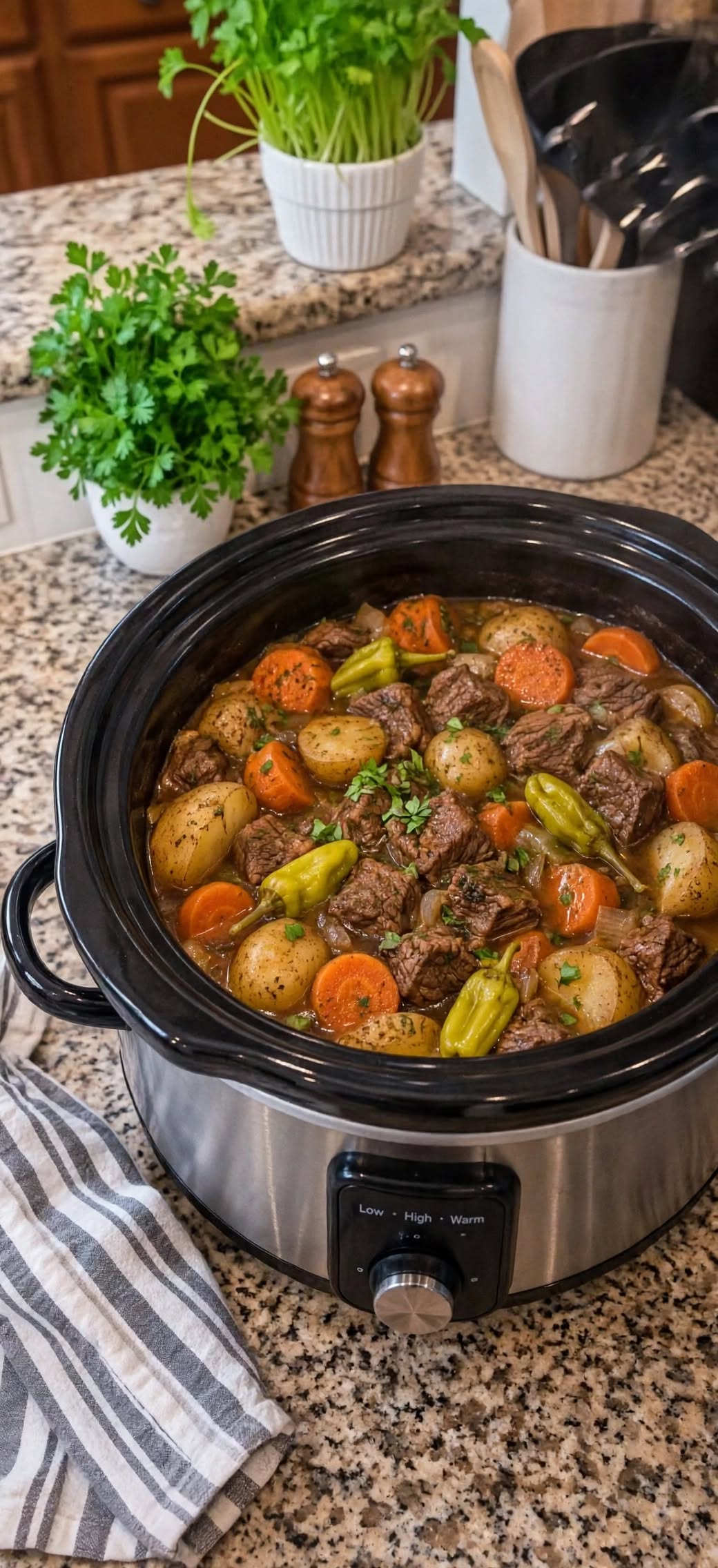
This Slow Cooker Pepperoncini Beef Stew is a hearty one-pot dinner made with tender chunks of beef, buttery baby potatoes, sweet carrots, onions, and mild pepperoncini peppers simmered slowly in a rich brown gravy.
It has the comforting flavors of classic beef stew with a slightly tangy Mississippi-style twist. The pepperoncini bring brightness to the rich beef broth without making the dish overwhelmingly spicy, while several hours of slow cooking transform chuck roast into fork-tender pieces.
Everything cooks together in the crockpot, making this an excellent recipe for busy weekdays, Sunday dinners, meal prep, fall gatherings, or cold winter evenings.
Recipe Rating: 9.9/10 ⭐
Prep Time: 20 minutes
Cook Time: 7–8 hours on LOW
Total Time: About 8 hours
Servings: 6–8
Category: Dinner / Slow Cooker / Beef
Cuisine: American Comfort Food
Difficulty: Easy
Why This Recipe Is Popular
Slow cooker beef stew is a classic because it turns relatively affordable ingredients into a deeply flavorful family meal.
Chuck roast becomes tender after several hours of gentle cooking, while potatoes and carrots absorb the seasoned beef broth.
This version gets extra personality from pepperoncini peppers.
Their slightly tangy flavor helps balance the richness of beef, butter, potatoes, and gravy.
Another advantage is convenience.
Instead of cooking meat, vegetables, and sauce separately, almost everything goes into one appliance.
Once the ingredients are assembled, the slow cooker handles most of the work.
Recipe Information
Preparation Time: 20 minutes
Cooking Time: 7–8 hours on LOW or 4–5 hours on HIGH
Total Time: Approximately 8 hours
Servings: 6–8
Recommended Slow Cooker: 6 quart
Difficulty: Easy
Best For: Family dinners, meal prep, fall meals, winter comfort food, Sunday dinner
Main Ingredients
Beef chuck roast: Chuck contains enough marbling and connective tissue to become especially tender during slow cooking.
Baby potatoes: Yukon Gold or baby potatoes develop a creamy center while generally holding their shape.
Carrots: Provide natural sweetness and classic stew flavor.
Pepperoncini: Add mild acidity and tanginess that balances the rich gravy.
Onions: Slowly soften into the broth and provide savory depth.
Garlic: Fresh garlic strengthens the overall flavor.
Beef broth: Creates the savory liquid base.
Worcestershire sauce: Adds extra umami and depth.
Tomato paste: A small amount deepens the gravy without making the stew taste strongly of tomato.
Ingredients
For the Beef
3 pounds beef chuck roast
1½ tablespoons olive oil
1 teaspoon black pepper
1 teaspoon garlic powder
½ teaspoon onion powder
½ teaspoon smoked paprika
½ teaspoon salt
For the Vegetables
1½ pounds baby Yukon Gold potatoes
4 large carrots, cut into thick pieces
1 large yellow onion, chopped
4 garlic cloves, minced
6–8 whole pepperoncini peppers
For the Beef Gravy
2½ cups low-sodium beef broth
¼ cup pepperoncini brine
2 tablespoons Worcestershire sauce
1 tablespoon tomato paste
1 teaspoon Dijon mustard
1 teaspoon dried thyme
½ teaspoon dried rosemary
2 tablespoons unsalted butter
For Thickening
2 tablespoons cornstarch
2 tablespoons cold water
For Garnishing
Fresh chopped parsley
Freshly ground black pepper
How to Choose the Best Beef
Chuck roast is one of the best cuts for slow cooker stew.
It contains connective tissue that initially makes the beef tough, but long, moist cooking gradually breaks that tissue down.
The result is tender beef surrounded by rich cooking juices.
Look for chuck with visible marbling distributed throughout the meat.
Avoid choosing extremely lean beef if tenderness is your priority.
Cut the roast into approximately 1½- to 2-inch cubes.
Keeping the pieces fairly large helps them remain juicy during several hours of cooking.
Prepare the Beef
Pat the beef dry with paper towels.
Removing surface moisture helps the meat brown instead of steam.
Cut it into large cubes.
Season with black pepper, garlic powder, onion powder, smoked paprika, and salt.
Toss until the seasoning is distributed evenly.
Brown the Beef
Browning the beef is optional, but it adds significant flavor.
Heat olive oil in a large skillet over medium-high heat.
Add the beef in batches.
Do not crowd the skillet.
Allow each piece to develop a dark brown surface before turning.
You do not need to cook the beef completely.
The goal is simply to create browned flavor.
Transfer each batch directly to the slow cooker.
Deglaze the Skillet
After browning the beef, pour approximately ½ cup beef broth into the hot skillet.
Scrape the bottom with a wooden spoon.
Those browned bits contain concentrated beef flavor.
Pour the liquid into the slow cooker.
This simple step can make the final gravy taste noticeably richer.
Prepare the Potatoes and Carrots
Wash the potatoes thoroughly.
Small baby potatoes can remain whole.
Cut larger potatoes in half.
Peel the carrots if desired and cut them into substantial pieces.
Avoid cutting either vegetable too small.
They will spend several hours cooking, and tiny pieces can become overly soft before the beef is tender.
Assemble the Slow Cooker
Place the beef in the crockpot.
Arrange the potatoes, carrots, and onions around the meat.
Add minced garlic and whole pepperoncini.
In a bowl, whisk together beef broth, pepperoncini brine, Worcestershire sauce, tomato paste, Dijon mustard, thyme, and rosemary.
Pour the mixture evenly into the slow cooker.
Add the butter.
The ingredients do not need to be completely submerged.
Slow cookers trap moisture, and both beef and vegetables release additional liquid while cooking.
Slow Cook Until Tender
Cover the slow cooker.
Cook on LOW for 7–8 hours.
You can also cook on HIGH for approximately 4–5 hours, although LOW usually produces the most consistent tenderness.
The beef is ready when a fork easily enters the pieces and the meat separates with little resistance.
The potatoes and carrots should also be tender.
Do not repeatedly remove the lid during cooking.
Each time the lid is opened, heat and steam escape.
Why LOW Works Better for Beef Stew
Chuck roast benefits from time.
The meat does not become tender simply because it reaches a safe cooking temperature.
The connective tissue needs extended cooking to gradually soften.
This is why beef that still feels chewy near the end of cooking may actually need more time rather than less.
Cooking on LOW gives the beef more opportunity to become tender without aggressively boiling the outside.
What Pepperoncini Add to Beef Stew
Pepperoncini provide a mild tang that makes this beef stew different from a traditional version.
They are generally much milder than jalapeños.
Their main contribution is acidity rather than intense heat.
That acidity helps balance ingredients such as beef, butter, potatoes, and gravy.
The brine is useful too.
A small amount intensifies the tangy flavor without making the dish taste pickled.
If you prefer a milder result, reduce the brine to 1–2 tablespoons.
How to Make the Gravy Thicker
When the beef and vegetables are completely tender, combine cornstarch and cold water in a small bowl.
Whisk until smooth.
Stir the slurry gradually into the cooking liquid.
Turn the slow cooker to HIGH.
Cover and cook for approximately 10–15 minutes.
The gravy should become noticeably thicker.
Do not add dry cornstarch directly to the stew because it can form lumps.
Remember that the gravy will continue thickening slightly as it cools.
How to Make the Gravy Richer
Use a flavorful low-sodium beef broth as your base.
Tomato paste provides concentrated savory flavor.
Worcestershire sauce adds umami.
Dijon mustard introduces subtle acidity.
Pepperoncini brine brightens the sauce.
Butter rounds everything out and makes the gravy feel richer.
Taste the finished sauce before adding more salt.
Broth, Worcestershire sauce, and pepperoncini all contribute sodium.
How to Keep Potatoes From Falling Apart
Choose waxy or all-purpose potatoes such as Yukon Gold, red potatoes, or baby potatoes.
Keep the pieces relatively large.
Do not cut them into tiny cubes.
Also avoid aggressively stirring the stew once the potatoes are tender.
If your slow cooker runs particularly hot, you can add the potatoes one hour after starting the beef.
For maximum convenience, however, large baby potatoes usually work well from the beginning.
Classic Beef Stew Variation
If you prefer traditional beef stew, leave out the pepperoncini and brine.
Add an additional carrot and some celery.
Increase the thyme slightly.
You can also add frozen peas during the final 15 minutes.
This gives you a more traditional beef-and-vegetable stew flavor.
Mississippi-Style Beef Stew Variation
For a stronger Mississippi-inspired version, add:
- 1 tablespoon ranch seasoning
- 1 tablespoon au jus seasoning
- Additional pepperoncini
- 2 additional tablespoons butter
Be cautious with salt because seasoning packets can contain substantial sodium.
Taste before adding any extra salt.
Spicy Pepperoncini Beef Stew
For more heat, add crushed red pepper flakes.
You can also use hot pepperoncini or add sliced jalapeños near the end.
Keep the base recipe moderate at first.
It is easier to add spice to individual bowls than to reduce the heat of an entire slow cooker.
Beef Stew With Mushrooms
Mushrooms work beautifully with the rich brown gravy.
Add approximately 8 ounces sliced cremini mushrooms.
For deeper flavor, brown them in the skillet after the beef.
Transfer them to the crockpot with the onions.
Mushrooms release additional moisture, so you may need slightly more cornstarch near the end.
What to Serve With Beef Stew
Because this recipe already contains beef, potatoes, and carrots, it can be served as a complete meal.
Warm bread is one of the best additions.
Try crusty French bread, dinner rolls, biscuits, or cornbread.
You can also serve the beef and gravy over creamy mashed potatoes when you want an especially hearty meal.
Green beans, roasted broccoli, or a simple garden salad provide a lighter side.
Turn Leftovers Into Beef and Gravy Bowls
Warm leftover beef and vegetables with some gravy.
Place mashed potatoes or rice in individual bowls.
Spoon the beef mixture over the top.
Add fresh parsley.
This turns the leftovers into an easy second dinner without making another full recipe.
Meal Prep and Storage
Slow cooker beef stew is excellent for meal prep.
Allow the stew to cool somewhat.
Divide it among airtight containers.
Make sure every portion gets beef, vegetables, and enough gravy to keep everything moist.
Refrigerate promptly.
For best quality and food safety, use refrigerated leftovers within approximately 3–4 days.
The gravy usually becomes thicker in the refrigerator.
That is normal.
Best Way to Reheat Beef Stew
Place the stew in a saucepan over medium-low heat.
Add a small splash of beef broth or water if the gravy has thickened excessively.
Cover and heat gently.
Stir occasionally.
Individual portions can also be reheated in the microwave.
Heat in shorter intervals and stir when possible so everything warms evenly.
Can You Freeze Pepperoncini Beef Stew?
Yes.
The beef and gravy freeze very well.
Allow leftovers to cool completely.
Transfer them to freezer-safe containers.
For best quality, use within approximately 2–3 months.
Thaw overnight in the refrigerator.
Potatoes may become slightly softer after freezing, but the flavor remains good.
If you are preparing specifically for the freezer, you can freeze primarily the beef and gravy and prepare fresh potatoes later.
Make-Ahead Instructions
You can prepare the beef and vegetables the night before.
Cut the beef and store it safely in the refrigerator.
Wash the potatoes.
Slice the carrots and onions.
Measure the seasonings and sauce ingredients.
In the morning, brown the beef if desired and assemble the slow cooker.
This reduces morning preparation to only a few minutes.
Common Mistakes to Avoid
Using very lean beef: Chuck roast gives better tenderness and richer gravy.
Cutting the beef too small: Larger pieces maintain a better texture.
Skipping browning when you have time: Browning creates additional depth of flavor.
Cutting potatoes and carrots too small: They can become mushy.
Using too much liquid: Slow cookers retain moisture.
Adding too much salt: Pepperoncini, broth, and Worcestershire already contribute sodium.
Opening the lid repeatedly: Heat escapes and cooking takes longer.
Stopping while the beef is chewy: Chuck roast often simply needs more time.
Adding cornstarch dry: Always make a slurry with cold water first.
Frequently Asked Questions
What cut of beef works best?
Chuck roast is one of the best options because it becomes tender and flavorful after prolonged slow cooking.
Are pepperoncini peppers hot?
They are generally mild and tangy rather than intensely spicy.
Can I leave out the pepperoncini?
Yes. The recipe will become a more traditional beef stew.
Can I use stew meat?
Yes. Pre-cut stew meat is convenient, although tenderness can vary because the package may contain pieces from several cuts.
Should I brown the beef first?
It is optional, but browning improves the flavor considerably.
Can I add celery?
Absolutely. Add two or three sliced celery stalks with the carrots.
Why is my beef still tough?
It most likely needs additional cooking. Chuck becomes tender only after its connective tissue has had enough time to soften.
Can I use regular potatoes?
Yes. Yukon Gold and red potatoes are particularly good because they hold their shape.
Can I cook it on HIGH?
Yes, approximately 4–5 hours, although LOW usually gives better tenderness.
Can I make this without cornstarch?
Yes. Leave the gravy thinner or mash a few potatoes into the broth to naturally thicken it.
Final Thoughts
This Slow Cooker Pepperoncini Beef Stew with Potatoes and Carrots brings together everything people love about classic crockpot comfort food: tender beef, creamy potatoes, sweet carrots, savory gravy, and minimal hands-on work.
The pepperoncini add just enough tanginess to make the recipe stand out without overpowering the familiar beef stew flavors.
For the best results, use chuck roast, brown the meat when possible, keep the vegetables fairly large, cook slowly on LOW, and give the beef enough time to become truly fork-tender.
Serve it steaming hot with crusty bread and fresh parsley for an easy family dinner that works especially well throughout fall and winter