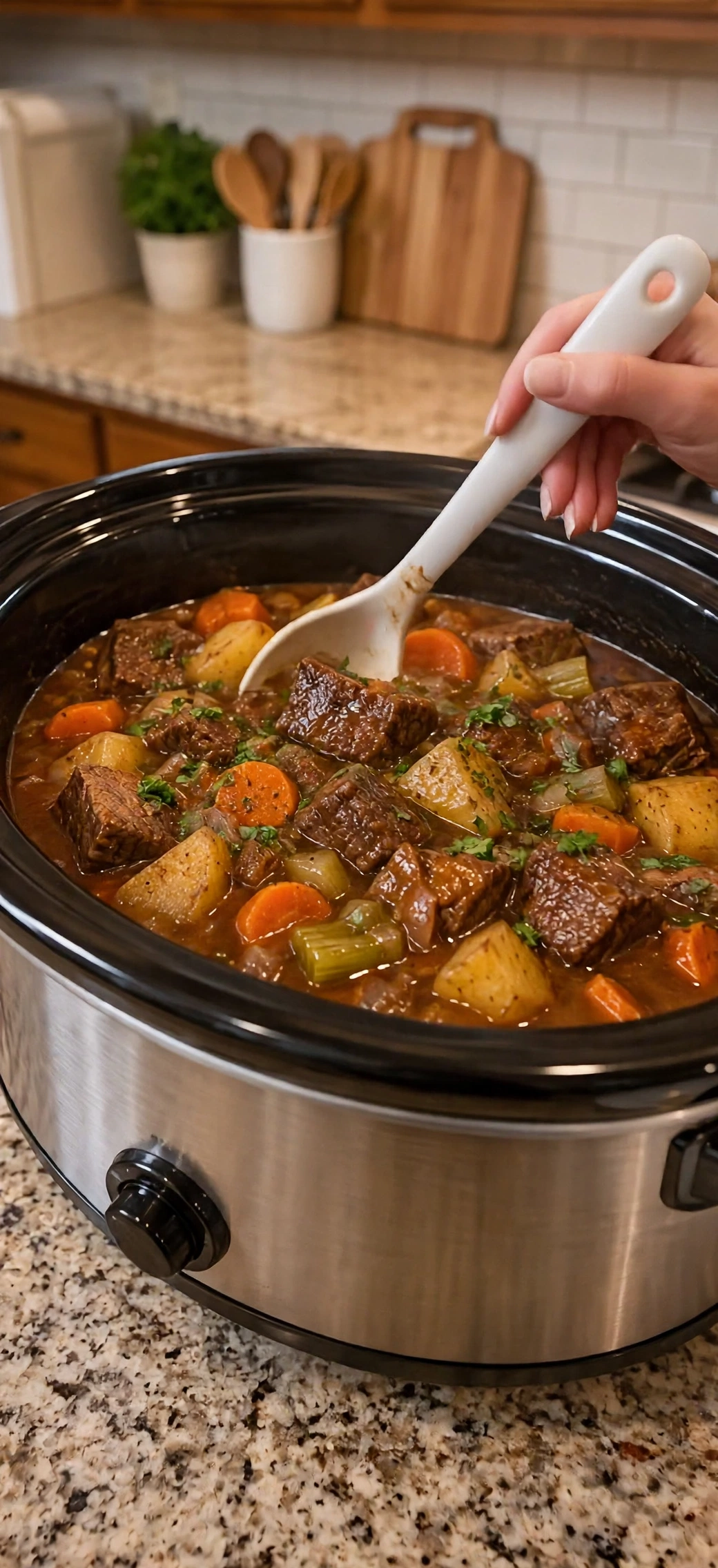
There is something incredibly comforting about coming home to a slow cooker filled with tender beef, soft potatoes, sweet carrots, and vegetables simmering in a rich, savory gravy. This Slow Cooker Beef Stew is exactly the kind of meal that turns simple ingredients into a warm and satisfying family dinner.
The beauty of this recipe is its simplicity. After a little preparation, the slow cooker does most of the work. The beef cooks gently for hours until it becomes fork-tender, while the potatoes and vegetables absorb the deeply flavored broth. As everything cooks together, the liquid gradually develops into a rich gravy that coats every bite.
This classic crockpot beef stew is especially good during fall and winter, but it is delicious any time you want an easy, hearty dinner. It is also excellent for meal prep because the flavors become even better after sitting overnight.
Whether you serve it with crusty bread, biscuits, mashed potatoes, or simply enjoy a large bowl on its own, this slow cooker beef stew is an easy comfort-food recipe worth keeping.
Why You’ll Love This Slow Cooker Beef Stew
This recipe combines everything people love about traditional beef stew with the convenience of slow cooking.
The beef becomes exceptionally tender because it cooks slowly in flavorful broth. Potatoes make the stew hearty and filling, while carrots, celery, and onions add natural sweetness and depth.
Another advantage is that most of the cooking is completely hands-off. Once everything is inside the slow cooker, you can leave it to cook while you handle the rest of your day.
It is also flexible. You can add mushrooms, peas, green beans, herbs, or different root vegetables depending on what you already have in your kitchen.
Best of all, this is a complete meal in one pot.
Recipe Information
Prep Time: 20 minutes
Cook Time: 7–8 hours on LOW or 4–5 hours on HIGH
Total Time: About 8 hours
Servings: 6
Category: Main Dish
Cuisine: American Comfort Food
Cooking Method: Slow Cooker
Ingredients
2 pounds beef chuck roast, cut into 1½-inch cubes
1½ pounds Yukon Gold or baby potatoes, cut into chunks
4 large carrots, sliced
3 celery stalks, chopped
1 large yellow onion, chopped
3 cloves garlic, minced
3 cups beef broth
2 tablespoons tomato paste
1 tablespoon Worcestershire sauce
2 tablespoons olive oil
1 teaspoon dried thyme
1 teaspoon dried rosemary
1 teaspoon paprika
1 bay leaf
1 teaspoon salt, or to taste
½ teaspoon black pepper
2 tablespoons cornstarch
2 tablespoons cold water
2 tablespoons fresh parsley, chopped
Choosing the Best Beef for Slow Cooker Beef Stew
Choosing the right cut of beef makes a major difference in slow cooker stew.
Beef chuck roast is one of the best options. Chuck contains connective tissue and enough fat to remain moist during several hours of slow cooking. That connective tissue gradually breaks down, giving the finished beef its tender texture.
Avoid choosing very lean steak simply because it looks more expensive. Lean cuts can become dry when cooked for many hours.
Cut your beef into pieces around 1½ inches thick. Pieces that are too small may break apart before the vegetables finish cooking, while oversized pieces can take longer to become tender.
Try to keep them reasonably uniform so they cook at approximately the same rate.
The Best Potatoes for Beef Stew
Yukon Gold potatoes are excellent for slow cooker beef stew because they become creamy without completely falling apart.
Red potatoes and baby potatoes also hold their shape well.
Russet potatoes can be used, but because they contain more starch, they tend to become softer and may begin breaking down after several hours.
Whichever variety you choose, cut the potatoes into fairly large chunks. Small cubes can become too soft during the long cooking time.
You can leave thin potato skins on after washing them thoroughly. This saves preparation time and helps the potatoes maintain their shape.
Why Browning the Beef Makes a Difference
Technically, you can put raw beef directly into the slow cooker. However, browning it first adds another layer of flavor.
Heat olive oil in a large skillet over medium-high heat.
Pat the beef dry using paper towels, then season it lightly with salt and black pepper.
Working in batches, add the beef without overcrowding the skillet. Brown it for approximately 2 minutes on each side.
You are not trying to cook the beef through. The goal is simply to develop a dark brown exterior.
Those browned surfaces create a deeper, more savory flavor in the finished stew.
If you are short on time, you can skip this step and still make a delicious stew.
How to Make Slow Cooker Beef Stew
Step 1: Prepare the Beef
Trim any very large pieces of excess fat from the chuck roast and cut the meat into approximately 1½-inch cubes.
Pat the beef dry.
Season with salt, pepper, and paprika.
Drying the beef is particularly important if you plan to brown it because wet meat tends to steam rather than sear.
Step 2: Brown the Beef
Heat the olive oil in a large skillet over medium-high heat.
Add the beef in small batches and brown the pieces on several sides.
Transfer the browned beef directly into your slow cooker.
Do not overcrowd the skillet. Giving each piece some space helps develop better caramelization.
Step 3: Prepare the Vegetables
Wash and cut the potatoes into large bite-size pieces.
Peel and slice the carrots.
Chop the celery and onion, then mince the garlic.
Place the potatoes, carrots, celery, onion, and garlic into the slow cooker with the beef.
Step 4: Prepare the Broth
In a bowl or large measuring cup, combine the beef broth, tomato paste, Worcestershire sauce, thyme, rosemary, and a little additional black pepper.
Whisk until the tomato paste is mostly incorporated into the broth.
Pour this mixture over the beef and vegetables.
Add the bay leaf.
Step 5: Slow Cook
Cover the slow cooker with the lid.
Cook on LOW for approximately 7–8 hours or HIGH for approximately 4–5 hours.
Low heat is generally the better option when you have enough time. The longer, gentler cooking process gives tough beef chuck plenty of time to become tender.
Avoid repeatedly opening the lid to check the stew. Each time the lid is removed, heat escapes and the cooking process can slow down.
Step 6: Check the Beef and Potatoes
Near the end of the cooking time, test one piece of beef with a fork.
It should be very tender and easy to pull apart.
Check one of the larger potato pieces as well. A fork should slide easily into the center without the potato completely disintegrating.
If the beef still feels tough, it often needs more cooking time, not less.
Step 7: Thicken the Gravy
A rich gravy transforms the broth into classic beef stew.
Mix 2 tablespoons of cornstarch with 2 tablespoons of cold water until completely smooth.
Pour the slurry into the slow cooker while gently stirring the stew.
Cover and continue cooking on HIGH for approximately 15–20 minutes, or until the liquid thickens.
Never add dry cornstarch directly to the stew because it can form unpleasant lumps.
Step 8: Finish and Serve
Remove the bay leaf.
Taste the gravy and adjust the salt and black pepper as needed.
Sprinkle chopped fresh parsley over the top immediately before serving.
Ladle the hot stew into bowls, making sure every serving gets plenty of tender beef, potatoes, carrots, celery, and gravy.
How to Get Extra-Tender Beef
The secret to tender beef stew is patience.
Chuck roast contains connective tissue that requires time to break down. If you check your stew and the meat is still chewy, continuing to cook it will usually improve the texture.
Cooking on LOW is particularly effective.
Another important tip is keeping the beef pieces fairly large. Tiny pieces can become dry or fall apart during a long cooking period.
You should also avoid using extremely lean beef. A moderate amount of marbling provides both moisture and flavor.
How to Make the Gravy Richer
Beef broth, tomato paste, and Worcestershire sauce provide a flavorful foundation, but you can make the gravy even richer.
Browning the beef before slow cooking is one of the easiest ways to create deeper flavor.
After browning the beef, pour a small amount of broth into the hot skillet. Scrape the browned bits from the bottom using a wooden spoon.
Pour this flavorful liquid into the slow cooker.
Those little caramelized pieces contain plenty of savory flavor.
For even more depth, you can add a small amount of onion powder or garlic powder alongside the herbs.
Vegetables You Can Add to Beef Stew
The classic combination of potatoes, carrots, celery, and onion is difficult to beat, but you can easily customize this recipe.
Mushrooms add a deep earthy flavor that pairs beautifully with beef.
Green beans provide color and texture.
Frozen peas are another classic addition, but they should be added during the final 15–20 minutes rather than at the beginning.
You could also try:
- Parsnips
- Sweet potatoes
- Turnips
- Pearl onions
- Corn
- Mushrooms
- Green beans
- Frozen peas
Vegetables that cook quickly should generally be added toward the end.
Slow Cooker Beef Stew With Mushrooms
Mushrooms are one of the easiest ways to create a slightly different version of this recipe.
Use approximately 8 ounces of sliced mushrooms.
For maximum flavor, sauté them briefly in the same skillet used for browning the beef.
You can also add them directly to the slow cooker.
Cremini mushrooms are particularly good because their stronger flavor holds up well against the beef and rich gravy.
What to Serve With Slow Cooker Beef Stew
Because beef stew already contains meat, potatoes, and vegetables, it can easily stand alone as a complete dinner.
Still, bread makes an excellent accompaniment.
Serve it with crusty French bread, warm dinner rolls, garlic bread, or homemade biscuits. Bread is particularly useful for soaking up the savory gravy remaining at the bottom of the bowl.
A simple green salad can provide a fresh contrast to the rich stew.
Roasted green vegetables such as broccoli, asparagus, or Brussels sprouts are also good choices.
Common Mistakes to Avoid
Using the Wrong Cut of Beef
Very lean beef may become dry during long cooking.
Chuck roast is generally a better choice because its connective tissue becomes tender after several hours.
Cutting Everything Too Small
Small potatoes and carrots can become mushy.
Keep your vegetables in generous chunks so they can withstand the long cooking period.
Adding Too Much Liquid
Slow cookers lose very little moisture compared with uncovered pots.
The vegetables and meat will release additional liquid while cooking, so you generally need less broth than you might expect.
Opening the Lid Frequently
It can be tempting to check the stew every hour, but lifting the lid allows valuable heat to escape.
Keep the slow cooker covered as much as possible.
Adding Cornstarch Too Early
The thickening slurry works best near the end.
Adding it at the beginning can produce an undesirable texture after hours of cooking.
Assuming Tough Beef Is Overcooked
With chuck roast, tough beef often means the connective tissue has not had enough time to break down.
Give it additional cooking time and check again.
How to Store Leftover Beef Stew
Allow the stew to cool before transferring it to airtight containers.
Refrigerate leftovers promptly and use them within 3–4 days.
Beef stew is one of those meals that often tastes even better the following day. Resting gives the savory flavors additional time to blend together.
For easy lunches, divide the leftovers into individual containers before refrigerating.
How to Reheat Beef Stew
The stovetop is one of the best methods.
Place the stew in a saucepan or Dutch oven over medium-low heat. Add a splash of beef broth or water if the gravy has become very thick.
Stir occasionally until everything is thoroughly heated.
Individual portions can also be reheated in the microwave.
Heat in short intervals and stir between each interval so the beef and vegetables warm evenly.
Can You Freeze Slow Cooker Beef Stew?
Yes. Beef stew generally freezes very well.
Allow it to cool completely before transferring it into freezer-safe containers.
Leave a little room at the top because liquids expand as they freeze.
For convenience, freeze the stew in individual portions.
Thaw frozen stew overnight in the refrigerator before reheating.
Keep in mind that potatoes may become slightly softer after freezing and thawing, but the overall flavor should remain delicious.
Meal Prep Tips
This recipe is particularly useful for meal prep.
You can cut the beef and vegetables the evening before cooking. Store everything safely in separate covered containers in the refrigerator.
The following morning, add the ingredients to the slow cooker and begin cooking.
You can also prepare the entire stew during the weekend and portion it into containers for several easy meals.
Because the recipe already includes protein, vegetables, and potatoes, very little needs to be added to turn it into a complete lunch.
Frequently Asked Questions
Can I put raw beef directly into the slow cooker?
Yes. Browning adds additional flavor, but it is not required for the slow cooker to cook the beef.
What is the best beef for slow cooker stew?
Chuck roast is an excellent choice because long, gentle cooking helps break down its connective tissue and creates tender pieces of beef.
Can I cook beef stew on HIGH?
Yes. Cook it for approximately 4–5 hours on HIGH, checking that the beef and vegetables are completely tender.
For the most tender results, LOW for 7–8 hours is generally preferable.
Why is my slow cooker beef still tough?
It may simply need additional time. Chuck becomes tender after its connective tissue has had enough time to break down.
Continue cooking and check periodically.
Can I use baby potatoes?
Absolutely. Baby potatoes work particularly well because they hold their shape during slow cooking.
Halve larger ones and leave very small potatoes whole.
Can I add frozen peas?
Yes. Add frozen peas during approximately the final 15–20 minutes so they remain bright and do not become overly soft.
How do I thicken beef stew?
Combine equal parts cornstarch and cold water, then stir the mixture into the hot stew near the end of cooking.
Allow another 15–20 minutes for the gravy to thicken.
Can I make this without potatoes?
Yes. Replace the potatoes with additional carrots, mushrooms, parsnips, turnips, or other sturdy vegetables.
Easy Variations
Once you know the basic recipe, you can adjust it in many ways.
For an herb-forward stew, add extra thyme and rosemary.
For a slightly smoky flavor, increase the paprika or use smoked paprika.
For a vegetable-heavy version, reduce the amount of beef slightly and add mushrooms, green beans, or parsnips.
You can also add peas near the end for extra color.
If you prefer an especially thick stew, use slightly more cornstarch slurry. Add it gradually rather than all at once so you can control the consistency.
Why Slow Cooking Works So Well for Beef Stew
Beef stew is almost perfectly suited to slow cooking.
Instead of using an expensive tender steak, the recipe takes advantage of a tougher, flavorful cut such as chuck. Several hours of moist, gentle heat allow the connective tissue to soften.
At the same time, the beef flavors the broth while onions, carrots, celery, herbs, and potatoes contribute their own flavors.
The result is a meal that tastes as though it required constant attention, even though most of the cooking happened unattended.
That combination of convenience and comfort is exactly why crockpot beef stew remains such a popular family dinner.
Final Thoughts
This Slow Cooker Beef Stew with Potatoes and Carrots is everything a comforting homemade dinner should be: hearty, flavorful, warming, and easy enough for an ordinary weeknight.
Tender chunks of beef cook slowly alongside potatoes, carrots, celery, and onions in a rich savory broth. A simple cornstarch slurry transforms that broth into a glossy gravy that coats every ingredient.
You can keep the recipe traditional or customize it with mushrooms, peas, green beans, additional herbs, or your favorite root vegetables.
Serve it steaming hot with crusty bread for dipping, and you have a satisfying slow-cooked dinner that the whole family can enjoy.