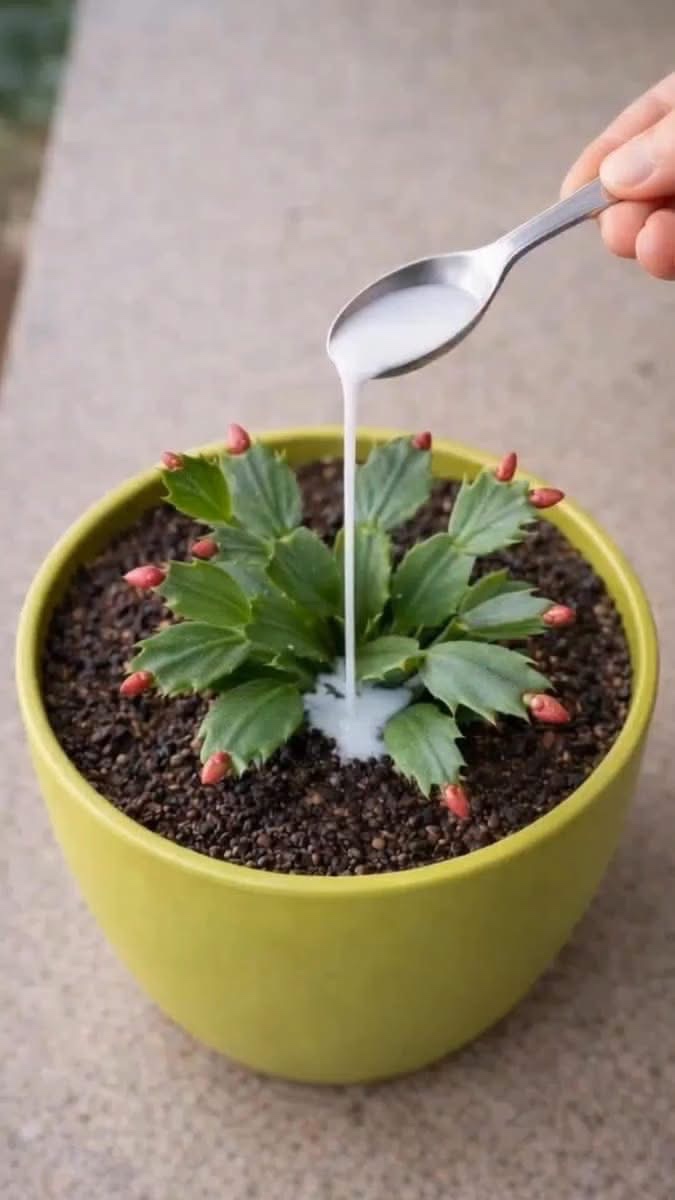
A Christmas cactus is one of the most rewarding houseplants to grow. Its flat, scalloped green segments look attractive all year, but the real magic happens when colorful buds open into flowers during the cooler months. With the right routine, this plant can return every year with fuller growth and a much better bloom display.
The plant in the photo is a Christmas cactus or a closely related holiday cactus. These plants are not desert cacti. In nature, they grow in the branches of trees in humid forests, where they receive filtered light, air around their roots, and regular moisture without sitting in wet soil.
That is why Christmas cactus care is different from caring for a typical dry-climate cactus. It likes brighter indirect light, a well-draining potting mix, gentle watering, and a short period of cool, dark nights to encourage buds.
One important note: do not pour milk, coffee, soda, pineapple water, or other kitchen liquids into the pot. They can sour in the soil, attract pests, and create root problems. A simple routine with clean water and a labeled houseplant fertilizer is safer and more reliable.
Why Christmas Cactus Is a Favorite Indoor Plant
Christmas cactus is popular because it is long-lasting, easy to propagate, and able to bloom when many other houseplants are resting. The flowers can be pink, red, white, purple, peach, or a mix of shades, making the plant a beautiful addition to a winter home display.
Unlike many flowering plants, a healthy Christmas cactus can live for decades. It may become fuller and more impressive every year when it receives consistent care. Older plants often produce many branches and can be covered in buds during the flowering season.
It is also a wonderful choice for small spaces. You can place it on a bright shelf, side table, kitchen counter, plant stand, or windowsill that receives soft morning light. When it blooms, it instantly adds color and warmth to the room.
Understanding Your Christmas Cactus
Christmas cactus has smooth, flat leaf-like segments with rounded or gently scalloped edges. Its flowers usually appear at the ends of the segments. The buds form after the plant experiences shorter days and cooler nights in autumn.
A healthy plant should have firm, green segments. Slightly soft segments can be a sign that the plant needs water, while very limp or yellow segments may suggest root stress, poor drainage, or too much moisture.
The plant grows best in a container with drainage holes. A decorative pot without drainage can look nice, but it should be used as an outer cover pot. Keep the Christmas cactus in a nursery pot with drainage inside it, and never allow water to collect at the bottom.
The Best Light for Christmas Cactus
Christmas cactus grows best in bright, indirect light. Place it near a window where it gets plenty of daylight but is protected from strong afternoon sun. An east-facing window is often ideal because it provides gentle morning light.
A south- or west-facing window can also work if the plant is set back from the glass or filtered with a sheer curtain. Strong direct sunlight can cause the segments to fade, turn reddish, or become dry around the edges.
Too little light can lead to weak growth and fewer flowers. If the plant is in a dark corner, move it gradually to a brighter location. Do not make a sudden dramatic change from low light to hot sun, because the plant may become stressed.
How to Water Christmas Cactus Correctly
Watering is one of the most important parts of Christmas cactus care. The goal is to keep the soil lightly and evenly moist during active growth without making it soggy.
Check the top inch of soil with your finger. If it feels dry, water the plant slowly until a little water runs from the drainage holes. Let the excess water drain completely, then empty the saucer beneath the pot.
Do not water again while the soil is still wet. Constantly wet soil can damage the roots and make the segments soft or wrinkled. In cooler weather, the plant usually needs less water because it grows more slowly.
During hot, bright months, it may need water more often. During winter or low-light periods, it may need less. Instead of following a strict calendar, always check the soil first.
Why You Should Avoid Milk and Other Kitchen Liquids
It may be tempting to try a viral plant trick using milk, coffee, tea, sugar water, or fruit water. However, these liquids are not a dependable way to care for Christmas cactus.
Milk contains sugars and proteins that can spoil in potting soil. This may create unpleasant odors, attract fungus gnats, and upset the balance around the roots. Coffee grounds, soda, and sweet liquids can also make the soil harder to manage.
The safest option is plain water. If your plant needs nutrients, use a balanced liquid houseplant fertilizer that is clearly labeled for indoor plants. Mix it according to the product directions and apply it only during the growing season.
Healthy growth comes from the correct light, good drainage, careful watering, and a stable environment. These basics are far more effective than homemade liquid tricks.
The Best Soil Mix for a Christmas Cactus
Christmas cactus needs a loose, airy potting mix that drains well but still holds some moisture. A dense, heavy soil can trap water around the roots and cause problems.
A simple mix can include regular indoor potting soil blended with perlite and orchid bark. The perlite improves drainage, while the bark creates air pockets around the roots. You can also use a good-quality cactus mix mixed with a little regular potting soil.
The ideal soil should feel light and crumbly. Water should move through the pot without sitting on top for a long time. If water pools on the surface, the soil may be compacted or the drainage hole may be blocked.
How to Encourage More Buds
The secret to encouraging Christmas cactus blooms is not a special powder or homemade drink. It is a seasonal routine that includes cooler temperatures and long, uninterrupted nights.
About six to eight weeks before you want flowers, place the plant in a cooler room where nighttime temperatures stay around 55°F to 65°F. During this period, give the plant 12 to 14 hours of darkness each night.
The darkness should be uninterrupted. Bright room lights, lamps, and television light can interrupt the process. A quiet room, unused office, enclosed porch, or cool bedroom may be a good location for this stage.
During the day, keep the plant in bright indirect light. Water only when the top layer of soil feels dry, and avoid moving it around too much. Once small buds appear, keep the routine steady.
What to Do When Buds Appear
When you see buds forming at the tips of the segments, resist the urge to move the plant. Sudden changes in temperature, light, or watering can cause buds to drop before opening.
Keep the plant away from cold drafts, heating vents, fireplaces, and frequently opened doors. A stable place with moderate indoor temperatures is best.
Continue to water when the top inch of soil feels dry. Do not let the plant become extremely dry while it is carrying buds, but do not overwater it either. Consistent moisture is the key.
If the plant is blooming beautifully, turn the pot gently every few days only if necessary for even light. Avoid large changes in position, especially while buds are still small.
Fertilizing for Stronger Growth
Christmas cactus benefits from light feeding during spring and summer, when it is actively producing new segments. Use a balanced liquid houseplant fertilizer at the dilution written on the label.
Fertilize about once a month from spring through late summer. Stop feeding in early fall when you begin preparing the plant for bud formation. Fertilizing during the resting and bud-setting period is not necessary.
Never use more fertilizer than recommended. Too much fertilizer can leave mineral salts in the soil and may damage the roots. If you notice a white crust on the soil surface, flush the pot with clean water and let it drain well.
The Best Places to Display Christmas Cactus
Christmas cactus can look beautiful in many parts of the home. Its trailing, segmented growth and colorful flowers work well in both modern and traditional spaces.
Place it on a plant stand near a bright east-facing window for a cheerful display. The flowers will be easy to see, and the plant will receive the gentle light it prefers.
A living-room shelf with filtered light is another good choice. Use a ceramic pot in a warm color, such as cream, terracotta, green, or deep red, to make the flowers stand out.
A kitchen windowsill can also be lovely if it does not receive harsh afternoon sun or strong heat from cooking appliances. Keep the plant away from cold glass in winter.
A hanging basket is perfect for a mature Christmas cactus with long, cascading branches. Hang it near a bright window where the flowers can trail naturally and become a beautiful focal point.
How to Prune and Shape the Plant
Pruning helps a Christmas cactus become fuller. After it finishes flowering, gently twist off one or two segments from the end of long branches. This encourages the plant to branch from the point where the segment was removed.
Do not cut the plant aggressively. Removing a few segments from selected branches is enough to create a fuller shape over time.
The removed segments can be used for propagation. Allow them to dry for one or two days, then place the cut end into lightly moist potting mix. Keep the cutting in bright indirect light and water sparingly until roots begin to develop.
Repotting a Christmas Cactus
Christmas cactus prefers to be slightly root-bound, so it does not need frequent repotting. Repot every two to three years, or when roots are tightly filling the pot and water runs through too quickly.
The best time to repot is after flowering, usually in late winter or spring. Choose a new pot only one size larger than the old one. A pot that is too large can hold excess moisture around the roots.
Use fresh, well-draining potting mix and make sure the new pot has drainage holes. After repotting, wait a few days before watering deeply so any disturbed roots can settle.
Common Christmas Cactus Problems
Wrinkled or limp segments can mean the plant is too dry, but they can also indicate root trouble from overwatering. Check the soil before adding water. If it is dry, water slowly. If it is wet and the plant is limp, allow the soil to dry more thoroughly and check the drainage.
Yellow segments may be caused by too much moisture, poor drainage, or intense sun. Move the plant to bright indirect light and review the watering routine.
Bud drop is often caused by sudden changes. Moving the plant, exposing it to drafts, letting it dry out completely, or changing the light too quickly can all affect developing buds.
A plant that will not bloom usually needs a better autumn routine. Give it cooler nights and uninterrupted darkness for several weeks, while keeping it in bright indirect light during the day.
Frequently Asked Questions
How often should I water my Christmas cactus?
Water when the top inch of soil feels dry. The exact schedule depends on your room temperature, light level, and potting mix. Check the soil rather than watering on a fixed day every week.
Can Christmas cactus grow outside?
It can stay outside during warm weather in a shaded, protected location. Bring it indoors before temperatures become cool or cold. Keep it away from direct hot sun and heavy rain.
Why are the leaves turning red?
Reddish or purple tones can appear when the plant gets too much direct sun, becomes too dry, or experiences cool stress. Move it to gentler light and check the soil moisture.
Can I use milk to help it bloom?
No. Milk is not recommended for Christmas cactus. It can spoil in the soil and cause avoidable problems. Use clean water and a labeled houseplant fertilizer instead.
How long do the flowers last?
Individual flowers can last for several days to a few weeks, depending on the room conditions. A healthy plant with many buds can provide color for a longer period as buds open gradually.
Final Safety Note
Christmas cactus care does not need risky home remedies. Avoid pouring milk, coffee, sweet drinks, unknown powders, or kitchen liquids into the soil. These can attract pests or create unhealthy root conditions.
For the best results, use bright indirect light, a pot with drainage holes, airy soil, careful watering, and a standard labeled fertilizer during the growing season. With this simple routine, your Christmas cactus can stay healthy, grow fuller, and reward you with a beautiful bloom display year after year.