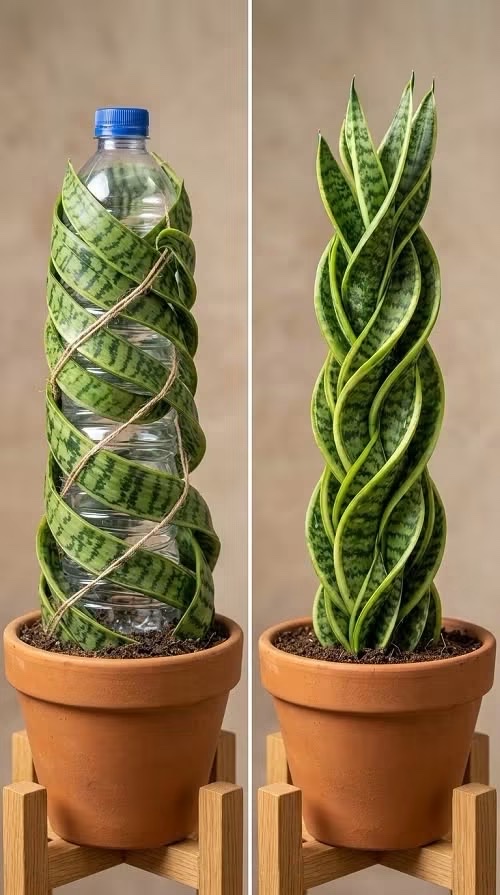
Snake plants are loved for their tall, patterned leaves and clean architectural shape. A spiral-style display can make a simple snake plant look more artistic and decorative, especially in a terracotta pot near a bright window or on a wooden plant stand.
However, it is important to create this look gently. Snake plant leaves are firm and can crack if bent too tightly. The goal is to support and arrange healthy leaves for a temporary decorative display without squeezing, damaging, or forcing the plant into an unnatural shape.
Can a Snake Plant Grow in a Permanent Spiral?
Snake plant leaves naturally grow upright. A bottle, string, or tight support will not make mature leaves permanently grow in a spiral shape.
You can create a temporary spiral-inspired arrangement using loose, soft ties and gentle positioning. The plant should still have room to grow naturally, and the leaves should never be folded sharply or pressed against a hard object.
For the healthiest long-term result, let the leaves keep their natural upright form and use decorative supports only for a short display.
What You Will Need
A healthy snake plant with long, flexible leaves
A terracotta or ceramic pot with drainage holes
Fast-draining potting mix
Soft plant ties or wide garden tape
A smooth decorative support, optional
Clean scissors
A soft cloth for wiping leaves
Start with a Healthy Snake Plant
Choose a snake plant with strong, unbroken leaves. Do not try to train leaves that are soft, yellowing, damaged, or newly transplanted.
Water the plant only when the soil is mostly dry. Healthy leaves are firm, but they should not be extremely dry or stressed before you gently arrange them.
If the pot is crowded with many new shoots, avoid tying all the leaves together. Leave enough room for air and light to reach the center of the plant.
How to Create a Gentle Spiral Look
Place a smooth support in the pot only if there is enough space and it will not disturb the roots. A clean decorative stake is safer than pushing a large bottle deeply into the soil.
Choose a few outer leaves that can move slightly without resistance. Guide them loosely around the support in a soft curve rather than twisting them tightly.
Use soft ties to hold the leaves in place. The ties should be loose enough for you to slide a finger underneath. Never use thin wire, string pulled tight, or tape directly against the leaf surface.
Check the plant every few days. If you notice pressure marks, bent tips, yellowing, or a leaf that looks strained, remove the tie immediately.
Why Tight Training Can Harm the Plant
Snake plant leaves do not bend like soft vines. Tight twisting can crack the leaf, damage its surface, or create permanent marks.
A tightly wrapped plastic bottle can also limit airflow around the center of the plant. If water collects near the base or the soil remains wet, the roots may struggle.
The safest decorative version is always a loose, removable display that allows the plant to continue growing naturally.
The Best Light for a Snake Plant Display
Place your snake plant in bright, indirect light. A spot near a window is ideal, but avoid intense direct afternoon sun for long periods.
A well-lit position helps maintain the leaf color and keeps the plant looking strong. Rotate the pot every few weeks so the leaves receive light evenly.
Snake plants tolerate lower light, but they grow more slowly there and may not look as full or upright.
Watering a Snake Plant Correctly
Let the potting mix dry well before watering. Snake plants store water in their roots and leaves, so they do not need frequent watering.
When the soil is dry, water slowly around the edge of the pot until a little water drains from the bottom. Empty the saucer after a few minutes.
Avoid pouring water into the center of the plant. Keep moisture away from the base of the leaves to reduce the chance of rot.
The Best Pot and Soil
Use a pot with drainage holes. Terracotta is an excellent choice because it allows moisture to evaporate more easily and gives the display a warm, natural look.
Choose a fast-draining potting mix for cacti, succulents, or indoor plants with extra perlite. This helps prevent the soil from staying wet for too long.
Repot only when the plant becomes very crowded or the roots begin pushing against the pot. Snake plants often prefer being slightly snug in their containers.
Safe Fertilizer Tips
During spring and summer, you can use a balanced houseplant fertilizer or slow-release fertilizer made for indoor plants. Follow the exact label instructions and use only the recommended amount.
Do not add salt, baking soda, unknown white powders, or strong household products to the soil. These products can leave residue and make it harder for the roots to function properly.
Good light, careful watering, and drainage are more important than frequent feeding.
Beautiful Places for a Snake Plant Spiral Display
A decorative snake plant looks beautiful on a wood plant stand near a bright living-room window. It can also add height to an office, hallway, bedroom corner, or covered patio.
A terracotta pot gives the plant a warm, natural style, while a matte black or white ceramic pot creates a more modern look.
Keep the display where it can be admired without being bumped, pulled, or exposed to cold drafts.
Safety Note
Snake plants can be irritating if chewed by pets or small children. Keep the plant out of reach, and wash hands after pruning or repotting.
Remove any tight ties or supports immediately if the leaves show stress. A healthy natural plant is always more beautiful than a damaged decorative shape.
Final Thoughts
A spiral snake plant display can be a creative décor idea when done gently and temporarily. Use loose soft ties, avoid sharp bending, and allow the leaves to keep their natural upright growth.
With bright indirect light, dry soil between waterings, and a draining pot, your snake plant can stay healthy, glossy, and beautiful in any room.