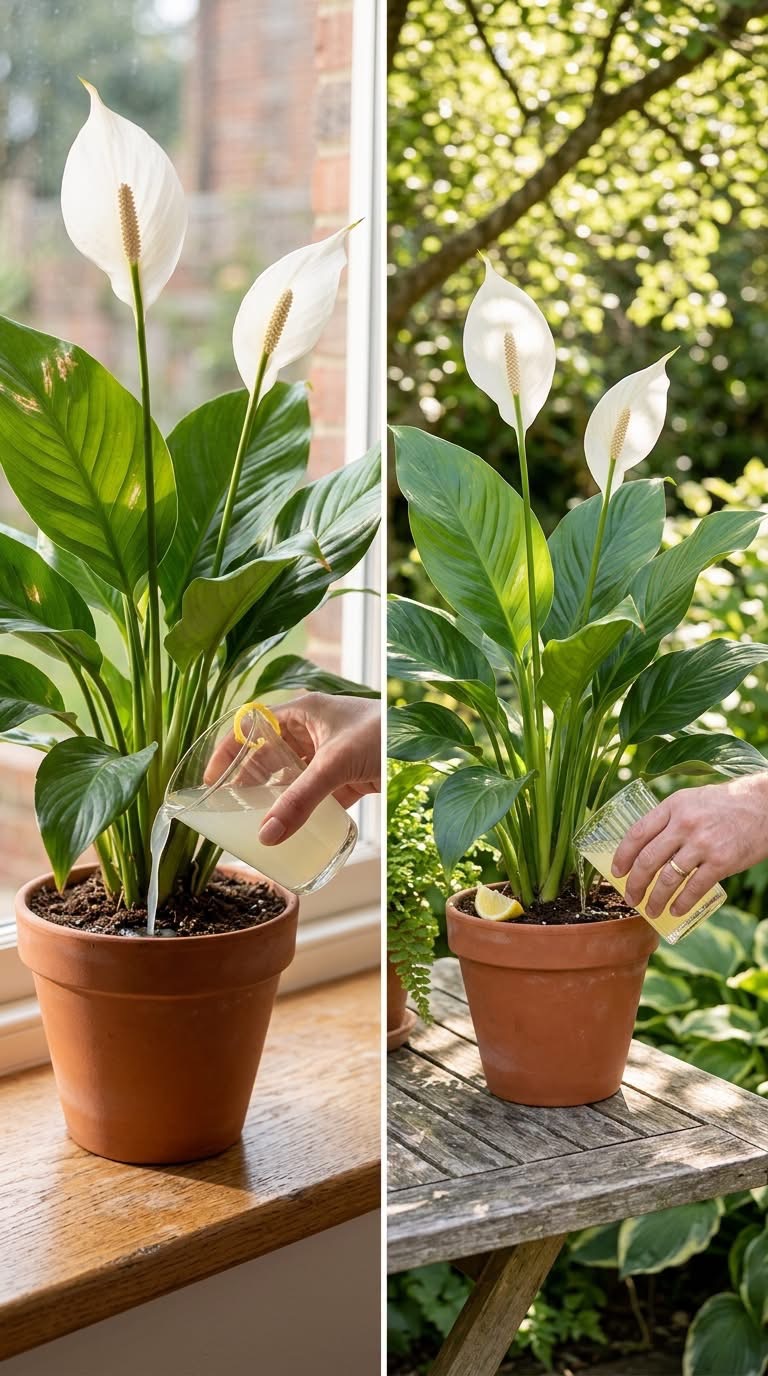
Peace lilies are loved for their deep green leaves and elegant white blooms. They can make a living room, bedroom, office, or bright hallway feel calmer and more luxurious, especially when placed in a simple ceramic or terracotta pot.
The best peace lily “hack” is not a kitchen ingredient or lemon water. Peace lilies grow beautifully when they receive the right balance of indirect light, careful watering, drainage, and gentle feeding during the growing season. A steady routine gives much better results than quick home remedies.
What Makes a Peace Lily So Special?
A peace lily has broad glossy leaves and white flower-like spathes that rise above the foliage. It is a popular indoor plant because it can adapt to medium-light rooms and looks beautiful in many décor styles.
A healthy peace lily creates a full, lush shape that works well as a statement plant beside a sofa, near a bright window, on an entryway table, or in a quiet bedroom corner.
The key is keeping the plant comfortable rather than constantly changing its routine.
The Best Light for a Peace Lily
Peace lilies prefer bright indirect light. Place the pot near a window with filtered daylight, but avoid strong direct sun for many hours because it can scorch the leaves.
An east-facing window or a spot a few feet away from a bright window is often ideal. If the room is darker, the plant may still survive, but growth can slow and blooms may appear less often.
Rotate the pot slightly every few weeks so all sides receive even light. This helps the plant grow in a balanced and attractive shape.
Why Lemon Water Is Not Needed
Lemon water may look like an interesting plant trick, but it is not a regular care requirement for peace lilies. Adding acidic kitchen mixtures to the soil can make watering more complicated and does not replace proper plant care.
Plain room-temperature water is the safest choice for regular watering. The real goal is to keep the soil lightly moist without leaving it soggy.
If you want to feed your peace lily, use a balanced houseplant fertilizer at a diluted strength during active growth. Always follow the product label and use fertilizer only on already-moist soil.
How to Water a Peace Lily Correctly
Check the top inch of the soil before watering. If it feels dry, water slowly around the soil surface until a little water begins to drain from the bottom of the pot.
Empty any water that collects in the saucer or outer decorative pot. Peace lily roots do not like sitting in standing water for long periods.
A peace lily may droop when it needs water, but it is better to check the soil rather than wait until the leaves fall dramatically. Consistent watering helps the leaves stay stronger and the plant look fuller.
Use a Pot With Good Drainage
A pot with a drainage hole is one of the most important parts of peace lily care. It allows extra water to escape and helps protect the roots.
For a stylish display, keep the plant in a nursery pot with drainage holes, then place that inside a decorative pot. Remove the inner pot when watering, let it drain completely, then return it to the outer pot.
This gives you a beautiful indoor plant display without sacrificing proper drainage.
Choosing the Right Potting Mix
Peace lilies grow well in a light, good-quality indoor potting mix. The soil should hold some moisture but should not become dense or muddy.
If your potting mix stays wet for many days, add a little perlite to help improve drainage. This gives the roots more air and makes watering easier to manage.
Repot the peace lily only when it becomes very crowded or the roots begin filling the pot. Move it up only one pot size at a time.
How to Encourage Fuller, Lusher Leaves
Wipe the leaves gently with a soft damp cloth every few weeks. Dust can make the leaves look dull and block light from reaching the plant evenly.
Remove yellow or damaged leaves with clean scissors. Trim them near the base of the plant, taking care not to cut healthy new growth.
Keep the plant away from very cold drafts, heating vents, and strong air-conditioning. Peace lilies look their best in a stable indoor environment.
Helping a Peace Lily Bloom
Peace lilies bloom best when they receive enough bright indirect light. A plant kept in a very dark corner may grow leaves but produce fewer blooms.
During spring and summer, use a gentle balanced houseplant fertilizer at a diluted rate. Do not overfeed, because too much fertilizer can stress the roots and lead to brown leaf tips.
Patience is important. A healthy peace lily may take time to adjust after being moved, repotted, or brought home from the store. Once it settles into a consistent care routine, new leaves and blooms can appear naturally.
Common Peace Lily Problems
Yellow leaves often mean the plant is receiving too much water, especially when the soil stays damp for a long time. Let the soil dry slightly before watering again and make sure the pot drains well.
Brown leaf tips can happen because of inconsistent watering, dry indoor air, or mineral buildup. Try using filtered water or water that has been left out for a while before watering.
Leaves that look pale may mean the plant needs a little more indirect light. Move it closer to a bright window without placing it directly in harsh sunlight.
Where to Place a Peace Lily at Home
A large peace lily looks elegant on a plant stand beside a living room window. Its deep green leaves and white blooms create a clean, modern look with wood, white, beige, or black décor.
A medium peace lily can look beautiful on an entryway console, in a bright bathroom, or near a bedroom window with sheer curtains.
For a softer, more natural style, place the plant in a terracotta pot or woven basket. For a clean luxury style, use a smooth white or stone-colored ceramic planter.
Peace Lily Safety Note
Keep peace lilies out of reach of pets and small children, especially if they may chew on leaves or flowers. Wash your hands after pruning or handling the plant.
Avoid adding random household powders, citrus mixtures, salt, sugar, or other kitchen products to the soil. Simple care with clean water, drainage, indirect light, and label-approved fertilizer is the safest routine.
Final Thoughts
The easiest way to help a peace lily grow lush leaves and beautiful blooms is to keep its care simple and consistent. Give it bright indirect light, water only when the soil begins to dry, use a pot with drainage, and feed lightly during the growing season.
With patience and the right routine, your peace lily can become one of the most elegant and eye-catching plants in your home.