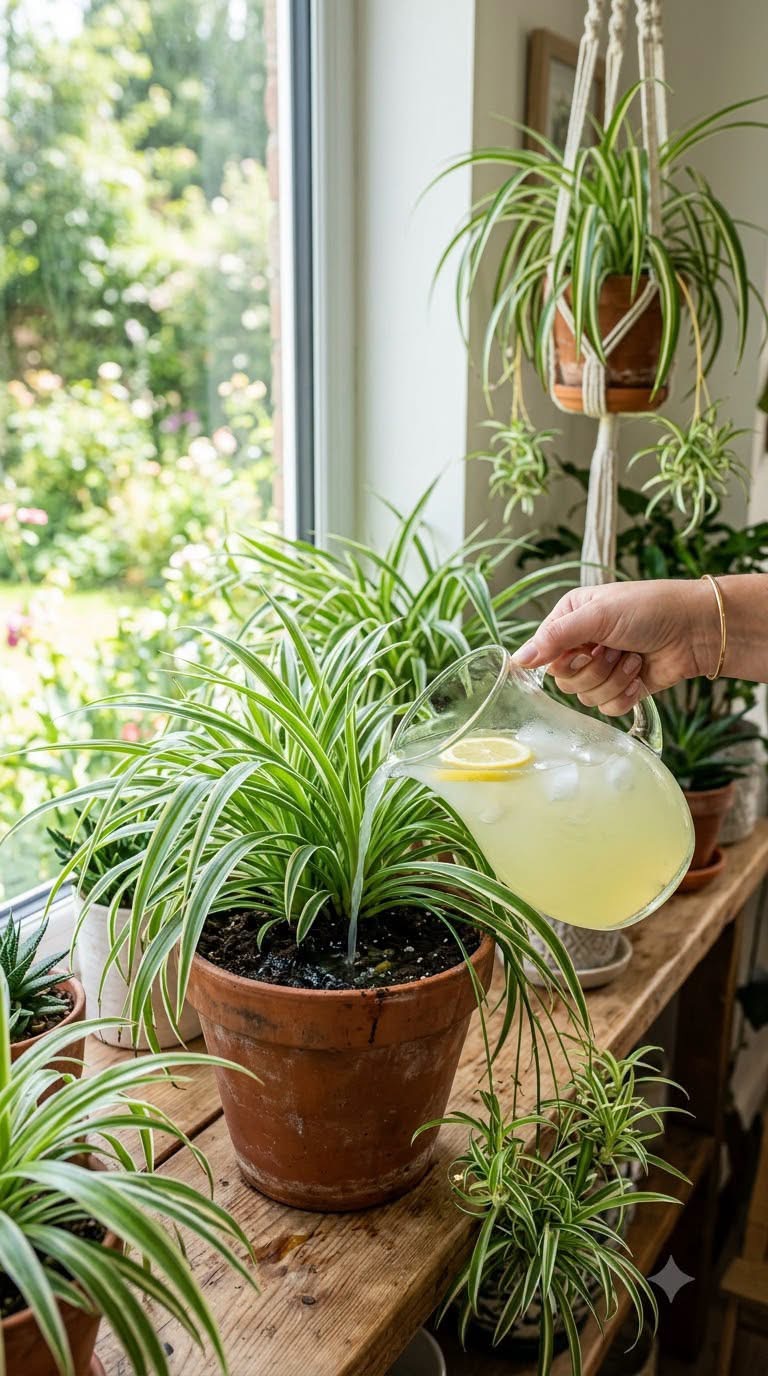
Spider plants are one of the easiest indoor plants to grow, but they still need the right routine to look full, fresh, and elegant. Their long striped leaves and cascading baby plants make them perfect for shelves, hanging baskets, bright kitchens, and sunny living-room corners.
Many online plant tricks suggest adding lemon water or other kitchen ingredients to the soil. However, a spider plant does not need lemon water to grow well. The best results usually come from simple, consistent care: bright or medium light, regular potting mix, proper drainage, and watering only when the soil begins to dry.
When these basics are in place, a spider plant can grow into a beautiful, fuller display and may produce its recognizable baby plants on long arching stems.
What Is a Spider Plant?
Spider plant is the common name for Chlorophytum comosum. It is known for its narrow, arching leaves, which may be solid green or marked with creamy white stripes.
As the plant matures, it can produce long stems with tiny new plants at the ends. These baby plants make spider plants especially attractive in hanging pots and raised planters.
Spider plants are adaptable houseplants. They prefer bright light but can also grow in medium light. They grow well in ordinary potting mix, and the soil should be allowed to dry somewhat between waterings.
Why Lemon Water Is Not the Secret
The image may show lemon water being poured around a spider plant, but this is not a necessary care step. A spider plant does not need acidic kitchen mixtures to look green or produce more baby plants.
The real secret is giving the plant what it naturally needs. Plain water, correct light, good drainage, and a gentle feeding routine during active growth are more dependable than adding lemon juice or other homemade mixtures to the pot.
Using simple care also makes it easier to understand your plant. When you use one steady routine, you can see whether the plant needs more light, less water, or a slightly larger pot.
Start With the Right Light
Light has a major effect on the appearance of a spider plant. A bright room with indirect sunlight is a wonderful location. Place the pot near a window where the plant receives plenty of daylight without sitting in strong, hot sun for many hours.
An east-facing window is often a good choice because it provides gentle morning light. A spot a few feet from a south- or west-facing window can also work when the light is filtered by a sheer curtain.
Spider plants can adapt to medium light, but very dark corners may slow growth and reduce the chance of seeing baby plants. If the leaves begin to look dull or the plant stops producing new growth, try moving it to a brighter location.
Water Only When the Soil Begins to Dry
Spider plants do not need their soil to stay constantly wet. Before watering, touch the top inch of the potting mix. If it still feels damp, wait a few more days. If it feels dry, water the soil slowly and evenly.
Use plain room-temperature water and water until a small amount drains from the bottom of the pot. Then empty the saucer or outer pot so the roots are not sitting in standing water.
Overwatering can damage roots in many houseplants. Letting the soil dry a little between waterings is a simple way to avoid giving the spider plant more moisture than it needs.
Choose a Pot With Drainage
A stylish pot can make a spider plant look beautiful, but drainage is just as important as appearance. Always choose a pot with at least one drainage hole at the bottom.
If you want to use a decorative ceramic basket or a pot without drainage, keep the spider plant inside a smaller nursery pot with holes. Remove the inner pot for watering, let it drain fully, then place it back inside the decorative container.
This method prevents extra water from collecting around the roots and gives you a cleaner, more professional-looking plant display.
Use a Simple, Airy Potting Mix
Spider plants grow well in regular indoor potting mix. The mix should feel light enough for water to move through, not heavy and compacted.
If your soil stays wet for a long time, add a little perlite to improve drainage. This creates more air space around the roots and helps the water flow through the container.
When repotting, only move the plant up one pot size. A pot that is too large can hold extra moisture for too long. A slightly snug pot is often a better choice for a healthy spider plant.
How to Encourage More Baby Spider Plants
Baby spider plants appear on long stems as the plant matures. They are not created by a fast watering trick. They usually develop when the parent plant has good light, consistent care, and enough maturity.
Spider plants are also known to produce plantlets when they are somewhat pot-bound. This does not mean the plant should be left in an extremely tight pot for years. It simply means you do not need to rush to repot every time the plant becomes full.
Give the plant bright indirect light, water it carefully, and avoid moving it constantly from one place to another. A stable environment helps it focus on steady growth.
A Safe Fertilizer Routine
During spring and summer, you can use a balanced liquid houseplant fertilizer at a diluted strength. Follow the instructions on the product label and apply it only to moist soil.
There is no need to use lemon water, baking soda, salt, sugar, or other household ingredients as a substitute for fertilizer. A proper houseplant fertilizer used lightly and according to its label is the safer, more predictable option.
How to Deal With Brown Leaf Tips
Brown tips are common on spider plants. They can happen when watering is inconsistent, when the plant sits too close to a cold draft, or when mineral salts build up in the pot.
You can trim off brown tips with clean scissors, following the natural pointed shape of the leaf. Avoid cutting too much green tissue, and focus on improving the watering routine rather than repeatedly trimming the plant.
Keeping the Leaves Clean and Attractive
Dust can collect on the long leaves and make the plant look less vibrant. Every few weeks, gently wipe the leaves with a soft damp cloth or give the plant a light rinse in the sink or shower.
Clean leaves help the plant receive light more evenly and make the variegated stripes stand out. Avoid leaf-shine sprays, oily products, or strong cleaning solutions.
A clean spider plant in a warm terracotta pot, woven hanging basket, or smooth white ceramic planter can become a beautiful natural accent in any room.
Where to Place a Spider Plant for a Beautiful Display
A hanging basket near a bright window is one of the best ways to show off a spider plant’s long arching leaves and baby plants. The leaves can cascade naturally, creating a soft and relaxed look.
Spider plants also look beautiful on an open shelf, a plant stand, or a kitchen windowsill. Place one in a terracotta pot for a warm rustic style, or use a white ceramic pot for a clean modern display.
In a living room, place the plant near a window with filtered light. In an office, position it near a bright wall or desk where it receives daylight but is not directly under air-conditioning or heating vents.
How to Propagate Baby Spider Plants
When the mother plant produces baby plants, you can leave them attached for a fuller hanging display or grow new plants from them.
Choose a healthy baby plant with small roots beginning to form. You can place it in a small pot of moist potting mix while it is still attached to the parent plant. Once it has rooted well, cut the connecting stem.
You can also place the baby plant in water temporarily until roots become stronger, then transfer it to soil. For long-term growth, a pot with well-draining soil is the better choice.
Common Spider Plant Care Mistakes
One common mistake is watering too often. Spider plants like moisture, but they should not stay soggy. Always check the soil before watering.
Another mistake is placing the plant in a very dark area. It may survive, but growth can become slower and the leaves may not look as full or vibrant.
Using random kitchen ingredients is another avoidable mistake. Lemon water may look attractive in a video, but a spider plant does not need it. Consistent care gives safer and more reliable results.
Safety Note
Keep spider plants out of reach of pets and young children who may chew on the leaves. When using fertilizer or any plant-care product, read and follow the label directions.
Do not mix household products into the soil unless they are specifically intended for houseplants. Plain water, suitable light, drainage, and a label-approved fertilizer are enough for a healthy routine.
Final Thoughts
A fuller spider plant does not come from lemon water. It comes from a simple routine that respects the plant’s natural needs.
Give it bright indirect light, allow the soil to dry slightly before watering, use a pot with drainage, and feed lightly during the growing season. With patience and steady care, your spider plant can become a beautiful indoor display with long striped leaves and charming baby plants.