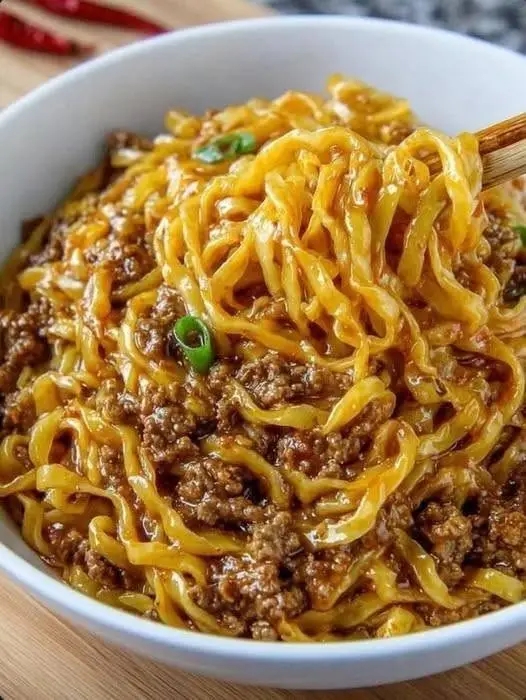
Juicy crumbled beef, thick ribbon noodles, and a glossy, umami‑packed sauce that clings to every strand – this quick and easy noodle bowl is better than takeout and ready in the time it takes to order delivery.
There’s something deeply satisfying about a bowl of noodles coated in a thick, glossy, sticky sauce that’s packed with savoury, sweet, and umami flavours. This Sticky Asian Ground Beef Noodle Bowl delivers exactly that – and it does it in under 20 minutes. The combination of crumbled, juicy ground beef, wide, ribbon‑like noodles, and a rich, dark mahogany sauce is pure comfort food heaven. It’s the kind of dish that makes you want to skip the fork and go straight for chopsticks, slurping up every last bit of that glossy glaze.
This recipe was born out of a craving for the bold, savoury flavours of Asian street food – the kind you find in bustling night markets and hole‑in‑the‑wall noodle shops. The deep, caramelised colour of the sauce comes from a combination of dark soy sauce, oyster sauce, and a touch of hoisin, while the cornstarch slurry gives it that signature sticky, clingy texture that coats every noodle perfectly. The beef is browned until crumbly and then simmered in the sauce, creating a rich, meaty ragu that pairs beautifully with the chewy noodles.
What I love most about this dish is its simplicity and adaptability. It uses everyday ingredients that are easy to find, comes together in a single pan, and is infinitely customisable – add extra veggies, swap the protein, or dial up the heat. Whether you’re a beginner cook or a seasoned home chef, this recipe is foolproof, forgiving, and guaranteed to impress. In this comprehensive guide, I’ll walk you through every step, share pro tips for achieving that perfect sticky glaze, offer delicious variations, and answer all your burning questions. Let’s get cooking!
✨ Why this noodle bowl is a weeknight game‑changer:
• 20 minutes from start to finish – faster than delivery.
• One pan, minimal cleanup – everything cooks in a single wok or skillet.
• Big, bold flavours – savoury, sweet, umami, and slightly smoky.
• Super satisfying – hearty enough for a main meal.
• Perfect for meal prep – tastes even better the next day.
📋 The Recipe – Sticky Asian Ground Beef Noodle Bowl
Prep: 10 min · Cook: 10 min · Total: 20 min
Servings: 4 · Diet: High‑Protein · Adjustable
🥣 Ingredients
- For the noodles:
- 12 oz wide lo mein noodles, Chinese knife‑cut noodles, or thick egg noodles (pappardelle or fettuccine work well as substitutes)
- For the meat & aromatics:
- 1 lb lean ground beef (or ground pork/turkey)
- 2 tbsp neutral cooking oil (avocado or vegetable oil)
- 4 cloves garlic, minced
- 1 tbsp fresh ginger, grated
- 4 green onions, thinly sliced (white parts for cooking, green parts for garnish)
- For the glossy sauce:
- ½ cup low‑sodium soy sauce (or coconut aminos)
- 2 tbsp dark soy sauce (crucial for the deep mahogany colour!)
- 2 tbsp oyster sauce
- 1 tbsp hoisin sauce
- 1 tbsp brown sugar (or zero‑calorie substitute)
- 1 cup beef or chicken broth
- 1 tbsp cornstarch + 2 tbsp cold water (mixed to make a slurry)
- Optional for heat: ½ tsp red pepper flakes or 1 tbsp chili crisp
👩🍳 Step‑by‑Step Instructions
- Cook the noodles: Bring a large pot of salted water to a boil. Cook the noodles according to package directions until al dente. Drain, rinse with cold water to stop the cooking, and set aside.
- Cook the beef: Heat a large wok or deep skillet over high heat. Add the cooking oil. Once shimmering, add the ground beef. Break it up with a spatula and cook until completely browned and crumbly (about 5–6 minutes).
- Add aromatics: Push the beef to one side of the pan. Add the minced garlic, grated ginger, and the white parts of the green onions to the empty side. Sauté for 1 minute until fragrant, then mix everything together.
- Make the sauce: In a small bowl, whisk together the soy sauce, dark soy sauce, oyster sauce, hoisin sauce, brown sugar, and broth. Pour this mixture over the beef. Bring to a simmer.
- Thicken the glaze: Pour the cornstarch slurry into the sauce and stir continuously. In about 30–60 seconds, the sauce will turn from watery to thick, glossy, and sticky – exactly like the picture!
- Toss the noodles: Add the cooked, drained noodles directly into the pan with the saucy beef. Use tongs or chopsticks to toss vigorously for 1–2 minutes until every noodle is completely coated in that sticky brown glaze.
- Serve: Transfer to a large white bowl, pile high, and garnish generously with the green parts of the sliced green onions.
💡 Pro tip: For an extra layer of flavour, add a splash of sesame oil at the very end – it adds a wonderful nutty aroma.
~530Calories
32gProtein
18gFat
58gCarbs
Inside the Glossy Sauce – Why Each Ingredient Matters
The sauce is the soul of this noodle bowl. Each ingredient contributes a specific layer of flavour, colour, and texture. Here’s why they’re all essential – and how you can adapt them to your taste.
Dark Soy Sauce – The Colour and Depth
Dark soy sauce is non‑negotiable if you want that deep, rich mahogany colour. Unlike light soy sauce, it’s aged longer and often contains molasses, giving it a thicker consistency, a slightly sweet flavour, and a deep, dark hue. It’s what makes the sauce look so glossy and appetising. If you skip it, your sauce will look pale brown – still tasty, but not nearly as striking. You can find dark soy sauce in the Asian aisle of most supermarkets.
Oyster Sauce – The Umami Powerhouse
Oyster sauce is the secret to that savoury, slightly sweet, deeply complex flavour that defines many Asian noodle dishes. It adds a rich, meaty umami that elevates the entire dish. If you’re vegetarian, you can use a mushroom‑based oyster sauce alternative.
Hoisin Sauce – The Sweet Depth
Hoisin sauce adds a subtle sweetness and a hint of spice that balances the saltiness of the soy sauce. It also contributes to the sauce’s thickness and gives it a beautiful, lacquered shine. If you don’t have hoisin, you can use a mixture of peanut butter and a little extra brown sugar.
Soy Sauce – The Salty Base
Low‑sodium soy sauce allows you to control the salt level without sacrificing flavour. It forms the liquid base of the sauce, carrying all the other flavours. If you’re using regular soy sauce, reduce the added salt elsewhere.
Broth – The Savory Liquid
Chicken or beef broth adds body and a savoury depth that water simply can’t provide. It helps create a generous amount of sauce that coats both the meat and the noodles.
Cornstarch Slurry – The Thickener
This is what transforms the sauce from watery to sticky and clingy. The cornstarch, when heated, gelatinises and thickens the liquid, creating that glossy, sauce‑that‑clings texture that makes this dish so satisfying. Be sure to mix the cornstarch with cold water before adding it – adding it directly to hot liquid will cause lumps.
The Wok Hei Effect – Why High Heat Matters
If you have a wok, this is the time to use it – but a large, heavy‑bottomed skillet works well too. High heat is essential for two reasons: it quickly browns the beef, creating those delicious caramelised bits, and it helps the sauce thicken rapidly, giving you that perfect glossy finish. The intense heat also imparts a subtle smoky flavour (known as wok hei in Cantonese cuisine) that adds a layer of complexity you just can’t replicate with low heat.
When cooking at high heat, keep your ingredients prepped and ready to go – the cooking happens fast. Have your sauce mixed and your slurry ready before you start cooking. And don’t crowd the pan; if you’re making a large batch, cook the beef in batches to ensure it browns rather than steams.
Pro Tips for the Perfect Sticky Noodle Bowl
🍜 Wide noodles catch more sauce – The broader the noodle, the more surface area there is for the sticky glaze to cling to. Lo mein, knife‑cut, or pappardelle are ideal.
🥩 Brown the beef well – Don’t rush the browning. Let the beef sit for a minute before stirring to get a nice crust – this adds deep, savoury flavour.
🧂 Salt the pasta water – Seasoning the noodle water ensures the noodles have flavour beyond the sauce. Use about 1 tablespoon of salt per gallon of water.
🥄 Reserve pasta water – If the sauce seems too thick after adding the noodles, add a splash of the reserved pasta water to loosen it up.
Endless Variations – Make This Noodle Bowl Your Own
This recipe is a fantastic base for countless variations. Here are some of my favourite twists:
- Spicy Szechuan: Add 1 tablespoon of Szechuan peppercorns (crushed) and 1 teaspoon of chili oil along with the garlic. The numbing heat is incredible.
- Veggie‑Loaded: Stir in 2 cups of shredded cabbage, sliced bell peppers, or snap peas when you add the aromatics – they cook quickly and add crunch.
- Chicken or Pork: Swap the beef for ground chicken or pork. Both work beautifully – just make sure to cook them thoroughly.
- Gluten‑Free: Use gluten‑free noodles (rice noodles or gluten‑free pappardelle), and replace the soy sauce with tamari or coconut aminos. Use a gluten‑free hoisin and oyster sauce.
- Extra Saucy: If you love extra sauce, increase the broth to 1½ cups and add an extra tablespoon of cornstarch slurry – you’ll have more of that delicious glaze to coat everything.
- Peanut Twist: Stir in 2 tablespoons of smooth peanut butter along with the sauce for a rich, nutty dimension.
How to Serve Your Sticky Noodle Bowl
This dish is a complete meal on its own, but a few simple additions can make it feel even more special:
- With a soft‑boiled egg: A jammy, soy‑marinated egg (or a plain soft‑boiled egg) adds richness and an extra protein boost.
- With a side of pickled vegetables: The tangy crunch of pickled daikon or cucumber is a perfect contrast to the rich, savoury noodles.
- With extra chili oil: For those who like heat, a drizzle of chili oil or a sprinkle of red pepper flakes adds a fiery kick.
- With fresh herbs: A handful of fresh basil, cilantro, or mint on top adds brightness and colour.
Serve the noodles in deep bowls, and don’t forget to provide chopsticks and a spoon – you’ll want to capture every last drop of that glossy sauce.
Storing, Reheating, and Meal‑Prepping
This noodle bowl is a meal‑prepper’s dream. It stores beautifully in the refrigerator for up to 4 days in an airtight container. The sauce may thicken as it cools, but it loosens up when reheated – add a splash of water or broth to bring it back to a saucy consistency.
To reheat, microwave individual portions for 2–3 minutes, or gently warm in a skillet over medium heat with a little extra broth. The flavours actually deepen and meld overnight, making this an excellent make‑ahead lunch or dinner.
You can also freeze the cooked beef and sauce (without the noodles) for up to 2 months. Cook the noodles fresh when you’re ready to eat, then toss with the reheated beef mixture – it’s a great way to have a quick meal on hand.
Want the full recipe and simple step-by-step instructions?
Page 2 continues with the full ingredients, cooking tips, and easy directions so you can make this recipe perfectly at home.