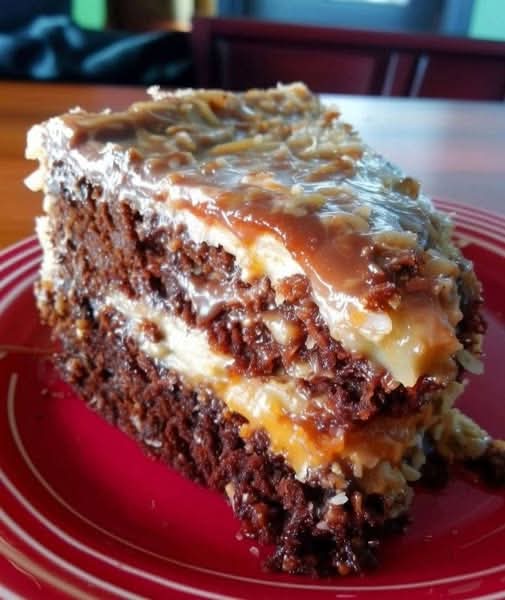
There are chocolate cakes, and then there is German Chocolate Cake. This isn’t just any dessert—it’s a celebration of contrasts: a light, tender chocolate cake that’s not too sweet, layered with a luscious, caramel-like coconut-pecan custard that’s rich, chewy, and utterly irresistible. It’s the kind of cake that makes birthdays feel special, holiday dinners unforgettable, and ordinary weekends feel like a celebration. Despite its name, this iconic cake is a purely American creation—one that has captured hearts and taste buds for generations. And the best part? It’s surprisingly approachable to make from scratch.
If you’ve ever wondered what makes German Chocolate Cake so unique, you’re about to find out. The combination of a mild, buttermilk-kissed chocolate cake with a gooey, coconut-pecan frosting is unlike any other dessert. It’s not overly sweet, it’s not heavy—it’s perfectly balanced, deeply satisfying, and guaranteed to earn you rave reviews. Let’s dive into the history, the technique, and the recipe that will make this cake your new signature dessert.
What Is German Chocolate Cake?
German Chocolate Cake is a layered chocolate cake filled and topped with a distinctive coconut-pecan frosting—a custard-like mixture made with egg yolks, evaporated milk, butter, sugar, shredded coconut, and chopped pecans[reference:0]. The cake itself is mild and tender, often made with buttermilk to provide a subtle tang that balances the sweetness of the frosting[reference:1]. Unlike many chocolate cakes that are dense and fudgy, German Chocolate Cake is lighter and more delicate, allowing the rich, chewy frosting to take center stage[reference:2].
The cake is traditionally assembled with three thin layers, with the coconut-pecan frosting spread between each layer and generously piled on top. The sides are often left unfrosted, showcasing the beautiful layers, though some versions include a chocolate frosting on the sides for a more polished look[reference:3][reference:4]. Maraschino cherries are sometimes added as a garnish, adding a pop of color and a touch of sweetness[reference:5].
What sets German Chocolate Cake apart is its balance of textures and flavors. The cake is soft and airy, the frosting is chewy and rich, and the pecans add a satisfying crunch. It’s a symphony of contrasts that has made this cake a beloved classic for over half a century.
The Fascinating History of German Chocolate Cake
Despite its name, German Chocolate Cake is not German in origin[reference:6][reference:7]. It’s a purely American creation, and its name comes from a man, not a country. The story begins in 1852, when an English-American chocolate maker named Samuel German developed a sweet baking chocolate for the Baker’s Chocolate Company in Boston[reference:8][reference:9]. This chocolate contained more sugar and less cocoa than the unsweetened baking bars common at the time, and the company named it “German’s Sweet Chocolate” in his honor[reference:10][reference:11].
For over a century, German’s Sweet Chocolate was used in various recipes, but it wasn’t until 1957 that the cake we know today was born. That year, a Dallas, Texas homemaker named Mrs. George Clay (also known as Lucy Clay) submitted a recipe for “German’s Sweet Chocolate Cake” to The Dallas Morning News, where it was published as the “Recipe of the Day”[reference:12][reference:13]. The recipe quickly gained national attention, and sales of Baker’s German’s Sweet Chocolate reportedly increased by 73 percent within a year[reference:14].
As the recipe spread across the country, the possessive apostrophe was gradually dropped. “German’s Chocolate Cake” became “German Chocolate Cake,” giving the dessert a misleading geographic identity that persists to this day[reference:15][reference:16]. Despite the confusion, the cake’s flavor profile—mild chocolate layered with coconut and pecans—reflects mid-20th-century American pantry staples rather than European pastry traditions[reference:17]. It was designed to showcase a specific sweet baking chocolate and a rich coconut custard frosting, not to compete with darker, more intense chocolate cakes[reference:18].
In popular culture, German Chocolate Cake has become a symbol of celebration. It’s a staple at birthdays, weddings, and holiday gatherings, often cited as a favorite comfort dessert. Its reputation for being “fancy” yet approachable has made it a go-to choice for home bakers looking to impress.
Today, while many recipes use semisweet or bittersweet chocolate instead of the original German’s Sweet Chocolate, the essence of the cake remains the same: a tender chocolate layer cake crowned with a generous blanket of coconut-pecan custard. It’s a dessert that tells a story—of American ingenuity, of the power of a good recipe, and of the enduring love for chocolate and coconut.
Why You’ll Love This Recipe
There are countless reasons to fall in love with this German Chocolate Cake. Here are just a few that will have you making it on repeat:
Perfectly balanced flavor – the mild chocolate cake is the ideal canvas for the sweet, rich coconut-pecan frosting[reference:19].
Incredible texture contrast – soft, tender cake meets chewy, crunchy, custardy frosting in every bite[reference:20].
Impressive presentation – the layered look with exposed sides is stunning and professional.
Make-ahead friendly – the cake layers and frosting can be prepared in advance[reference:21].
Better than store-bought – fresh, homemade ingredients make all the difference.
A true American classic – this cake has a rich history and a devoted following[reference:22].
Feeds a crowd – a 9‑inch layer cake serves 12 generously[reference:23].
Customizable – adjust the sweetness, swap nuts, or add chocolate frosting on the sides[reference:24].
Kid‑friendly – even picky eaters love the sweet, nutty frosting.
Always a crowd‑pleaser – this cake is guaranteed to earn rave reviews.
This is the recipe that will make you feel like a pastry chef. It’s proof that you don’t need a bakery to create a spectacular, showstopping dessert.
Ingredients for German Chocolate Cake
This recipe uses simple, high-quality ingredients that come together beautifully. Here’s what you’ll need:
For the Chocolate Cake Layers
4 oz German’s Sweet Chocolate (or semisweet chocolate, 60% cacao)[reference:25][reference:26]
½ cup water[reference:27]
2 cups all-purpose flour (or cake flour for a lighter crumb)[reference:28][reference:29]
1 teaspoon baking soda[reference:30]
¼ teaspoon salt[reference:31]
1 cup unsalted butter, softened[reference:32]
2 cups granulated sugar[reference:33]
4 large eggs, separated[reference:34]
1 teaspoon vanilla extract[reference:35]
1 cup buttermilk[reference:36]
For the Coconut-Pecan Frosting
4 large egg yolks[reference:37]
12 oz evaporated milk (one can)[reference:38]
1½ cups granulated sugar[reference:39]
¾ cup unsalted butter[reference:40]
1½ teaspoons vanilla extract[reference:41]
7 oz (about 2⅔ cups) sweetened shredded coconut[reference:42]
1½ cups chopped pecans[reference:43]
For the Chocolate Frosting (Optional, for the sides)
- 1 cup heavy cream
- 8 oz semisweet chocolate, chopped
- 1 tablespoon unsalted butter
- 1 teaspoon vanilla extract
Ingredient Notes and Substitutions
Chocolate: The original recipe uses German’s Sweet Chocolate, which has about 48% cacao and a sweet, creamy taste[reference:44]. If you can’t find it, use semisweet chocolate with around 60% cacao and consider reducing the sugar slightly to maintain the balance[reference:45]. Avoid using unsweetened chocolate—it will make the cake too bitter.
Flour: All-purpose flour works well, but cake flour is ideal for a lighter, more tender crumb[reference:46]. Cake flour has a lower protein content, which produces a more delicate texture and won’t weigh down the beaten egg whites[reference:47].
Buttermilk: Buttermilk adds tang and helps create a tender crumb. If you don’t have buttermilk, you can make a substitute by adding 1 tablespoon of lemon juice or white vinegar to 1 cup of milk and letting it sit for 5–10 minutes.
Coconut: Sweetened shredded coconut is traditional and provides the perfect level of sweetness. You can toast it lightly for extra flavor, but it’s not required.
Pecans: Pecans are essential for that classic buttery crunch[reference:48]. You can substitute with walnuts, but the flavor will be slightly different.
Step‑by‑Step Instructions
Follow these detailed steps to create a flawless German Chocolate Cake every single time. The process is straightforward, and the results are spectacular.
1. Preheat and Prepare the Pans
Preheat your oven to 350°F (175°C)[reference:49]. Grease three 9‑inch round cake pans and line the bottoms with parchment paper[reference:50][reference:51]. This ensures the layers come out cleanly and prevents sticking.
2. Melt the Chocolate
In a small saucepan or microwave-safe bowl, combine the chopped chocolate and ½ cup of water. Heat gently, stirring frequently, until the chocolate is completely melted and smooth[reference:52]. Set aside to cool slightly[reference:53].
3. Prepare the Dry Ingredients
In a medium bowl, whisk together the flour, baking soda, and salt. Set aside[reference:54].
4. Beat the Butter and Sugar
In a large mixing bowl or the bowl of a stand mixer fitted with the paddle attachment, beat the butter and sugar on medium speed until light and fluffy – about 3–4 minutes[reference:55].
5. Add Egg Yolks and Chocolate
Add the egg yolks one at a time, beating well after each addition[reference:56]. Scrape down the sides of the bowl as needed. Add the melted chocolate and vanilla extract, and mix until fully combined[reference:57].
6. Alternate Dry Ingredients and Buttermilk
With the mixer on low speed, add the dry ingredients in three additions, alternating with the buttermilk, starting and ending with the flour mixture[reference:58]. Mix just until combined – do not overmix.
7. Beat the Egg Whites
In a separate clean, dry bowl, beat the egg whites with an electric mixer on high speed until stiff peaks form[reference:59][reference:60]. They should hold their shape when the whisk is lifted. This is crucial for creating a light, airy cake.
8. Fold the Egg Whites into the Batter
Gently fold the beaten egg whites into the batter in three additions[reference:61]. Use a large spatula and fold with a gentle, sweeping motion – don’t stir vigorously, or you’ll deflate the air. The batter should be light and fluffy.
9. Divide and Bake
Divide the batter evenly between the three prepared pans[reference:62]. Bake for 25–30 minutes, or until a toothpick inserted into the center comes out clean[reference:63]. The cakes should be golden and spring back when lightly pressed.
10. Cool the Layers
Let the cakes cool in the pans for 10 minutes, then transfer them to wire racks to cool completely[reference:64]. It’s essential that the layers are fully cooled before you assemble the cake, otherwise the frosting will melt and slide off.
11. Make the Coconut-Pecan Frosting
In a medium saucepan over medium heat, combine the egg yolks, evaporated milk, sugar, and butter[reference:65]. Whisk constantly to prevent the eggs from scrambling[reference:66]. Cook until the mixture thickens and coats the back of a spoon – this should take about 8–10 minutes[reference:67]. Remove from heat and stir in the vanilla extract, shredded coconut, and chopped pecans[reference:68]. Let the frosting cool to room temperature, stirring occasionally to prevent a skin from forming[reference:69]. It will thicken as it cools[reference:70].
12. Assemble the Cake
Place one cooled cake layer on a serving plate[reference:71]. Spread about ⅓ of the coconut-pecan frosting over the top, stopping just short of the edges to prevent overflow[reference:72]. Top with the second layer and repeat. Place the third layer on top and spread the remaining frosting over the top[reference:73]. If desired, you can also spread chocolate frosting on the sides for a more polished look[reference:74].
13. Serve
Let the assembled cake rest briefly before slicing to allow the layers to set[reference:75]. Use a sharp knife to cut clean slices. Serve at room temperature for the best flavor and texture.
Expert Tips for the Perfect German Chocolate Cake
This recipe is straightforward, but a few expert tricks will elevate it to perfection. Here’s what I’ve learned from making this cake countless times:
Use Baker’s German’s Sweet Chocolate if you can find it – it’s the authentic choice and has the perfect balance of sweetness and chocolate flavor[reference:76].
Use cake flour – it produces a lighter, more tender crumb and won’t weigh down the beaten egg whites[reference:77].
Melt the chocolate properly – never melt chocolate over direct heat; use a microwave or double boiler to prevent burning[reference:78].
Add coffee to the batter – replacing some of the water with hot coffee intensifies the chocolate flavor without adding a coffee taste[reference:79].
Beat the egg whites to stiff peaks – this is essential for creating a light, airy cake[reference:80].
Let the cake layers cool completely – if the cakes are warm, the frosting will melt and slide off[reference:81].
Don’t overmix the batter – overmixing can make the cake tough. Mix just until combined[reference:82].
Toast the coconut and pecans – toasting them before adding to the frosting intensifies their nutty flavors and removes excess moisture[reference:83].
Chill the cake briefly between layers – if you prefer a neater look, chilling the cake for a few minutes between layers helps the frosting set[reference:84].
Use a serrated knife for slicing – a serrated knife makes clean, even cuts without crushing the layers.
Delicious Variations
One of the best things about this recipe is how easily it adapts to different tastes and cravings. Here are some of my favorite ways to switch it up:
Chocolate Frosting on the Sides
For a more polished, bakery-style look, spread a chocolate ganache or buttercream on the sides of the cake[reference:85][reference:86]. The contrast between the dark chocolate sides and the light coconut-pecan top is stunning.
German Chocolate Cupcakes
Use the same batter and frosting to make cupcakes. Fill cupcake liners about ⅔ full and bake at 350°F for 18–22 minutes. Top with a dollop of coconut-pecan frosting[reference:87].
German Chocolate Cake Bars
Bake the batter in a 9×13‑inch pan and spread the frosting over the top. These bars are easier to serve and perfect for potlucks[reference:88].
German Chocolate Poke Cake
Bake a chocolate sheet cake, poke holes in it, and pour a mixture of sweetened condensed milk and melted chocolate over the top[reference:89]. Top with coconut-pecan frosting for a fun twist on the classic[reference:90].
Vegan German Chocolate Cake
Use dairy-free butter, plant-based milk, and egg replacers to make a vegan version[reference:91]. The coconut-pecan frosting can be made with coconut milk instead of evaporated milk[reference:92].
Chantilly Cake
Popular in Hawaii, Chantilly cake is a modified German Chocolate Cake without coconut or nuts in the frosting, though it’s occasionally topped with macadamia nuts[reference:93].
Serving Suggestions
This versatile cake can be served in a variety of ways, making it perfect for any occasion:
- With a glass of cold milk – the classic pairing that never fails.
- With coffee or espresso – the bitterness of the coffee contrasts beautifully with the sweet frosting.
- For birthdays – the ultimate celebration cake[reference:94].
- For holiday gatherings – a showstopping dessert for Thanksgiving, Christmas, or Easter.
- With a dollop of whipped cream – adds a light, airy contrast.
- With fresh berries – strawberries or raspberries add a bright, tart note.
- As a gift – a homemade German Chocolate Cake is a thoughtful and impressive present.
Storage and Reheating Guidelines
This cake stores beautifully, making it a fantastic make‑ahead option.
Room Temperature: Store the cake in an airtight container at room temperature for up to 2 days. The frosting will stay soft and the cake will remain moist.
Refrigeration: Store in an airtight container in the refrigerator for up to 5 days. The flavors deepen and intensify overnight. Bring the cake to room temperature before serving for the best flavor[reference:95].
Freezing: This cake freezes beautifully. Wrap the cooled, unfrosted cake layers tightly in plastic wrap and foil, and freeze for up to 2 months. The frosting also freezes well. Thaw the layers in the refrigerator overnight before assembling[reference:96].
Pro tip: If you’re making the cake ahead of time, you can prepare the layers and frosting separately and assemble just before serving for the freshest results.
Want the full recipe and simple step-by-step instructions?
Page 2 continues with the full ingredients, cooking tips, and easy directions so you can make this recipe perfectly at home.