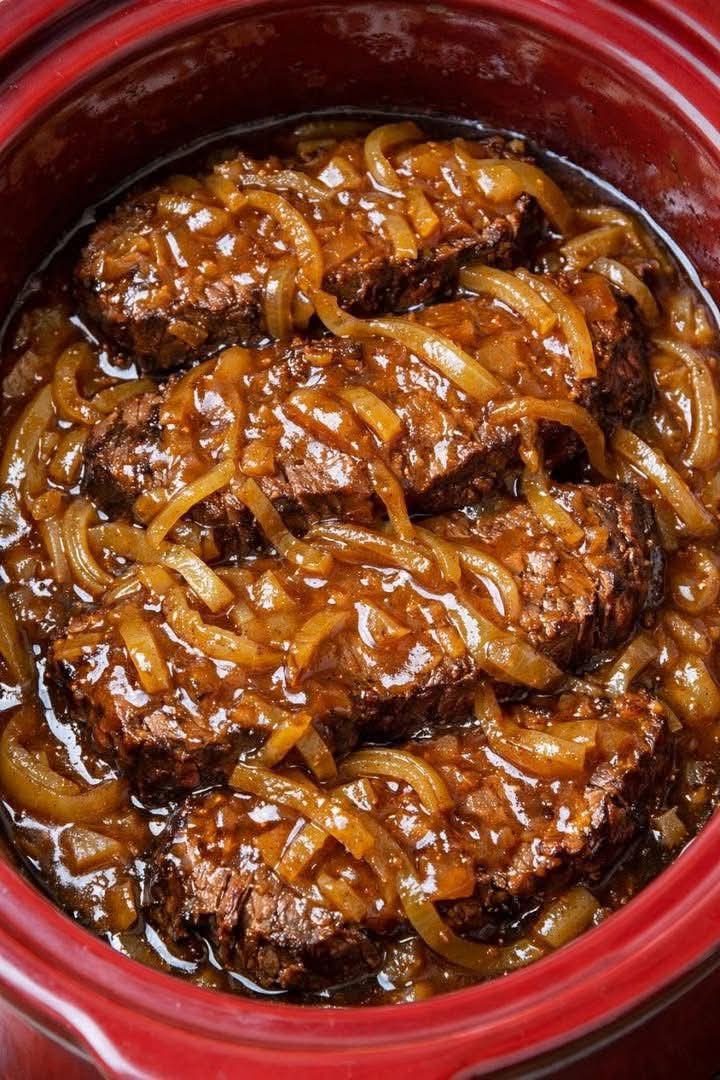
Serving Suggestions
This versatile roast can be served in a variety of ways, making it perfect for any occasion:
Over mashed potatoes – the classic pairing. The creamy potatoes soak up the rich gravy beautifully.
Over rice – a great option for soaking up every last drop of gravy.
With egg noodles – the tender noodles are a perfect match for the shredded beef.
On crusty bread – make open‑faced sandwiches with the beef and gravy.
With roasted vegetables – serve alongside roasted Brussels sprouts, green beans, or asparagus.
As a stew – add extra broth and serve in bowls with crusty bread for dipping.
With a side salad – a crisp green salad with a tangy vinaigrette cuts through the richness.
Storage and Reheating Guidelines
This roast stores beautifully, making it a fantastic make‑ahead option.
Refrigeration: Store leftovers in an airtight container in the refrigerator for up to 4 days. The flavors deepen and intensify overnight – it actually tastes better the next day.
Reheating: For the best texture, reheat gently in a saucepan over low heat, adding a splash of broth if the gravy has thickened too much. You can also microwave individual portions for 2–3 minutes, or reheat in a 350°F oven covered with foil for 15–20 minutes.
Freezing: This roast freezes beautifully. Place the shredded beef and gravy in a freezer‑safe container, leaving a little headspace. Freeze for up to 3 months. Thaw overnight in the refrigerator and reheat gently on the stovetop.
Pro tip: If you’re freezing leftovers, freeze the beef and gravy separately from any potatoes or noodles – they don’t freeze as well and can become watery.
Nutritional Information
Approximate values per serving (based on 8 servings, without sides):
- Calories: 385
- Carbohydrates: 14g
- Protein: 34g
- Fat: 22g
- Saturated Fat: 9g
- Fiber: 3g
- Sugar: 6g
- Sodium: 620mg
For a lower‑fat version, trim visible fat from the roast before cooking and use a leaner cut like top round. You can also skim the fat from the gravy before serving.
Frequently Asked Questions
Q: Can I use a different cut of beef?
A: Yes. Chuck roast is ideal, but bottom round, brisket, or even shoulder roast work well. Avoid lean cuts like sirloin or tenderloin – they don’t have enough fat to stay moist during slow cooking.
Q: Why is my roast tough?
A: The most common cause is undercooking. Chuck roast needs to reach an internal temperature of at least 195°F for the collagen to break down and become tender. If it’s still tough, it needs more time in the slow cooker.
Q: Can I cook this on HIGH instead of LOW?
A: Yes, but LOW is preferred for the most tender results. If you’re short on time, cook on HIGH for 5–6 hours. Check for tenderness – it may need a little more time.
Q: Can I add potatoes to the slow cooker?
A: Yes. Add quartered potatoes along with the carrots. They’ll absorb the gravy and become incredibly flavorful. If you prefer firmer potatoes, add them during the last 2 hours of cooking.
Q: How do I thicken the gravy without cornstarch?
A: You can use flour instead. Mix 2 tablespoons of flour with ¼ cup of cold water to form a slurry, then whisk it into the liquid. You can also let the gravy reduce by cooking it uncovered on HIGH for the last hour.
Q: Can I make this recipe gluten‑free?
A: Yes. Use tamari or coconut aminos instead of soy sauce, and thicken with cornstarch instead of flour. The rest of the ingredients are naturally gluten‑free.
Q: Can I double this recipe?
A: Yes, if you have a large enough slow cooker (7 quarts or more). Double all the ingredients. The cooking time remains about the same – check for tenderness.
Q: What’s the best way to reheat leftovers?
A: Reheat gently on the stovetop over low heat, adding a splash of broth if needed. You can also microwave individual portions, but the texture is best when reheated slowly.
The Legacy of Pot Roast – A American Classic
Pot roast has been a cornerstone of American home cooking for generations, and for good reason. It’s a dish that evolved from necessity – the need to transform tough, economical cuts of meat into something tender and delicious. Our ancestors understood that low, slow cooking was the secret to unlocking the rich, beefy flavors hidden in humble cuts like chuck roast.
The “smothered” version takes that tradition to the next level. By layering the meat with onions and cooking it in a flavorful liquid, you create a natural gravy that’s bursting with depth. The onions melt into the sauce, the herbs infuse the meat, and the result is a dish that’s far greater than the sum of its parts.
This recipe is a celebration of that tradition – a reminder that the best dishes are often the ones that take time, patience, and a little bit of love. It’s the kind of meal that brings families together, creates lasting memories, and proves that simple ingredients can create something truly extraordinary.
Final Thoughts
Slow Cooker Smothered Beef Roast is the dinner that delivers on every level. It’s tender, flavorful, and deeply satisfying – the kind of meal that earns rave reviews and recipe requests. With its rich, savory gravy and fall‑apart beef, it’s comfort food at its finest.
Whether you’re making it for a Sunday dinner, a holiday gathering, or simply because you want to fill your home with the most inviting aromas, this recipe is a guaranteed winner. It’s proof that you don’t need complicated techniques or expensive ingredients to create something truly memorable – you just need a good cut of beef, a few simple seasonings, and a little bit of patience.
So preheat your slow cooker, sear that roast, and get ready to make a dish that will become a family favorite. This is the meal that defines comfort – and it’s about to become a staple in your kitchen.