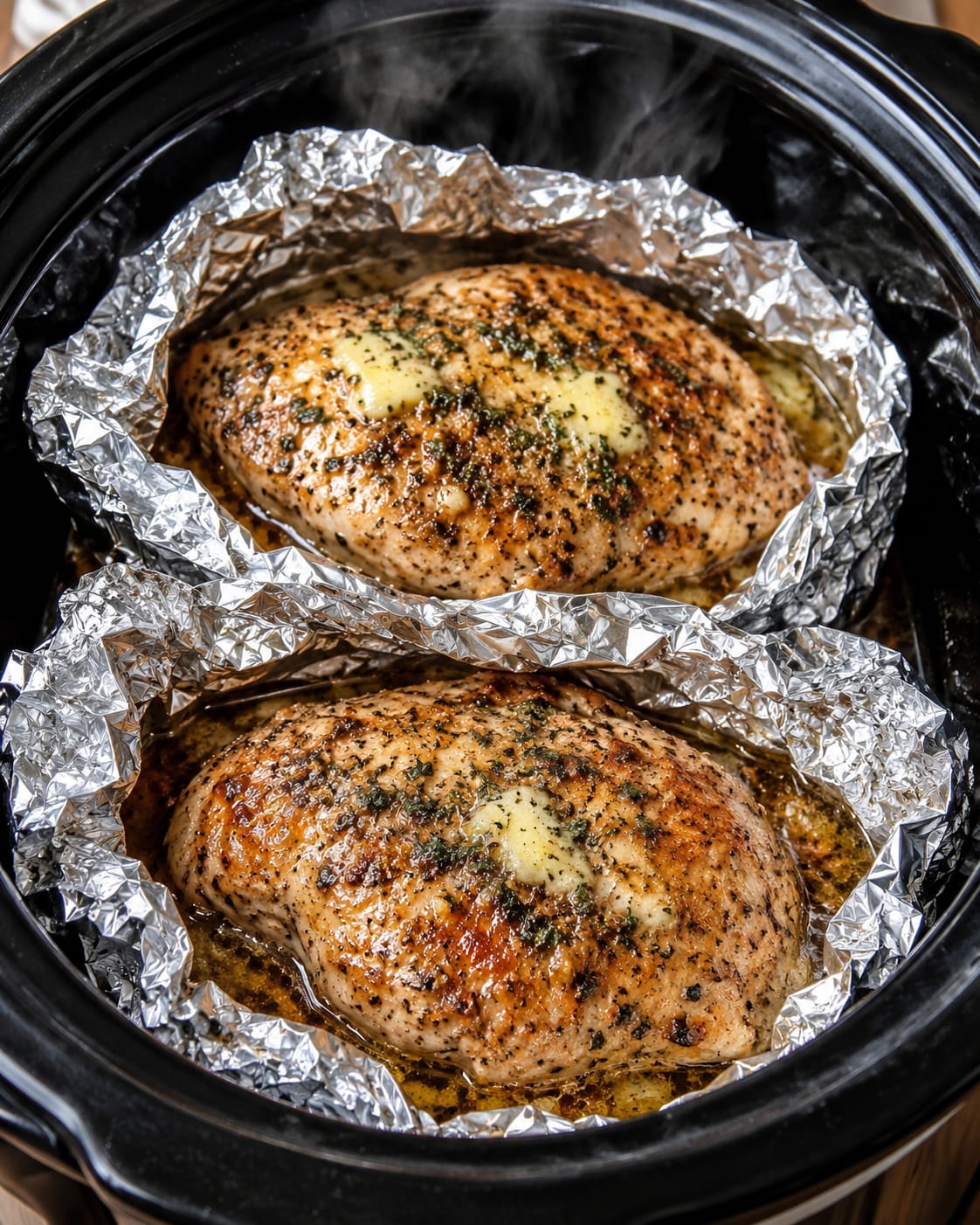
Imagine pulling a shiny, steaming foil packet from the oven—or the grill, or even the campfire—and unwrapping it to reveal the most succulent, fall-apart pork chop you’ve ever tasted. It’s surrounded by tender baby potatoes, sweet carrots, and fragrant onions, all swimming in a buttery, garlicky herb sauce that has been sealed inside, steaming and braising everything to fork-tender perfection. There’s no splattered stovetop, no pile of dirty pans, and absolutely no dry, tough meat. These Foil Packet Pork Chops are the dinner you make when you want something that tastes like a Sunday supper but requires barely any effort. The foil does all the work, trapping steam and flavor, creating a self-contained little oven that ensures every single bite is juicy, aromatic, and deeply satisfying. Whether you bake them in the oven, toss them on the grill, or tuck them into hot coals, this is the ultimate set-it-and-forget-it meal. It’s destined to become your go-to for busy weeknights, easy entertaining, and whenever you need a delicious dinner that practically cleans up itself.
The genius of cooking in foil packets—also called “en papillote” in French kitchens—has been known to home cooks for generations, but it never goes out of style. The concept is brilliantly simple: place your protein and vegetables on a sheet of heavy-duty aluminum foil, add a generous pat of butter and a shower of seasonings, then fold the foil into a tightly sealed pouch. As the packet heats, the ingredients steam in their own juices, along with any added butter, broth, or marinade. This gentle, moist environment breaks down the muscle fibers in the meat, turning even lean pork chops into something you can cut with a spoon. The vegetables nestled alongside soak up all those savory juices, becoming meltingly tender and infused with flavor. The best part? When dinner is over, you simply crumple up the foil and toss it. There are no pots to scrub, no baking dishes to soak, and no stovetop to wipe down. It’s the ultimate one-dish wonder, perfect for campers, busy parents, and anyone who values both incredible taste and easy cleanup. And because each packet is an individual serving, you can customize them easily—add a little heat with red pepper flakes, use sweet potatoes instead of red potatoes, or sprinkle with Parmesan for a cheesy finish. The possibilities are endless, and the method is foolproof. Once you experience the magic of foil packet cooking, you’ll find yourself turning to it again and again, for chicken, fish, and vegetables, too. But these pork chops, in particular, are a revelation. The meat emerges so tender that your fork sinks right in, and the buttery, garlicky sauce that collects at the bottom of the packet is pure liquid gold. Serve it over rice, with crusty bread for dipping, or just enjoy it straight from the foil. It’s the kind of dinner that makes you feel like a kitchen genius, with almost no effort at all.
In this comprehensive guide, I’ll walk you through every detail of making the most tender, flavorful foil packet pork chops you’ve ever had. We’ll explore the best cuts of pork to use, the secrets to perfectly cooked vegetables that are done at the same time as the meat, creative seasoning blends and marinades, and all the tips for grilling, baking, or cooking over an open fire. You’ll find make-ahead instructions, storage suggestions, and a complete recipe card to keep on hand. Let’s tear off some foil and get ready for the easiest, most delicious pork chop dinner of your life.
Why You’ll Love These Foil Packet Pork Chops
Incredibly juicy, fork-tender meat every single time. Pork chops have a reputation for drying out, but not when you cook them in foil packets. The sealed environment traps steam, essentially braising the meat in its own juices along with butter and seasonings. The result is a pork chop so tender you can literally cut it with a fork. The gentle, moist heat breaks down the muscle fibers, keeping the meat succulent and flavorful. Even lean, boneless center-cut chops emerge perfectly cooked—no brining, no pounding, no special tricks required. The foil packet method is the most foolproof way to guarantee juicy pork chops, and once you try it, you’ll never go back to pan-frying or baking them uncovered. It’s a game-changer for anyone who has ever struggled with dry pork. The butter and aromatics create a luscious, savory sauce right in the packet, so every bite is drenched in flavor. You’ll be amazed at how something so simple can taste so luxurious.
Zero cleanup and minimal prep. This is the ultimate one-dish meal—or rather, one-packet meal. You assemble everything on a sheet of foil, fold it up, and cook. When dinner is done, you serve it straight from the foil (or slide it onto a plate), and the only thing to wash is your fork. There are no pots, no pans, no baking dishes to soak, and no stovetop grease to scrub. It’s the perfect solution for busy weeknights, camping trips, or anytime you want a hot, homemade dinner without the mess. The active prep time is about 15 minutes, and then the oven or grill does the rest of the work. It’s also a great way to get kids involved in cooking—they can help assemble their own packets, adding their favorite vegetables and seasonings. The simplicity of the method makes it accessible to even the most novice cooks, and the results are consistently impressive. You’ll feel like you’ve discovered a magical cooking hack, and you’ll want to use it for everything.
A complete, well-rounded dinner in a single packet. The pork chops cook right alongside a medley of vegetables—baby potatoes, carrots, and onions are classic, but you can add whatever you have on hand. The vegetables absorb the buttery, garlicky juices from the pork, becoming incredibly flavorful and perfectly tender. There’s no need to prepare a separate side dish; the entire meal is contained in one tidy little package. This makes foil packet pork chops the ultimate convenience food, with built-in portion control. You can customize each packet to suit individual preferences: extra potatoes for the kids, a little heat for the adults, or a different vegetable mix for a picky eater. The meal is balanced, satisfying, and packed with protein and nutrients. It feels like a complete Sunday dinner, but it’s ready in under an hour with almost no hands-on work. Pair it with a simple green salad or some crusty bread to soak up the sauce, and you have a restaurant-worthy dinner at home.
Versatile cooking methods for any season. These foil packets can be baked in the oven, tossed on the grill, or even cooked over a campfire or in hot coals. In the summer, you can avoid heating up the kitchen by taking the packets outside to the grill. In the winter, the oven fills your home with the most incredible savory aroma. For camping, foil packets are a classic—prepare them ahead of time, keep them in a cooler, and cook them over the fire for a hearty, rustic meal. You can even cook them in a slow cooker (though they won’t get the same slight browning). The method adapts to whatever equipment you have, making it a year-round staple. The cooking times remain similar across methods, and the results are always the same: perfectly tender pork and vegetables, with almost no effort. This versatility makes the recipe a reliable go-to, no matter the weather or the occasion.
Ingredient Deep Dive: The Juicy, Tender Cast
Understanding each ingredient’s role will help you achieve perfectly tender pork chops and the most flavorful vegetables every time. Let’s break down the lineup.
Pork Chops – The Star Protein
You’ll need 4 boneless pork chops, about 1 to 1½ inches thick. Thick-cut chops are essential for this cooking method because they stay juicy and tender during the steaming process. Thin, fast-fry chops will overcook before the vegetables are done, becoming dry and tough. Look for center-cut loin chops, which have a nice balance of lean meat and a small amount of fat for flavor. Bone-in chops also work wonderfully; the bone adds extra flavor and helps insulate the meat, keeping it even more moist. However, you may need to increase the cooking time by about 5–10 minutes for bone-in chops. If you only have thinner chops, you can still use them, but you’ll want to reduce the cooking time slightly or add the vegetables a few minutes ahead. The ideal chop for this recipe is about 6–8 ounces each. Pork shoulder chops (also called blade chops) are another excellent, budget-friendly option; they have more marbling and become incredibly tender with this moist-heat method. The key is to choose chops that are uniform in thickness so they cook at the same rate. Pat the chops dry with paper towels before seasoning to help the seasoning adhere and to prevent excess moisture from steaming the meat. The pork chops are seasoned generously with salt, black pepper, garlic powder, and a touch of paprika, which adds color and a subtle smokiness. There’s no need to sear them first—the foil packet method creates a gentle braise that yields fork-tender meat without any stovetop browning. The fat from the butter and the natural juices from the pork mingle to create a savory, aromatic sauce that permeates every bite. The result is a pork chop that’s so tender and juicy, you’ll be shocked it came from your own kitchen.
Baby Potatoes and Vegetables – The Built-In Side Dish
About 1 pound of baby potatoes (such as Yukon Gold or red potatoes) are halved or quartered, depending on their size, so they cook through in the same time as the pork chops. The potatoes should be cut into uniform pieces about 1 inch in size. Waxy potatoes hold their shape beautifully and become buttery-tender inside the packet. Two medium carrots, sliced into ¼-inch rounds, add a touch of natural sweetness and a pop of color. One small onion, sliced into thin wedges, becomes soft, sweet, and aromatic as it steams. These vegetables are the classic combination, but you can easily swap them or add others: zucchini, bell peppers, mushrooms, or even halved Brussels sprouts. The vegetables should be arranged in the center of the foil, creating a bed for the pork chop to rest on. This elevates the meat slightly and allows the heat to circulate, ensuring even cooking. The vegetables also absorb the buttery, garlicky juices that drip down from the pork, becoming incredibly flavorful. A generous drizzle of olive oil or melted butter over the vegetables before sealing the packet helps them cook evenly and adds richness. A sprinkle of salt, pepper, and a pinch of dried herbs (like thyme or rosemary) seasons the vegetables beautifully. The result is a complete meal in a single packet, with tender, savory vegetables that are the perfect accompaniment to the juicy pork. It’s a one-stop dinner that requires no additional sides, though a fresh green salad or some crusty bread never hurts. The vegetables retain their texture and flavor, steaming gently in their own juices along with the pork. The combination is classic, satisfying, and endlessly customizable to what’s in your fridge.
Butter, Garlic, and Herbs – The Flavor Powerhouse
Each packet gets a generous pat of butter—about 1 tablespoon per serving—placed right on top of the pork chop. As the butter melts, it bastes the meat from above, keeping it incredibly moist and adding a rich, velvety finish. Two cloves of garlic, minced, are sprinkled over the pork and vegetables, infusing the entire packet with a pungent, savory aroma. You can also use garlic powder if fresh garlic is too strong, but fresh garlic mellows beautifully during cooking, becoming sweet and nutty. Fresh or dried herbs—such as thyme, rosemary, oregano, or an Italian blend—add an earthy, fragrant note that complements the pork. A tablespoon of fresh chopped parsley or a sprig of rosemary placed on top before sealing gives a burst of fresh flavor. Salt and freshly ground black pepper are essential; don’t be shy with the seasoning, as the steam will carry the flavors throughout the packet. A splash of chicken broth, white wine, or even a few slices of lemon can be added to the packet to create more steam and a slightly tangy sauce. The butter and seasonings melt together into a luscious, garlicky herb butter that coats the pork and vegetables. Every bite is infused with this savory goodness, and when you open the packet, the aroma is absolutely intoxicating. The butter also helps the pork and vegetables achieve a slight golden color, even though they’re essentially steaming. It’s the simple, classic combination of butter, garlic, and herbs that makes this dish taste like a gourmet meal, despite its humble preparation. You can experiment with compound butters—mix softened butter with herbs, garlic, and a pinch of salt, then dollop it on the pork before sealing. The possibilities are endless, and the butter is what makes this dish so rich and satisfying.
Heavy-Duty Aluminum Foil – The Secret Weapon
This might seem obvious, but the quality of the foil matters. You’ll need heavy-duty aluminum foil, cut into large squares, about 12×18 inches each. Heavy-duty foil is thicker and less likely to tear or puncture during cooking, especially if you’re grilling or turning the packets. Regular foil can work if you double it up, but heavy-duty is more reliable and easier to handle. For each packet, you’ll place the ingredients in the center of the foil, then bring the long sides together and fold them over several times to create a tight seal. The short ends are then folded up, sealing the packet completely. The seal must be tight to trap the steam, which is what cooks the food and keeps everything moist. If steam can escape, the pork can dry out, and the vegetables may not cook through. The foil packets can be placed directly on an oven rack, on a baking sheet (for easier handling), on a grill grate, or even nestled into hot coals. They’re incredibly versatile and can withstand high heat. The foil also makes serving a breeze: simply place each packet on a plate, carefully open it (watch out for the hot steam), and enjoy. There’s no need to transfer the food to another dish unless you want to. The foil packets hold the sauce and juices perfectly, so you can savor every drop. If you’re cooking for a crowd, you can prepare the packets ahead of time and store them in the refrigerator until you’re ready to cook. This makes entertaining effortless. The foil is the unsung hero of this recipe, and using the right kind ensures a stress-free, successful dinner. Always use heavy-duty foil, and don’t skimp on the size of the sheets—you want plenty of room to fold and seal securely without the ingredients crowding the edges. A well-sealed packet is the key to perfectly steamed, fork-tender pork chops.
Step-by-Step: Building the Perfect Foil Packets
This recipe is wonderfully straightforward. Follow these detailed steps for perfectly tender pork chops and vegetables every time.
Step 1: Preheat and Prepare the Foil
Preheat your oven to 400°F (200°C). If you’re grilling, preheat the grill to medium-high heat (about 400°F). Tear off 4 large sheets of heavy-duty aluminum foil, each about 12×18 inches. The shiny side can face up or down; it doesn’t matter for this cooking method. Lightly spray the center of each foil sheet with nonstick cooking spray or brush with a little olive oil. This prevents the vegetables from sticking to the foil. The foil sheets should be large enough to fully enclose the food with room for the steam to circulate. Having the foil ready before you start assembling makes the process smooth and efficient.
Step 2: Season the Pork Chops and Prepare the Vegetables
Pat the 4 boneless pork chops completely dry with paper towels. Season them generously on both sides with salt, freshly ground black pepper, garlic powder, and a pinch of paprika. Set them aside. In a large bowl, toss the halved baby potatoes, sliced carrots, and onion wedges with a drizzle of olive oil, a pinch of salt, pepper, and a sprinkle of dried thyme or rosemary. The vegetables should be lightly coated but not drenched. This simple seasoning brings out their natural flavors as they steam. The potatoes and carrots should be cut into uniform pieces so they cook at the same rate. The onion wedges will become soft and sweet, adding their own aromatic flavor to the packet. This step can be done ahead of time; the vegetables can be prepped and stored in the fridge for up to a day, making the assembly even faster when you’re ready to cook.
Step 3: Assemble the Packets
Divide the seasoned vegetable mixture evenly among the 4 foil sheets, placing it in the center of each sheet. Spread the vegetables into a small bed, about the size of the pork chop. Place a seasoned pork chop directly on top of the vegetables. This allows the meat to cook evenly and lets the vegetables absorb the pork juices. Top each pork chop with 1 tablespoon of butter, cut into small pieces, and scatter the minced garlic over the top. If you’re using fresh herbs, place a sprig of rosemary or a few sprigs of thyme on top. Drizzle a teaspoon of chicken broth or white wine over each packet for extra steam and flavor (optional). The packet is now ready to be sealed. The ingredients should be mounded in the center, with plenty of foil around the edges to fold. The garlic and butter will melt down over the pork as it cooks, basting it continuously. This assembly ensures every component is perfectly positioned for even cooking. The vegetables underneath the pork will steam gently, while the pork on top gets the direct heat from the butter and seasonings. The result is a harmonious blend of flavors in every bite.
Step 4: Seal the Packets Tightly
Bring the two long sides of the foil up over the pork and vegetables, meeting in the center. Fold the edges together and crimp them tightly, making several small folds to create a secure seal. Then, fold up the short ends, crimping them tightly as well. The packet should be completely sealed, with no gaps or tears where steam could escape. The sealed environment is what traps the steam and braises the pork to fork-tenderness. Leave a little extra room inside the packet—don’t press the foil directly against the food—so the steam can circulate. The packets can be placed on a baking sheet (for easier transport) or directly on the oven rack. For grilling, place them directly on the grill grates. The seal must be strong enough to hold in the steam but still allow for easy opening later. A well-sealed packet is the key to success. If you’re concerned about leaks, you can double-wrap each packet with a second layer of foil, but heavy-duty foil is usually sufficient. The folding technique is simple and becomes second nature after the first packet.
Step 5: Cook Until Tender
Oven method: Place the foil packets on a baking sheet and bake in the preheated oven at 400°F for 25–30 minutes. The exact time will depend on the thickness of your pork chops and the size of your vegetable pieces. The pork is done when it reaches an internal temperature of 145°F (63°C), but for fork-tender results, you can let it go to 150–155°F, as the moist environment prevents it from drying out. The vegetables should be easily pierced with a fork. Grill method: Place the packets on the grill over medium-high heat, close the lid, and cook for 20–25 minutes, turning once halfway through. The packets will puff up as the steam builds. Campfire method: Place the packets in the hot coals (not in the direct flame) and cook for about 25–30 minutes, turning once, until the pork is cooked through. No matter which method you use, the packets will be puffed and sizzling when done. Carefully open one packet to check for doneness—be cautious of the hot steam that will escape. The pork should be tender and juicy, and the vegetables should be perfectly cooked. If the pork needs more time, reseal the packet and return it to the heat for another 5 minutes. The foil packet method is forgiving, so don’t worry about precise timing. The pork will stay moist even if cooked a bit longer.
Step 6: Rest Briefly and Serve
Remove the packets from the heat and let them rest, still sealed, for 5 minutes. This brief rest allows the juices to redistribute in the meat and the steam to settle, making the pork even more tender. To serve, carefully open each packet (watch out for the hot steam) and transfer the contents to a plate, or simply place the open packet on a plate and eat directly from the foil. Spoon any buttery juices from the bottom of the packet over the pork and vegetables. Garnish with fresh chopped parsley, a sprinkle of flaky sea salt, or a squeeze of lemon juice for brightness. Serve immediately. The pork will be so tender you can cut it with a fork, and the vegetables will be buttery and perfectly seasoned. The entire meal is in one beautiful, delicious package. This is comfort food at its finest, and it’s almost unbelievably easy. Enjoy the accolades and the empty plates—you’ve just pulled off a dinner that tastes like it simmered all day, in under 30 minutes.
Pro Tips for the Most Tender, Flavorful Pork Chops
- Use thick, uniform pork chops. Thin chops will overcook and dry out long before the vegetables are tender. Aim for chops that are at least 1 inch thick, and try to select pieces that are similar in size and thickness. This ensures all the packets cook at the same rate. If you can only find thinner chops, reduce the cooking time by about 5–7 minutes and check them early. Bone-in chops are excellent for this method because the bone conducts heat and adds flavor, but they may need a few extra minutes. The ideal pork chop for a foil packet is a center-cut loin chop, about 6–8 ounces. The thickness is the single most important factor in achieving that fork-tender result.
- Don’t overcook—use a meat thermometer. The USDA recommends cooking pork to a minimum internal temperature of 145°F, followed by a 3-minute rest. For the most tender, juicy result, aim for 145–150°F. The foil packet’s moist environment will keep the pork succulent even if it goes slightly higher, but pulling it at the right temperature is the best guarantee of perfection. An instant-read thermometer is a worthwhile investment and takes the guesswork out of cooking meat. Insert it through the foil if you need to check, then reseal the packet if it needs more time. The pork will continue to cook slightly as it rests in the packet.
- Cut the vegetables into even, bite-sized pieces. Uniform pieces ensure that everything cooks at the same rate. If the potatoes are too large, they’ll still be hard when the pork is done. Aim for 1-inch chunks for potatoes, ¼-inch slices for carrots, and thin wedges for onions. Dense vegetables like potatoes and carrots are ideal for this method; softer vegetables like zucchini or bell peppers can be added, but they will cook much faster and may become mushy. If you want to include softer vegetables, add them during the last 10 minutes of cooking, or cut them into larger pieces so they hold their shape. The even size of the vegetables is key to a harmonious meal where everything is done at the same time.
- Seal the packets tightly, but leave a little room for steam. A tight seal is crucial to prevent steam from escaping, which would dry out the pork and prevent the vegetables from cooking properly. However, the foil should not be pressed tightly against the food; there should be a little extra space inside for the steam to circulate. This is what creates the braising effect. When folding the foil, make several small, tight folds along the edges. If you’re using regular foil, double it up for extra strength. A well-sealed packet will puff up dramatically during cooking; this is a sign that the steam is working its magic. If a packet leaks, the food will still cook, but it won’t be as moist and the vegetables may not be as tender. Take the time to seal them well—it’s the most critical step.
- Let the packets rest before opening. That 5-minute rest after cooking is not just to save your fingers from the steam. It allows the juices in the meat to redistribute, ensuring the pork is as juicy as possible. It also lets the steam settle slightly, so it doesn’t all escape in a scalding burst when you open the packet. The rest is a small step that makes a big difference in the final texture. During this time, you can set the table, pour drinks, or simply anticipate the delicious dinner to come. The pork will stay hot inside the sealed packet, so no worries about it cooling off. A brief rest is always beneficial for any cooked meat, and it’s especially important for lean cuts like pork loin chops.
Flavor Twists & Customizations
Once you’ve mastered the classic version, try these delicious variations to keep dinner exciting.
- Honey Garlic Pork Chop Packets: Replace the butter with a mixture of 2 tablespoons honey, 2 tablespoons soy sauce, and 1 tablespoon melted butter. Add a clove of minced garlic and a pinch of red pepper flakes. The sweet and savory glaze coats the pork and vegetables, creating an Asian-inspired flavor that’s absolutely addictive. The honey caramelizes slightly in the heat, giving the pork a beautiful sticky glaze. Serve with steamed rice to soak up the extra sauce.
- Italian Herb and Parmesan Packets: Season the pork and vegetables with an Italian herb blend (oregano, basil, thyme), and place a slice of fresh mozzarella or a generous sprinkle of Parmesan on top of the pork for the last 5 minutes of cooking. The cheese melts into a gooey, savory layer. Add a few cherry tomatoes to the vegetable mix for a burst of sweetness. Drizzle with a little balsamic glaze before serving. This variation tastes like a deconstructed chicken Parmesan, but with juicy pork. Serve with a side of pasta or a crusty Italian bread.
- Smoky BBQ Ranch Packets: Brush the pork chops with your favorite BBQ sauce and sprinkle with dry ranch seasoning mix before sealing the packet. Add a few slices of bacon on top of the pork for an extra-smoky, salty crunch. The vegetables can be tossed in a little olive oil and ranch seasoning as well. The result is a tangy, smoky, ranch-flavored pork chop that tastes like summer. Serve with corn on the cob and coleslaw for a complete BBQ plate.
- Cajun Spiced Pork Packets: Rub the pork chops with a generous amount of Cajun or Creole seasoning before placing them in the packets. Add sliced andouille sausage and bell pepper strips to the vegetable mix. The spicy, smoky flavors of the Cajun seasoning permeate the entire packet, and the sausage adds an extra layer of protein and flavor. Serve with a side of dirty rice or a simple green salad. This version is hearty and flavorful, perfect for those who like a little heat.
- Lemon Herb and Artichoke Packets: Place a few lemon slices on top of the pork, and add canned artichoke hearts (drained) and a handful of spinach to the vegetable mix. The lemon adds a bright, fresh flavor, while the artichokes and spinach give the packet a Mediterranean flair. Drizzle with a little white wine and olive oil before sealing. The spinach wilts in the steam, becoming tender and flavorful. This elegant variation is perfect for a light, healthy dinner and pairs beautifully with a glass of white wine.
Serving Suggestions & Pairings
These foil packet pork chops are a complete meal in themselves, but a few simple additions can round out the dinner beautifully. Serve the contents of each packet over a bed of fluffy rice, couscous, or quinoa to soak up the buttery juices. A side of crusty bread or warm dinner rolls is perfect for mopping up every last drop. For a fresh contrast, add a simple green salad with a lemon vinaigrette or a cucumber-tomato salad. If you’re looking for extra vegetables, steamed broccoli, roasted asparagus, or green beans are excellent additions. For a truly indulgent meal, spoon the contents of the packet over creamy mashed potatoes. The packets are also wonderful served family-style: simply open them at the table and let everyone dig in. They’re casual, fun, and perfect for a relaxed dinner with friends and family. If you’re camping, serve them right from the foil with a fork—no plates needed. A cold beer, a glass of Chardonnay, or a sparkling water with lemon are all lovely accompaniments. The beauty of this meal is its versatility; it can be dressed up or down to suit any occasion. And because each packet is an individual serving, it feels special and personalized. Let everyone customize their own before cooking for a fun, interactive dinner.
Storage, Meal Prep & Reheating
Meal Prep: You can assemble the foil packets completely up to 24 hours in advance. Store them in the refrigerator, and when you’re ready to cook, simply place them in the oven or on the grill. If the packets are very cold from the fridge, you may need to add 5–7 minutes to the cooking time. You can also prep the vegetables and season the pork chops, storing them separately in the fridge, and then assemble the packets right before cooking. The foil packets are also perfect for freezer meal prep: assemble the packets (without the butter on top, as it can make the foil soggy), wrap them tightly, and freeze for up to 3 months. Thaw overnight in the refrigerator and cook as directed. The butter can be added just before cooking. Having a stash of these in the freezer is a lifesaver for busy nights.
Storing Leftovers: If you have leftover cooked pork and vegetables, transfer them to an airtight container and refrigerate for up to 3 days. The pork will remain moist, and the vegetables will still be flavorful. The juices from the packet can be stored with the leftovers to keep everything moist. The pork can be sliced and used in sandwiches, salads, or wraps the next day. The vegetables can be reheated alongside the pork or chopped and added to a breakfast hash. Leftovers are delicious cold, too, making a quick and easy lunch.
Reheating: To reheat, place the pork and vegetables in a microwave-safe dish, add a splash of water or broth to keep them moist, and microwave until heated through. You can also reheat them in a 350°F oven, covered with foil, for about 15–20 minutes. The foil packet method is great for reheating as well—simply rewrap the leftovers in a fresh piece of foil and warm in the oven. Avoid overheating, as the pork can become dry. The vegetables may soften further, but they’ll still be delicious. A fresh sprinkle of herbs or a pat of butter can revive the flavors. The leftovers are versatile and can be incorporated into other dishes, such as stir-fries, soups, or pasta.
Want the full recipe and simple step-by-step instructions?
Page 2 continues with the full ingredients, cooking tips, and easy directions so you can make this recipe perfectly at home.