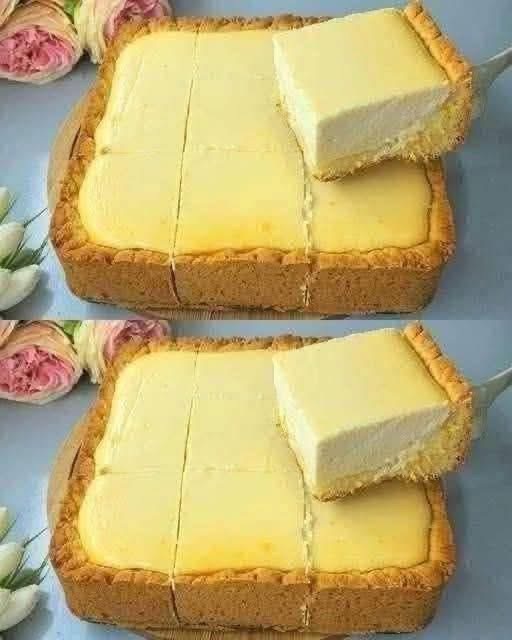
Strawberry Cheesecake Bars
Fresh strawberries make a beautiful and refreshing topping for these creamy cheesecake bars.
Slice the strawberries shortly before serving and arrange them over the chilled cheesecake.
For extra shine, warm a small amount of strawberry jam and brush it lightly over the fruit.
You can also prepare a simple homemade strawberry sauce.
Combine two cups of chopped strawberries with ¼ cup of sugar and one tablespoon of fresh lemon juice.
Cook over medium-low heat until the berries soften and release their juices.
Allow the sauce to cool completely before spooning it over the cheesecake bars.
Blueberry Cheesecake Bars
Blueberry topping pairs beautifully with the smooth vanilla filling.
Place two cups of blueberries, ⅓ cup of sugar, one tablespoon of lemon juice, and one teaspoon of cornstarch in a small saucepan.
Cook over medium heat until the berries begin to burst and the mixture thickens.
Remove the saucepan from the heat.
Allow the topping to cool completely.
Spoon it over individual cheesecake bars shortly before serving.
Lemon Cheesecake Bars
For a stronger lemon flavor, increase the lemon zest to two teaspoons.
Add one additional tablespoon of fresh lemon juice to the cheesecake filling.
After the bars have chilled, spread a thin layer of lemon curd over the top.
Decorate each square with whipped cream and a small amount of fresh lemon zest.
Avoid adding too much lemon juice because excess liquid can make the cheesecake filling softer.
Chocolate Cheesecake Bars
Melt six ounces of semi-sweet chocolate and allow it to cool slightly.
Prepare the cheesecake batter according to the original instructions.
Divide the batter between two bowls.
Mix the melted chocolate into one half.
Pour the plain batter over the prepared crust.
Add spoonfuls of the chocolate batter across the surface.
Use a knife to create gentle swirls.
Bake, cool, and refrigerate the cheesecake according to the original recipe.
Caramel Cheesecake Bars
Drizzle thick caramel sauce over the chilled cheesecake bars before serving.
For salted caramel cheesecake bars, sprinkle a very small amount of flaky sea salt over the caramel.
Chopped toasted pecans can also be added for extra flavor and texture.
Do not pour hot caramel directly onto cold cheesecake.
Allow the caramel to cool until it is warm or at room temperature first.
Cherry Cheesecake Bars
Cherry pie filling is one of the easiest toppings for this recipe.
Place a spoonful of cherry filling over each chilled square.
The bright red cherries create a classic bakery-style appearance.
You can also make homemade cherry topping using fresh or frozen cherries, sugar, lemon juice, and cornstarch.
Allow homemade topping to cool completely before adding it to the cheesecake.
Graham Cracker Crust Alternatives
Graham crackers are traditional, but many other cookies can create a delicious cheesecake crust.
Try using:
Digestive biscuits
Vanilla wafers
Shortbread cookies
Golden sandwich cookies
Chocolate sandwich cookies
Gingersnap cookies
Biscoff cookies
Use approximately the same volume of fine cookie crumbs.
Very sweet cookies may require less added sugar.
Cookies containing more fat may also need slightly less melted butter.
Chocolate Cookie Crust
For a chocolate crust, use finely crushed chocolate sandwich cookies.
If the cookies contain cream filling, reduce the melted butter to approximately five tablespoons.
Mix the crumbs and butter until evenly combined.
Press the mixture firmly into the prepared pan.
Bake for approximately 8–9 minutes before adding the cheesecake filling.
This crust pairs especially well with raspberry, cherry, caramel, or chocolate toppings.
Can You Make Cheesecake Bars Without Sour Cream?
Yes.
Plain full-fat Greek yogurt can replace the sour cream.
The finished cheesecake may have a slightly tangier flavor.
Heavy cream can also be used, but the filling may become softer.
For the most reliable texture, use sour cream or full-fat Greek yogurt.
Can You Use Low-Fat Cream Cheese?
Low-fat cream cheese may work, but it can create a softer and less rich cheesecake.
Avoid using whipped cream cheese sold in containers.
Whipped cream cheese contains additional air and may not produce a firm filling.
Full-fat, block-style cream cheese is recommended for the smoothest and most stable result.
Gluten-Free Cheesecake Bars
Use gluten-free graham crackers or certified gluten-free cookies for the crust.
Check the labels on vanilla extract, cornstarch, and prepared toppings to make sure they meet your dietary needs.
Use clean bowls, utensils, and cookware when preparing the dessert for someone who must completely avoid gluten.
Cornstarch is a convenient gluten-free thickener for the cheesecake filling.
How to Make a Thicker Crust
Increase the cookie crumbs to three cups.
Use approximately ¾ cup of melted butter.
Press the crust firmly across the bottom and slightly up the sides of the pan.
Pre-bake it for approximately 10–12 minutes.
A thicker crust creates more contrast between the crisp base and creamy filling.
How to Make a Thinner Crust
Reduce the crumbs to two cups.
Use approximately six tablespoons of melted butter.
Press the mixture only across the bottom of the pan.
Bake for 8–9 minutes.
A thinner crust allows the creamy cheesecake filling to become the main texture in every bite.
Make-Ahead Instructions
Cheesecake bars are ideal for preparing in advance.
Bake the cheesecake one day before serving.
Cool it completely and refrigerate it overnight.
Wait to add fresh fruit, whipped cream, caramel, or fruit sauce until shortly before serving.
This helps keep the toppings attractive and prevents additional moisture from collecting on the cheesecake.
The crust can also be prepared several hours before adding the filling.
Allow it to cool and keep it covered until needed.
How to Store Cheesecake Bars
Place the cheesecake bars inside an airtight container.
Store them in the refrigerator for up to five days.
Place parchment paper between the layers if the bars need to be stacked.
Do not leave cheesecake at room temperature for longer than two hours.
During warm weather, return the dessert to the refrigerator sooner.
Add fresh fruit shortly before serving for the best texture and appearance.
Can You Freeze Cheesecake Bars?
Yes.
Cheesecake bars freeze very well.
Chill the baked cheesecake completely before cutting it.
Place the bars on a tray and freeze until firm.
Wrap each bar tightly in plastic wrap.
Transfer the wrapped bars to a freezer-safe container or bag.
Freeze for up to two months.
Thaw the bars overnight in the refrigerator.
Add fresh toppings after thawing.
Can You Freeze the Whole Cheesecake?
Yes.
Leave the chilled cheesecake uncut.
Wrap the entire pan or cheesecake slab tightly in plastic wrap and aluminum foil.
Freeze for up to two months.
Thaw it overnight in the refrigerator before cutting.
Freezing the cheesecake without fruit or whipped toppings provides the best result.
How to Serve Cheesecake Bars
Serve the bars cold or allow them to rest at room temperature for approximately 10–15 minutes.
Cheesecake tastes softer and creamier when it is not extremely cold.
Decorate each square with:
A swirl of whipped cream
Fresh berries
Lemon zest
Chocolate curls
Caramel drizzle
Powdered sugar
Chopped nuts
Fruit sauce
Use moderately sized portions because cheesecake is rich and satisfying.
Serving Cheesecake Bars at a Party
Cut the cheesecake into smaller squares for a dessert table.
Place each square inside a paper cupcake liner.
This makes the bars easier for guests to pick up and keeps the serving tray cleaner.
Keep the cheesecake refrigerated until shortly before the party begins.
When serving outdoors, place the dessert tray over a larger container filled with ice.
What to Serve With Cheesecake Bars
These creamy bars pair well with:
Hot coffee
Iced coffee
Black tea
Herbal tea
Fresh berries
Fruit salad
Chocolate sauce
Caramel sauce
Whipped cream
Vanilla ice cream
A slightly tart fruit sauce helps balance the rich cream-cheese filling.
Common Problems and Solutions
Why Is My Cheesecake Filling Lumpy?
The cream cheese may have been too cold.
Allow the block-style cream cheese to soften before mixing.
Beat the cream cheese by itself until smooth before adding the sugar or other ingredients.
Scrape the sides and bottom of the bowl regularly.
Why Did My Cheesecake Crack?
The batter may have been overmixed, overbaked, or cooled too quickly.
Small cracks will not affect the flavor.
Cover them with whipped cream, fruit sauce, caramel, or another topping.
Next time, mix the eggs gently and remove the cheesecake while the center still has a slight wobble.
Why Is the Cheesecake Too Soft?
The cheesecake may be underbaked or may not have chilled long enough.
Refrigerate it for at least four hours.
Overnight chilling provides an even firmer texture.
Measure the sour cream and eggs carefully.
Avoid adding too much liquid flavoring.
Why Is the Cheesecake Dry?
The filling was probably baked for too long.
The edges should be firm, but the center should still move slightly when the pan is gently shaken.
Remember that the cheesecake continues cooking from residual heat after leaving the oven.
Why Is the Crust Crumbly?
The cookie crumbs may not contain enough melted butter.
The crust may also not have been pressed firmly enough.
Make sure the crumb mixture holds together when squeezed between your fingers.
Use the bottom of a measuring cup to compact it firmly inside the pan.
Why Is the Crust Soggy?
The crust may not have been pre-baked.
The cheesecake may also have been sliced before chilling completely.
Pre-bake the crust and refrigerate the bars fully before cutting.
When using a water bath, wrap the pan carefully to prevent water from reaching the crust.
Why Did the Cheesecake Stick to the Pan?
Line the pan with parchment paper.
Leave enough paper over two sides to create lifting handles.
Chill the cheesecake completely before removing it.
Run a thin knife around any exposed edges when necessary.
Frequently Asked Questions
Can I Use a Hand Mixer?
Yes.
A hand mixer works well for this recipe.
Use low or medium speed and scrape the bowl regularly.
Avoid overmixing after adding the eggs.
Can I Make the Recipe in a Smaller Pan?
Yes.
A smaller pan creates thicker cheesecake bars and requires a longer baking time.
Use an 8-inch or 9-inch square pan for half the recipe.
Begin checking the center after approximately 40 minutes.
Can I Double the Recipe?
Yes.
Prepare the cheesecake in two separate 9-by-13-inch pans.
Do not place a double quantity inside one very deep pan because the center may bake unevenly.
Can I Use Vanilla Bean Paste?
Yes.
Replace the vanilla extract with an equal amount of vanilla bean paste.
The cheesecake will contain small vanilla specks and have a deeper vanilla flavor.
Can I Leave Out the Lemon?
Yes.
The lemon juice and zest add brightness, but they are not essential.
Leave them out or replace the lemon juice with a small amount of additional sour cream.
Can I Add Fruit Inside the Batter?
Small amounts of thick fruit puree can be swirled into the batter.
Avoid adding large pieces of watery fruit because they can affect the texture.
Fruit toppings are usually more reliable when added after baking.
How Do I Know When the Cheesecake Is Done?
The outer edges should be set and slightly puffed.
The center should wobble gently when the pan is moved.
It should not look liquid.
The filling will continue becoming firm while the cheesecake cools and chills.
Final Note
Creamy Vanilla Cheesecake Bars are an elegant dessert with a buttery cookie crust and a smooth, rich filling.
They offer the classic flavor of homemade cheesecake in a rectangular shape that is easy to cut, carry, and share.
Use room-temperature ingredients, avoid overmixing, and remove the cheesecake from the oven while the center still has a slight wobble.
Refrigerate it thoroughly before cutting.
Serve the bars plain or decorate them with fresh berries, lemon curd, caramel, chocolate, cherry topping, or whipped cream.
They are perfect for holidays, birthdays, potlucks, family dinners, and any occasion that calls for a creamy homemade dessert.